Jeep Wrangler Tj Soft Top Hardware: Your Essential Screw And Bracket Guide
The Jeep Wrangler TJ, a beloved icon of off-road adventure, offers the thrilling experience of open-air driving. A key part of this experience is the soft top, allowing you to quickly transition from a protected cabin to soaking up the sun.
However, like any mechanical component, the soft top hardware can wear out, break, or simply go missing. Replacing or installing these essential screws and brackets is a common task for TJ owners.
This guide will walk you through the specific hardware you'll need, where it goes, and how to install it, ensuring your soft top is secure and functional for every adventure.
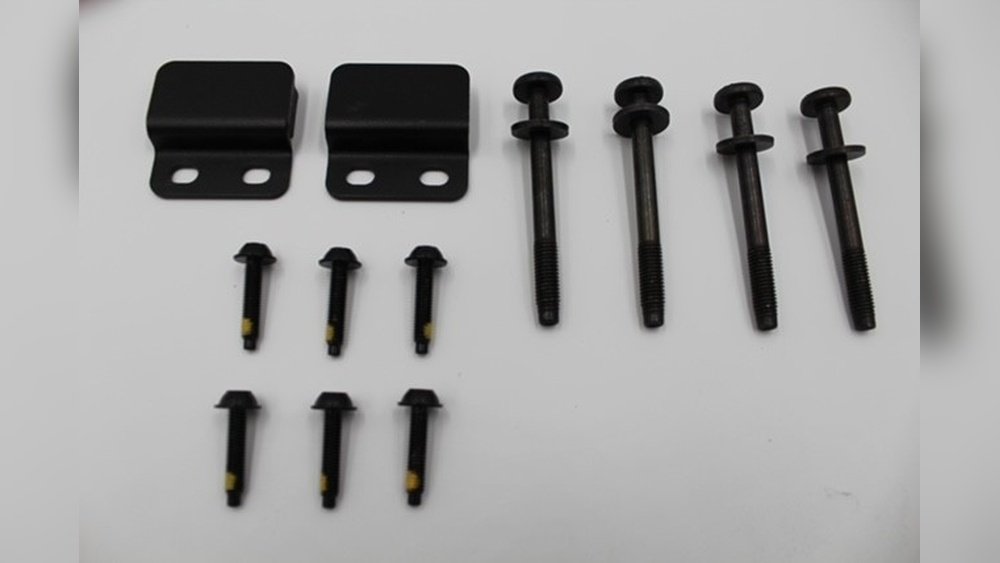
Understanding the various pieces of hardware can seem daunting at first. There are many small parts, each with a specific job. From the door surround channels that seal the top to the bow assembly brackets that support the fabric, each component plays a vital role. Getting the right hardware kit or individual pieces is crucial for a proper fit and a leak-free seal. This guide aims to demystify the process, providing clear explanations and practical advice for TJ owners tackling this common maintenance task.
Understanding The Soft Top Hardware Components
Before diving into installation, it’s important to identify the main hardware pieces that make up the Jeep Wrangler TJ soft top system. These parts work together to secure the fabric, create a watertight seal, and allow for easy operation.
Each component has a specific location and function, and using the correct part is essential for a successful installation.
Door Surround Channels
These are long, plastic or rubber channels that attach to the Jeep’s body, typically along the B-pillar and behind the doors. Their primary purpose is to receive the edges of the soft top fabric, creating a seal to prevent water and wind from entering the cabin. They are usually secured with a combination of screws and clips. The fit of these channels is critical for preventing leaks, especially around the doors.
Bow Assembly Brackets
The bow assembly is the framework that supports the soft top fabric. It consists of several metal or plastic rods (bows) that create the shape of the top. The brackets are the points where these bows attach to the Jeep’s body or roll cage. These brackets often pivot, allowing the soft top to be folded down. They are typically secured with bolts and nuts.
Top Bow Pivot Brackets
These specific brackets are found at the pivot points of the bow assembly. They allow the bows to fold and unfold smoothly. They are usually made of metal and are designed to withstand repeated movement. Proper lubrication of these pivot points can extend their life and prevent squeaking.
Tailgate Bar Retainer Clips
At the rear of the soft top, a tailgate bar slides into a pocket in the fabric. This bar then clips into retainers mounted on the Jeep’s tailgate or body. These clips hold the bottom edge of the soft top securely in place, ensuring a tight seal against the tailgate.
Header Bar And Latches
The header bar is located at the front of the soft top, above the windshield. It is usually a metal bar with a seal that presses against the windshield frame when the top is closed. Latches on either side of the header bar secure it to the windshield frame. These latches are critical for keeping the front of the top sealed and preventing it from flapping in the wind.
Screws, Bolts, And Washers
A variety of screws, bolts, and washers are used throughout the soft top hardware system. These range from small sheet metal screws that hold plastic trim pieces to larger bolts that secure structural brackets. Using the correct size and type of fastener is paramount. Using a screw that is too long can damage underlying components, while one that is too short may not provide adequate holding power. Washers help distribute the load and prevent fasteners from pulling through softer materials.
Essential Screws And Their Locations
The specific types and sizes of screws used in Jeep Wrangler TJ soft top installations can vary slightly depending on the year and the exact soft top manufacturer. However, certain types are consistently found.
Self-tapping Screws
These are perhaps the most common type of screw used in soft top hardware. They are designed to cut their own threads into the material they are fastening, often plastic or sheet metal.
- Location: Frequently used to attach door surround channels to the Jeep’s body, to secure plastic trim pieces, and to mount various brackets to the tub or roll cage.
- Sizes: You’ll typically find them in sizes like #8 or #10, with lengths ranging from 1/2 inch to 1 inch. Look for Phillips head or Torx head designs.
Machine Screws
Machine screws are used when fastening into a pre-tapped hole or a nut. They have a consistent thread diameter and pitch.
- Location: Often used in conjunction with nuts or threaded inserts to attach more substantial brackets, like those for the bow assembly pivots, to the Jeep’s frame or roll cage.
- Sizes: Common sizes might include M5 or M6 (metric) or #10 or 1/4 inch (SAE). They often come with corresponding nuts and washers.
Bolts (grade 5 Or 8)
Larger fasteners, often referred to as bolts, are used for load-bearing connections. These will typically be accompanied by nuts and washers.
- Location: Used to secure major structural components like the main pivot brackets for the bow assembly. These are critical connections that need to be strong.
- Sizes: You might encounter 1/4 inch, 5/16 inch, or 3/8 inch diameter bolts, in various lengths. Always use the appropriate grade (e.g., Grade 5 or Grade 8) for strength.
Specialized Fasteners
Some soft top systems may include specialized fasteners, such as:
- U-nuts or Speed Nuts: These are metal clips that provide a threaded receiver and are often used where access to the back of a panel is difficult.
- Rivets: Less common for user-replaceable hardware, but sometimes used in original factory installations.
Pro Tip: When replacing screws, always try to use the exact same size and thread pitch. If you can’t find the exact replacement, take the old screw to a hardware store and match it. Using the wrong fastener can lead to stripped threads, loose components, and potential leaks.
Key Brackets And Their Installation
Brackets are the structural anchors for your soft top hardware. Their correct installation is crucial for a secure and leak-free fit.
Door Surround Brackets
These brackets attach to the Jeep’s body at the rear of the doors and along the B-pillar. They form the framework that the door surround channels slide into or attach to.
- Installation: Typically secured with a combination of self-tapping screws and sometimes bolts with nuts. Ensure the bracket is aligned correctly with the body lines to allow the channel to seat properly. Misalignment here is a common cause of wind noise and leaks.
- Common Issues: Stripped screw holes in the body or cracked plastic brackets.
Top Bow Pivot Brackets
These are critical for the operation of your soft top. They mount to the roll cage or the body tub and allow the main bow assembly to pivot.
- Installation: Usually secured with larger bolts and nuts, often requiring access to both sides of the mounting point. Tighten these securely, but be careful not to overtighten and strip the threads or crush any mounting points. In some cases, these brackets might have a specific orientation (left vs. right) that must be followed.
- Common Issues: Worn pivot points causing squeaking or difficulty in opening/closing the top, or broken bracket ears due to stress.
Header Bar Latches
These latches are attached to the windshield frame and engage with the header bar of the soft top.
- Installation: Often mounted with screws or small bolts. Ensure they are positioned correctly to firmly grip the header bar when closed. Adjustability is sometimes built into these latches to achieve the perfect tension.
- Common Issues: Bent latches, worn springs, or misaligned mounting points.
Tailgate Bar Retainers
Mounted on the tailgate or the body tub, these retainers accept the tailgate bar from the bottom of the soft top.
- Installation: Usually attached with screws. Ensure they are positioned to allow the tailgate bar to slide in easily and then securely lock in place. The angle and depth of the retainer are important for a good seal.
- Common Issues: Cracked plastic retainers or bent metal clips.
Example: When installing new door surround brackets, I found that the original holes in the Jeep’s body tub had become slightly enlarged over time. I used slightly larger diameter self-tapping screws with a washer to ensure a tight grip, preventing any movement.
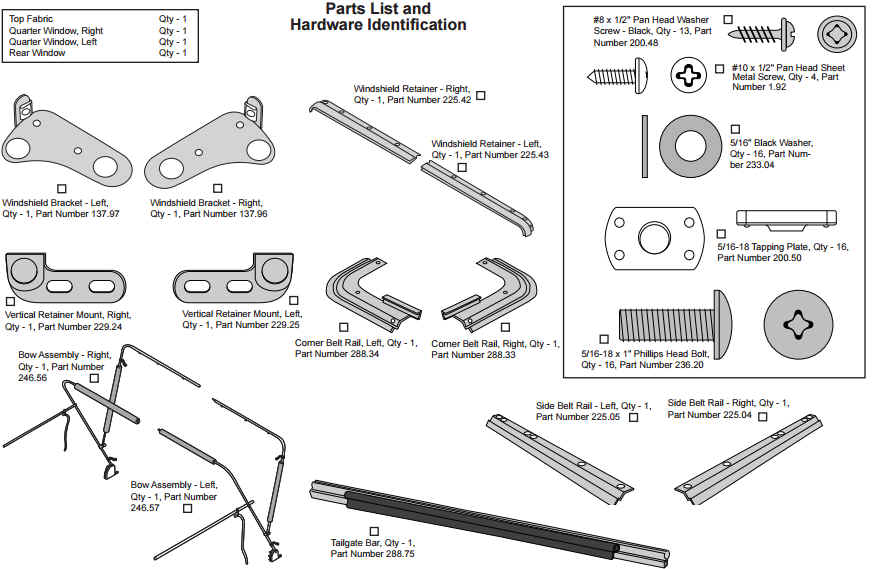
Installation Process: Step-by-step
Installing soft top hardware requires patience and attention to detail. It’s best to work in a clean, well-lit area, preferably with a helper.
Preparation
- Gather Your Hardware: Ensure you have all the necessary screws, bolts, brackets, and any tools required. A basic toolkit with screwdrivers (Phillips and flathead), socket wrenches, pliers, and potentially a Torx bit set is usually sufficient.
- Clean the Area: Before installing new hardware, clean the mounting surfaces on your Jeep thoroughly. Remove any dirt, rust, or old sealant. This ensures a good fit and helps prevent future corrosion.
- Inspect Old Hardware: If you are replacing existing hardware, carefully remove the old parts. Note how they were installed and identify any damaged areas on the Jeep’s body or roll cage.
Installing Door Surround Channels And Brackets
- Attach Door Surround Brackets: Mount the brackets to the Jeep’s body using the appropriate screws or bolts. Ensure they are flush and securely fastened.
- Install Door Surround Channels: Slide the rubber or plastic channels onto the brackets. Some channels may also be secured with small screws. Make sure the channels are fully seated and aligned correctly with the door opening.
Mounting The Bow Assembly
- Attach Pivot Brackets: Secure the top bow pivot brackets to the roll cage or body tub using the specified bolts and nuts. Ensure they are oriented correctly for the left and right sides.
- Assemble Bows: If you are installing a new bow assembly, follow the manufacturer’s instructions to connect the individual bow pieces.
- Mount Bow Assembly: Carefully place the assembled bow framework into the pivot brackets. You may need a helper to hold it in place while you secure it with the pivot bolts. Ensure the bows can pivot freely but without excessive play.
Installing Header And Tailgate Components
- Attach Header Bar Latches: Mount the header bar latches to the windshield frame. Check their alignment and ensure they can engage firmly with the header bar.
- Install Tailgate Bar Retainers: Screw the tailgate bar retainers onto the tailgate or the body tub. Verify their position allows the tailgate bar to slide in and lock securely.
Final Checks And Adjustments
- Test Operation: Carefully raise and lower the soft top to ensure all components move smoothly. Check that the header bar latches securely and the tailgate bar engages properly.
- Check for Leaks: After installation, it’s a good idea to perform a quick water test. Spray the top with a hose and check for any drips around the door surrounds, header, and tailgate.
- Tighten Fasteners: Re-check all screws and bolts after a few days of use. Some settling may occur, and minor re-tightening might be necessary.
Warning: Never force components into place. If something doesn’t fit, double-check that you have the correct part and that it’s oriented properly. Forcing parts can lead to damage that is more costly to repair.
Common Soft Top Hardware Issues And Solutions
Even with careful installation, you might encounter common problems with your TJ’s soft top hardware. Knowing how to address them can save you time and frustration.
Leaks Around Doors And Windows
This is arguably the most common complaint. It’s often caused by misaligned or damaged door surround channels, worn seals, or improperly adjusted header latches.
- Solution: Ensure the door surround channels are firmly attached and correctly positioned. Check for cracks or tears in the rubber seals. Adjust the header bar latches for a tighter seal against the windshield frame. Sometimes, a thin bead of silicone sealant can help temporarily fix minor leaks, but addressing the underlying hardware issue is the best long-term solution.
Wind Noise
Excessive wind noise usually stems from gaps between the soft top and the Jeep’s body. This can be due to loose hardware, worn seals, or a top that is not stretched properly.
- Solution: Tighten all screws and brackets. Inspect the header bar seal and the tailgate bar seal for wear or damage. Ensure the soft top fabric itself is not torn or loose. In some cases, adding weatherstripping to the Jeep’s body where the top makes contact can help reduce noise.
Difficulty Opening Or Closing The Top
This can be caused by binding pivot brackets, misaligned bows, or obstructed hardware.
- Solution: Inspect the bow pivot brackets for damage or stiffness. Lubricate pivot points with a silicone-based lubricant. Ensure no wires or other components are interfering with the movement of the bows. Check that the header bar is fully releasing from the latches.
Loose Or Rattling Parts
Any loose hardware can create annoying rattles and potentially lead to further damage.
- Solution: Go over all screws, bolts, and clips and ensure they are tight. Pay special attention to any plastic components, as the mounting holes can strip easily. Use larger screws or add washers if necessary, but be careful not to overtighten and crack the plastic.
Missing Or Broken Fasteners
Over time, screws can vibrate loose and fall out, or brackets can break under stress.
- Solution: Identify the missing or broken fastener. Purchase an exact replacement if possible. If a bracket is broken, it will need to be replaced. Many aftermarket companies offer replacement hardware kits specifically for TJ soft tops.
In my experience, a loose door surround channel was the culprit behind a persistent whistling noise on my TJ. Simply re-tightening the self-tapping screws that held the channel in place solved the problem completely.
Choosing The Right Hardware Kit
When it comes time to replace your soft top hardware, you have a few options. You can buy individual parts, or you can purchase a comprehensive hardware installation kit.
Individual Parts Vs. Kits
- Individual Parts: This is a good option if you only need to replace one or two specific items, like a single broken bracket or a few lost screws. It can be more cost-effective if your needs are minimal. However, it can be time-consuming to source all the necessary individual pieces.
- Hardware Kits: