The Jeep Wrangler is an icon. For decades, it has represented ruggedness, freedom, and off-road capability.
Many people associate the Wrangler with adventure, not necessarily with speed. However, a common question arises for those who use their Wrangler for more than just weekend trail rides: "What is the Jeep Wrangler 4×4 max speed?"
This question isn't as simple as it sounds. The maximum speed of a Jeep Wrangler 4×4 depends on many factors.
These include the specific model year, engine type, transmission, tire size, and even the type of 4WD system engaged. While the Wrangler is built for crawling over rocks and mud, understanding its limits on the pavement is important for safe driving.
This article will explore the various aspects influencing the Wrangler’s top speed, discuss the different 4WD modes and their implications, and provide a clear picture of what you can expect from this legendary vehicle on the open road. We will look at how different configurations affect its performance and what drivers should consider when pushing the limits.
Understanding Jeep Wrangler 4×4 Systems
Before diving into maximum speed, it’s crucial to understand the four-wheel drive (4WD) systems Jeep offers. Not all Wranglers are created equal when it comes to their drivetrain. Jeep has evolved its 4WD technology over the years, offering different levels of engagement and capability. The primary systems you’ll find are Command-Trac, Selec-Trac, and Rock-Trac. Each system has distinct characteristics that can influence how the vehicle behaves at higher speeds, though their main purpose is off-road traction.
Command-trac Nv241 Gii
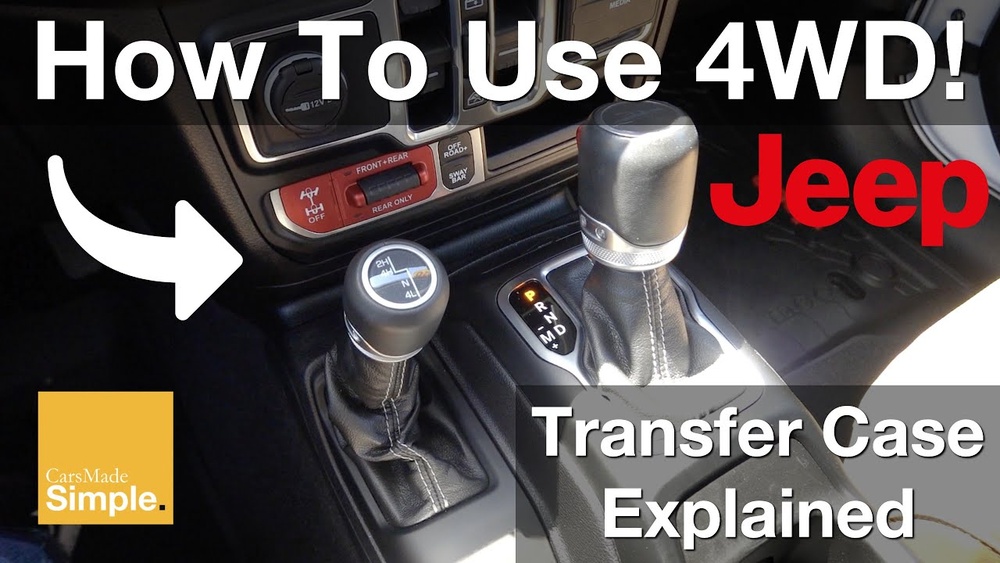
This is the most common 4WD system found in many Jeep Wrangler models, especially the Sport and Sahara trims. The Command-Trac system is a part-time 4WD system. It allows the driver to manually shift between 2WD (rear-wheel drive), 4WD High (4H), and 4WD Low (4L).
- 2WD (RWD): This mode drives only the rear wheels. It’s the most fuel-efficient mode for normal driving on dry, paved roads.
- 4WD High (4H): In this mode, power is sent to all four wheels. This is useful for slippery conditions like rain, snow, or light off-roading. The system mechanically locks the front and rear driveshafts together, meaning they must rotate at the same speed. This is why 4H should not be used on dry pavement. Driving with 4H locked on dry surfaces can cause tire binding, drivetrain stress, and poor handling, potentially leading to damage.
- 4WD Low (4L): This mode also sends power to all four wheels, but it engages a lower gear ratio (typically around 2.72:1). This provides significantly more torque for extreme off-road situations like climbing steep hills, rock crawling, or pulling heavy loads at low speeds. It is never to be used on paved roads.
The Command-Trac system is designed for versatility but prioritizes off-road performance. At higher speeds on pavement, drivers will typically use the 2WD mode.
Engaging 4H on pavement, even for short periods, is not recommended and can affect handling, though it doesn't drastically reduce the vehicle's *potential* top speed as much as it impacts its *stability* and *drivability* at speed.
Selec-trac Full-time 4wd
The Selec-Trac system, often found in Sahara models, offers a more convenient experience for drivers who encounter varied conditions frequently. This system is a full-time 4WD system, meaning it can automatically distribute power between the front and rear axles as needed. It typically includes modes for 2WD, 4WD High Auto, 4WD High Lock, and 4WD Low Lock.
- 2WD: Similar to Command-Trac, this mode drives the rear wheels for optimal fuel economy on dry pavement.
- 4WD High Auto: This is the key difference. In this mode, the system uses a center differential that allows the front and rear wheels to rotate at different speeds. It can send power to the front axle only when slippage is detected at the rear. This makes it safe to use on dry pavement and in mixed driving conditions.
- 4WD High Lock: This mode locks the center differential, similar to the 4H mode in Command-Trac. It forces the front and rear driveshafts to rotate at the same speed, providing maximum traction in slippery or off-road conditions. Like Command-Trac’s 4H, this mode should not be used on dry pavement.
- 4WD Low Lock: This mode locks the center differential and engages the lower gear ratio for maximum torque in extreme off-road situations.
The Selec-Trac system's "Auto" mode offers a significant advantage for on-road driving. It can handle varying traction levels without the driver needing to constantly switch modes.
While the 'Auto' mode itself doesn't inherently increase the Wrangler's *theoretical* top speed, it provides better stability and control during acceleration and deceleration on mixed surfaces, which can indirectly contribute to a more confident feeling at higher speeds.
Rock-trac 4×4 System
The Rock-Trac system is the most robust and is typically found on Rubicon models. It is designed for extreme off-roading and rock crawling. It features a more advanced transfer case with a lower crawl ratio (often 4:1) and electronic locking front and rear differentials. It includes modes for 2WD, 4WD High Lock, and 4WD Low Lock.
- 2WD: Standard rear-wheel drive for normal road use.
- 4WD High Lock: Locks the front and rear driveshafts for maximum traction. Not for use on dry pavement.
- 4WD Low Lock: Engages the 4:1 low-range gear ratio and locks both differentials. This provides exceptional torque and control for crawling over obstacles at very low speeds.
While the Rock-Trac system excels off-road, its primary focus is not on achieving high speeds on pavement. The locking differentials and lower gearing are optimized for slow, controlled movement.
In 2WD mode, its on-road performance is similar to other Wranglers, but the overall design of the Rubicon, with its beefier components and often larger tires, can influence its top-end speed characteristics.
Factors Affecting Jeep Wrangler Max Speed
The maximum speed of any vehicle is determined by a complex interplay of factors. For the Jeep Wrangler, these factors are particularly varied due to its long history and the numerous configurations available. Understanding these elements provides a clearer picture of why there isn’t a single, definitive answer to the “max speed” question.
Engine Power And Torque
The heart of any vehicle’s performance is its engine. Jeep Wranglers have come with a variety of engines over the years, each with different power and torque outputs.
- 2.0L Turbocharged I4: Found in newer JL models, this engine offers a good balance of power and efficiency. It typically produces around 270 horsepower and 295 lb-ft of torque.
- 3.6L Pentastar V6: This has been a staple engine for many years. It generally produces around 285 horsepower and 260 lb-ft of torque.
- 6.4L HEMI V8 (392): Exclusive to the Rubicon 392 model, this powerhouse delivers an impressive 470 horsepower and 470 lb-ft of torque. This engine significantly increases the potential top speed.
- Older Engines: Previous generations (JK, TJ, YJ) had different engine options, including smaller 4-cylinders and older V6s, which would have lower top speeds.
More horsepower and torque generally translate to a higher potential top speed, as the engine has more power to overcome aerodynamic drag and mechanical resistance at higher velocities.
Transmission Type
The transmission plays a vital role in how an engine’s power is delivered to the wheels. Wranglers have been offered with both manual and automatic transmissions.
- Manual Transmissions: Typically 5-speed or 6-speed. These can offer a direct connection to the engine but might have different gearing ratios affecting top speed compared to automatics.
- Automatic Transmissions: Ranging from 4-speed to 8-speed (in newer models). Modern automatic transmissions with more gears and sophisticated electronic controls can often optimize engine performance for both acceleration and cruising, potentially allowing for higher sustained speeds. An 8-speed automatic, for instance, can keep the engine in its power band more effectively.
The final drive ratio (axle gearing) also works in conjunction with the transmission. A numerically lower final drive ratio (e.
g. , 3.
73) is better for highway cruising and higher top speeds, while a numerically higher ratio (e. g.
, 4. 10, 4.
56) is better for off-road torque and larger tires.
Aerodynamics And Body Style
The Jeep Wrangler’s iconic boxy shape is fantastic for off-road visibility and interior space, but it’s a poor aerodynamic design for high speeds. The blunt front end, upright windshield, and flat body panels create significant air resistance (drag). As speed increases, aerodynamic drag increases exponentially. This means that even with a powerful engine, the Wrangler’s top speed is heavily limited by its aerodynamic profile.
Compared to a sleek sports car, the Wrangler fights a constant battle against the wind. This is a primary reason why its top speed is relatively modest, even in its most powerful configurations.
Tire Size And Type
The tires fitted to a Wrangler have a substantial impact on its performance, including top speed.
- Stock Tires: When equipped with standard road tires, the Wrangler’s top speed will be closer to its manufacturer-rated limits.
- Larger Off-Road Tires: Many Wrangler owners upgrade to larger, more aggressive off-road tires (e.g., 33-inch, 35-inch, or larger). These tires have several effects:
- Increased Rolling Diameter: A larger tire effectively changes the final drive ratio, making it “taller.” This means the engine has to work harder to achieve the same road speed, reducing acceleration and potentially lowering the absolute top speed.
- Increased Weight and Rolling Resistance: Off-road tires are often heavier and have more aggressive tread patterns, which increases rolling resistance and the energy required to turn them.
- Aerodynamic Impact: Larger, knobbier tires can also disrupt airflow around the vehicle, further increasing drag.
Gearing And Drivetrain Configuration
As mentioned earlier, the final drive ratio in the axles is crucial. A common gearing for Wranglers with 33-inch tires might be 4.10 or 4.56, which is great for off-road but not ideal for top speed. If a Wrangler is equipped with a numerically lower gear ratio (e.g., 3.07 or 3.73) and smaller tires, it will be geared more for highway cruising and higher speeds.
Furthermore, the specific 4WD mode engaged influences how power is delivered. While 2WD is the standard for highway driving, engaging 4H on pavement, though not recommended, can introduce binding and stress that might indirectly affect perceived stability at speed.

Jeep Wrangler 4×4 Max Speed By Model Generation
Pinpointing an exact maximum speed for every single Wrangler ever made is impossible due to the vast number of configurations. However, we can provide general ranges and typical figures for different generations and popular models.
Jk Generation (2007-2018)
The JK generation is very popular and came with several engine options, primarily the 3. 8L V6 and later the 3. 6L Pentastar V6.
- With 3.8L V6 (approx. 202 hp): These models, especially with manual transmissions and standard tires, would typically top out around 95-105 mph (153-169 km/h).
- With 3.6L Pentastar V6 (approx. 285 hp): This more powerful engine allowed for slightly higher speeds. With automatic transmissions and stock tires, these Wranglers could reach speeds of around 105-115 mph (169-185 km/h).
- Rubicon Models (JK): Even with the Pentastar V6, Rubicon models often came with lower gearing (e.g., 4.10) and larger tires, which would limit their top speed to the lower end of the range, perhaps 100-110 mph (161-177 km/h).
It’s important to note that at these speeds, the Wrangler’s handling characteristics, particularly its steering feel and susceptibility to crosswinds, become more pronounced. Many owners report that the vehicle feels less stable at speeds above 70-80 mph.
Jl Generation (2018-present)
The current generation JL introduced new engine options, including the 2. 0L turbo and the powerful 6. 4L V8 in the Rubicon 392.
- With 2.0L Turbo I4 (approx. 270 hp): These models are quite capable on the highway. With the 8-speed automatic transmission and stock tires, they can reach speeds of approximately 110-120 mph (177-193 km/h). The turbo engine provides good torque for maintaining speed.
- With 3.6L Pentastar V6 (approx. 285 hp): Similar to the JK generation with the Pentastar, these models will likely hit speeds in the 105-115 mph (169-185 km/h) range.
- Rubicon 392 (6.4L V8, 470 hp): This is the performance outlier. With its massive V8 engine, the Rubicon 392 is electronically limited to 150 mph (241 km/h). This is significantly higher than any other Wrangler and is a testament to the V8’s power overcoming the Wrangler’s aerodynamic limitations. Even with the V8, the Rubicon 392 still uses off-road-focused tires and suspension, so reaching that limited speed is a feat in itself.
Older Generations (tj, Yj, Cj)
Older Wranglers, with their smaller engines (e. g.
, 4. 0L inline-6 in TJs, 4.
2L inline-6 in YJs, various 4-cylinders and V6s in CJs), had considerably lower top speeds.
- TJ Wrangler (1997-2006): With the