The Enduring Charm Of The Jeep Willys Wheeler With Flat Fenders
The Jeep brand is synonymous with ruggedness, adventure, and a legacy that stretches back to the very beginnings of the four-wheel-drive vehicle. Among its many iconic models, the Jeep Willys Wheeler with flat fenders holds a special place in the hearts of off-road enthusiasts and vintage vehicle collectors.
This early iteration of the Jeep, born out of necessity during World War II, evolved into a civilian icon that continues to captivate with its simple, utilitarian design and remarkable capability.
These early Jeeps, often referred to by their civilian designations like the CJ-2A, CJ-3A, and CJ-3B, are characterized by their distinctive flat fenders. Unlike later models that adopted more rounded, bulbous designs, these flat-fendered Jeeps exude a raw, honest aesthetic. They represent a direct link to the military Jeeps that traversed battlefields and proved their mettle in the harshest conditions. Owning and driving one of these vehicles is not just about transportation; it’s about connecting with a piece of automotive history, experiencing a purer form of off-roading, and embracing a lifestyle that values simplicity and capability above all else.
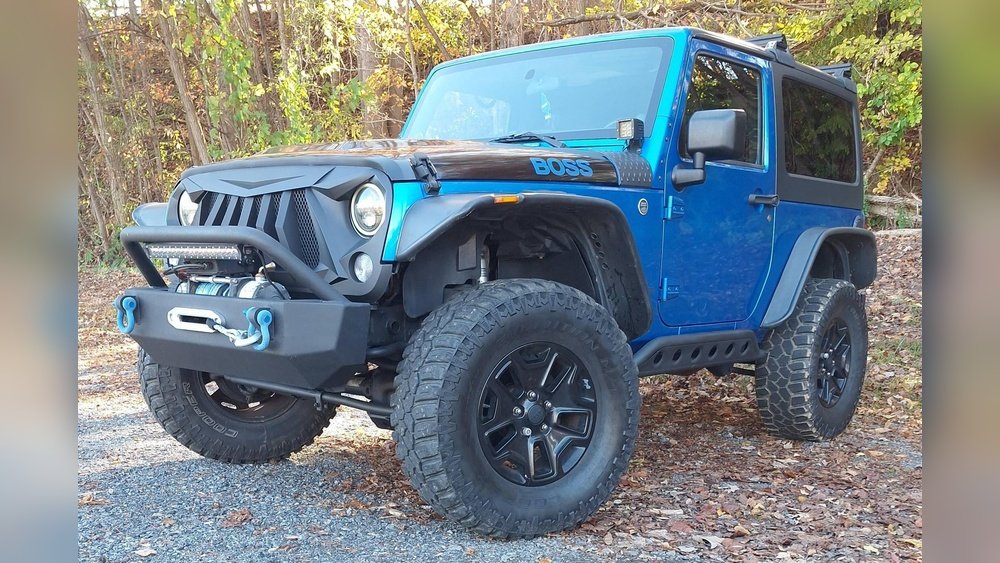
This article will explore the history, design, appeal, and practical considerations of the Jeep Willys Wheeler with flat fenders, offering insights for those who admire, own, or are considering acquiring one of these timeless machines. We’ll look at what makes them unique, how they perform, and why they remain so popular decades after their production ceased.
Genesis Of An Icon: From War Machine To Civilian Workhorse
The story of the Jeep Willys Wheeler with flat fenders is intrinsically tied to the Second World War. As the United States mobilized for war, the military needed a light, versatile, four-wheel-drive reconnaissance vehicle that could navigate rough terrain and carry troops or supplies. Bantam Car Company, Willys-Overland Motors, and Ford Motor Company all developed prototypes, but it was the Willys MB (and its Ford counterpart, the GPW) that became the definitive military Jeep. These vehicles were built for function, not form, with their flat, unadorned fenders being a direct result of the need for efficient production and battlefield utility.
After the war, Willys-Overland recognized the potential of adapting their successful military vehicle for civilian use. In 1945, they introduced the CJ-2A (Civilian Jeep). While visually similar to its military predecessor, the CJ-2A incorporated several modifications to make it more suitable for farm work, construction, and general transportation. These included a tailgate, side-mounted spare tire, improved lighting, a civilian-grade grille, and a more comfortable driver’s seat. Crucially, it retained the signature flat fenders that had become so recognizable.
The CJ-2A was followed by the CJ-3A in 1949, which featured a revised transmission with three forward gears and one reverse, and a more robust rear axle. Then came the CJ-3B in 1953, which is perhaps the most recognizable of the flat-fendered Jeeps to many. The CJ-3B sported a distinctive high-hood design to accommodate the taller Hurricane F-Head engine, a significant upgrade over previous powerplants. Despite the engine change, it maintained the classic flat-fendered silhouette. These models collectively laid the groundwork for the entire Jeep legacy, establishing a reputation for toughness and go-anywhere capability that endures to this day.

Design And Engineering: Simplicity As A Strength
The appeal of the Jeep Willys Wheeler with flat fenders lies in its uncomplicated design and robust engineering. These vehicles were built with a clear purpose: to be tough, reliable, and capable in off-road conditions. This philosophy is evident in every aspect of their construction.
The Iconic Flat Fenders
The flat fenders are more than just a visual identifier; they are a functional element. Their simple, angular design was easy to manufacture and offered a degree of protection without adding unnecessary complexity or weight. In an off-road scenario, these fenders provided a platform for mounting accessories or could even serve as a sturdy surface to stand on. Their flat surface also made them relatively easy to repair or replace if damaged. This utilitarian approach to design is a hallmark of the early Jeeps and contributes significantly to their timeless appeal.
Robust Drivetrain And Chassis
Underneath the utilitarian body, the Willys Wheeler boasts a strong, ladder-type frame and a robust drivetrain. The original military Jeeps featured a full-time four-wheel-drive system with a two-speed transfer case, allowing drivers to select between two-wheel drive and four-wheel drive, and to engage low-range gearing for crawling over obstacles. Civilian models retained this capable system, often with slight modifications for road use.
The suspension system typically consisted of leaf springs at both the front and rear axles. While this setup might seem primitive by modern standards, it was incredibly durable and well-suited for absorbing the shocks of rough terrain. Combined with solid axles, this suspension provided excellent articulation and ground clearance, essential for off-road performance.
The Heart Of The Machine: Engines
Throughout the production run of the flat-fendered Jeeps, several engines powered these rugged vehicles. The early CJ-2A and CJ-3A models often came equipped with the Willys L-Head “Go Devil” engine. This 134 cubic inch (2.2-liter) inline-four engine was known for its reliability and torque, though it was not particularly powerful by today’s standards. Its simple design made it relatively easy to maintain and repair, a crucial factor for a vehicle intended for hard work and remote use.
The introduction of the Hurricane F-Head engine in the CJ-3B marked a significant step up in performance. This overhead-valve engine offered more horsepower and better efficiency than the L-Head. Its taller block necessitated the distinctive high-hood design of the CJ-3B, but it provided the power needed for more demanding tasks and a better on-road driving experience.
Minimalist Interior
The interior of a flat-fendered Willys Wheeler is a testament to its utilitarian roots. Expect a spartan cabin with basic seating, a simple dashboard featuring essential gauges (speedometer, fuel, temperature, oil pressure), and a steering wheel. Creature comforts were minimal, with features like heaters and radios often being optional extras or added later by owners. This minimalist approach means there are fewer complex systems to break down, contributing to the vehicle’s overall reliability and ease of maintenance.
The Unmistakable Appeal: Why Flat-fendered Jeeps Endure
The enduring popularity of the Jeep Willys Wheeler with flat fenders can be attributed to a confluence of factors: historical significance, a timeless aesthetic, exceptional off-road capability, and a strong sense of community among owners.
A Connection To History
Owning a flat-fendered Jeep is like owning a piece of automotive history. These vehicles were instrumental in the Allied victory in World War II and went on to become indispensable tools for farmers, ranchers, and adventurers in the post-war era.
Driving one offers a tangible connection to that past, a reminder of a time when vehicles were built with a focus on durability and function over luxury and speed. This historical resonance adds a layer of prestige and emotional value that modern vehicles often lack.
Timeless, Utilitarian Aesthetics
The simple, boxy design with its signature flat fenders possesses a rugged charm that has aged exceptionally well. In a world of increasingly complex and stylized automotive designs, the unadorned, purposeful look of the flat-fendered Jeep stands out. It’s a design that says, “I’m here to do a job,” without any pretense. This minimalist aesthetic appeals to those who appreciate function over form and a classic, honest design.
Off-road Prowess
Despite their age, these Jeeps remain remarkably capable off-road. Their short wheelbase, high ground clearance, excellent articulation thanks to the solid axles and leaf springs, and the ability to engage low-range four-wheel drive make them formidable machines on challenging trails. The simplicity of their design also means that repairs can often be made with basic tools, a significant advantage when venturing far from civilization. Many enthusiasts find that the raw, direct connection to the terrain provided by these early Jeeps offers a more engaging and rewarding off-road experience than more modern, electronically controlled 4x4s.
A Thriving Community
The world of vintage Jeep ownership is supported by a passionate and active community. Online forums, social media groups, and local clubs are filled with owners eager to share knowledge, offer advice, and showcase their Jeeps. This community provides invaluable resources for restoration, maintenance, and modification. Regular meetups and off-road events allow owners to connect, share their passion, and tackle trails together, fostering a strong sense of camaraderie.
Customization Potential
While their stock form is highly desirable, flat-fendered Jeeps also offer a fantastic platform for customization. Owners often modify them to suit specific needs, whether that’s enhancing off-road performance with larger tires and suspension lifts, or adding creature comforts for more comfortable daily driving. The aftermarket support for these vehicles, while not as extensive as for some later models, is robust, with many specialized parts and services available.
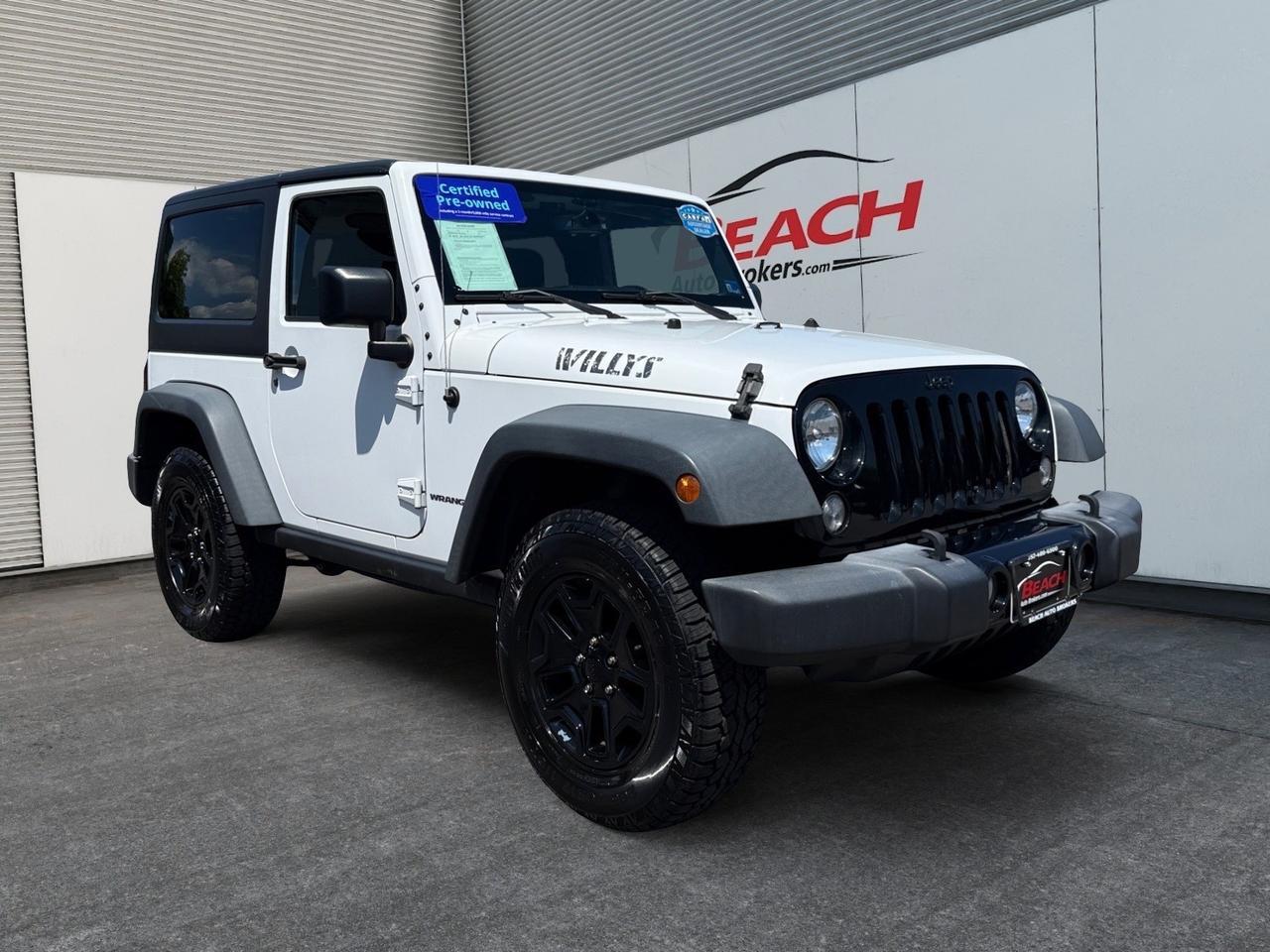
Owning A Flat-fendered Willys Wheeler: Practical Considerations
While the allure of owning a piece of automotive history is strong, potential owners should be aware of the practicalities involved in acquiring and maintaining a vintage vehicle like the Jeep Willys Wheeler with flat fenders.
Sourcing A Vehicle
Finding a good example of a flat-fendered Willys Wheeler can take time and patience. They are often found through online marketplaces, specialized classic car dealers, and word-of-mouth within the Jeep community. When searching, it’s crucial to inspect the vehicle thoroughly for rust, particularly in the frame, floor pans, and body mounts, as these areas are prone to corrosion. Also, check the condition of the engine, transmission, transfer case, and drivetrain for signs of wear or damage.
The specific model (CJ-2A, CJ-3A, CJ-3B) might influence your choice based on desired features or engine type. The CJ-3B, with its Hurricane engine and high hood, offers slightly more power but a different aesthetic than the earlier models.
Restoration And Maintenance
Most flat-fendered Jeeps will require some level of restoration or ongoing maintenance. Parts availability can vary; while many common wear items are readily available, finding original or specific body panels might be more challenging. Fortunately, the simplicity of the design makes many repairs accessible to the home mechanic. Understanding the vehicle’s mechanicals is a key part of the ownership experience.
Regular maintenance is crucial. This includes routine tasks like oil changes, fluid checks, greasing suspension components, and inspecting brakes.
The leaf spring suspension, for instance, often requires periodic greasing at the shackle points.
Performance And Driving Experience
It’s important to manage expectations regarding the driving experience. These Jeeps were not designed for high-speed highway cruising. Their basic suspension and steering systems mean they can be less comfortable and more physically demanding to drive on paved roads compared to modern vehicles. Expect a bumpy ride, significant road noise, and steering that requires constant attention.
However, on the trail, the experience is entirely different. The direct connection to the road, the mechanical sounds, and the feeling of control over the terrain are incredibly rewarding. For many, this raw, engaging driving experience is precisely why they choose a flat-fendered Jeep.
Cost Of Ownership
The initial purchase price of a flat-fendered Willys Wheeler can range widely depending on its condition, originality, and model. A project vehicle might be acquired for a few thousand dollars, while a fully restored, concours-quality example could command tens of thousands. Beyond the purchase price, factor in the costs of maintenance, repairs, parts, and potential restoration work. Insurance for classic vehicles is often more affordable than for daily drivers.
Common Modifications And Upgrades
Many owners choose to modify their flat-fendered Jeeps to enhance their usability or performance. Some common upgrades include:
- Engine Swaps: Replacing the original engine with a more modern, powerful, or fuel-efficient one (e.g., a Chevrolet V6, or a later Jeep 4-cylinder like the AMC 2.5L).
- Transmission Upgrades: Installing a transmission with more gears or an overdrive gear for better highway performance.
- Brake Upgrades: Converting from drum brakes to more effective disc brakes, especially on the front axle.
- Suspension Modifications: While many prefer to keep the original leaf springs, some opt for suspension lifts or more modern spring setups for improved articulation or ride comfort.
- Tire Upgrades: Fitting larger or more aggressive off-road tires.
- Interior Comforts: Adding sound deadening, more comfortable seats, or a modern stereo system.
Comparing Flat-fendered Willys Wheeler Models
While all flat-fendered Willys Wheeler Jeeps share a common lineage, there are distinct differences between the main civilian models: the CJ-2A, CJ-3A, and CJ-3B. Understanding these variations can help enthusiasts choose the model that best suits their preferences.
Here’s a look at some key differences:
| Feature | Willys CJ-2A (1945-1949) | Willys CJ-3A (1949-1953) | Willys CJ-3B (1953-1968) |
|---|---|---|---|
| **Engine** | Willys L-Head “Go Devil” (134 cu in, 60 hp) | Willys L-Head “Go Devil” (134 cu in, 60 hp) | Willys Hurricane F-Head (134 cu in, 70 hp) |
| **Hood Design** | Low hood, civilian grille | Low hood, civilian grille | **High hood** to accommodate taller engine |
| **Transmission** | T-90 3-speed manual | T-90 3-speed manual (revised gear ratios) | T-90 3-speed manual |
| **Rear Axle** | Spicer Model 41 | Spicer Model 44 (stronger) | Spicer Model 44 |
| **Body Features** | Tailgate, side-mounted spare, civilian grille | Similar to CJ-2A, minor trim changes | Similar to CJ-3A, but with high hood |



















