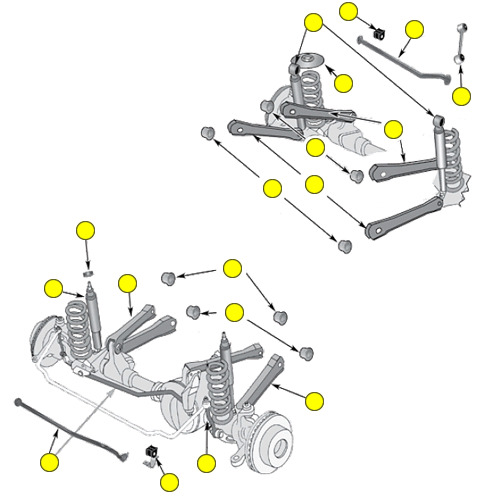
The Jeep TJ is loved by off-road fans for its strong build and excellent handling on rough terrain. At the heart of this capability is its suspension system.
Understanding the Jeep TJ suspension diagram helps owners maintain, upgrade, or repair their vehicle. This article breaks down the main suspension parts, explains how they work together, and gives practical guidance for both daily drivers and off-road enthusiasts.
Key Parts Of The Jeep Tj Suspension
The Jeep TJ uses a solid axle suspension with coil springs and control arms. This design offers both strength and flexibility for challenging trails.
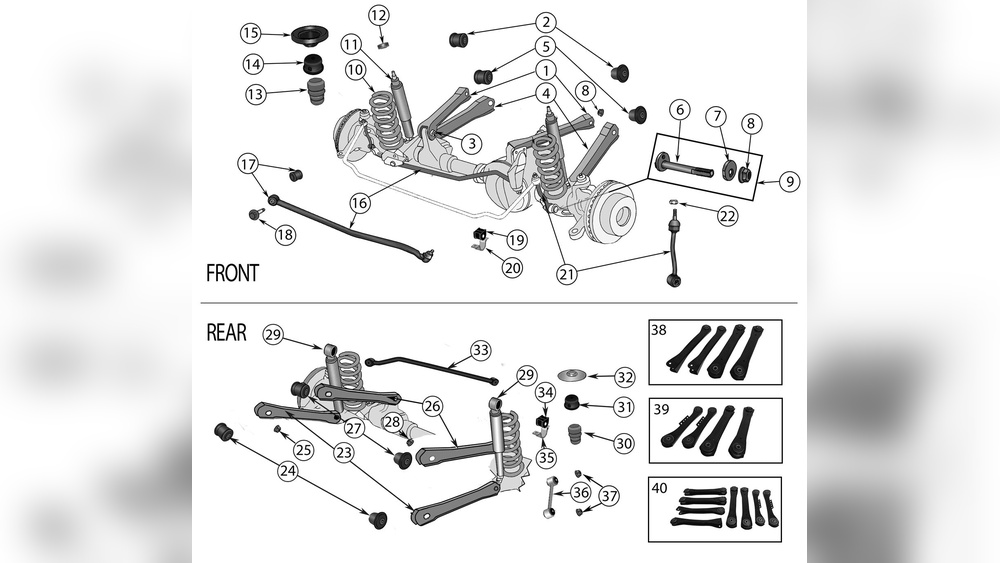
Front Suspension
The front suspension uses a solid Dana 30 axle. Important parts include:
- Coil springs: Support the Jeep’s weight and absorb bumps.
- Shock absorbers: Control the up-and-down movement of the axle.
- Upper and lower control arms: Keep the axle in place and allow it to move up and down.
- Track bar: Prevents side-to-side movement of the axle.
- Sway bar: Reduces body roll during turns.
Rear Suspension
The rear uses a solid Dana 35 or Dana 44 axle. Main components are:
- Coil springs
- Shock absorbers
- Control arms (upper and lower)
- Track bar
- Sway bar
The basic layout front and rear is similar, but some differences exist in geometry and length of parts.
Visualizing The Suspension: Diagram Breakdown
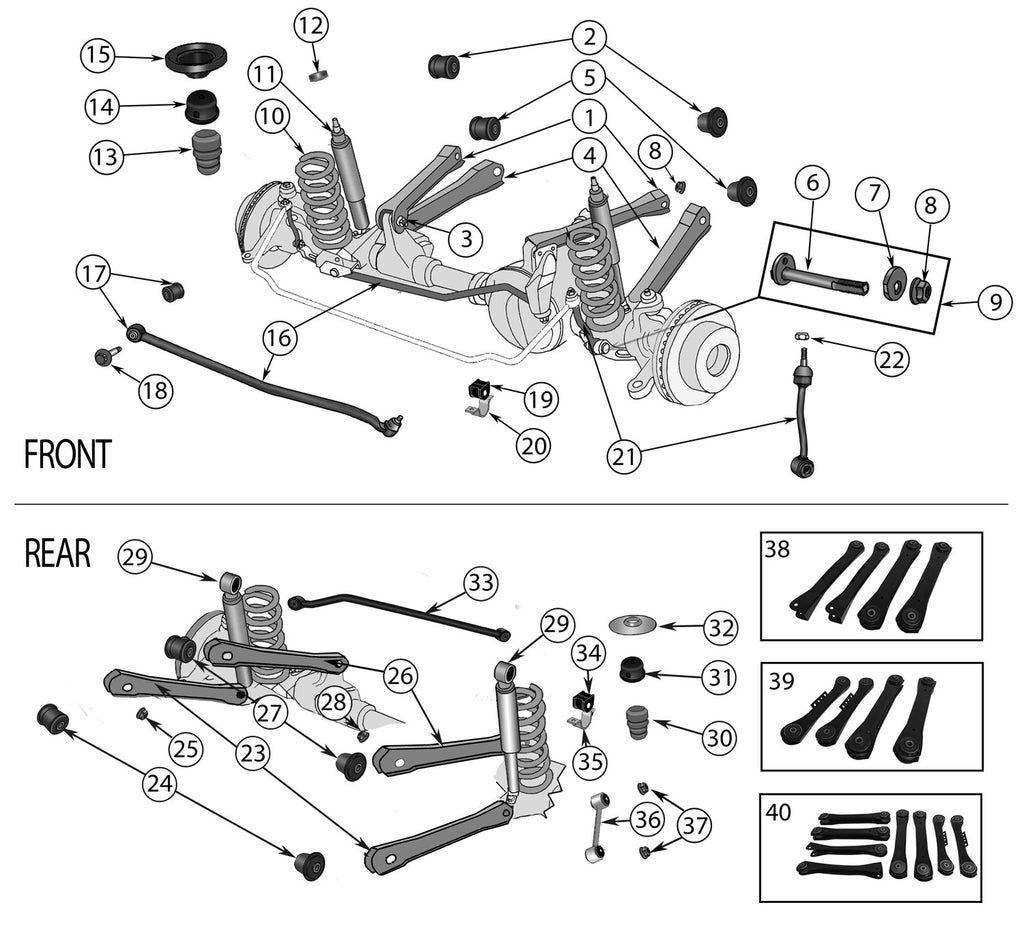
A suspension diagram shows how all these parts connect and interact. Here’s a simple reference for the Jeep TJ:
| Component | Location | Main Function |
|---|---|---|
| Coil Springs | Front & Rear | Support weight, absorb bumps |
| Shock Absorbers | Front & Rear | Control axle movement |
| Control Arms | Front & Rear | Axle positioning |
| Track Bar | Front & Rear | Limit side-to-side axle movement |
| Sway Bar | Front & Rear | Reduce body roll |
A beginner often overlooks the angle of the control arms and the importance of proper track bar alignment. Both are critical for safe driving and even tire wear.
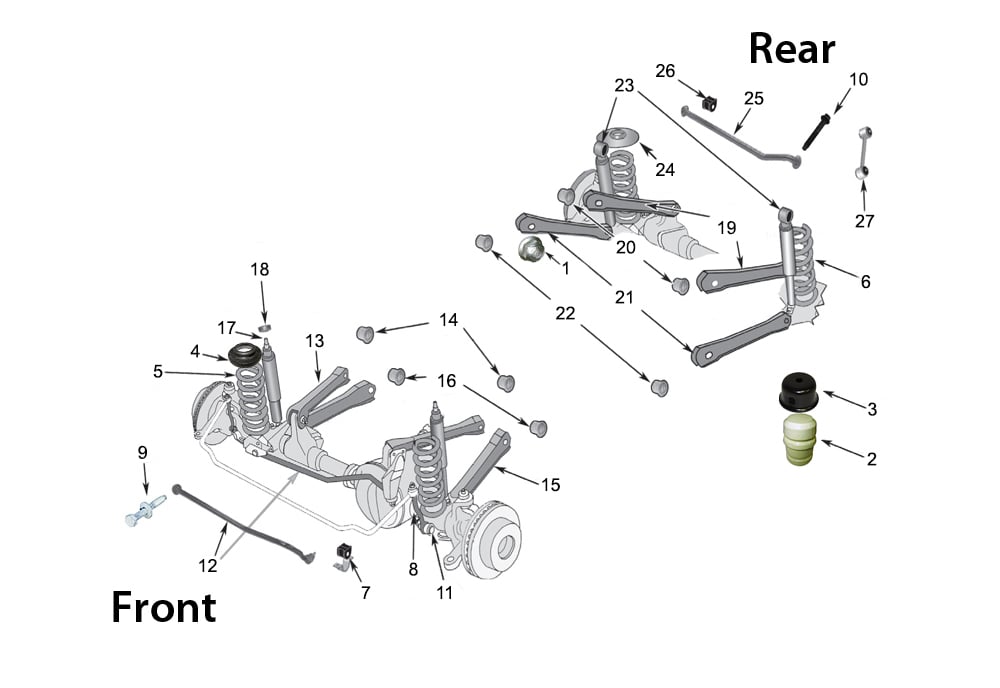
How The Suspension Works Together
When your Jeep TJ moves, the coil springs compress and expand over bumps. The shock absorbers slow this movement, making the ride smoother. Control arms keep the axles steady while letting them move up and down. The track bar stops the axle from shifting sideways, and the sway bar keeps the Jeep level during sharp turns.
If any of these parts wear out or are installed incorrectly, you may notice issues like poor handling, uneven tire wear, or vibrations.
Common Suspension Upgrades
Many Jeep TJ owners modify their suspension for better off-road performance or higher ground clearance.
Popular Upgrades
- Lift kits: Raise the Jeep for bigger tires and better clearance.
- Heavy-duty shocks: Improve control on rough trails.
- Adjustable control arms: Allow for better alignment after lifting.
- Quick disconnect sway bar links: Make it easy to improve wheel movement off-road.
Aftermarket parts are not always “better”—they need to match your driving style and Jeep’s use. For example, a 4-inch lift without the right control arms or track bar can make the Jeep hard to steer.
Comparing Stock Vs. Lifted Suspension
Here’s a quick look at how a stock and a typical lifted TJ suspension differ:
| Feature | Stock | Lifted (4-inch kit) |
|---|---|---|
| Ground Clearance | 8.8 inches | 12.5 inches |
| Ride Comfort | Good | Varies (can be firm) |
| Handling | Stable | May feel less stable |
| Tire Size | 30 inches | 33-35 inches |
Notice that a lift improves clearance but may affect handling and comfort.
Maintenance And Troubleshooting Tips
A well-maintained suspension keeps your Jeep safe and enjoyable. Here are some practical steps:
- Inspect bushings and joints every oil change. Look for cracks or looseness.
- Check shock absorbers for leaks or dents.
- Listen for clunks or squeaks. These often signal worn parts.
- Re-torque bolts after off-road trips or after installing new parts.
A common mistake is ignoring the track bar. Even a slightly loose track bar can cause “death wobble,” a scary vibration at speed. Always check it first if you notice steering shakes.
Choosing The Right Suspension Parts
When replacing or upgrading, focus on:
- Fitment: Ensure parts match your TJ model year (1997–2006).
- Quality: Choose trusted brands. Cheap parts often wear out faster.
- Purpose: Decide if you want a comfortable ride, off-road strength, or both.
Here’s a quick comparison of common control arm options:
| Type | Best For | Durability |
|---|---|---|
| Factory Stock | Daily driving | Good |
| Heavy-duty Fixed | Off-roading | Excellent |
| Adjustable | Lifts & custom setups | Very Good |
Upgrading just one part—like shocks—can sometimes make a big difference without a full suspension swap.
Non-obvious Insights For Tj Owners
Many beginners forget that alignment is critical after any suspension change. Even a small lift or part replacement can throw off steering angles, causing rapid tire wear or pull.
Another tip: Always check driveline angles after a lift. Incorrect angles can lead to vibration and damage your driveshaft or U-joints.
For more in-depth technical diagrams and official Jeep specs, you can visit the Jeep Wrangler TJ Wikipedia page.
The Jeep TJ’s suspension is strong, but it needs the right care and upgrades to stay safe and fun on and off the road. Knowing how the parts work—and checking them often—will keep your Jeep running smoothly.
Frequently Asked Questions
What Year Models Does The Jeep Tj Suspension Diagram Cover?
The Jeep TJ suspension diagram fits all TJ models made from 1997 to 2006. Differences between years are small, but always check your specific model before ordering parts.
Can I Install A Lift Kit Myself?
Yes, but you need basic tools and some experience. Lifting a Jeep changes suspension geometry, so a professional alignment is recommended after installation.
What Is “death Wobble” In A Jeep Tj?
“Death wobble” is a strong steering shake that happens at speed, usually from worn or loose suspension parts—especially the track bar or control arm bushings.
How Often Should I Check My Suspension?
Check key parts like bushings, shocks, and track bars at least every oil change, or before and after any serious off-roading.
Do I Need Adjustable Control Arms With A Lift?
For lifts over 2 inches, adjustable control arms are recommended. They help set the correct axle position and alignment, improving handling and reducing wear.