The Jeep TJ, built from 1997 to 2006, is famous for its off-road abilities and classic design. One key reason for its performance is the front suspension system.
Many Jeep owners want to understand how the suspension works, either for repairs, upgrades, or simply to know their vehicle better. A clear diagram can help, but you also need to know what each part does and how they connect.
This guide breaks down the Jeep TJ front suspension diagram, explains each part, and offers insights for both beginners and experienced Jeepers.
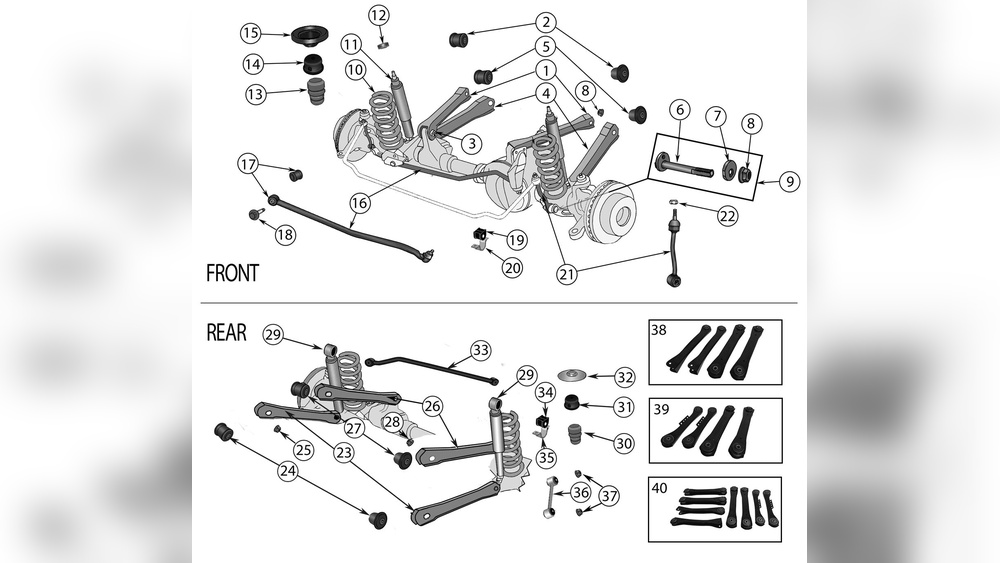
Key Components Of The Jeep Tj Front Suspension
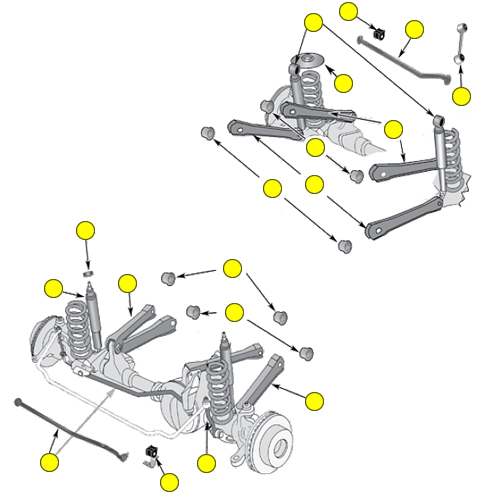
The front suspension system of a Jeep TJ uses a solid front axle and a coil spring, link-type design. This setup gives the TJ its well-known flexibility and strength. Here are the main parts you’ll find in a typical front suspension diagram:
1. Front Axle (dana 30 Or 44)
This is the main support and includes the differential and axle shafts. It holds the wheels and connects to the suspension links.
2. Coil Springs
These support the Jeep’s weight and absorb bumps. Located between the axle and the frame, they are critical for ride comfort and off-road movement.
3. Lower Control Arms
Two strong arms connect the axle to the frame, controlling forward and backward movement.
4. Upper Control Arms
These shorter arms link the axle to the frame and control axle rotation.
5. Track Bar (panhard Rod)
This bar keeps the axle centered under the Jeep, reducing side-to-side movement.
6. Sway Bar
Also called an anti-roll bar, it helps limit body roll during turns.
7. Sway Bar Links
These connect the sway bar to the axle, transferring forces.
8. Shock Absorbers
Shocks control the bounce and smooth out the ride.
9. Steering Linkage (drag Link, Tie Rod)
These parts connect the steering box to the wheels, allowing you to turn.
Typical Jeep Tj Front Suspension Diagram
Below is a simplified layout of the main parts:
| Part | Main Function | Location |
|---|---|---|
| Coil Spring | Absorbs bumps, supports weight | Between axle and frame |
| Lower Control Arm | Controls axle position | Axle to frame (lower position) |
| Upper Control Arm | Controls axle rotation | Axle to frame (upper position) |
| Track Bar | Keeps axle centered | Axle to frame (sideways) |
| Sway Bar | Reduces body roll | Across frame, front of vehicle |
| Shock Absorber | Dampens movement | Near coil spring, axle to frame |
How The Suspension Works Together
Each part has a specific job, but they work as a unit. For example, coil springs and shock absorbers handle bumps, while control arms keep the axle in place. The track bar and sway bar add stability.
A common beginner mistake is to focus on just one part, like swapping only the shocks for a smoother ride. In reality, good suspension performance comes from the system as a whole.
Replacing one part can change how other parts work.
Example: Off-road Vs. On-road
Off-road drivers often remove or disconnect the sway bar for more axle movement (called “articulation”). This helps keep wheels on the ground over rocks. On the street, the sway bar is important for safety and handling.
Here’s a quick look at how the system changes for off-road use:
| Situation | Sway Bar | Result |
|---|---|---|
| On-Road | Connected | Stable, less body roll |
| Off-Road | Disconnected | More axle movement |
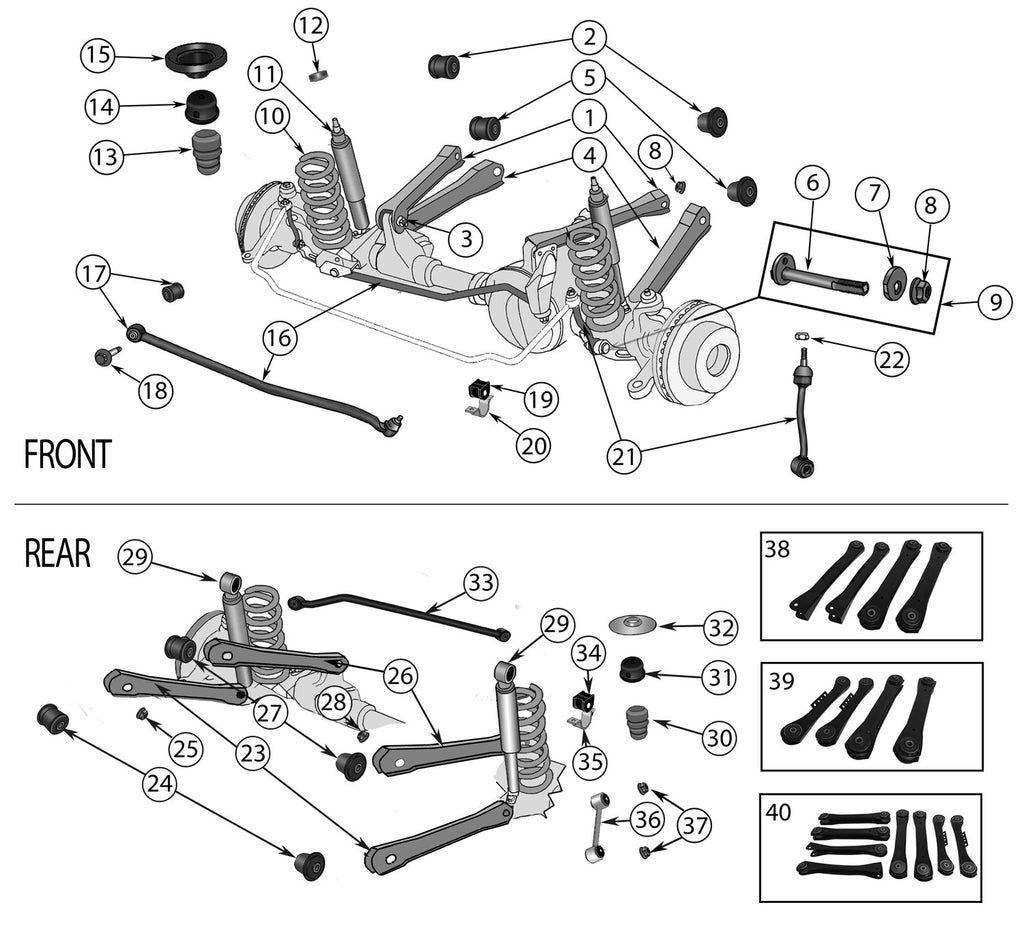
Common Suspension Problems And What They Mean
Understanding the diagram also helps with troubleshooting. Here are a few issues Jeep TJ owners often face:
- Death Wobble: Violent steering shake, usually from worn bushings or loose track bar.
- Sagging Front End: Can mean weak coil springs.
- Clunking Noises: Often due to worn control arm bushings or sway bar links.
- Poor Handling: May result from a bent track bar or damaged shocks.
Regular inspection of each suspension part is important. Replacing bushings and bolts as they wear out can prevent bigger problems.
Upgrades And Modifications
Many Jeep TJ owners upgrade their suspension for better off-road use or to fit larger tires. Popular changes include:
1. Lift Kits
These raise the Jeep’s body for more ground clearance. They include longer coil springs, new shocks, and often longer control arms.
2. Adjustable Control Arms
Allow fine-tuning of axle position, which helps with alignment after lifting.
3. Heavy-duty Track Bars
Stronger and less likely to bend, especially important with larger tires.
4. Quick-disconnect Sway Bar Links
Let you disconnect the sway bar easily for off-road trips.
Important Note
Upgrading one part, like just the springs, without matching shocks or control arms, can create new problems. For example, too tall springs with stock shocks can cause poor handling or even damage. Always check if parts are compatible.
Here’s a basic comparison between stock and lifted suspension setups:
| Feature | Stock Suspension | Lifted Suspension |
|---|---|---|
| Ride Height | Standard | Higher |
| Ground Clearance | Normal | Improved |
| Handling | Stable | Can be less stable if not set up right |
| Tire Size | Smaller | Larger possible |
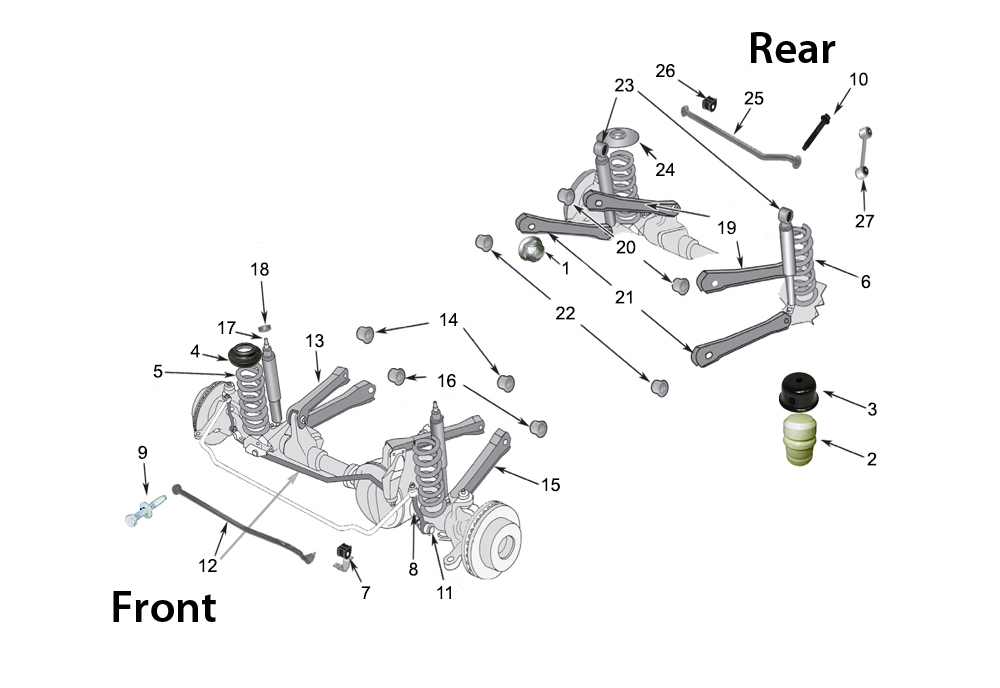
Non-obvious Insights For Jeep Tj Owners
One thing many new owners miss is the relationship between alignment and suspension parts. After changing control arms or the track bar, a professional alignment is often needed. Driving without proper alignment can quickly wear out tires and make steering unsafe.
Another overlooked detail is bushing quality. Cheap rubber bushings wear out fast, especially if you drive off-road often. Upgrading to polyurethane or high-quality rubber bushings can improve both performance and lifespan.
Where To Find Jeep Tj Front Suspension Diagrams
Official Jeep service manuals have the most accurate diagrams, but many trustworthy diagrams are available online. Make sure any diagram matches your model year, as small changes exist between years and special editions. For a reliable visual reference, check resources like the Jeep TJ Wikipedia page.
Frequently Asked Questions
What Is The Purpose Of The Track Bar In A Jeep Tj?
The track bar keeps the front axle centered under the vehicle. Without it, the axle could move side-to-side, causing handling problems or steering issues.
How Do I Know If My Coil Springs Are Worn Out?
Common signs include a sagging front end, uneven ride height, or a rougher ride. If you notice these, inspect the springs for cracks or loss of shape.
Can I Lift My Jeep Tj With Just New Springs?
Technically yes, but it’s not recommended. Lift kits should include longer shocks and sometimes control arms and track bars to keep everything working safely and smoothly.
What Causes Death Wobble In The Front Suspension?
Death wobble is usually caused by worn or loose suspension parts, especially the track bar, control arms, or steering components. Worn bushings and unbalanced tires can also contribute.
Is The Jeep Tj Front Suspension Good For Off-road Use?
Yes. The solid axle with coil springs provides great articulation and strength, making the Jeep TJ one of the most capable stock off-road vehicles.
A solid understanding of the Jeep TJ front suspension diagram helps you maintain, repair, or upgrade your Jeep with confidence. This knowledge ensures your TJ stays safe and ready for both the road and the trail.