When you look at a Jeep, you may see a tough, off-road-ready vehicle. But what makes a Jeep handle rough trails, climb rocks, and drive over mud with confidence?
The answer lies in its suspension system. Understanding the Jeep suspension diagram helps drivers, mechanics, and enthusiasts know how these vehicles perform and how to maintain or upgrade them for the best experience.
What Is A Jeep Suspension System?
The suspension system connects the Jeep’s frame to the wheels. It absorbs shocks from bumps, keeps tires on the ground, and controls how the Jeep moves. A good suspension gives both comfort on the road and strength off-road. Most Jeep models use a solid axle setup, but the design can change by model and year.
Key Parts In A Jeep Suspension Diagram
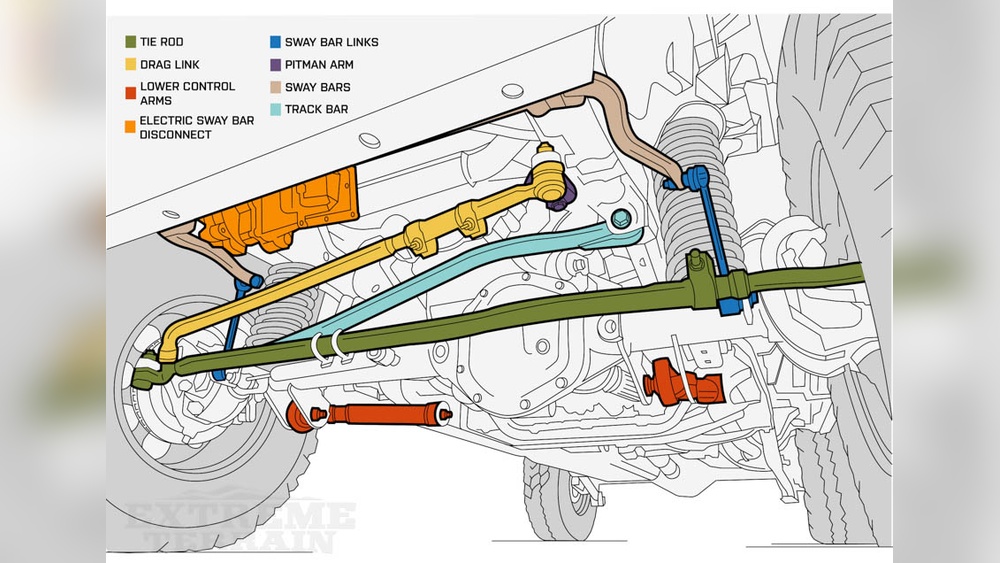
If you study a typical Jeep suspension diagram, you’ll see several main parts:
- Axles: Solid pieces connecting the left and right wheels. Most Jeeps use solid axles (front and rear) for strength.
- Springs: Usually coil springs in modern Jeeps. Older Jeeps used leaf springs.
- Shock absorbers: These dampen movement, reducing bounce after hitting bumps.
- Control arms: Connect axles to the Jeep’s frame, controlling movement.
- Track bar (Panhard bar): Keeps the axle centered under the Jeep.
- Sway bar: Reduces body roll during turns.
- Bump stops: Prevent damage if the suspension compresses fully.
- Steering linkage: Connects the steering to the wheels.
Below is a simple comparison of suspension types found in different Jeep generations:
| Model | Front Suspension | Rear Suspension |
|---|---|---|
| Jeep CJ (1945-1986) | Leaf Spring | Leaf Spring |
| Jeep Wrangler YJ (1987-1995) | Leaf Spring | Leaf Spring |
| Jeep Wrangler TJ (1997-2006) | Coil Spring | Coil Spring |
| Jeep Wrangler JK/JL (2007+) | Coil Spring | Coil Spring |
How Jeep Suspension Works
The suspension allows the Jeep to move over uneven ground while keeping the body stable. Here’s a basic example: When a wheel hits a rock, the coil spring compresses, the shock absorber slows the bounce, and the control arms guide the axle’s movement. The track bar keeps everything lined up, and the sway bar stops too much body lean.
Solid Axle Vs Independent Suspension
Most Jeeps use solid axles for both front and rear. This means both wheels on an axle move together. This design is stronger for off-roading but less smooth on pavement. Some modern SUVs and trucks use independent suspension, where each wheel moves separately. Jeeps choose solid axles because they are better for rock crawling and trail driving.
A quick comparison:
| Suspension Type | Main Advantage | Main Weakness |
|---|---|---|
| Solid Axle | Strength & Articulation | Rougher Ride |
| Independent | Smoother On-Road | Less Off-Road Strength |
Reading A Jeep Suspension Diagram
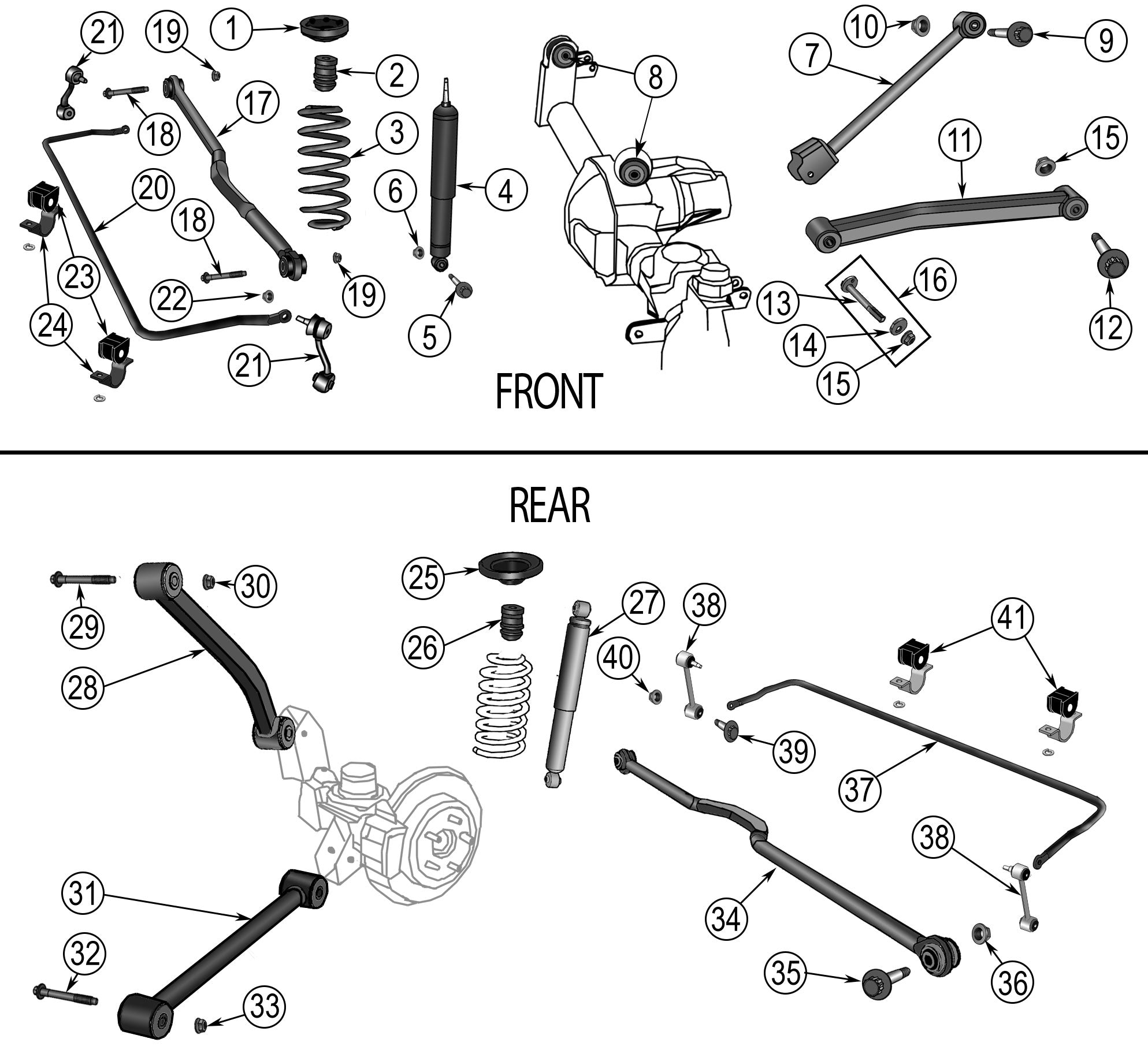
A suspension diagram is a drawing that shows how all the parts connect. You’ll see lines for the frame, axles, springs, and linkages. Diagrams help you:
- Identify worn or broken parts
- Plan upgrades (like lift kits)
- Understand how changes affect handling
For example, if you want to add a lift, the diagram shows where longer coils, control arms, or track bars are needed.
Common Suspension Upgrades
Jeep owners often upgrade the suspension for better off-road ability or to fit larger tires. Popular upgrades include:
- Lift kits: Raise the body for more ground clearance.
- Heavy-duty shocks: Handle rougher terrain and bigger bumps.
- Adjustable control arms: Fine-tune wheel position and handling.
- Sway bar disconnects: Allow more axle movement for rock crawling.
Upgrading suspension can change how a Jeep handles on the street. For example, a tall lift kit may make the Jeep less stable during sharp turns.
Always check the diagram to see how new parts fit together.
Maintenance Tips For Jeep Suspension
Keeping your Jeep’s suspension in good shape is important for safety and performance. Here are some tips:
- Check bushings and joints for wear or cracks.
- Inspect shocks for leaks or dents.
- Tighten all bolts after off-road trips.
- Lubricate moving parts to reduce squeaks and rust.
One insight many beginners miss: Even small changes, like a new track bar, can affect the alignment and how the Jeep drives. Always get an alignment after major suspension work.
Another common mistake: Focusing only on lifts and ignoring driveline angles. Raising a Jeep too much without correcting these can cause vibrations and damage.
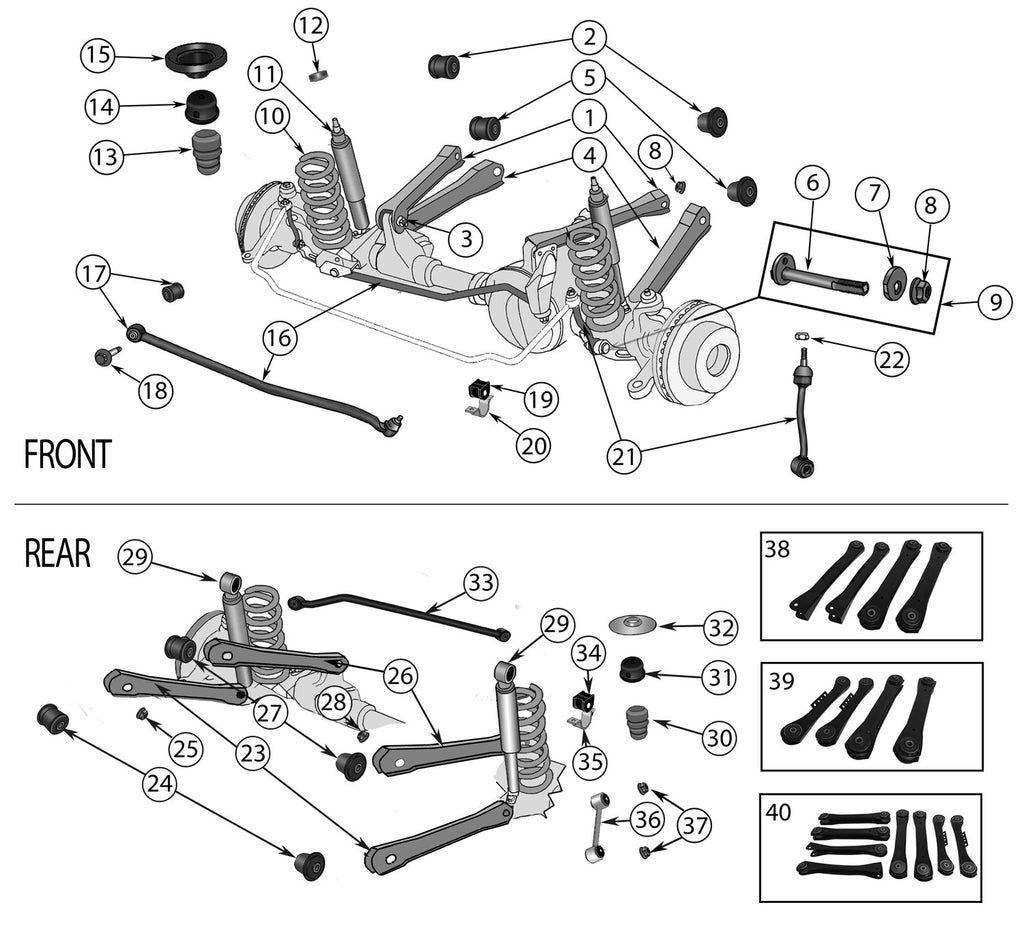
Example: Jeep Wrangler Jl Suspension Layout
Let’s look at the Jeep Wrangler JL (2018+), one of the most popular modern Jeeps:
- Front and rear coil springs
- Solid axles (Dana 30/44)
- Control arms (front: Upper/lower; rear: upper/lower)
- Track bars (front and rear)
- Sway bars (front with electronic disconnect on Rubicon models)
- Shock absorbers at each wheel
This setup offers great wheel movement for off-roading while still handling well on the road.
Here’s a simple layout showing key suspension links on a Wrangler JL:
| Component | Number (Front) | Number (Rear) |
|---|---|---|
| Coil Springs | 2 | 2 |
| Shock Absorbers | 2 | 2 |
| Control Arms | 4 | 4 |
| Track Bar | 1 | 1 |
| Sway Bar | 1 (Disconnectable) | 1 |
Why Jeep Suspension Matters For Off-roading
Off-road, the suspension is more important than horsepower or tires. It keeps all four wheels on the ground for traction, and absorbs sharp impacts.
For example, when rock crawling, a Jeep’s solid axle design helps the wheels flex up and down, keeping grip even on uneven surfaces.
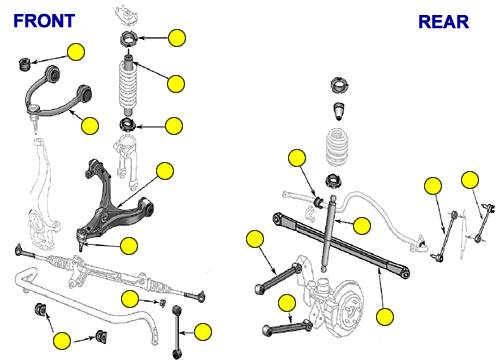
A well-understood suspension diagram helps you see which parts can be upgraded for better articulation (wheel movement) or ground clearance. This is why many Jeep fans study diagrams before changing anything.
If you want to learn more about vehicle suspension systems in detail, the Wikipedia page on vehicle suspension is an excellent reference.
Frequently Asked Questions
What Is The Main Difference Between Jeep Cj And Wrangler Suspension?
The Jeep CJ used leaf springs front and rear, which are stiff but simple. The Wrangler (from TJ onward) uses coil springs for a smoother ride and better off-road movement.
Can I Upgrade My Jeep Suspension By Myself?
Many upgrades, like shocks or sway bar links, are DIY-friendly if you have basic tools. However, complex work (like installing a lift kit) may require special equipment or professional help.
How Does A Lift Kit Affect My Jeep?
A lift kit raises the Jeep for larger tires and more ground clearance, but it can change steering, handling, and driveline angles. Always align your Jeep after a lift.
What Should I Check First If My Jeep Suspension Makes Noise?
Check bushings, joints, and shocks for wear or looseness. Squeaks often mean dry bushings, while clunks may mean loose bolts or worn parts.
Is Solid Axle Better For Off-roading Than Independent Suspension?
For most Jeep uses, a solid axle offers better strength and wheel movement on rough trails. Independent suspension is smoother on highways but less durable for rock crawling.
A strong suspension is the heart of any Jeep. By understanding the diagram and each part’s role, you can keep your Jeep safe, comfortable, and ready for any adventure.