Jeep Off-road Headlight Upgrade: See Further, Drive Safer
Your Jeep is built for adventure. It’s designed to take you off the beaten path, through mud, over rocks, and across challenging terrain.
But when the sun goes down, or the weather turns foul, your stock headlights can leave you in the dark.
Upgrading your Jeep’s off-road headlights isn’t just about aesthetics; it’s a critical safety and performance enhancement. Better visibility means you can react faster to obstacles, navigate trails with more confidence, and extend your off-roading adventures well into the night.
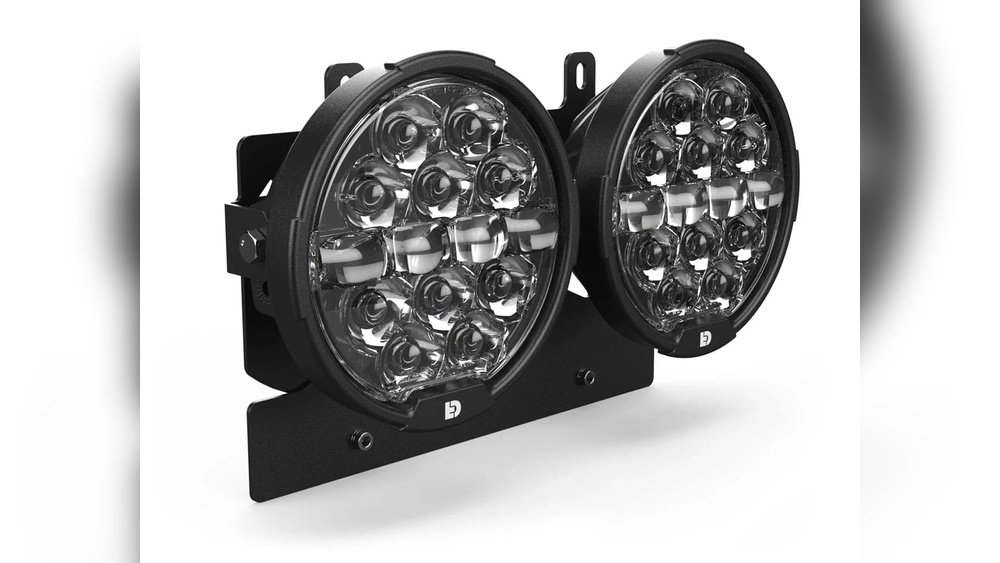
Many Jeep owners dream of exploring trails that others shy away from, especially after dark. However, factory headlights often lack the power and beam pattern needed for serious off-road use. They might be adequate for city driving, but on a dark, winding trail, they can feel like dim candles. This is where an off-road headlight upgrade becomes essential. A good upgrade can transform your night-time driving experience, revealing hazards you might otherwise miss and illuminating the path ahead with clarity. This guide will explore why upgrading is important, the different types of headlights available, what to look for, and how to make the right choice for your Jeep.
Why Upgrade Your Jeep’s Off-road Headlights?
The reasons for upgrading your Jeep's headlights go beyond simply wanting brighter lights. The stock headlights on most Jeeps, while meeting legal requirements for on-road use, are often a compromise.
They are designed to provide a broad, diffused light pattern that works in most everyday situations.
However, off-roading presents unique challenges that demand more from your lighting system.
Enhanced Visibility And Safety
The most significant benefit of upgrading your headlights is significantly improved visibility. Off-road trails are unpredictable. You might encounter sudden drops, large rocks, fallen branches, or wildlife that dart out from the darkness. Stock headlights often have a limited beam throw and a narrow field of vision, meaning you might not see an obstacle until it’s too late to react. Upgraded headlights, particularly those with advanced LED technology, can produce a much longer and wider beam, illuminating more of the trail ahead and to the sides. This allows for quicker decision-making and a safer driving experience, reducing the risk of damage to your Jeep or injury.
Navigating difficult terrain at night requires precise control and a clear understanding of your surroundings. Dim headlights can make it hard to judge distances, identify the best line to take, or spot subtle changes in the trail surface. Brighter, more focused headlights provide a clearer picture of the trail, helping you to confidently choose your path and avoid getting stuck or damaging your vehicle. This is especially important when tackling technical sections or driving in unfamiliar areas after sunset.
Extended Off-roading Opportunities
Why let the setting sun cut your adventure short? With upgraded headlights, you can continue exploring trails long after dark.
This opens up new possibilities for weekend trips and night runs, allowing you to experience the outdoors in a different, often more serene, light.
Many off-road enthusiasts enjoy the challenge and unique beauty of night driving, and powerful headlights are the key to safely enjoying these experiences.
Reduced Driver Fatigue
Driving with inadequate lighting, especially on challenging terrain, can be mentally exhausting. Your eyes strain to pick out details in the darkness, and you are constantly on high alert, anticipating unseen hazards. Better headlights reduce this strain by providing a clearer, brighter view of the trail. This allows you to focus more on driving and less on straining to see, leading to a more enjoyable and less fatiguing experience.
Aesthetic Appeal
While function is the primary driver for most off-road headlight upgrades, there’s no denying that modern LED headlights can significantly enhance the aggressive, rugged look of a Jeep. Many aftermarket headlights feature sleek designs, distinct DRL (Daytime Running Light) signatures, and a clean white light output that modernizes the vehicle’s appearance.

Types Of Off-road Headlights For Jeeps
When you start looking for headlight upgrades, you’ll quickly discover a few primary technologies. Each has its own advantages and disadvantages in terms of performance, cost, and longevity.
Halogen Headlights
Halogen headlights are the traditional type found in most vehicles, including older Jeeps. They work by passing an electric current through a tungsten filament, which heats up and emits light.
- Pros: They are typically the least expensive option upfront and are readily available. They also produce a warmer, yellowish light that some drivers prefer, as it can cut through fog and dust better than pure white light.
- Cons: Halogen bulbs are less efficient than other technologies, meaning they produce less light output for the amount of power they consume. They also have a shorter lifespan compared to LEDs and HIDs. Their light output is generally not as bright or as far-reaching as modern alternatives, making them less ideal for serious off-road use.
High-intensity Discharge (hid) Headlights
HID headlights, also known as Xenon headlights, produce light by creating an electrical arc between two electrodes within a gas-filled bulb. This arc excites the gas, causing it to emit a very bright light.
- Pros: HIDs produce a much brighter light than halogens and have a longer lifespan. The light they produce is often a crisp white or bluish-white, offering good clarity.
- Cons: HID systems require ballasts to regulate the voltage, adding complexity to the installation. They can also have a warm-up period, meaning they don’t reach full brightness instantly. While brighter than halogens, they are often outshone by modern LED technology in terms of efficiency and beam pattern control. They can also be more susceptible to damage from vibrations common in off-road environments.
Light Emitting Diode (led) Headlights
LED headlights are the most popular choice for off-road upgrades today. They use semiconductor devices that emit light when an electric current passes through them.
- Pros: LEDs are incredibly energy-efficient, producing more light output per watt than halogens or HIDs. They have an exceptionally long lifespan, often lasting tens of thousands of hours. They also turn on instantly to full brightness and are very durable due to their solid-state nature, making them resistant to vibration and shock. Modern LED headlights offer excellent beam control, allowing for precise patterns that maximize forward throw and peripheral visibility without causing excessive glare for oncoming drivers.
- Cons: The initial cost of quality LED headlights can be higher than other options. While they are generally durable, cheaper, unbranded LEDs might not perform as well or last as long.
Key Features To Consider For Off-road Headlights
When choosing an off-road headlight upgrade for your Jeep, several factors are more important than just raw brightness. The right combination of features will ensure you get the best performance and value.
Beam Pattern And Output
This is arguably the most critical factor. Headlights need to provide a long-range beam to see far down the trail and a wide beam to illuminate the sides, helping you spot obstacles and stay on track.
- Spot Beam: Concentrates light into a narrow, intense beam that travels a long distance. Great for seeing far ahead on open trails or highways.
- Flood Beam: Spreads light over a wide area, excellent for illuminating the immediate surroundings and providing peripheral vision.
- Combination Beam: Many modern LED headlights offer a combination of spot and flood optics within the same housing, providing both long-range visibility and wide-area illumination.
The lumens (a measure of light output) are important, but how that light is projected onto the road or trail is more crucial for off-road use. Look for headlights designed specifically for off-road applications, which often feature advanced lens and reflector designs to optimize beam patterns.
Durability And Construction
Off-roading is tough on vehicles. Your headlights need to withstand vibration, shock, dust, and water.
- Housing Material: Look for robust materials like die-cast aluminum. This provides good heat dissipation and durability.
- Lens Material: Polycarbonate lenses are common and offer good impact resistance. However, they can scratch over time. Some higher-end options might use tougher, scratch-resistant coatings.
- IP Rating: This indicates the level of protection against dust and water. An IP67 or IP68 rating is highly desirable, meaning the headlights are dust-tight and can withstand immersion in water. This is crucial for Jeeps that frequently encounter mud, water crossings, and harsh weather.
Color Temperature (kelvin)
The color temperature, measured in Kelvin (K), affects how the light appears.
- 3000K-4000K: Warmer, yellowish light. Can be better in fog, dust, or snow, as the longer wavelengths scatter less.
- 5000K-6500K: Cooler, white light. This is closer to natural daylight and is preferred by many for its clarity and ability to make colors appear more vibrant. It generally provides better detail perception.
- Above 6500K: Bluish light. While it might seem brighter, excessive blue light can cause glare and doesn’t necessarily improve visibility in adverse conditions.
For off-roading, a 5000K to 6000K range is often considered the sweet spot, offering a good balance of clarity and detail without excessive blue tint.
Power Consumption And Heat Dissipation
While LEDs are efficient, higher-powered LEDs generate more heat. Good heat management is essential for the longevity and performance of LED headlights.
- Heat Sinks: Look for headlights with substantial heat sinks on the back. These dissipate heat away from the LEDs, preventing them from overheating and dimming or failing prematurely.
- Fan Cooling: Some high-performance LED headlights use small, integrated fans for active cooling. While effective, these fans can be a potential point of failure over time, especially in dusty or wet environments.
Compliance With Regulations
While off-road lights are often used in situations where strict road legality is less of a concern, it’s important to be aware of regulations. Many aftermarket headlights are sold for “off-road use only” to avoid issues with road legality. If you plan to use your upgraded headlights on public roads, ensure they meet DOT (Department of Transportation) or ECE (Economic Commission for Europe) standards for road use. Non-compliant lights can lead to fines and safety issues for other drivers due to improper beam patterns or excessive glare.

Popular Jeep Off-road Headlight Upgrade Options
Jeeps, particularly the JK (2007-2018) and JL (2018-Present) generations, have a massive aftermarket for lighting. Here are some common types of upgrades and considerations:
Direct Replacement Led Headlights
These are designed to directly replace your factory headlights, usually with a plug-and-play harness. They are available in various sizes, with 7-inch round headlights being the most common for Wranglers.
- Pros: Easy installation, often requiring no modifications. They offer a significant improvement in brightness and beam pattern over stock halogens. Many come with integrated DRLs and turn signals.
- Cons: Quality varies greatly. Cheap options might have poor beam patterns or fail prematurely. High-quality units can be expensive.
Led Headlight Pods And Light Bars
These are auxiliary lights that supplement your main headlights. They come in various shapes and sizes, from small pods to long light bars.
- Pros: Offer extreme brightness and can be strategically placed to provide targeted illumination for specific off-road needs (e.g., a spot beam light bar for long-distance visibility, flood pods for close-range work). They can be wired to separate switches for independent control.
- Cons: Installation is more involved, often requiring custom mounting and wiring. They are strictly for off-road use only and cannot be legally used on public roads. They can also be a significant drain on your Jeep’s electrical system if not properly managed.
Fog Lights And Ditch Lights
These are smaller auxiliary lights often mounted on the bumper (fog lights) or A-pillars (ditch lights).
- Fog Lights: Designed to cut through fog, rain, and dust. They typically have a wide, low beam pattern to illuminate the area directly in front of the vehicle without reflecting too much light back at the driver.
- Ditch Lights: Small, powerful LED pods mounted on the cowl or A-pillar. They are usually wired to a switch and provide excellent forward and side illumination for spotting trail hazards or wildlife. Their placement is key to reducing glare.
Installation Considerations For Your Upgrade
Installing new headlights can range from a simple plug-and-play job to a more complex wiring project. Understanding the process helps in choosing the right product and preparing for the installation.
Plug-and-play Replacements
For many Jeep Wranglers (JK and JL), there are direct plug-and-play LED headlight kits. These kits use the factory headlight connector, making installation as simple as removing the old headlight and plugging in the new one.
- Process: This usually involves removing the headlight bezel, then the headlight retaining ring. The factory headlight can then be unplugged and removed. The new LED headlight plugs in, and the retaining ring, bezel, and any other trim pieces are reinstalled.
- Canbus Adapters: Some modern vehicles, including newer Jeeps, use a CANbus system that monitors headlights. Cheap LED replacements might not communicate correctly with the CANbus, leading to hyper-flashing turn signals or “bulb out” warnings. Quality LED kits often include CANbus adapters or built-in resistors to prevent these issues. Ensure your chosen kit is compatible with your Jeep’s electrical system.
Auxiliary Lighting Installation
Installing light bars, pods, or other auxiliary lights is more involved.
- Mounting: You’ll need appropriate mounting brackets. These can be specific to your Jeep model (e.g., A-pillar mounts, bumper mounts) or universal.
- Wiring: This is the most complex part. You’ll typically need to run wires from the lights through the firewall into the cabin to a switch. It’s highly recommended to use a relay and fuse for safety. A relay ensures that the main power draw from the lights doesn’t overload your Jeep’s factory wiring or switches. The fuse protects the circuit from shorting out.
- Wiring Harnesses: Many auxiliary light manufacturers offer pre-made wiring harnesses that include relays, fuses, and switches, simplifying the process.
- Professional Installation: If you’re not comfortable with electrical work, it’s best to have auxiliary lights installed by a professional.
Aiming Your Headlights
Even with upgraded headlights, proper aiming is crucial for optimal performance and to avoid blinding other drivers.
- On-Road vs. Off-Road: For headlights intended for road use, aim them according to DOT specifications. This typically involves parking your Jeep on a level surface 25 feet away from



















