The Jeep Grand Cherokee is a popular SUV, known for its capability and comfort. When it comes to keeping your Grand Cherokee’s headlights in top shape, understanding the correct headlight bulb type is crucial.
This isn't just about seeing better at night; it's about safety, proper illumination, and ensuring your vehicle complies with regulations. Driving with dim or faulty headlights is dangerous for you and other drivers.
Many owners face confusion when it's time to replace a burnt-out bulb or upgrade to brighter, more efficient options. The Grand Cherokee has seen several generations and model years, and each can use different types of bulbs.
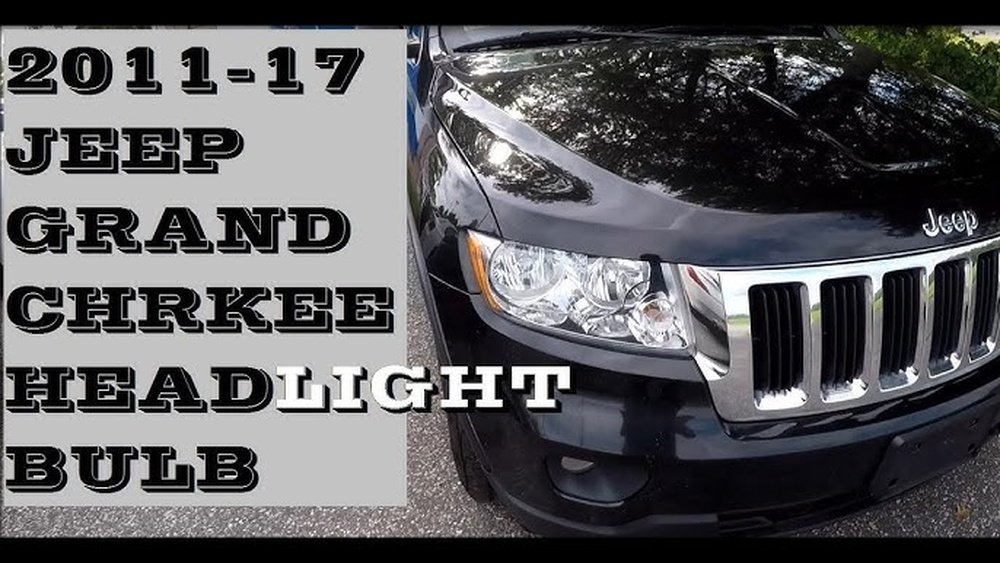
This guide will help you identify the correct bulb types for your specific Jeep Grand Cherokee, explain the different technologies available, and offer tips for replacement.
We’ll cover everything from the common H11 bulbs to advanced LED options, ensuring you have the knowledge to make an informed decision.
Understanding Headlight Bulb Basics
Before diving into specific types for the Jeep Grand Cherokee, it's helpful to understand how headlights work and the common terms used. Headlights are essential safety features.
They illuminate the road ahead, allowing you to see obstacles, road signs, and other vehicles in low-light conditions or at night.
Proper headlight function is also vital for being seen by others.
There are two main types of headlights: low beams and high beams.
- Low beams are used for normal driving. They are designed to illuminate the road ahead without blinding oncoming drivers.
- High beams provide a more powerful, longer-range light. They should only be used when there is no oncoming traffic and no vehicle ahead that you are following, as they can cause glare.
The type of bulb used can significantly impact the brightness, color temperature, and lifespan of your headlights. Common bulb technologies include halogen, HID (High-Intensity Discharge), and LED (Light-Emitting Diode).
Halogen Bulbs
Halogen bulbs are the most traditional type of headlight bulb. They work by passing an electric current through a tungsten filament, which heats up and produces light.
This filament is enclosed in a glass bulb filled with halogen gas (like iodine or bromine).
The halogen gas helps to prevent the filament from evaporating too quickly, extending the bulb’s life compared to older incandescent bulbs.
Pros:
- Affordable: Halogen bulbs are generally the least expensive option.
- Easy to find: They are widely available in auto parts stores.
- Simple installation: They are usually a direct replacement for existing bulbs.
Cons:
- Lower brightness: Compared to HID and LED, halogen bulbs offer less light output.
- Shorter lifespan: They typically last between 400 to 1,000 hours.
- Less energy-efficient: They consume more power to produce less light.
Hid (high-intensity Discharge) Bulbs
HID bulbs, often called Xenon lights, work differently than halogens. Instead of a filament, they use an electric arc to ignite xenon gas.
This arc creates a very bright light. HID systems require a ballast to provide the high voltage needed to start the arc and then regulate the current.
Pros:
- Brighter light: HID bulbs produce significantly more light than halogen bulbs, improving visibility.
- Longer lifespan: They can last between 2,000 to 3,000 hours.
- More energy-efficient: They use less power than halogen bulbs once ignited.
- Daylight-like color: They often have a whiter, more natural light color.
Cons:
- More expensive: HID bulbs and the necessary ballasts are pricier than halogens.
- Complex installation: Replacing an HID bulb can be more involved, especially if the ballast needs replacement.
- Warm-up time: They take a few seconds to reach full brightness.
- Potential glare: If not properly aimed, their brightness can cause glare for other drivers.
Led (light-emitting Diode) Bulbs
LED bulbs are the latest technology in automotive lighting. They use semiconductors to produce light when an electric current passes through them.
LEDs are highly efficient, durable, and offer a bright, crisp light.
Pros:
- Exceptional brightness: LEDs are the brightest option, offering superior road illumination.
- Longest lifespan: They can last 15,000 to 30,000 hours or more.
- Highly energy-efficient: They consume the least amount of power.
- Instant on: They reach full brightness immediately.
- Durable: They are resistant to vibration and shock.
- Modern look: They often provide a clean, white light that enhances the vehicle’s appearance.
Cons:
- Most expensive: LED bulbs are the most costly upfront.
- Complex installation: Some LED kits require modifications or specific wiring.
- Heat management: LEDs generate heat, and their performance can be affected if not properly cooled (often with heatsinks or fans).
- Legality: In some regions, aftermarket LED bulbs might not be street-legal if they aren’t designed as direct replacements for the original halogen or HID bulbs and lack proper DOT certification.
Identifying Your Jeep Grand Cherokee’s Headlight Bulb Type
The exact headlight bulb type for your Jeep Grand Cherokee depends heavily on its model year and trim level. Jeep has used various bulb technologies across different generations of the Grand Cherokee. The most reliable way to find out is to check your owner’s manual or inspect the existing bulbs.
Checking Your Owner’s Manual
Your Jeep Grand Cherokee owner's manual is the definitive source for this information. It typically contains a section on maintenance or specifications that lists the correct bulb types for headlights, taillights, and other exterior lights.
Look for sections related to "Lighting," "Bulb Replacement," or "Specifications.
“
Inspecting The Existing Bulbs
If you can safely access your headlight bulbs, you can often find the bulb type printed directly on the bulb’s base or its glass.
- Access the Bulbs: Open the hood and locate the back of the headlight assembly. You may need to remove a dust cover or other components to get a clear view.
- Identify Markings: Look for markings like “H11,” “9005,” “H7,” “D1S,” etc., printed on the plastic or metal base of the bulb. The type is usually in a small font.
- Note the Technology: If your Grand Cherokee has HID or LED headlights from the factory, the system will be more complex than simple halogen bulbs. You might see a ballast for HID or integrated LED units.
Online Resources And Parts Catalogs
Many online auto parts retailers have vehicle-specific parts finders. By entering your Grand Cherokee's year, make, model, and sometimes trim, you can see compatible headlight bulbs.
Always cross-reference this information with your owner's manual if possible.

Common Headlight Bulb Types By Jeep Grand Cherokee Generation
Jeep has produced the Grand Cherokee for several decades, with distinct generations often using different lighting technologies. Here’s a general overview, but always verify for your specific vehicle year.
1st Generation (zj: 1993, 1998)
- Low Beam: Typically uses 9006 (HB4) bulbs.
- High Beam: Typically uses 9005 (HB3) bulbs.
These are standard halogen bulbs.
2nd Generation (wj: 1999, 2004)
- Low Beam: Often uses 9007 (HB5) dual-filament bulbs, which serve as both low and high beams in some configurations.
- High Beam: If separate, may also use 9007.
In some configurations, the 9007 bulb handles both functions. This is a halogen bulb.
3rd Generation (wk: 2005, 2010)
- Low Beam: Commonly uses H11 halogen bulbs.
- High Beam: Commonly uses 9005 (HB3) halogen bulbs.
Some higher trims might have offered optional HID (Xenon) headlights, which would use D1S bulbs and require a ballast.
4th Generation (wk2: 2011, 2026)
This generation saw more variation, with different trims offering halogen, HID, and later, LED options.
- Early Models (approx. 2011-2013):
- Low Beam: Often H11 halogen.
- High Beam: Often 9005 (HB3) halogen.
- Higher trims might have featured HID (D3S) bulbs for low beams.
- Later Models (approx. 2014-2026):
- Base models might still use H11 for low beams and 9005 for high beams.
- Higher trims (like Overland, Summit, SRT) increasingly featured HID (D3S) headlights, often with projector lenses.
- Some of the very latest models or specific packages might have introduced LED headlights as standard or optional, but these are often integrated units rather than simple bulb replacements.
5th Generation (wl: 2026, Present)
- Standard Headlights: Typically use H11 for low beams and 9005 for high beams.
- LED Headlights: Higher trims often come standard with full LED headlight assemblies. These are usually not serviceable by simply replacing a bulb but may have replaceable LED modules or entire headlight units.
Important Note: This is a general guide. Jeep frequently updates options and packages. Always confirm the specific bulb type for your exact Grand Cherokee model year and trim.
Decoding Bulb Numbers And Types
Automotive headlight bulbs have specific codes that indicate their base type, filament configuration, and intended use. Understanding these codes helps when purchasing replacements.
Common Halogen Bulb Types
- H11: A popular single-filament bulb often used for low beams. It has a distinct angled base.
- 9005 (also known as HB3): A single-filament bulb commonly used for high beams. It has a different base than the H11.
- 9006 (also known as HB4): Similar to 9005 but designed for lower wattage, often used for low beams.
- 9007 (also known as HB5): A dual-filament bulb. This means it has two filaments inside, allowing it to function as both a low beam and a high beam from a single bulb. This design simplifies headlight assemblies.
Hid Bulb Types
- D1S, D2S, D3S, D4S: These are types of HID bulbs. The ‘S’ designation typically means they are designed for projector-style headlight housings. The number (1, 2, 3, 4) indicates the specific type of ignitor and ballast system they require. For example, D1S and D3S bulbs have the ignitor built into the bulb base, while D2S and D4S require an external ignitor. D3S is common in many modern Jeeps with factory HID.
Led Bulb Types
- LEDs are a bit different. While you can buy aftermarket LED bulbs designed to replace H11, 9005, etc., factory-integrated LED headlights are usually a complete module. Aftermarket LED bulbs often come as a kit with the LED chip, a driver (similar to a ballast), and a cooling system (heatsink or fan).

Key Considerations When Choosing Replacement Bulbs
When it’s time to replace your Jeep Grand Cherokee’s headlight bulbs, you have choices beyond just getting the exact same type. Consider these factors:
1. Brightness And Visibility
- Lumens: This is the measure of light output. Higher lumens mean a brighter light. If you frequently drive in rural areas or poorly lit conditions, brighter bulbs can significantly improve safety.
- Color Temperature (Kelvin): This describes the color of the light.
- Halogen: Typically around 3000K, producing a yellowish light.
- HID/LED: Often range from 4000K (whiter) to 6000K (bluish-white). A common preference for upgraded headlights is around 5000K for a clean, white light that mimics daylight.
- Warning: Extremely high Kelvin ratings (over 6000K) can produce a very blue or purple light, which reduces visibility in rain or fog and may be illegal for road use.
2. Lifespan
- Halogen: 400-1,000 hours.
- HID: 2,000-3,000 hours.
- LED: 15,000-30,000+ hours.
If you want a “set it and forget it” solution, LEDs offer the longest lifespan.
3. Energy Consumption
- LEDs are the most energy-efficient, followed by HIDs, and then halogens. Lower energy draw can slightly benefit your vehicle’s electrical system and potentially fuel economy, though the impact is usually minimal for headlights alone.
4. Legality And Dot Compliance
- This is crucial. For road use, headlight bulbs must meet Department of Transportation (DOT) standards in the US.
- Factory-installed lights (halogen, HID, LED) are designed and certified for your specific vehicle.
- Aftermarket bulbs, especially HIDs and LEDs, may not always be DOT-compliant. Look for markings indicating DOT approval. Bulbs that are significantly brighter or have a different beam pattern than the original equipment can cause glare and may result in a ticket.
- Example: Replacing H11 halogen bulbs with H11-base LED bulbs is often straightforward. However, if the LED bulb’s design alters the light beam pattern or intensity beyond legal limits, it could be problematic.
5. Cost
- Halogen: Cheapest upfront ($10-$30 per pair).
- HID Kits: Moderate to expensive ($50-$200+), including bulbs and ballasts.
- LED Bulbs: Moderate to expensive ($40-$150+ per pair).
- Factory LED/HID Assemblies: Can cost hundreds or even thousands of dollars if replacing the entire unit.
6. Ease Of Installation
- Halogen: Generally the easiest to install.
*



















