The Jeep Grand Cherokee has built a reputation for off-road strength and smooth highway handling. A big part of this comes from its front suspension system.
For owners and enthusiasts, understanding the layout and function of these parts isn’t just interesting—it’s essential for maintenance, troubleshooting, and upgrades. This article breaks down the Jeep Grand Cherokee front suspension diagram, explains each component, and offers practical advice for keeping your ride stable and safe.
Main Parts Of The Jeep Grand Cherokee Front Suspension
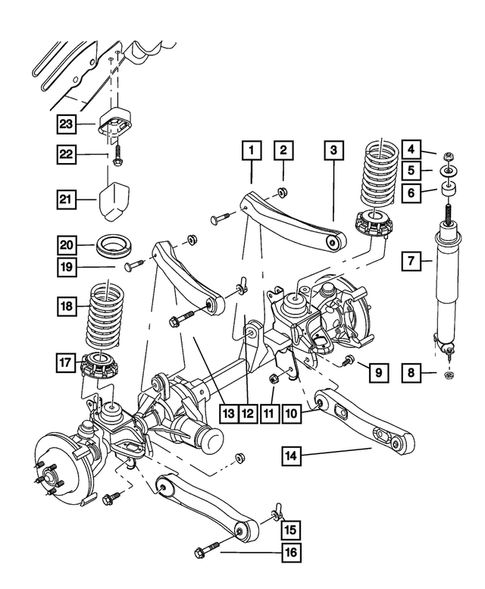
If you look at a typical front suspension diagram for a Jeep Grand Cherokee (WK, WJ, or newer models), you’ll see several key components. Each part works together to absorb bumps, keep the wheels aligned, and improve steering control.
| Component | Main Function | Common Issues |
|---|---|---|
| Control Arms | Connect wheel hub to frame, allow up/down movement | Worn bushings, bent arms |
| Ball Joints | Pivot point for steering and suspension | Play, noise, uneven tire wear |
| Shock Absorbers/Struts | Dampen bumps, control ride comfort | Leaking oil, poor handling |
| Sway Bar (Stabilizer Bar) | Reduces body roll during turns | Broken links, rattling noises |
| Steering Knuckle | Holds wheel hub, connects to suspension | Bent knuckle after impact |
Many beginners don’t realize how each part’s wear can lead to bigger issues—like how a worn ball joint can quickly affect tire life and safety.
How The Front Suspension Works
The Jeep Grand Cherokee uses an independent front suspension. This means the left and right wheels move separately over bumps, giving a smoother ride compared to old solid axle designs. Here’s how the key parts interact:
- Control arms hold the wheel hub but let it move up and down.
- Shock absorbers (or struts in some models) control the bounce from road impacts.
- Ball joints allow the wheels to turn left and right while moving up and down.
- The sway bar connects both sides, reducing body roll when you corner.
A simple example: when you hit a pothole with your right front tire, only that wheel moves up, while the left stays on the road. The sway bar helps keep the Jeep level, and the shocks absorb most of the impact.
| Component | Location in Diagram | Maintenance Interval (miles) |
|---|---|---|
| Lower Control Arm | Bottom, links wheel to frame | 60,000-100,000 |
| Upper Control Arm | Top, links wheel to frame | 60,000-100,000 |
| Shock Absorber | Vertically beside wheel hub | 50,000-70,000 |
| Sway Bar Link | Between sway bar and control arm | 40,000-80,000 |
Common Problems And Signs Of Wear
Front suspension issues show up in several ways. Jeep Grand Cherokee owners should watch for:
- Clunking noises when driving over bumps
- Steering wheel vibration at certain speeds
- Uneven tire wear (especially on the insides or outsides)
- Poor handling or wandering on the highway
- Leaking shocks (visible oil on the strut)
Many people miss that a loose or worn sway bar link can sound like a bad shock absorber. Always inspect both before replacing parts.
Reading A Suspension Diagram
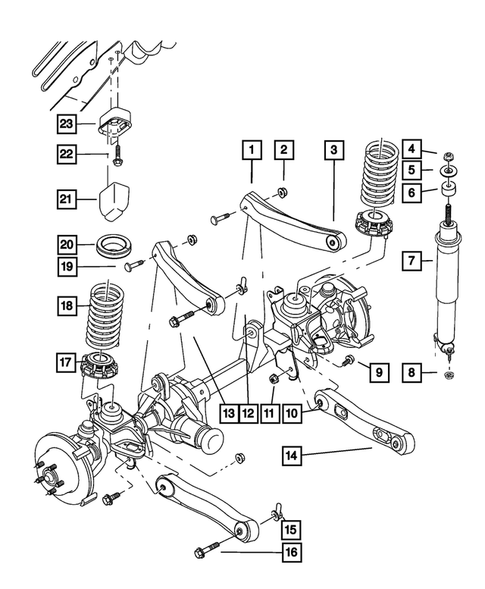
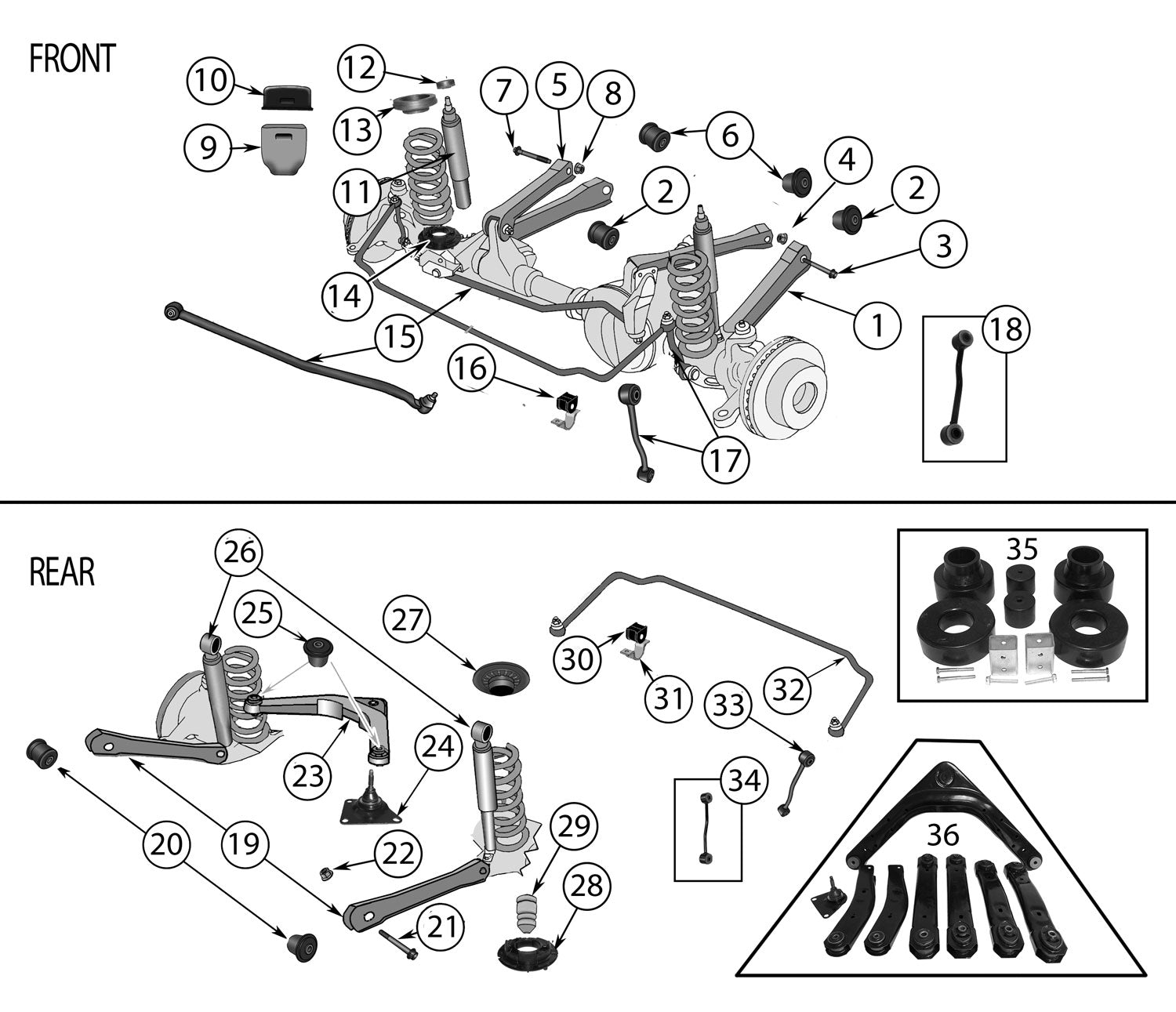
A front suspension diagram of the Jeep Grand Cherokee looks complex, but it gets easier when you know what to look for. Most diagrams show:
- The steering knuckle in the center, attached to the wheel hub
- Upper and lower control arms on each side of the knuckle
- Ball joints where the arms meet the knuckle
- Shock absorbers running vertically near the wheel
- The sway bar running horizontally across the Jeep, connected by short links
Here’s a quick layout:
| Diagram Symbol | Represents |
|---|---|
| Thick lines | Control arms |
| Circles at joints | Ball joints |
| Vertical cylinder | Shock absorber/strut |
| Curved bar | Sway bar |
| Box with hub | Steering knuckle |
Understanding these symbols helps when ordering parts or talking to mechanics.
Tips For Maintenance And Upgrades
Taking care of your front suspension extends the life of your Jeep Grand Cherokee and keeps you safe. Here’s what you should do:
- Inspect bushings and ball joints regularly—every oil change is a good time.
- Check for leaks around the shock absorbers.
- Tighten bolts to factory specifications after any repair.
- If you lift your Jeep for off-roading, upgrade to heavy-duty control arms and adjustable sway bar links.
- Use quality parts—aftermarket bushings can wear out faster than OEM.
A common beginner mistake is forgetting to realign the wheels after suspension work. This can lead to poor handling and rapid tire wear.
Why Diagrams Matter
A clear front suspension diagram is more than a picture. It helps you:
- Identify worn or broken parts quickly
- Communicate better with repair shops
- Order the correct replacements
- Understand upgrade options
For anyone working on their own Jeep, diagrams are as important as the right tools. If you’re looking for official diagrams, the Jeep service manual or reliable auto parts websites are good sources. You can also find helpful visuals at the Jeep Grand Cherokee Wikipedia page.
Frequently Asked Questions
How Do I Know If My Front Suspension Needs Repair?
Look for signs like clunking noises, uneven tire wear, or a bouncy ride. If your steering feels loose or you see leaks on the shocks, it’s time for an inspection.
Can I Replace Front Suspension Parts Myself?
Yes, with basic tools and safety gear, you can change parts like control arms, sway bar links, and shocks. However, some jobs (like ball joints) may need special tools or a shop press.
What’s The Difference Between A Strut And A Shock Absorber?
A strut supports the vehicle’s weight and is part of the suspension geometry. A shock absorber only controls the up-and-down motion. The Grand Cherokee usually uses shocks in front, but some models use struts.
Is Wheel Alignment Necessary After Suspension Work?
Absolutely. Any time you replace control arms, ball joints, or tie rods, you must get a wheel alignment. Skipping this step causes fast tire wear and poor handling.
Where Can I Find A Jeep Grand Cherokee Front Suspension Diagram?
You’ll find the most accurate diagrams in the official Jeep service manual or trusted parts websites. Online forums often have labeled diagrams shared by other owners.
Understanding your Jeep Grand Cherokee’s front suspension makes every drive safer and more enjoyable. With the right diagram and maintenance tips, you can keep your Jeep performing at its best—on or off the road.