The Jeep Commander is a capable SUV, but like any vehicle, its suspension system can wear out over time. When you notice issues like a rough ride, poor handling, or strange noises, it might be time to consider a Jeep Commander front suspension kit.
This guide will walk you through everything you need to know about these kits, from what they include to how to choose the right one and what to expect during installation.
A well-functioning front suspension is crucial for a comfortable and safe driving experience. It absorbs shocks from the road, keeps your tires in contact with the pavement for better grip, and ensures your vehicle handles predictably.
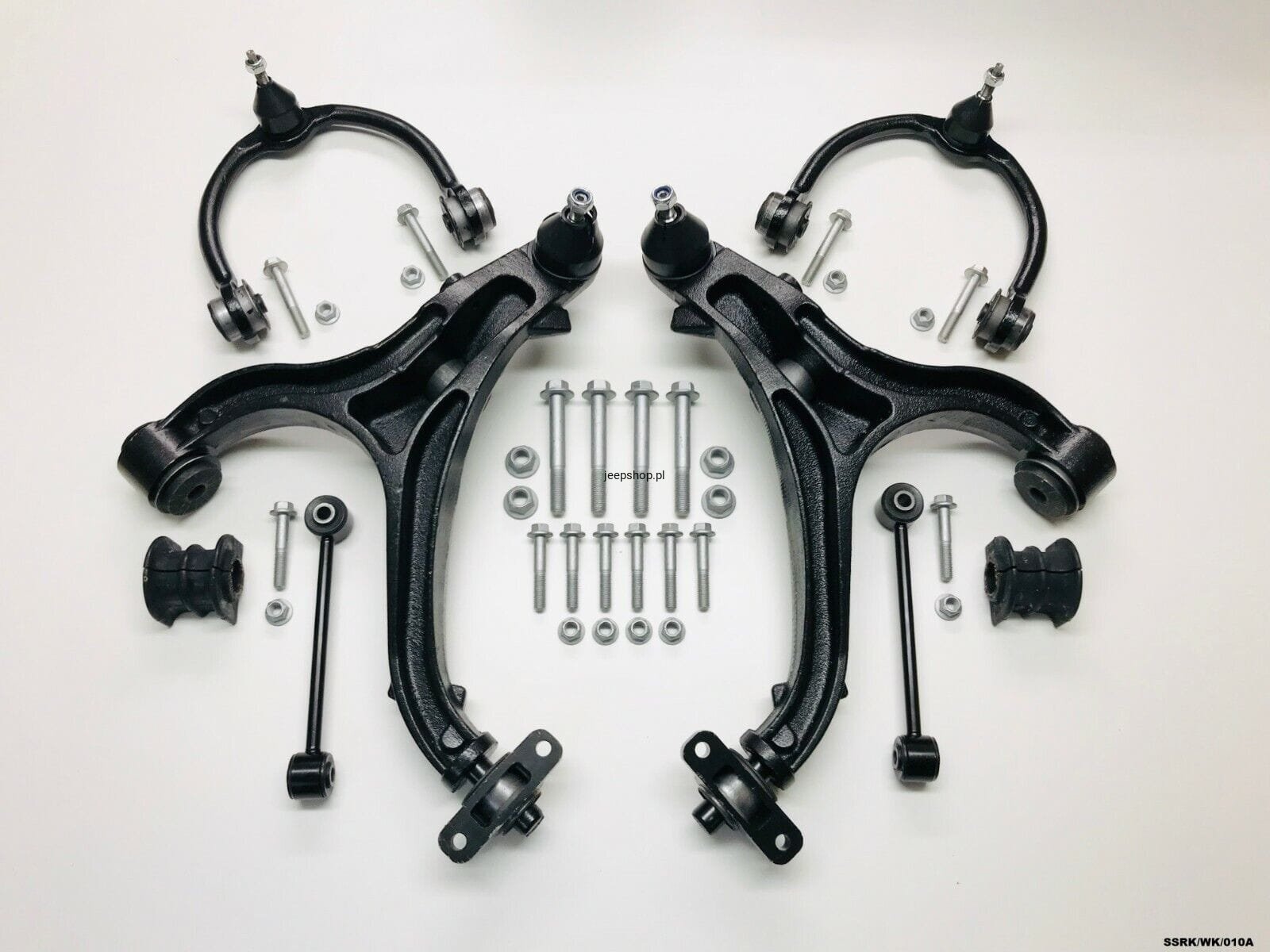
Over time, components like ball joints, control arms, tie rods, and shocks or struts can degrade, leading to a host of problems.
A front suspension kit is designed to replace these worn-out parts, restoring your Commander’s handling and ride quality.
Understanding Jeep Commander Front Suspension Components
Before diving into kits, it’s essential to understand the key parts that make up your Jeep Commander’s front suspension. Each component plays a vital role in how your vehicle rides and handles.
Ball Joints
Ball joints are spherical bearings that connect the control arms to the steering knuckles. They allow for smooth pivoting and turning of the wheels while keeping them properly aligned. When ball joints wear out, you might hear clunking noises, especially when turning or going over bumps, and experience looseness in the steering.
Control Arms
Control arms, also known as wishbones, are A-shaped or wishbone-shaped metal arms that connect the chassis of the vehicle to the steering knuckles. They pivot at two points on the frame and one point on the knuckle, allowing the suspension to move up and down. Control arms guide the wheel’s movement and maintain proper alignment. Worn bushings in the control arms can cause clunks, vibrations, and alignment issues.
Tie Rod Ends
Tie rod ends are part of the steering system, connecting the steering rack to the steering knuckle. They translate the turning of the steering wheel into the actual movement of the wheels. Worn tie rod ends can lead to sloppy steering, uneven tire wear, and difficulty in keeping the vehicle aligned. You might notice shimmying in the steering wheel or a feeling that the car is wandering.
Shocks And Struts
Shocks (shock absorbers) and struts are damping devices. Shocks absorb the bouncing motion of the springs, while struts are a structural part of the suspension that combine damping with load-bearing functions. They are critical for a smooth ride and maintaining tire contact with the road. Worn shocks or struts can cause a bouncy ride, excessive body roll in corners, and longer braking distances.
Sway Bar Links And Bushings
The sway bar (or anti-roll bar) is a torsion bar that connects the left and right sides of the suspension to reduce body roll during cornering. Sway bar links connect the sway bar to the control arms or other suspension components, and bushings hold the sway bar to the chassis. Worn links or bushings can cause clunking noises, especially at lower speeds or over uneven surfaces, and a noticeable increase in body lean when turning.
Why Replace Your Front Suspension?
Several factors can necessitate replacing your Jeep Commander’s front suspension components. Ignoring these signs can lead to safety hazards and more expensive repairs down the line.
Signs Of Worn Suspension
- Rough Ride: If your vehicle feels like it’s bouncing excessively, even on smooth roads, or if bumps feel much harsher than they used to, your shocks or struts might be worn.
- Clunking or Knocking Noises: These sounds, often heard when going over bumps, turning, or braking, can indicate worn ball joints, tie rod ends, or control arm bushings.
- Poor Handling: If your Jeep Commander pulls to one side, feels unstable in corners, or the steering feels loose or vague, it’s a strong sign that suspension or steering components are failing.
- Uneven Tire Wear: Worn suspension parts can cause your tires to wear out unevenly, with patterns like feathering or cupping appearing on the tire tread.
- Vehicle Sags: If one corner of your vehicle appears lower than the others, it could be a sign of a broken spring or a failing shock absorber.
The Importance Of A Functional Suspension
A properly functioning front suspension is not just about comfort; it’s a critical safety system. It ensures:
- Stable Braking: Good tire contact with the road, maintained by the suspension, is essential for effective braking. Worn parts can increase stopping distances.
- Predictable Steering: A tight and responsive suspension system allows you to steer accurately and confidently, especially in emergency maneuvers.
- Tire Longevity: Proper alignment and suspension function prevent premature and uneven tire wear, saving you money on replacements.
- Overall Vehicle Control: The suspension system works in conjunction with your tires and steering to keep the vehicle planted and controllable under various driving conditions.
Types Of Jeep Commander Front Suspension Kits
When you’re ready to replace worn parts, you’ll likely encounter various types of front suspension kits. Understanding the differences will help you choose the best option for your needs and budget.
Complete Overhaul Kits
These kits aim to replace almost every wearable suspension component in the front end. They are ideal for vehicles with high mileage or those that have experienced significant wear and tear. A comprehensive kit typically includes:
- Upper and lower ball joints
- Upper and lower control arms (or control arm bushings)
- Inner and outer tie rod ends
- Tie rod boots
- Sway bar links and bushings
- Shocks or struts
Pro Tip: If your Jeep Commander has over 100,000 miles or you’re unsure about the condition of individual components, a complete overhaul kit is often the most cost-effective and time-saving solution. It ensures all critical parts are renewed simultaneously.
Component-specific Kits
Sometimes, only a few parts of your front suspension are worn. In such cases, you might opt for a kit that focuses on specific areas:
- Ball Joint and Control Arm Kits: These kits contain the necessary ball joints and control arms (or bushings) for both sides of the front axle.
- Steering Component Kits: These focus on tie rod ends, drag links, and related hardware, addressing issues primarily related to steering looseness and alignment.
- Shock/Strut Kits: These kits include replacement shocks or struts, often sold in pairs for the front axle. Some may also include related mounting hardware.
Performance Or Heavy-duty Kits
For Jeep Commander owners who engage in off-roading, towing, or carry heavy loads, standard replacement parts might not suffice. Performance or heavy-duty kits offer:
- Stronger Materials: Components made from forged steel or with reinforced joints for increased durability.
- Improved Geometry: Some kits might offer slight modifications to suspension geometry for better off-road articulation or on-road stability under load.
- Adjustability: Certain high-end kits might include adjustable components for fine-tuning alignment or ride height.
Choosing The Right Jeep Commander Front Suspension Kit
Selecting the correct kit involves considering your vehicle’s specific needs, your driving habits, and the quality of the parts.
Identify Your Jeep Commander Model And Year
Suspension components can vary significantly between different model years and even trim levels of the Jeep Commander. Always ensure the kit you choose is explicitly listed as compatible with your exact year, make, and model. VIN (Vehicle Identification Number) lookups can be helpful here.
Assess Your Driving Needs
- Daily Driving: For everyday commuting and general use, a standard replacement kit from a reputable brand will likely be sufficient. Focus on quality and longevity.
- Off-Roading/Towing: If you frequently take your Commander off-road or tow heavy trailers, consider heavy-duty or performance kits. These are built to withstand more stress and abuse. Look for components made from stronger materials and with designs that offer increased travel or articulation if needed.
- Performance Driving: While less common for the Commander, if you push your vehicle hard on winding roads, enhanced damping or stiffer components might be considered, though this is usually secondary to off-road or heavy-duty needs.
Quality Of Components
Not all suspension parts are created equal. When choosing a kit, consider:
- Brand Reputation: Stick with well-known and trusted brands in the automotive aftermarket. Brands like Moog, ACDelco, Monroe, and Mopar (for OEM parts) generally offer good quality. Research reviews for specific kits.
- Material Quality: Look for kits that use high-quality steel forgings for control arms and ball joints, and durable rubber or polyurethane for bushings.
- Warranty: A good warranty (e.g., lifetime limited warranty on certain components) can be an indicator of the manufacturer’s confidence in their product’s durability.
What’s Included In The Kit?
Carefully examine the parts list for any kit. A truly comprehensive kit should include all the necessary components for a full front-end refresh.
Missing even small items like cotter pins or specific bolts can lead to delays and extra trips to the parts store.
- Check for Boots and Seals: Ensure that dust boots for ball joints and tie rod ends are included. These are critical for preventing dirt and water from contaminating the joints and causing premature failure.
- Hardware: Some kits come with new mounting hardware, while others expect you to reuse the old bolts and nuts. New hardware is always preferable for ensuring a secure fit and avoiding rust issues.
Installation Process: What To Expect
Installing a Jeep Commander front suspension kit is a moderately difficult job that requires specific tools and mechanical knowledge. If you’re not comfortable with these tasks, it’s best to have a professional mechanic perform the installation.
Tools Required
You’ll need a good set of tools, including:
- Floor jack and jack stands
- Socket set (metric and possibly some imperial sizes)
- Wrench set
- Torque wrench (essential for proper tightening)
- Ball joint separator tool (pickle fork or press type)
- Tie rod end puller
- Pry bars
- Hammer
- Wire brush for cleaning threads
- Penetrating oil (like PB Blaster) for loosening rusted bolts
- Safety glasses and gloves
Step-by-step Overview (simplified)
- Safety First: Park the Jeep on a level surface, engage the parking brake, and block the rear wheels. Loosen the front wheel lug nuts slightly.
- Lift and Support: Use a floor jack to lift the front of the vehicle and secure it with sturdy jack stands under the frame rails or designated support points. Never work under a vehicle supported only by a jack.
- Remove Wheels: Fully remove the lug nuts and take off the front wheels.
- Disassemble Old Components: This is the most labor-intensive part. You’ll need to disconnect tie rods, sway bar links, and then carefully separate the ball joints and control arms from the steering knuckle. This often involves using specialized pullers and considerable force.
- Install New Components: Install the new ball joints, control arms, tie rods, and sway bar links according to the kit’s instructions and proper torque specifications. Ensure all dust boots are properly seated.
- Install Shocks/Struts: If your kit includes shocks or struts, remove the old ones and install the new ones, ensuring all mounting hardware is in place and tightened correctly.
- Reassemble: Reattach the steering knuckle to the control arms and ball joints. Reconnect the tie rods and sway bar links.
- Lower Vehicle: Carefully lower the Jeep Commander back to the ground.
- Torque Lug Nuts: Tighten the lug nuts to the manufacturer’s specified torque in a star pattern.
Crucial Post-installation Step: Wheel Alignment
This is non-negotiable. After replacing any significant suspension or steering components, your vehicle’s wheel alignment will be thrown off. Driving with improper alignment can lead to:
- Poor handling and steering
- Rapid and uneven tire wear
- Increased fuel consumption
You must take your Jeep Commander to a qualified alignment shop as soon as possible after installation. They will adjust the camber, caster, and toe angles to factory specifications, ensuring optimal performance, safety, and tire life.
Maintenance Tips For Your New Suspension
Once you’ve installed a new front suspension kit, a little preventative maintenance can help extend its lifespan and keep your Commander riding smoothly.
Regular Inspections
- Visual Checks: Periodically (e.g., during oil changes), look under the front of your Jeep for any signs of damage, leaks from shocks/struts, torn dust boots, or loose components.
- Listen for Noises: Pay attention to any new sounds. Clunks, rattles, or squeaks can be early indicators of a problem developing.
- Check Tire Wear: Regularly inspect your tires for signs of uneven wear, which can point to alignment or suspension issues.
Driving Habits
- Avoid Potholes: Whenever possible, steer clear of potholes and large road imperfections. These are major contributors to suspension wear and damage.
- Mindful Off-Roading: If you use your Commander for off-roading, be aware of the limits of your suspension. Hitting obstacles at high speed can cause significant damage.
- Reduce Load: Avoid consistently overloading your vehicle beyond its rated capacity, as this puts excessive strain on the suspension components.
Professional Alignment Checks
Even if you haven’t replaced suspension parts, it’s a good idea to have your alignment checked periodically, perhaps once a year or every 12,000-15,000 miles. This is especially true if you drive on rough roads or have experienced a significant impact.
Common Pitfalls And How To Avoid Them
When dealing with suspension work, a few common mistakes can lead to frustration or further damage.
Not Replacing Parts In Pairs
Suspension components on the front axle are designed to work together. If one ball joint is significantly worn, the one on the other side is likely not far behind. Replacing parts individually can lead to premature wear on the new parts and handling inconsistencies. Always replace suspension components in pairs (left and right) for balanced performance and longevity.
Neglecting The Wheel Alignment
As mentioned, this is a critical step. Skipping the alignment after suspension work is a recipe for disaster, leading to poor handling and ruined tires. Never skip the alignment.
Using Incorrect Torque Specifications
Over-tightening suspension bolts can strip threads or even break components. Under-tightening can lead to parts loosening over time, causing dangerous handling issues. Always use a torque wrench and follow the manufacturer’s specified torque values for each fastener.
Forcing Components Without Proper Tools
Trying to remove ball joints or tie rod ends without the correct puller can damage the components, the steering knuckle,