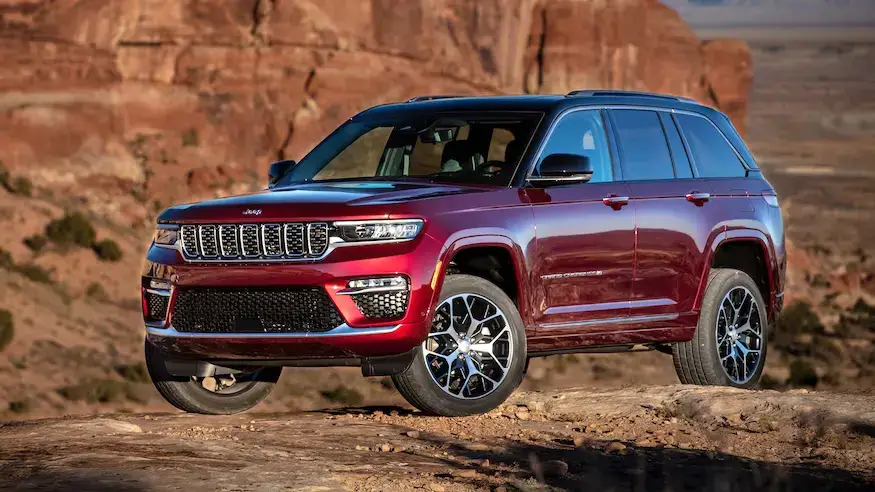
The Jeep Cherokee Latitude is a popular choice for drivers looking for a capable and comfortable SUV. While the Latitude trim offers a great balance of features and value, one of the most crucial components that directly impacts its performance, safety, and overall driving experience is its tires.
Choosing the right tires for your Cherokee Latitude can make a significant difference, whether you're navigating city streets, tackling off-road trails, or braving harsh weather conditions.
This guide will help you understand everything you need to know about Jeep Cherokee Latitude tires, from factory specifications to aftermarket options, ensuring you make informed decisions for optimal performance and safety.

Understanding Your Jeep Cherokee Latitude Tire Size
The first step to selecting the correct tires is knowing your specific tire size. This information is vital because using the wrong size can negatively affect your vehicle’s speedometer, odometer, handling, and even damage other components. Fortunately, finding your tire size is straightforward.
Where To Find Your Tire Size
- Driver’s Side Doorjamb: The most common location is a sticker on the driver’s side doorjamb. Open the driver’s door, and you should find a label that lists the original equipment (OE) tire size, recommended tire pressure, and load index.
- Owner’s Manual: Your Jeep Cherokee Latitude’s owner’s manual also contains detailed information about the recommended tire specifications, including size, speed rating, and load index.
- Sidewall of Your Current Tires: The tire size is also printed directly on the sidewall of your existing tires. It will appear as a series of numbers and letters, like `P225/60R17`.
Let’s break down what this code means:
- P: Indicates the tire is designed for passenger vehicles.
- 225: This is the tire width in millimeters, measured from sidewall to sidewall.
- 60: This is the aspect ratio, representing the tire’s sidewall height as a percentage of its width. So, 60 means the sidewall height is 60% of 225mm.
- R: Stands for Radial construction, which is standard for most modern vehicles.
- 17: This is the wheel diameter in inches. The tire fits a 17-inch rim.
The Jeep Cherokee Latitude typically comes with a few different tire size options depending on the model year and specific configuration. Common OE sizes include:
- 225/65R17
- 245/65R17
- 225/60R18
Always refer to your vehicle’s specific information for the most accurate size.
Why Tire Size Matters
Using the correct tire size is paramount for several reasons:
- Speedometer and Odometer Accuracy: The vehicle’s computer is calibrated for a specific tire diameter. Changing the diameter significantly will throw off your speedometer and odometer readings.
- Handling and Stability: The intended tire size contributes to the vehicle’s designed handling characteristics. Incorrect sizes can lead to unpredictable steering response and reduced stability.
- Traction and Braking: The contact patch (the area of the tire touching the road) is optimized for the OE size. Altering this can affect braking distances and grip.
- Component Wear: Larger or smaller tires can put extra stress on suspension components, drivetrain, and even cause the tires to rub against the fender wells or suspension parts.
Types Of Tires For Your Jeep Cherokee Latitude
Your Jeep Cherokee Latitude can accommodate various types of tires, each suited for different driving conditions and preferences. Understanding these categories will help you choose the best fit for your lifestyle.
All-season Tires
All-season tires are the most common choice for the Jeep Cherokee Latitude and are designed to provide a balance of performance in various conditions. They offer decent grip in dry, wet, and light snowy conditions.
- Pros: Versatile, long tread life, comfortable ride, good fuel efficiency.
- Cons: Not ideal for extreme winter conditions or serious off-roading.
- Best for: Drivers who experience a mix of weather but don’t encounter severe snow or challenging off-road terrain regularly.
All-terrain Tires (a/t)
If you frequently venture off the beaten path or live in an area with rougher roads, all-terrain tires might be a better option. These tires have a more aggressive tread pattern and reinforced sidewalls to handle dirt, gravel, mud, and rocks.
- Pros: Excellent off-road traction, durable, good on various surfaces.
- Cons: Can be noisier on the highway, reduced fuel efficiency, may offer a slightly harsher ride compared to all-season tires.
- Best for: Those who frequently drive on unpaved roads, trails, or live in rural areas with less-than-perfect road conditions.
Winter Tires
For drivers who face harsh winter conditions with heavy snow and ice, dedicated winter tires are a must. They are made with special rubber compounds that stay flexible in cold temperatures and feature aggressive tread patterns designed to bite into snow and ice.
- Pros: Superior traction and braking in snow and ice, enhanced safety in winter.
- Cons: Shorter tread life, reduced performance in warm weather, can be noisy.
- Best for: Areas with significant snowfall and icy roads during winter months.
Performance Tires
While less common for the Latitude trim, some drivers might opt for performance tires if they prioritize on-road handling and a sportier feel. These tires typically have a lower profile and a tread pattern optimized for dry and wet pavement grip.
- Pros: Excellent on-road grip, responsive handling, quiet ride.
- Cons: Poor off-road capability, limited snow/ice traction, potentially shorter tread life.
- Best for: Drivers who primarily use their Cherokee Latitude for on-road commuting and value sporty handling.

Key Tire Specifications To Consider
Beyond the basic size and type, several other specifications on a tire’s sidewall provide crucial information for making the right choice.
Load Index
The load index is a numerical code that indicates the maximum weight each tire can support when properly inflated. This number corresponds to a specific maximum load capacity in kilograms or pounds.
- Example: A load index of `104` means the tire can carry a maximum load of 900 kg (1984 lbs).
Your Jeep Cherokee Latitude has a specific load capacity requirement determined by its weight and intended use. Exceeding this limit can lead to tire failure, overheating, and dangerous driving conditions. Always choose tires with a load index equal to or greater than the OE specification.
Speed Rating
The speed rating is an alphanumeric code that indicates the maximum speed at which a tire can safely carry a load corresponding to its load index.
- Example: A speed rating of `H` means the tire is rated for speeds up to 210 km/h (130 mph).
Common speed ratings for SUVs like the Cherokee Latitude range from `S` (180 km/h or 112 mph) to `V` (240 km/h or 149 mph). While you may not often drive at these speeds, the speed rating also reflects the tire’s construction and performance characteristics.
Higher speed ratings often indicate a more robust tire capable of better handling. It’s generally recommended to match or exceed the OE speed rating.
Treadwear, Traction, And Temperature Ratings (utqg)
The Uniform Tire Quality Grading (UTQG) system, mandated by the National Highway Traffic Safety Administration (NHTSA), provides consumers with a standardized way to compare tires. It consists of three components:
- Treadwear: This is a comparative number that indicates the tire’s expected tread life. A tire with a treadwear grade of 400 is expected to last twice as long as a tire with a grade of 200, assuming both are used under similar conditions. Higher numbers mean longer potential tread life.
- Traction: This rating indicates the tire’s ability to stop on wet pavement. It’s graded as AA, A, B, or C, with AA being the highest. This rating is crucial for safety, especially in wet driving conditions.
- Temperature: This rating indicates the tire’s resistance to heat buildup and its ability to dissipate heat. It’s graded as A, B, or C, with A being the highest. High temperatures can cause tire degradation and failure.
- Example: A tire might be rated as `P225/60R17 100H 800 AA A`. Here, `800 AA A` represents the UTQG ratings.
When selecting tires, consider your priorities. If longevity is key, look for higher treadwear numbers. For safety in wet weather, aim for a high traction rating (A or AA). The temperature rating is important if you frequently drive in hot climates or at sustained high speeds.
Popular Tire Brands And Models For The Jeep Cherokee Latitude
Many reputable tire manufacturers offer excellent options for the Jeep Cherokee Latitude. Here are a few popular brands and models often considered by owners, along with their typical strengths.
Bridgestone
Bridgestone is known for its quality and diverse range of tires.
- Bridgestone Dueler H/L Alenza: A popular all-season touring tire designed for SUVs and crossovers. It offers a quiet, comfortable ride, good handling, and reliable traction in dry and wet conditions. It’s a strong contender for drivers prioritizing on-road comfort and longevity.
- Bridgestone Ecopia EP422 Plus: If fuel efficiency is a top concern, the Ecopia line is designed to minimize rolling resistance, helping you save on gas. It provides a comfortable ride and decent all-season performance.
Michelin
Michelin is a premium brand renowned for its innovation, performance, and durability.
- Michelin Defender LTX M/S: This is a highly regarded all-season tire that excels in longevity, wet traction, and a smooth ride. It’s often praised for its ability to handle various conditions, including light snow, making it a versatile choice for many Cherokee Latitude owners.
- Michelin Latitude Tour: Specifically designed for SUVs and crossovers, this tire focuses on providing a comfortable, quiet ride with confident handling. It offers good all-season performance for everyday driving.
Goodyear
Goodyear is another well-established brand offering a wide array of tire types.
- Goodyear Assurance MaxLife: An all-season tire focused on delivering long tread life and reliable performance throughout the year. It’s engineered for durability and consistent traction.
- Goodyear Wrangler All-Terrain Adventure with Kevlar: For those needing more off-road capability, this tire offers a blend of on-road comfort and off-road toughness, thanks to its Kevlar reinforcement. It provides good grip in mud, gravel, and dirt.
Continental
Continental tires are often recognized for their advanced technology and safety features.
- Continental CrossContact LX25: This is a popular all-season tire for SUVs, offering a balance of comfort, quietness, and all-weather traction. It’s designed to provide a smooth ride and reliable performance.
Pirelli
Pirelli is known for its performance-oriented tires, but also offers options for SUVs.
- Pirelli Scorpion Verde All Season Plus: This tire is designed for SUVs and Crossovers, emphasizing reduced fuel consumption, low noise, and good all-season performance. It balances comfort with responsive handling.

Choosing Between All-season And All-terrain Tires
The decision between all-season and all-terrain tires is one of the most common dilemmas for Jeep Cherokee Latitude owners, especially those who enjoy exploring beyond paved roads.
All-season Tires: The Everyday Workhorse
All-season tires are the default choice for most vehicles, and for good reason. They are engineered to provide a satisfactory level of performance across a wide spectrum of common driving conditions: dry pavement, wet roads, and even light snow.
- Comfort and Quietness: Their tread patterns are typically designed to minimize road noise and provide a smooth, comfortable ride, which is highly desirable for daily commuting and long road trips.
- Fuel Efficiency: Generally, all-season tires have lower rolling resistance compared to all-terrain tires. This means your engine doesn’t have to work as hard to maintain speed, leading to better fuel economy. For a vehicle like the Cherokee Latitude, where fuel efficiency can be a consideration, this is a significant advantage.
- Tread Life: Many all-season tires are built with durable compounds and tread designs that promote even wear, leading to longer tread life. This translates to fewer tire replacements over the ownership of your vehicle.
- Wet Traction: While not specialized for extreme conditions, good all-season tires offer reliable traction on wet roads, channeling water away effectively to prevent hydroplaning.
Pro Tip: When selecting all-season tires, pay close attention to the traction rating in the UTQG system. An ‘A’ or ‘AA’ rating will give you extra confidence in wet conditions.
All-terrain Tires: For The Adventurous Spirit
If your Jeep Cherokee Latitude is more than just a daily driver and you often find yourself on unpaved surfaces, all-terrain (A/T) tires are worth serious consideration. These tires are built with durability and off-road capability in mind.
- Aggressive Tread Pattern: A/T tires feature deeper, more widely spaced tread blocks. This design helps them bite into loose surfaces like dirt, gravel, mud, and sand, providing significantly better grip than all-season tires in these environments.
- Robust Construction: They often have reinforced sidewalls to resist punctures from sharp rocks or debris encountered off-road. This added durability is a key benefit for adventurous driving.
- Off-Road Performance: Whether you’re navigating forest trails, tackling a muddy track, or simply driving on a poorly maintained rural road, A/T tires offer superior traction and control.
- Snow Performance: Many A/T tires also perform quite well in snow, often better than all-season tires due to their aggressive tread and ability to clear snow effectively. Some are even Three-Peak Mountain Snowflake (3PMSF) certified, indicating they meet specific performance standards in severe snow conditions.
Considerations for A/T Tires:
- On-Road Noise: The aggressive tread that provides off-road grip can also generate more road noise on paved surfaces. This can make for a less refined driving experience on the highway.
- Fuel Economy: The larger, blockier tread and heavier construction of