The Jeep Cherokee is a popular SUV known for its capability and comfort. Like all modern vehicles, it relies on a complex evaporative emission control (EVAP) system to prevent fuel vapors from escaping into the atmosphere.
This system is crucial for environmental protection and for your vehicle to pass emissions tests. Understanding how the Jeep Cherokee EVAP system works, common problems, and how to diagnose them can save you time and money.
This guide will walk you through the ins and outs of the EVAP system in your Jeep Cherokee. We’ll cover its components, how it functions, typical issues you might encounter, and what to do when the Check Engine light comes on due to an EVAP code.
How The Jeep Cherokee Evap System Works
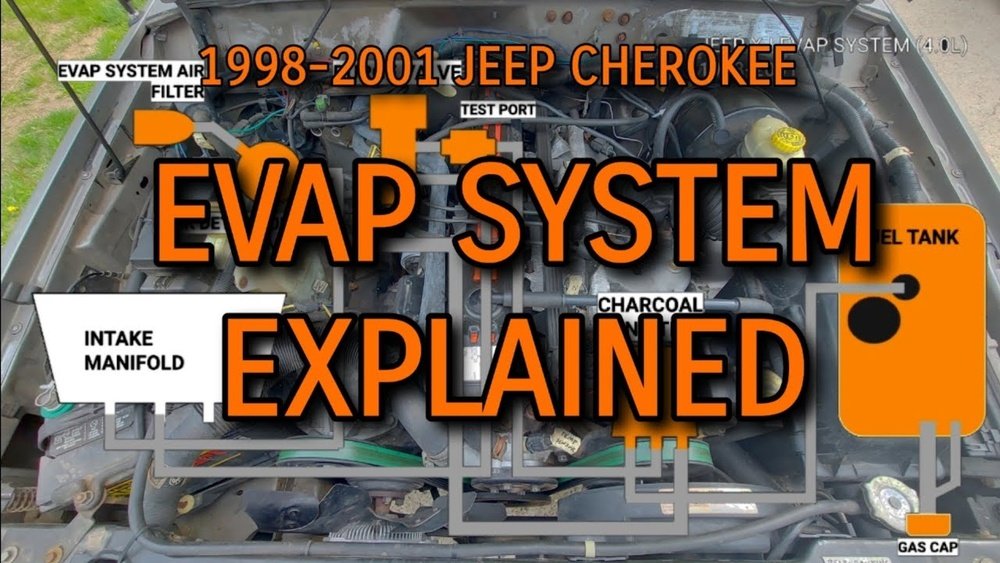
The primary goal of the EVAP system is to capture fuel vapors that evaporate from the fuel tank and prevent them from being released into the air. These vapors are not only harmful pollutants but can also be flammable. The system stores these vapors and then, under specific engine conditions, purges them into the engine to be burned as fuel. This process is carefully controlled by the Powertrain Control Module (PCM), the vehicle’s main computer.
Key Components Of The Evap System
The EVAP system is made up of several interconnected parts, each playing a vital role:
- Fuel Tank: This is where gasoline is stored. As fuel levels change and temperature fluctuates, vapors naturally form inside the tank.
- Fuel Cap: A seemingly simple part, the fuel cap is actually a critical seal for the EVAP system. It must create a tight seal to prevent vapors from escaping directly. Many EVAP issues stem from a loose or damaged fuel cap.
- EVAP Purge Solenoid Valve: This valve is usually located in the engine bay. It controls the flow of fuel vapors from the charcoal canister to the engine. The PCM opens and closes this valve based on engine operating conditions.
- Charcoal Canister: This is a container filled with activated charcoal. It acts like a sponge, absorbing and storing fuel vapors from the fuel tank when the engine is off or not ready for purging.
- EVAP Vent Solenoid Valve: This valve is typically located near the charcoal canister, often at the end of the vent hose. It seals the system during EVAP tests and allows fresh air into the canister when the purge valve is open. When the PCM wants to test the system for leaks, it closes this valve to create a sealed environment.
- EVAP Hoses and Lines: These are the pathways that carry fuel vapors between the different components. They must be intact and free of cracks or blockages.
- Fuel Tank Pressure Sensor: This sensor monitors the pressure inside the fuel tank. The PCM uses this information to detect leaks and manage the purging process.
- Powertrain Control Module (PCM): The PCM is the brain of the operation. It monitors all the sensors, controls the solenoid valves, and determines when to purge vapors and when to test the system for leaks.
The Evap Cycle: Storing And Purging Vapors
The EVAP system operates in cycles:
- Storage Phase: When the engine is off or running at conditions not suitable for purging (like cold starts or idling), the EVAP purge solenoid is closed. Fuel vapors from the tank travel through hoses and are absorbed by the charcoal in the canister.
- Purge Phase: When the engine is warm and running at cruising speeds, the PCM determines it’s the right time to burn off the stored vapors. It opens the EVAP purge solenoid valve. Vacuum from the engine then draws the vapors from the charcoal canister into the intake manifold, where they mix with the air-fuel mixture and are burned.
- Leak Detection (Self-Test): The PCM periodically performs a self-test to ensure the EVAP system is sealed. It usually does this when the vehicle has been sitting for a while, the fuel level is between certain parameters, and the engine temperature is stable. During the test, the PCM closes the EVAP vent solenoid valve, effectively sealing the system. It then uses the fuel tank pressure sensor to monitor for any pressure changes. A significant drop in pressure indicates a leak, while a failure to build pressure might indicate a stuck-open vent solenoid or a blockage.
Common Jeep Cherokee Evap System Problems
EVAP systems are generally reliable, but like any part of a vehicle, they can develop issues. These problems often manifest as a Check Engine light (CEL) and may trigger specific diagnostic trouble codes (DTCs).
Here are some of the most common problems affecting the Jeep Cherokee EVAP system:
1. Loose Or Faulty Fuel Cap
This is by far the most frequent cause of EVAP system problems. The fuel cap’s seal can degrade over time, or it might not be tightened properly after refueling.
- Symptoms: Check Engine light may illuminate, sometimes with codes like P0455 (Evap System Leak Detected – Large Leak) or P0457 (Evap System Leak Detected – Gross Leak). You might also notice a faint smell of gasoline.
- Diagnosis: The simplest first step is to remove the fuel cap, inspect it for damage (cracked rubber seal, damaged threads), and then reinstall it, ensuring it clicks multiple times. If the light stays on after a few drive cycles, the cap may need replacement.
- Non-Obvious Insight: Modern cars often have sophisticated EVAP systems that can detect even small leaks. A cap that *looks* okay might still be faulty if its seal isn’t perfectly airtight.
2. Faulty Evap Purge Solenoid Valve
The purge solenoid is an electronically controlled valve that can fail. It might get stuck open, stuck closed, or not open/close properly.
- Symptoms:
- Stuck Open: This can cause a rough idle, stalling, poor fuel economy, and a Check Engine light with codes like P0496 (EVAP Purge Valve Stuck Open). The engine is essentially getting an uncontrolled amount of fuel vapor at all times.
- Stuck Closed or Leaking: This can lead to a Check Engine light with codes like P0442 (Evap System Leak Detected – Small Leak) or P0455. The system cannot purge vapors effectively.
- Diagnosis: This usually requires specialized diagnostic tools to test the solenoid’s operation and check for vacuum leaks. Sometimes, a mechanic can test it by applying voltage to it directly.
- Pro Tip: A failing purge solenoid can sometimes cause drivability issues because it affects the air-fuel mixture entering the engine.
3. Faulty Evap Vent Solenoid Valve
The vent solenoid seals the system during tests. If it fails, it can cause leaks or prevent the system from holding pressure.
- Symptoms: Codes like P0442, P0455, or P0446 (EVAP Vent System Malfunction) are common. The vehicle might fail an emissions test if the system cannot be properly sealed or tested.
- Diagnosis: This often involves testing the solenoid’s electrical connection and its ability to seal and open correctly. It’s also important to check the vent hose for blockages.
4. Leaking Evap Hoses Or Lines
The rubber hoses and plastic lines that make up the EVAP system can become brittle, crack, or get damaged over time due to heat, vibration, or physical impact.
- Symptoms: A small leak (P0442) or gross leak (P0455) code is typical. You might also smell gasoline, especially after refueling or when the vehicle has been sitting in the sun.
- Diagnosis: This requires a thorough visual inspection of all EVAP lines, looking for cracks, kinks, or disconnections. A smoke test is the most effective way to find small leaks in the EVAP system. A mechanic introduces a non-toxic smoke into the system, and where the smoke escapes is where the leak is.
5. Faulty Fuel Tank Pressure Sensor
This sensor is crucial for the PCM to monitor fuel tank pressure and perform leak detection tests. If it malfunctions, it can send incorrect readings.
- Symptoms: Codes related to pressure sensor circuit malfunction (e.g., P0450, P0451, P0452, P0453) or general leak detection codes (P0442, P0455) can occur.
- Diagnosis: This involves checking the sensor’s electrical connections and signal output using a scan tool.
6. Clogged Charcoal Canister
While less common, the charcoal canister can become saturated with fuel or contaminated, leading to blockages or reduced efficiency in absorbing vapors.
- Symptoms: This can result in various EVAP codes, often related to pressure issues or system malfunctions. A persistent fuel smell might also be present.
- Diagnosis: Testing the canister’s ability to absorb and release vapors can be difficult. Often, it’s replaced if other components check out and symptoms persist.
7. Issues With The Fuel Tank Itself
In rare cases, the fuel tank can develop cracks or leaks, or the internal baffling that helps manage fuel vapor can be damaged.
- Symptoms: Gross leak codes (P0455) are most common.
- Diagnosis: This is usually a last resort diagnosis after all other EVAP components have been thoroughly checked.

Diagnosing Evap System Problems In Your Jeep Cherokee
When your Jeep Cherokee’s Check Engine light illuminates, and you suspect an EVAP issue, a systematic diagnostic approach is essential. Simply replacing parts without proper diagnosis can be costly and ineffective.
Step 1: Check For Codes
The first step is to retrieve the diagnostic trouble codes (DTCs) stored in the PCM using an OBD-II scanner. Jeep Cherokees, like all vehicles sold in the US since 1996, are equipped with an OBD-II port, usually located under the dashboard on the driver’s side.
- Common EVAP Codes:
- P0440: Evap System Malfunction
- P0441: Evap Purge System Incorrect Flow
- P0442: Evap System Leak Detected (Small Leak)
- P0446: Evap Vent System Malfunction
- P0450: Evap Pressure Sensor Malfunction
- P0455: Evap System Leak Detected (Gross Leak)
- P0456: Evap System Leak Detected (Very Small Leak)
- P0457: Evap System Leak Detected (Gross Leak)
Step 2: Visual Inspection
Before diving into complex testing, perform a thorough visual inspection:
- Fuel Cap: As mentioned, check the fuel cap for damage and ensure it’s properly tightened.
- Hoses and Lines: Inspect all visible EVAP hoses and lines for cracks, kinks, loose connections, or signs of damage. Pay close attention to areas near exhaust components or moving parts that could cause wear.
- Components: Look for any obvious signs of damage or corrosion on the purge solenoid, vent solenoid, and charcoal canister.
Step 3: Smoke Testing
A smoke test is the most effective method for pinpointing leaks in the EVAP system, especially small ones that are hard to find visually.
- How it works: A specialized machine injects a small amount of non-toxic smoke into the EVAP system. The technician then observes where the smoke escapes. This could be from a cracked hose, a faulty solenoid seal, or even a leaking fuel tank.
- Benefits: It can quickly identify leaks that would otherwise be extremely difficult to locate.
Step 4: Testing Solenoid Valves
Solenoid valves can be tested for proper operation:
- Purge Solenoid: The PCM controls this valve. A mechanic can use a scan tool to command the valve open and closed and listen for clicking sounds or check for vacuum changes. The electrical connector can also be tested for voltage and ground signals.
- Vent Solenoid: Similar testing methods apply, focusing on its ability to seal the system and allow airflow when commanded.
Step 5: Testing Sensors
- Fuel Tank Pressure Sensor: A scan tool can display live data from the pressure sensor. The technician can compare these readings to expected values under different conditions (e.g., when the system is sealed, when it’s being purged). Electrical connections to the sensor should also be checked.
Step 6: Using Advanced Diagnostic Tools
For complex issues, specialized tools might be needed:
- EVAP System Testers: These machines can perform simulated EVAP tests, applying pressure or vacuum to the system and measuring its response, helping to diagnose leaks or component failures.
- Scan Tools with Bi-Directional Control: Advanced scan tools allow technicians to command various EVAP components (like solenoids) to operate, helping to isolate faulty parts.
Common Jeep Cherokee Evap Codes And Their Meanings
Understanding the specific codes your Jeep Cherokee throws can significantly speed up the diagnostic process. Here’s a breakdown of some common EVAP codes and what they generally indicate.
P0440: Evaporative Emission System Malfunction
This is a general code indicating that the PCM has detected a problem with the EVAP system but hasn't pinpointed the exact cause. It could be a leak, a stuck valve, or a sensor issue.
A visual inspection and smoke test are usually the next steps.
P0441: Evaporative Emission System Purge Flow Incorrect
This code suggests that the amount of fuel vapor being drawn from the charcoal canister into the engine (purged) is not what the PCM expects. This could be due to a purge solenoid that is stuck slightly open, a leak in the purge line, or a faulty Mass Airflow (MAF) sensor affecting engine load calculations.
P0442: Evaporative Emission System Leak Detected (small Leak)
This is one of the most common EVAP codes. It means the PCM has detected a very small leak in the EVAP system during its self-test.
The most frequent culprit is a loose or faulty fuel cap, but it could also be a small crack in a hose, a leaking purge valve seal, or a faulty vent valve seal.
P0446: Evaporative Emission System Vent Control Malfunction
This code points to a problem with the EVAP vent control circuit. The vent solenoid is responsible for sealing the system during tests and allowing fresh air in when needed.
A P0446 code often means the vent solenoid is stuck closed, preventing the system from venting properly, or there's an issue with the electrical circuit controlling the solenoid.
A blockage in the vent hose can also cause this.