Owning a Jeep Cherokee is exciting, but nothing interrupts a drive faster than a warning light suddenly appearing on your dashboard. These symbols are your Cherokee’s way of telling you something—sometimes simple, sometimes urgent.
Understanding what each symbol means can save you time, money, and even help you avoid dangerous situations. Many drivers ignore or misunderstand these signals, risking bigger problems.
This guide explains the most common Jeep Cherokee dashboard symbols, their meanings, and what actions you should take when they appear.
Why Dashboard Symbols Matter
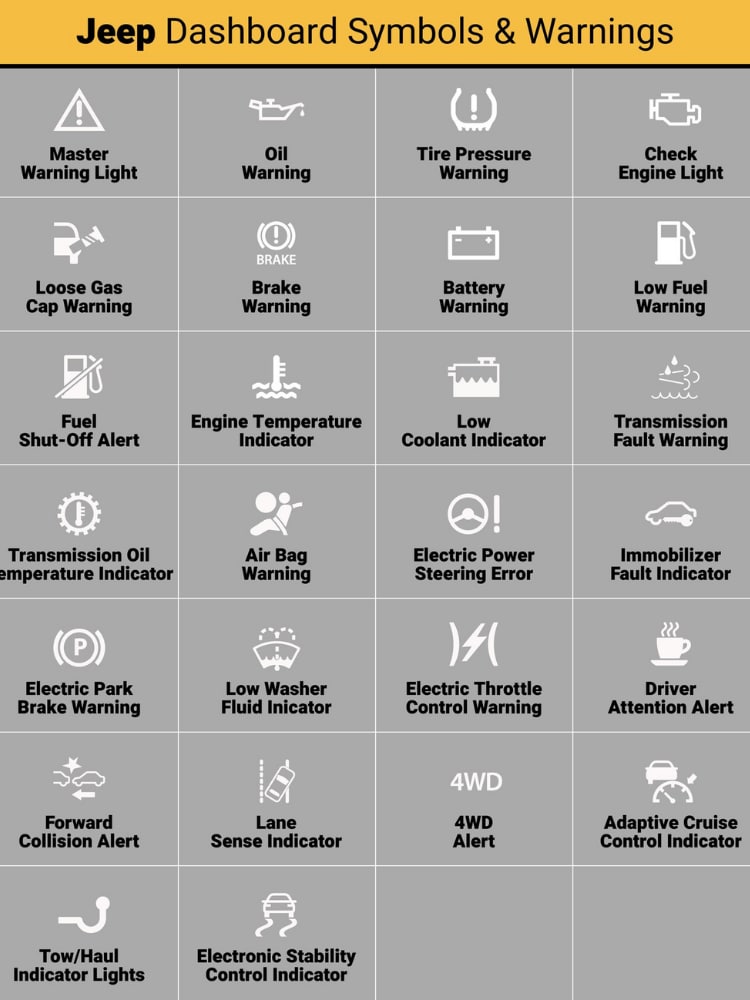
Every dashboard symbol is designed to communicate a specific message about your vehicle’s health. The Jeep Cherokee uses over 20 different lights, each with a unique color and shape. Some warn you about critical issues, while others just provide information.
Ignoring a warning light can lead to expensive repairs or unsafe driving conditions. For example, a simple oil pressure light could mean your engine is moments away from serious damage if not addressed.
Dashboard Symbol Colors: What They Mean
Colors help you quickly judge the urgency:
- Red: Immediate action required. Can indicate safety or mechanical problems.
- Yellow/Amber: Caution. Something needs attention soon.
- Green/Blue: Informational. Features are active, but there’s usually no problem.
Here’s a quick reference for color meanings:
| Color | Urgency | Common Examples |
|---|---|---|
| Red | Stop now | Brake, Oil Pressure |
| Yellow/Amber | Service soon | Check Engine, Tire Pressure |
| Green/Blue | Information | High Beams, Cruise Control |

Common Jeep Cherokee Dashboard Symbols And Their Meanings
Let’s break down the most important symbols you’ll see in your Jeep Cherokee.
1. Check Engine Light
- Symbol: Engine shape, usually yellow.
- Meaning: Emission or engine problem. Can be minor or severe.
- What to do: Check gas cap first. If light stays on, schedule a diagnostic check.
2. Battery Warning Light
- Symbol: Battery with plus and minus signs.
- Meaning: Charging system problem, battery not charging.
- What to do: Avoid turning off the engine until checked. Visit a mechanic soon.
3. Oil Pressure Warning
- Symbol: Old-style oil can, usually red.
- Meaning: Low oil pressure, possible engine damage.
- What to do: Stop the engine immediately. Check oil level. Do not drive if light remains on.
4. Tire Pressure Monitoring System (tpms)
- Symbol: Exclamation point inside a tire outline.
- Meaning: One or more tires have low pressure.
- What to do: Check all tires with a gauge. Inflate to recommended PSI.
5. Abs Warning
- Symbol: Letters “ABS” in a circle.
- Meaning: Anti-lock braking system problem.
- What to do: Brakes still work, but ABS is off. Drive carefully, get system checked soon.
6. Airbag Warning Light
- Symbol: Person with a circle (airbag) in front.
- Meaning: Airbag system problem.
- What to do: Airbags may not deploy in a crash. Service immediately.
7. Engine Temperature Warning
- Symbol: Thermometer in liquid, usually red.
- Meaning: Engine overheating.
- What to do: Pull over safely. Check coolant level after engine cools.
8. Brake System Warning
- Symbol: Exclamation mark in a circle or “BRAKE.”
- Meaning: Parking brake on, low brake fluid, or system fault.
- What to do: Release parking brake. If light stays on, check brake fluid and system.
9. Electronic Stability Control (esc) Indicator
- Symbol: Car with wavy lines.
- Meaning: ESC is active or has a fault.
- What to do: If flashing, it’s working. If solid, get system checked.
10. Transmission Temperature Warning
- Symbol: Thermometer inside gear.
- Meaning: Transmission overheating.
- What to do: Stop and let transmission cool. Check fluid if possible.
Symbols You Should Not Ignore
Some lights need immediate action to avoid damage or injury. Here are the top three:
| Symbol | Why Urgent | Action |
|---|---|---|
| Oil Pressure | Engine failure risk | Stop and check oil |
| Engine Temperature | Overheating can ruin engine | Pull over, cool down |
| Brake System | Unsafe to drive | Check brakes/fluid |

Less Obvious Symbols (but Still Important)
Many Cherokee owners miss these symbols, thinking they’re less important:
- Adaptive Cruise Control Indicator: Shows if cruise control is active. A flashing light may mean a problem with sensors.
- Forward Collision Warning: Alerts you if you’re approaching another car too fast. If lit, system may be off or malfunctioning.
- LaneSense Warning: Lane lines with a steering wheel mean the car is helping you stay in your lane. If amber or red, system needs attention.
- Service 4WD Light: Indicates a problem with the four-wheel drive system. Continuing to drive may cause further damage.
Tips For Responding To Dashboard Lights
- Don’t panic—most lights give you time to respond.
- Read your owner’s manual for symbol details specific to your year/model.
- Address red lights immediately to prevent breakdowns.
- Yellow/amber lights mean you should schedule service soon.
- For persistent lights after a repair, ask your mechanic to reset the system.
Many drivers ignore “small” warnings like the TPMS, but low tire pressure can increase stopping distance and reduce fuel efficiency—an easy fix that pays off.
When To Seek Professional Help
If a warning light stays on after you’ve checked the basics (oil, coolant, gas cap), it’s time for a professional diagnostic. Modern Cherokees use advanced sensors—sometimes a simple scan tool can pinpoint the problem quickly.
According to the National Highway Traffic Safety Administration, ignoring some dashboard lights is a leading cause of roadside breakdowns (NHTSA).
Frequently Asked Questions
Why Does My Check Engine Light Come On And Off?
A check engine light that blinks or turns off and on may mean an intermittent issue. It’s best to have your Jeep scanned for error codes to find the cause.
Even if it goes off, the problem could return.
Is It Safe To Drive With The Abs Light On?
Yes, your Cherokee will still brake normally, but the anti-lock feature won’t work. Drive carefully and avoid hard braking, then get the system checked as soon as possible.
What Does A Flashing Tire Pressure Light Mean?
A flashing TPMS light usually means the sensor itself is malfunctioning, not just low pressure. Check your tires and see a technician if the light keeps flashing.
Can I Reset Dashboard Warning Lights Myself?
You can reset some lights by fixing the problem (like inflating tires or tightening the gas cap). Others need a diagnostic tool or mechanic to reset the system.
What’s The Most Important Dashboard Symbol To Watch For?
The oil pressure and engine temperature lights are the most critical. Both can signal problems that may destroy your engine if ignored.
Stop driving and check your vehicle immediately if these lights come on.
Understanding your Jeep Cherokee dashboard symbols is one of the simplest ways to keep your SUV reliable and safe. When in doubt, always consult your owner’s manual or a trusted mechanic. The right response to a warning light can save you from expensive repairs—and keep you on the road longer.