The allure of the Jeep brand is inextricably linked to its legendary off-road prowess. For decades, Jeep vehicles have been synonymous with tackling rugged trails, conquering challenging landscapes, and offering an unparalleled sense of adventure.
While the robust engineering and iconic design play a significant role, a crucial element enabling this capability, especially in modern Jeeps, is their sophisticated terrain response system.
This technology isn't just about engaging four-wheel drive; it's an intelligent suite of electronic and mechanical aids designed to optimize the vehicle's performance across a diverse range of surfaces, from slick mud and deep snow to steep inclines and rocky ascents.

Understanding how this system works is key to unlocking the full potential of your Jeep and ensuring safe, confident navigation when the pavement ends.
Key Takeaways
- Terrain Response Systems are advanced technologies in modern Jeeps that optimize vehicle performance for various off-road and on-road conditions.
- These systems typically work by adjusting engine response, transmission settings, suspension (if applicable), traction control, electronic stability control, and differential locking.
- Different Jeep models may feature varying levels of sophistication, from basic 4WD selectors to advanced, electronically controlled systems like Select-Terrain™.
- Understanding each mode is crucial for maximizing capability and safety; improper mode selection can hinder performance or even damage components.
- Proper maintenance of the 4WD system, tires, and sensors is vital for the terrain response system to function correctly.
- While these systems enhance off-road capability, driver skill and awareness remain paramount for safe adventuring.

The Evolution Of Jeep’s Off-road Capability
Jeep’s journey began with the Willys MB in the 1940s, a rugged, utilitarian vehicle designed for military use. Its core capability was its four-wheel-drive system, a mechanically robust setup that allowed drivers to manually engage the front axle for increased traction. This was revolutionary for its time, providing a level of mobility previously unseen in civilian vehicles. As automotive technology advanced, so did Jeep’s approach to off-road control. Early systems relied heavily on mechanical levers and low-range gearing, requiring significant driver input and understanding of vehicle dynamics. The driver was the primary interface for managing traction, speed, and power delivery.
Over the decades, the advent of electronic control units (ECUs) and sophisticated sensors began to transform vehicle management. What started as simple anti-lock braking systems (ABS) evolved into comprehensive electronic stability control (ESC) and traction control (TC) systems. Jeep engineers ingeniously integrated these emerging technologies with their established mechanical 4WD systems to create more intelligent and user-friendly off-road solutions. This evolution moved from purely mechanical engagement to electronically assisted and, eventually, electronically controlled systems that could actively manage power distribution and wheel slip in real-time. This shift not only improved performance but also made off-roading more accessible to a wider range of drivers, allowing them to tackle challenging terrain with greater confidence.
Understanding Jeep’s Terrain Management Systems
Jeep offers several variations of its terrain management technology across its model lineup, with the most advanced system being the Jeep Selec-Terrain™ Traction Management System. This sophisticated electronic system allows drivers to select different modes, each tailored to optimize the vehicle’s performance for specific driving conditions. While the exact implementation and number of modes can vary by model and trim level, the underlying principle remains the same: electronically adjusting various vehicle systems to maximize grip, stability, and forward momentum.
Selec-terrain™: The Pinnacle Of Jeep Traction Control
The Selec-Terrain™ system, found on models like the Grand Cherokee and some Wrangler trims, is a prime example of modern integrated vehicle dynamics control. It’s not just a simple 4WD selector; it’s a comprehensive electronic system that interfaces with the powertrain, brakes, and electronic stability control. When a driver selects a mode, the Selec-Terrain™ system automatically modifies:
- Throttle Response: Adjusts how quickly the engine reacts to accelerator pedal input. For instance, a more sensitive throttle might be used in Sand mode for quick bursts of power, while a softer, more progressive response is ideal for Snow or Mud to prevent wheel spin.
- Transmission Shifting: Dictates shift points to keep the engine in its optimal power band for the selected terrain. In low-traction situations, it might hold gears longer or shift at lower RPMs.
- Traction Control (TC) and Electronic Stability Control (ESC): These systems are recalibrated to allow for more wheel slip in certain modes (like Rock or Mud) where momentum is key, or to intervene more aggressively in others (like Snow) to maintain stability.
- All-Wheel Drive (AWD) or 4WD System: Manages the engagement and torque distribution of the 4WD system. This can include locking differentials or adjusting the power split between the front and rear axles.
- Hill Descent Control (HDC): In applicable modes, HDC can be activated to automatically control downhill speed without driver brake input.
Common Selec-terrain™ Modes And Their Functions
While specific modes can differ, the core functionalities are consistent across Jeep vehicles equipped with Selec-Terrain™.
- Auto: This is the default mode, where the system operates as a full-time, automatic 4WD system. It intelligently distributes torque to the wheels that have the most grip, providing optimal performance for everyday driving on paved roads and light off-road conditions. It’s the most efficient mode for general use.
- Snow: Designed for slippery, low-traction surfaces like snow, ice, or packed gravel. In this mode, the throttle response is softened to provide smoother acceleration, and the traction control system becomes more sensitive, intervening quickly to prevent wheel spin. The 4WD system is optimized for maximum grip, often pre-emptively engaging the front axle.
- Sport: This mode enhances on-road performance for a more engaging driving experience. It sharpens throttle response, holds gears longer for quicker acceleration, and stiffens the steering feel. The 4WD system typically remains in a full-time 4WD configuration but may bias torque distribution for sportier handling.
- Sand/Mud: These modes are tailored for loose surfaces. They typically allow for more wheel slip, which is crucial for maintaining momentum in sand or mud. The throttle response is often more aggressive, and the 4WD system may be configured to deliver more power to the wheels. In some systems, specific differential locking strategies are employed. For example, on certain models, the Selec-Trac™ Full-Time 4WD system can automatically lock the differentials in these modes.
- Rock: This mode is exclusively for serious rock crawling and is usually available on models equipped with advanced 4×4 systems (like the Jeep Wrangler Rubicon). In Rock mode, the system typically engages a low-range gear ratio and locks both the front and rear differentials, providing maximum traction and control at extremely low speeds. The suspension may also adjust its height if the vehicle is equipped with an adjustable air suspension. This mode allows the vehicle to “crawl” over obstacles with minimal driver throttle input, relying on the locked differentials to ensure all wheels receive power.
Beyond Selec-terrain™: Other Jeep 4wd Systems
Not all Jeeps feature the full Selec-Terrain™ suite. Many models utilize more traditional, yet still highly capable, 4WD systems.
- Selec-Trac®: This system offers a full-time, automatic 4WD mode similar to Selec-Terrain’s Auto mode, alongside a traditional 2WD mode for optimal fuel efficiency on dry pavement. It provides a good balance of convenience and capability for drivers who encounter varied conditions but don’t regularly engage in extreme off-roading.
- Command-Trac®: A robust part-time 4WD system found on many Wrangler and Cherokee models. It features driver-selectable modes: 2WD (for normal driving), 4WD High (for increased traction on slippery surfaces like snow or gravel), Neutral (for flat-towing behind an RV), and 4WD Low (for maximum traction and control in challenging off-road situations, providing significant gear reduction). This system requires driver intervention to switch between 2WD and 4WD, and engaging 4WD Low is essential for serious off-roading.
- Rock-Trac®: This is the heavy-duty 4WD system found on Rubicon trim levels of the Wrangler and some other off-road-focused Jeeps. It builds upon the Command-Trac® system by offering a lower gear ratio in 4WD Low (typically 4:1) and electronically locking front and rear differentials. This combination provides exceptional crawling capability and control over extreme obstacles.

How Terrain Response Systems Enhance Off-road Driving
The integration of sophisticated terrain response systems fundamentally changes the off-road driving experience. Instead of relying solely on mechanical linkages and driver intuition, these systems leverage electronic intelligence to optimize vehicle behavior.
This leads to several key advantages, especially for drivers who may not have extensive off-road experience.
Maximizing Traction And Momentum
One of the primary functions of any terrain response system is to maximize traction. On loose surfaces like mud or sand, a certain amount of wheel slip is often necessary to maintain momentum. The system can be programmed to allow this slip, preventing the vehicle from digging itself in. Conversely, on slippery surfaces like ice or wet grass, the system will drastically reduce allowed wheel slip, intervening with braking and power reduction to keep the vehicle moving forward without losing control. The ability to electronically manage differentials, as seen in systems like Rock-Trac®, ensures that power is sent to the wheels with grip, even when one or more wheels are in the air or on a very slick surface.
Enhancing Stability And Control
Beyond just traction, these systems play a critical role in maintaining vehicle stability. By adjusting throttle response and engaging electronic aids like ESC, the system can help prevent the vehicle from sliding sideways on inclines or during cornering on uneven terrain. For example, in Snow mode, the ESC is calibrated to be more sensitive, helping to correct potential skids. Hill Descent Control, often integrated into these systems, automatically manages braking on steep descents, allowing the driver to focus on steering and avoiding obstacles without worrying about locking up the brakes. This level of electronic assistance provides a significant confidence boost when navigating challenging descents.
Simplifying Complex Driving Scenarios
Perhaps the most significant benefit for many drivers is the simplification of complex driving scenarios. Engaging 4WD Low, locking differentials, and managing throttle can be intimidating for newcomers to off-roading. A terrain response system allows a driver to simply select the appropriate mode (e.g., “Rock” or “Mud”) and let the vehicle’s electronics handle the intricate adjustments. This democratizes off-road capability, making it accessible to a broader audience. For instance, a driver can select “Rock” mode on a Jeep Wrangler Rubicon, and the system will automatically engage the low-range transfer case and lock the differentials, preparing the vehicle for serious crawling without the driver needing to manually operate multiple levers or buttons. This allows the driver to focus on line selection and obstacle negotiation.
Protecting Drivetrain Components
By actively managing power distribution and torque, terrain response systems can also help protect the vehicle’s drivetrain. For example, in modes that allow more wheel slip, the system is less likely to put excessive strain on the differentials or axles compared to a driver who might inadvertently apply too much power in a low-traction situation. Similarly, by smoothly managing power delivery, it reduces the risk of drivetrain shock loads that can occur with abrupt acceleration on challenging surfaces.
Jeep Models And Their Terrain Response Capabilities
The specific terrain management system and its capabilities vary significantly across the Jeep model range. Understanding which system your Jeep is equipped with is the first step to leveraging its full potential.
Jeep Wrangler: The Off-road Icon
The Jeep Wrangler is the quintessential off-road vehicle, and its terrain management systems are tailored accordingly.
- Wrangler Sport, Sport S, Willys Sport, Altitude, Sahara: These trims typically feature the Command-Trac® NV241 GII part-time, two-speed transfer case. This system offers driver-selectable 2WD, 4WD High, Neutral, and 4WD Low. While capable, it requires the driver to manually engage the 4WD systems.
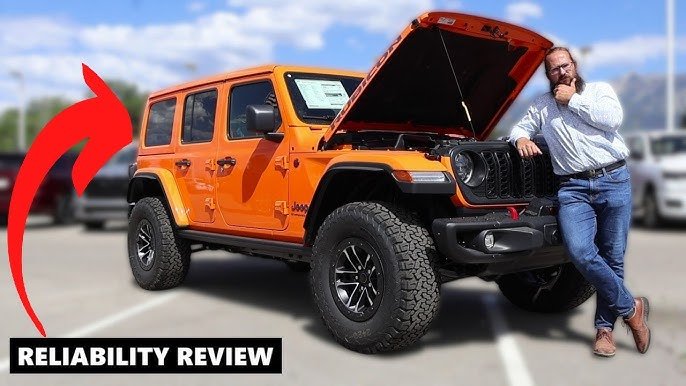
- Wrangler Rubicon and Rubicon 392: These trims boast the Rock-Trac® NV241-OR HD full-time transfer case. This system provides a lower gear ratio (4:1) in 4WD Low for superior crawling capability and features electronically locking front and rear differentials, selectable via buttons on the dashboard. Some Rubicon models also include the Selec-Speed™ Control (a form of Hill Descent Control) and may offer different modes within their off-road pages on the infotainment screen.
- Wrangler Rubicon 4xe (Plug-in Hybrid): This model combines the advanced Rock-Trac® system with hybrid power. It offers enhanced torque delivery from the electric motor, which can be particularly beneficial in low-speed crawling. It also features specific hybrid-related off-road modes.
Jeep Grand Cherokee: Luxury Meets Capability
The Jeep Grand Cherokee offers a blend of luxury, comfort, and significant off-road capability, often featuring the most advanced systems.
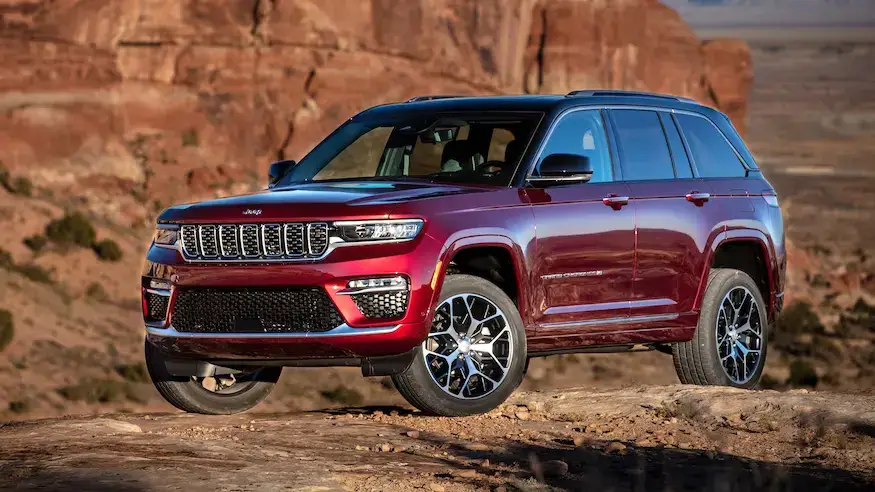
- Limited, Overland, Summit, Trailhawk (previous generations): These trims commonly feature the Selec-Terrain™ Traction Management System. Depending on the specific generation and trim, this system might include up to five modes: Auto, Snow, Sport, Sand/Mud. Trailhawk models, in particular, are designed for maximum off-road capability and often come standard with the most advanced 4×4 system, which may include features like an electronic limited-slip rear differential and an adjustable air suspension (Quadra-Lift®) that can raise the vehicle’s ride height for increased ground clearance.
- Grand Cherokee L (3-row): The longer wheelbase version offers similar Selec-Terrain™ capabilities as its 2-row counterpart, ensuring that even larger families can tackle challenging terrain.
- Newer Grand Cherokee (WL generation): This generation continues to offer advanced 4×4 systems, including Quadra-Trac® I, II, and Active 1, often paired with the Selec-Terrain™ system. Quadra-Trac® II, for instance, includes a 2-speed transfer case with a 2.72:1 ratio and a 50/50 torque split capability, further enhancing off-road performance.
Jeep Cherokee: Versatile All-rounder
The Jeep Cherokee offers a good balance of on-road comfort and off-road capability.
- Latitude, Latitude Plus, Upland, North Edition: These trims often come equipped with the Selec-Terrain™ system with modes like Auto, Snow, Sport, and Sand/Mud, paired with a capable 4×4 system.
- Trailhawk: The Trailhawk trim is the off-road specialist in the Cherokee lineup. It typically includes the most advanced 4×4 system available for the Cherokee, often featuring a 2-speed Power Transfer with 4WD Low range, a rear electronic limited-slip differential, and the full Selec-Terrain™ system, including a dedicated Rock mode. This makes it a highly competent off-roader in its class.
Jeep Compass & Renegade: Compact Capability
Even Jeep’s smaller SUVs offer impressive terrain management for their size.
- Compass and Renegade (with 4×4 option): These models can be equipped with the Jeep® Active Drive Low system, which is a full-time 4×4 system. It includes a 2-speed Power Transfer Unit with a 4.0:1 low-gear ratio for enhanced crawling capability. They also feature the Selec-Terrain™ Traction Management System with modes like Auto, Snow, Sport, and Mud/Sand, allowing drivers to optimize performance for various conditions. The Selec-Terrain™ system on these smaller Jeeps is particularly effective at providing confidence on slippery roads and light trails.
Real-world Examples And Scenarios
To truly appreciate the impact of a terrain response system, consider these practical scenarios:
Scenario 1: Navigating a Muddy Trail After Rain
Imagine you’re driving on a forest service road after a heavy downpour. The road has turned into a slick, muddy mess.
- Without a sophisticated system: You might struggle to maintain forward momentum, spinning your wheels and potentially getting stuck. You’d have to manually engage 4WD High or Low, and hope your traction control is effective enough.
- With Selec-Terrain™ (Mud Mode): You select “Mud.” The system automatically adjusts throttle response for smoother power delivery, allows a controlled amount of wheel slip to prevent digging in, and ensures the 4WD system is actively distributing power to all wheels. The result is a much more controlled and less stressful passage through the mud. You can focus on steering around obstacles rather than fighting for traction.
Scenario 2: Descending a Steep, Rocky Incline
You’re on a trail with large rocks and a steep downhill section.
- Without assistance: You would need to carefully feather the brakes to control your descent speed, which can be difficult on uneven surfaces where wheels might bounce. This risks locking up the wheels and losing steering control.
- With Selec-Speed™ Control / Hill Descent Control (in Rock Mode): You select “Rock” mode, and if equipped, activate Selec-Speed™ Control. The vehicle automatically maintains a slow, steady speed using engine braking and ABS. You can then focus entirely on steering the Jeep down the obstacle, ensuring each tire is placed precisely. This drastically reduces the risk of damage and increases safety.
Scenario 3: Driving on a Snowy Mountain Pass
You’re driving your Grand Cherokee on a mountain pass during a snowstorm. Visibility is low, and the road is covered in a layer of snow and ice.
- Without advanced systems: You’d be constantly monitoring your speed, relying on your 4WD system (if engaged) and trying to avoid sudden inputs that could cause a skid.
- With Selec-Terrain™ (Snow Mode): You select “Snow.” The system softens throttle response, making it harder to accidentally spin the wheels. The traction control becomes more sensitive, actively managing wheel speed to prevent skids. The 4WD system is optimized for maximum grip. This allows you to drive with significantly more confidence and stability, even in challenging winter conditions.
Maintaining Your Terrain Response System
For your Jeep’s terrain response system to function optimally, regular maintenance is crucial. These systems rely on a network of sensors, actuators, and robust mechanical components.
Tire Health And Selection
Tires are the only point of contact between your Jeep and the terrain.
- Tire Pressure: Maintaining the correct tire pressure is vital. Underinflated tires can hinder performance and damage the sidewalls, while overinflated tires reduce the contact patch and grip.
- Tread Depth: Worn tires significantly reduce traction, especially in adverse conditions. Regularly inspect your tread depth and replace tires when they reach the wear indicators.
- Tire Type: For serious off-roading, consider all-terrain (AT) or mud-terrain (MT) tires. These tires offer more aggressive tread patterns and tougher sidewalls compared to standard road tires. For example, when considering 4 Wheel Parts Jeep Builds, the tire choice is paramount. Similarly, for a Jeep Wrangler Sport 125 Wheel Spacer setup, ensuring appropriate tires are mounted is key.
Drivetrain And Suspension Checks
- Fluid Levels: Regularly check and maintain the proper fluid levels for your transfer case and differentials. Old or low fluid can lead to overheating and component wear.
- Component Inspection: Visually inspect drive shafts, CV joints, and suspension components for any signs of damage, leaks, or excessive wear. Any play in suspension components can affect sensor readings and the overall performance of the terrain management system.
- Suspension Maintenance: If your Jeep has an adjustable air suspension, ensure it is functioning correctly. Leaks or malfunctioning compressors can impact ride height and stability control.
Sensor Integrity
Modern terrain response systems rely heavily on various sensors: wheel speed sensors, steering angle sensors, yaw rate sensors, and more.
- Keep Them Clean: Ensure these sensors and their wiring harnesses are kept clean and free from mud, debris, or damage. A malfunctioning wheel speed sensor, for instance, can cause the ABS and traction control systems to behave erratically.
- Diagnostic Checks: If you notice any warning lights on your dashboard related to traction control, stability control, or 4WD systems, have them diagnosed by a qualified technician promptly. Issues with these sensors can disable or impair the functionality of your terrain response system.
Frequently Asked Questions
What Is The Difference Between Command-trac And Rock-trac?
Command-Trac® is a robust part-time 4WD system offering 2WD, 4WD High, Neutral, and 4WD Low. Rock-Trac® is a more advanced system found on Rubicon models, featuring a lower gear ratio in 4WD Low (4:1) and electronically locking front and rear differentials for superior rock-crawling capability.
Can I Use 4wd Low On Dry Pavement?
No, you should never use 4WD Low on dry pavement. Doing so can cause binding in the drivetrain due to the differences in tire rotation speeds on a high-traction surface, potentially leading to serious mechanical damage. 4WD Low is strictly for low-speed, slippery, or off-road conditions.
How Does Selec-terrain™ Affect Fuel Economy?
The impact on fuel economy varies by mode. The Auto mode is generally the most fuel-efficient, as it operates as a full-