If you own a Jeep with a 3. 7-liter engine, you’ll eventually need to check or replace the serpentine belt.
The belt is a key part that powers several engine components, like the alternator, air conditioning, and power steering. Knowing the Jeep 3.
7 belt diagram helps you avoid mistakes and save money during maintenance. Many beginners struggle to understand the routing, so this guide will make things clear and easy.
Understanding The Jeep 3.7 Belt Diagram
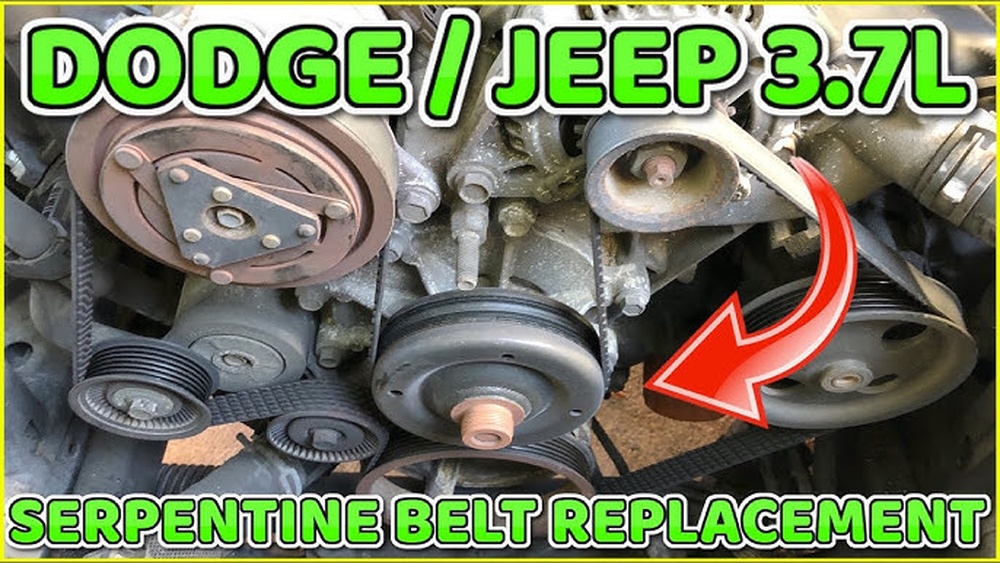
The serpentine belt in Jeep 3.7 engines connects multiple pulleys in a specific order. If the routing is wrong, your engine parts won’t work properly, and the belt could wear out quickly. Each Jeep 3.7 engine uses a similar diagram, but small differences can exist depending on model year and accessories.
What Does The Belt Control?
The belt powers:
- Alternator (charges the battery)
- Power steering pump (makes steering easier)
- Air conditioning compressor (keeps you cool)
- Water pump (keeps engine cool)
- Crankshaft pulley (main engine drive)
- Idler and tensioner pulleys (guide and keep tension)
If the belt snaps, all these systems can fail. The engine may overheat, or you could lose steering control.
Jeep 3.7 Belt Diagram: Three Key Items
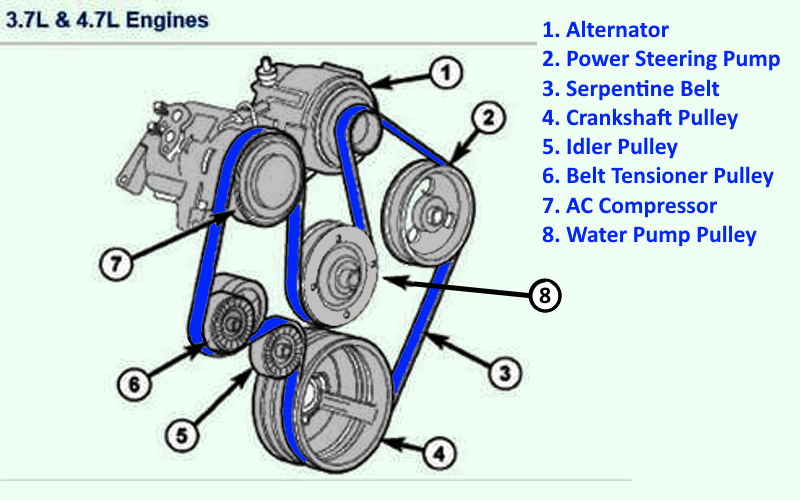
To fully understand the diagram, you need to identify three main items: the crankshaft pulley, the tensioner pulley, and the alternator. Each plays a special role in the belt’s routing.
Crankshaft Pulley
The crankshaft pulley is the largest pulley at the bottom front of the engine. It starts the movement for the belt and drives all other parts. In the diagram, the belt loops around this pulley first. Most Jeep 3.7 engines have the crankshaft pulley directly facing the radiator.
- Position: Bottom center, closest to the ground
- Function: Main engine drive, powers belt motion
- Tip: Always check for oil leaks here—oil can cause belt slippage
Tensioner Pulley
The tensioner pulley keeps the belt tight. If the belt is too loose, it can slip or squeal; too tight, it wears out faster. Most tensioners on Jeep 3.7 are spring-loaded and sit above the crankshaft pulley, slightly to the passenger side.
- Position: Upper right, near alternator
- Function: Maintains correct belt tension
- Tip: A worn tensioner is a common cause of belt noise. Replace if you hear squeaking.
Alternator
The alternator sits at the upper left of the engine (driver side). The belt wraps around the alternator pulley to generate electricity for the battery and electrical system. On the diagram, the alternator is easy to spot because of its wires.
- Position: Top left, near firewall
- Function: Generates electrical power
- Tip: If your battery dies often, check this part and the belt for wear.

Jeep 3.7 Belt Routing Diagram
Below is a simple visual representation of how the belt routes around these three items and other pulleys. This example fits most Jeep Liberty, Grand Cherokee, and Commander models with the 3. 7 engine.
| Pulley | Location | Role in Belt Routing |
|---|---|---|
| Crankshaft Pulley | Bottom center | Start point; drives all accessories |
| Tensioner Pulley | Upper right | Keeps belt tight |
| Alternator | Top left | Generates electricity |
| Power Steering | Right side | Helps steering |
| AC Compressor | Lower right | Runs air conditioning |
| Idler Pulley | Near center | Guides belt |
| Water Pump | Upper center | Cools engine |
Comparing Belt Routing: Jeep 3.7 Vs Other Engines
Some Jeep owners also drive V6 or V8 models. Here is a comparison of belt routing complexity:
| Engine | Belt Length | Pulley Count | Common Issues |
|---|---|---|---|
| Jeep 3.7 | ~90 inches | 7 | Squealing, misrouting |
| Jeep 4.0 | ~84 inches | 6 | Loose tension, cracks |
| Jeep 5.7 | ~92 inches | 8 | Belt slip, pulley wear |
As you see, the Jeep 3.7 belt diagram is not the simplest, but it’s easier than V8 setups.
Step-by-step: How To Replace The Jeep 3.7 Belt
If you want to replace the belt yourself, follow these steps:
- Disconnect the battery. This keeps you safe.
- Find the belt routing diagram. Usually, there’s a sticker under the hood.
- Locate the tensioner pulley. Use a wrench to rotate it and release belt tension.
- Remove the old belt. Slide it off each pulley carefully.
- Check all pulleys. Spin them to find any roughness or noise.
- Install the new belt. Follow the diagram exactly. Make sure the ribs sit in each groove.
- Release the tensioner. The new belt should be tight but not overstretched.
- Reconnect the battery. Start the engine and check for noise or misalignment.
Most Jeep 3.7 belts last 60,000–80,000 miles. If you live in a hot climate or drive off-road, check the belt more often.
Common Mistakes When Using The Belt Diagram
Many beginners miss small details:
- Routing errors: The belt sometimes goes behind pulleys, not just around.
- Wrong tension: Too loose means squealing; too tight damages bearings.
- Skipping pulley checks: A worn pulley can ruin a new belt.
- Ignoring the diagram: Guessing the route can cause expensive mistakes.
Always compare your work to the diagram after installation.
Real-world Example: Jeep Liberty 2005
A Jeep Liberty owner found that after replacing the belt, the air conditioning stopped working. The problem? The belt missed the AC compressor pulley. After rechecking the diagram, the issue was fixed, and all systems worked again. This shows how important following the Jeep 3.7 belt diagram is.
Practical Tips For Long Belt Life
- Always use OEM-quality belts for best fit.
- Check for cracks, fraying, or shiny spots.
- Replace tensioner and idler pulleys with the belt for longer life.
- Keep the belt clean—oil and coolant can shorten its lifespan.
You can find more technical data about Jeep engines at Wikipedia.

Frequently Asked Questions
What Are Signs Of A Worn Jeep 3.7 Belt?
You may hear squealing, see cracks, or notice power loss in steering or air conditioning.
How Often Should I Check The Belt?
Check every 20,000 miles or twice a year, especially in extreme climates.
Can I Use A Universal Belt?
No, always use a belt made for the Jeep 3.7 engine. Universal belts may not fit or last.
Do I Need Special Tools To Replace The Belt?
A basic ratchet wrench is enough for most models. Some may need a longer handle to release the tensioner.
What Happens If I Route The Belt Incorrectly?
Wrong routing can cause engine overheating, battery failure, or loss of power steering.
Understanding the Jeep 3.7 belt diagram is vital for safe, reliable driving. With clear diagrams and careful checks, you can handle belt replacement confidently and avoid costly mistakes.