Is The Jeep Commander Good For Wheeling? A Deep Dive
The Jeep Commander, produced from 2006 to 2010, often gets overlooked in the Jeep lineup. While models like the Wrangler are synonymous with off-roading, the Commander’s more suburban-friendly SUV design might make you wonder about its capabilities on the trail.
Can this three-row Jeep tackle challenging terrain, or is it best left on pavement? This article explores the Jeep Commander’s potential for off-road driving, examining its strengths, weaknesses, and what modifications might be necessary to make it a capable wheeler.
The Commander was built on the same platform as the Grand Cherokee of its era, which gives it a more robust foundation than many unibody SUVs. This shared DNA means it inherited some of the Grand Cherokee’s off-road hardware, including available four-wheel-drive systems and a decent amount of ground clearance. However, its design and marketing focused more on family utility and on-road comfort, which means it wasn’t configured from the factory as a dedicated off-roader. Understanding its stock capabilities and the common modifications needed is key to determining if the Commander can indeed be a good vehicle for wheeling.
Understanding The Jeep Commander’s Off-road Hardware
Before we talk about modifications, let’s look at what the Jeep Commander offers straight from the factory that can be beneficial for off-roading. Jeep is known for its off-road prowess, and even a less-focused model like the Commander has some interesting features.
Four-wheel-drive Systems
The Commander offered two main four-wheel-drive systems:
- Quadra-Trac I: This is a full-time, single-speed 4WD system. It automatically distributes power between the front and rear axles. While it provides better traction than a 2WD system, it lacks a low-range gear (4-Low). This means it’s suitable for light off-roading, slippery conditions like snow or rain, and moderate inclines, but it won’t offer the maximum torque multiplication needed for serious rock crawling or steep, technical climbs.
- Quadra-Trac II: This is a more capable system, featuring a two-speed transfer case. This means it includes a 4-Low gear (4WD Low range). Engaging 4-Low multiplies engine torque, allowing for slower, more controlled crawling over obstacles, better traction on steep hills, and more power when pulling. This system also includes a full-time 4WD mode and an electronic traction system that can brake individual wheels to simulate a locking differential. For off-roading, Quadra-Trac II is significantly superior to Quadra-Trac I.
Ground Clearance And Suspension
The Commander’s ground clearance is respectable for a factory SUV. Depending on the specific configuration and tire size, it typically ranges from around 8 to 8.5 inches. This is enough to clear smaller rocks and uneven terrain. Its independent front suspension and solid rear axle (in most models) offer a decent balance between on-road comfort and off-road articulation, though it’s not as flexible as the solid axles found on both ends of a Wrangler.
Durability And Components
Being built on the WK Grand Cherokee platform, the Commander shares many of its mechanical components. This means it has a robust unibody construction and generally durable drivetrain components. The V8 Hemi engine option, while not ideal for fuel economy, provides ample power for off-road situations. The transfer cases and differentials are generally considered reasonably strong for their intended use, though pushing them to extremes without upgrades can lead to failures.

Weaknesses Of The Jeep Commander For Wheeling
While the Commander has some positive attributes for off-road use, it also has significant limitations that prevent it from being a top-tier wheeler in stock form.
Limited Factory Off-road Features
Compared to a Jeep Wrangler, the Commander lacks many features that are standard for serious off-roading. It does not come with locking differentials from the factory, relying solely on electronic traction control. While electronic traction control can be helpful, it’s not as effective as a mechanical locker, especially in situations where one or more wheels lose traction completely. Furthermore, the approach, departure, and breakover angles are not as optimized as on vehicles designed specifically for off-roading, which can lead to scraping on obstacles.
Tire Size Limitations
Stock tire sizes on the Commander are generally geared towards on-road performance and fuel efficiency. They are typically all-season tires with limited tread depth and sidewall strength, making them prone to punctures and offering less grip on challenging surfaces like mud, rocks, or sand. The wheel wells also have limitations on how large a tire can be fitted without significant modifications.
Underbody Protection
The undercarriage of the Commander is not heavily protected from the factory. Key components like the transfer case, oil pan, and fuel tank are vulnerable to damage from rocks and debris. While some skid plates might have been offered as accessories, they were not standard and often not as robust as aftermarket options.
Electronic Systems And Water Fording
Modern SUVs like the Commander are filled with electronics. While the four-wheel-drive system is capable, the reliance on electronic controls means that deep water crossings can be risky. Water can potentially damage sensors, control modules, and other electronic components, leading to expensive repairs. The Commander’s water fording depth is also limited, usually around 19-20 inches.
Modifications To Enhance Commander’s Wheeling Capability
For those who want to take their Jeep Commander off the beaten path, several modifications can significantly improve its performance. These upgrades focus on increasing capability, durability, and protection.
1. Tires: The Most Important Upgrade
This is almost always the first and most impactful upgrade for any off-road vehicle.
- All-Terrain (AT) Tires: Switching to a good set of all-terrain tires is crucial. These tires offer a more aggressive tread pattern for better grip in mud, dirt, and rocks, along with stronger sidewalls to resist punctures. Look for tires with an “LT” (Light Truck) designation, as these are typically built tougher.
- Mud-Terrain (MT) Tires: For more extreme off-roading, mud-terrain tires provide the ultimate in traction in loose conditions. However, they can be louder on the highway and wear faster.
- Size: Increasing tire size (e.g., to 31, 32, or 33 inches) provides a higher ground clearance and allows the tire to better conform to uneven surfaces. This will likely require minor trimming of fender liners or more significant fender modifications depending on the size.
Pro Tip: When choosing tires, consider the load rating and ply rating for durability. A higher ply rating generally means a stronger sidewall.
2. Suspension Lift Kits
To accommodate larger tires and increase ground clearance, a suspension lift kit is often necessary.
- Budget Lifts: These are typically spacers that are added above the stock springs or struts. They are the most affordable option but can sometimes negatively affect ride quality and suspension travel.
- Complete Suspension Lifts: These kits replace stock components with longer springs, shocks, and sometimes control arms. They offer better performance, improved articulation, and a more comfortable ride both on and off-road. A lift of 2-4 inches is common for the Commander, allowing for up to 33-inch tires with some minor trimming.
Warning: A significant lift can put more stress on drivetrain components like CV joints and U-joints, potentially leading to premature wear.
3. Underbody Protection: Skid Plates
Protecting vital components is paramount for serious off-roading.
- Material: Skid plates are typically made from steel or aluminum. Steel offers maximum durability but adds significant weight. Aluminum is lighter and still very strong.
- Coverage: Essential areas to protect include the transfer case, engine oil pan, transmission pan, and fuel tank. Aftermarket companies offer bolt-on skid plate kits specifically designed for the Commander’s platform.
4. Gearing And Differentials
For tackling steeper climbs and technical terrain, improving the gear ratio or adding locking differentials can be game-changers.
- Re-gearing: If you install significantly larger tires, the vehicle’s effective gear ratio will be lowered, making it feel sluggish and putting more strain on the engine and transmission. Re-gearing the axles to a lower ratio (e.g., 4.10 or 4.56) compensates for larger tires, restoring lost power and improving off-road performance. This is a more involved and expensive modification.
- Locking Differentials: While not commonly available as aftermarket upgrades for the Commander, if you find a way to install selectable lockers (like ARB air lockers) in the front and/or rear differentials, it would dramatically increase its capability. These devices mechanically lock the axles together, ensuring both wheels on an axle receive power even if one is in the air. This is a complex and costly upgrade.
5. Recovery Gear
No off-road trip is complete without recovery equipment.
- Winch: A winch mounted on a sturdy aftermarket bumper can be a lifesaver when stuck.
- Tow Hooks/Recovery Points: Ensure your Commander has robust tow hooks or recovery points front and rear. Factory tow hooks can sometimes be weak; aftermarket ones are highly recommended for serious off-roading.
- Shovel, Traction Boards, Hi-Lift Jack: These are essential tools for self-recovery.
6. Bumpers And Armor
Aftermarket bumpers can offer better approach angles, provide mounting points for winches and lights, and offer more protection. Rock sliders protect the rocker panels from damage when sliding over obstacles.

Comparing The Commander To Other Jeeps For Wheeling
It’s helpful to contextualize the Commander’s off-road potential by comparing it to its more famous Jeep siblings.
Jeep Wrangler (jk/jl)
The Jeep Wrangler is the undisputed king of factory-built off-roaders. It features solid front and rear axles for maximum articulation, removable doors and roof for an open-air experience, and a design optimized for extreme terrain. It comes standard with 4WD Low, robust suspension, and often features like electronic sway bar disconnects and locking differentials (on Rubicon trims).
- Commander vs. Wrangler: The Wrangler is inherently more capable off-road in stock form. Its solid axles offer better articulation, and its design is purpose-built for challenging trails. The Commander, with its independent front suspension and more car-like design, will generally have less articulation and lower approach/departure angles than a comparable Wrangler. However, with significant modifications, a Commander can become a very capable wheeler, potentially surpassing a stock Wrangler in certain aspects due to its unique platform and available V8 power.
Jeep Grand Cherokee (wk/wk2)
The Commander shares its platform with the WK Grand Cherokee. The Grand Cherokee, especially in Overland or Trailhawk trims, often comes with more advanced off-road features than the Commander, such as Quadra-Drive II (which includes electronic limited-slip differentials), more robust skid plates, and sometimes air suspension for adjustable ride height.
- Commander vs. Grand Cherokee: A Grand Cherokee, particularly a higher trim level, will generally be more capable off-road out of the box than a Commander. The key difference lies in the available advanced systems like ELSDs and features like air suspension. However, the Commander’s simpler, more robust mechanicals (especially in models without air suspension) might be seen as an advantage by some off-roaders who prefer less complexity. With similar modifications, both can achieve high levels of off-road capability.
Jeep Cherokee (xj/kl)
The classic Jeep Cherokee XJ (1984-2001) is a beloved off-road icon. Its compact size, relatively simple mechanicals, solid axles, and excellent aftermarket support make it a favorite for custom builds. The newer KL Cherokee (2014-present) is a more modern crossover with independent front suspension and advanced 4WD systems, but it’s generally considered less rugged than the XJ and not as focused on extreme off-roading as a Wrangler.
- Commander vs. Cherokee: The XJ is a legendary wheeler, and many modified XJs can outperform a stock or lightly modified Commander. However, the Commander offers more interior space, modern amenities, and potentially more powerful engine options (like the Hemi). The KL Cherokee is more of a soft-roader; a modified Commander would likely be more capable than a stock KL.
Real-world Wheeling Experiences And Considerations
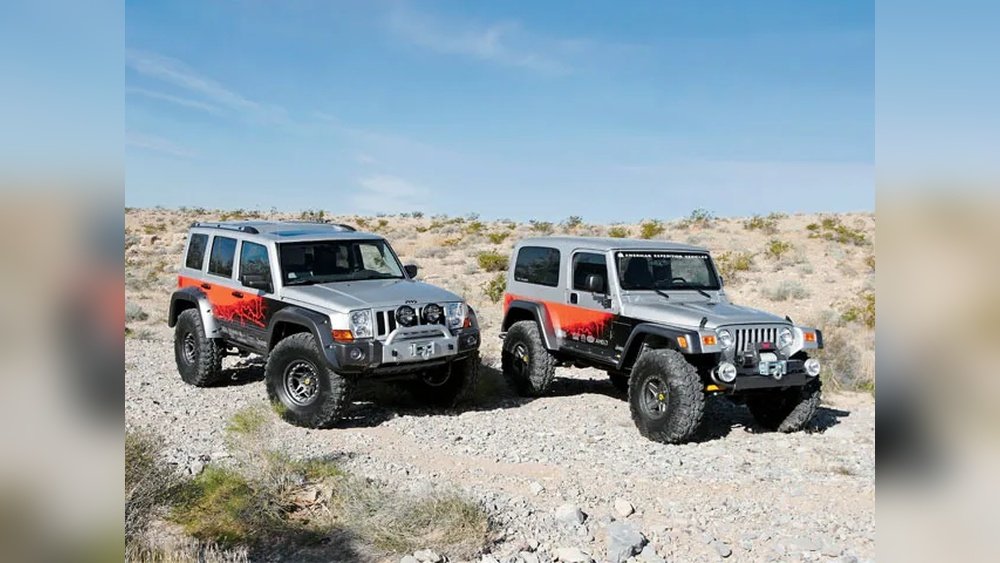
In my experience, the Jeep Commander’s suitability for wheeling depends heavily on expectations and the type of trails you plan to tackle. For light trails, fire roads, snow-covered paths, or moderate dirt tracks, a stock Commander with Quadra-Trac II and decent all-terrain tires can perform surprisingly well. It offers a comfortable ride on the highway, making it a viable option for a daily driver that can also handle weekend adventures.
However, if your definition of wheeling involves rock crawling, deep mud bogs, or steep, technical ascents, a stock Commander will likely struggle. The limited ground clearance, lack of factory lockers, and vulnerable underbody components are significant hindrances. This is where modifications become essential.
Common Issues And What To Watch For
When buying a used Commander for off-road potential, here are a few things to keep an eye on:
- Transmission: The transmission, especially the 5-speed automatic found in many V8 models, can be a weak point if the vehicle has been abused.
- Transfer Case: While generally robust, the transfer case can fail if overheated or subjected to extreme stress without proper maintenance or upgrades.
- Suspension Components: Look for signs of wear and tear, especially if the vehicle has already been modified. Worn ball joints, tie rods, and shocks can affect handling and off-road performance.
- Rust: As with any vehicle, check for rust, especially on the frame rails (even though it’s unibody, there are structural components that can rust), suspension mounts, and rocker panels.
The Commander As A Project Vehicle
The Jeep Commander represents an interesting project vehicle for someone who wants a capable off-roader but needs more space than a Wrangler or wants a unique build. Its platform is shared with the Grand Cherokee, meaning many Grand Cherokee aftermarket parts, especially suspension and armor, can be adapted. The availability of the Hemi V8 is also a significant plus for those seeking power.
The key is to approach it with realistic expectations. It won’t be a Wrangler out of the box, but with the right modifications, it can be transformed into a surprisingly competent off-road machine that still retains its