Is A Cow More Aerodynamic Than A Jeep
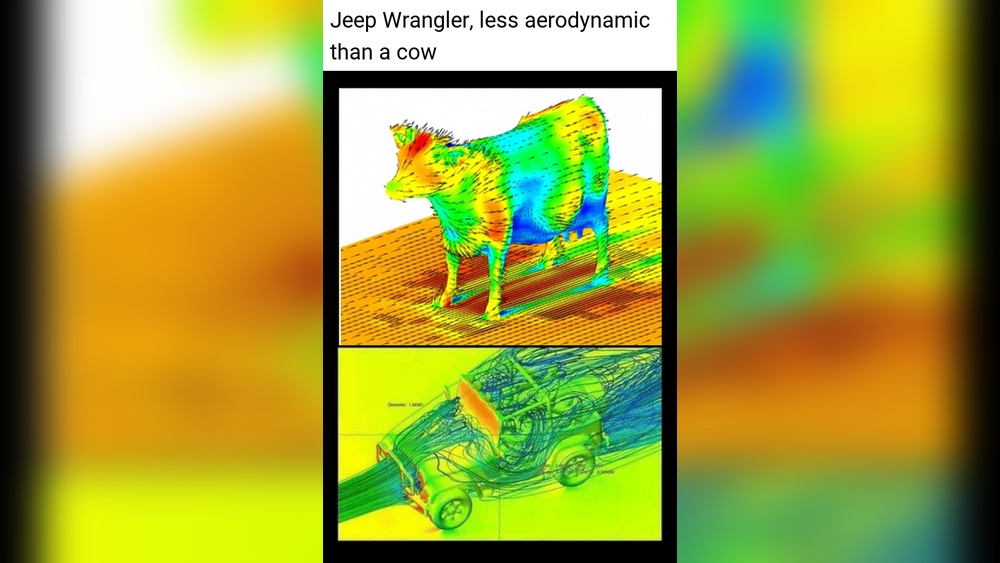
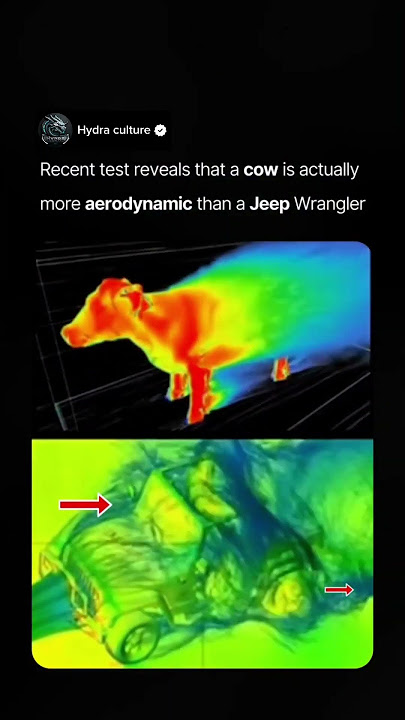
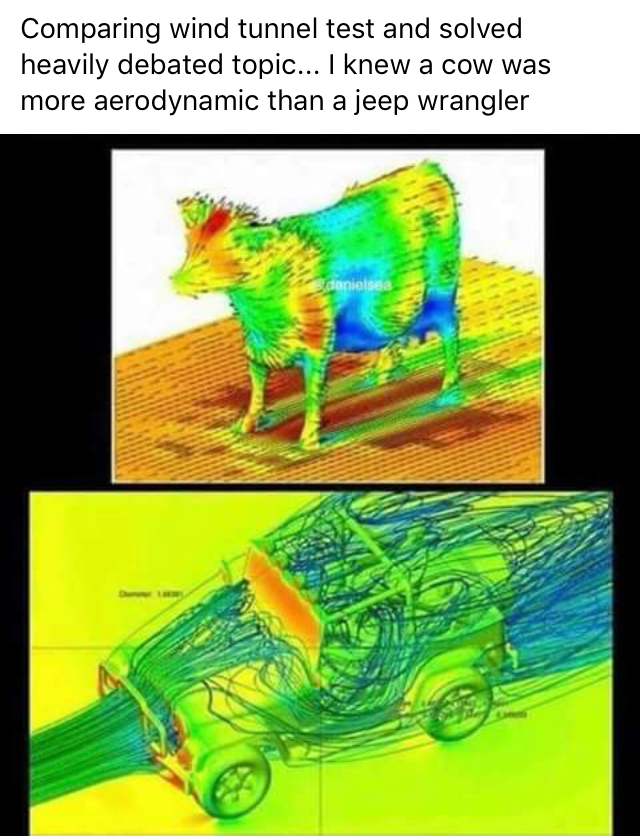
Have you ever wondered if a cow is more aerodynamic than a Jeep? This question sounds strange, but it’s a fun way to learn about aerodynamics in real life.
When we talk about aerodynamics, we mean how well something moves through air. Cars, animals, and even airplanes are designed or shaped to reduce air resistance.
But how do a cow and a Jeep compare? Let’s explore this question using real data, science, and examples.
Understanding Aerodynamics
Aerodynamics is the study of how air moves around objects. The main goal for vehicles is to reduce drag, which is the force that slows down movement. Lower drag means better fuel efficiency and faster speeds.
Drag coefficient (Cd) is a number that shows how aerodynamic something is. The lower the Cd, the easier it moves through air. A perfect shape for low drag is a teardrop, but most real objects are not shaped like this.
The Shapes: Cow Vs. Jeep
Cows and Jeeps have very different shapes. A cow is a living animal with a round body, head, and legs.
A Jeep is a boxy vehicle, often with flat surfaces and sharp angles.
Here’s a quick comparison of their shapes and how they affect air flow:
| Feature | Cow | Jeep |
|---|---|---|
| Body Shape | Round, uneven | Boxy, flat surfaces |
| Surface Area | Medium, curved | Large, flat |
| Front Profile | Wide, rounded head | Flat, vertical grille |
| Legs/Wheels | Thin legs | Four large wheels |
You can see that a cow’s body is round and uneven, while a Jeep is boxy. Usually, round shapes cause less drag than flat, vertical surfaces.
Drag Coefficient Data
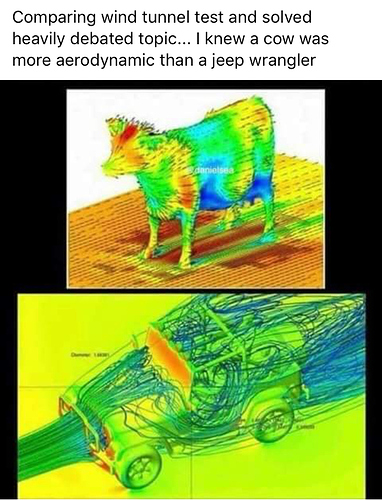
Let’s look at real numbers. The average drag coefficient of a cow is around 0.8 to 1.0. For a Jeep Wrangler, the Cd is about 0.55 to 0.60. These numbers might surprise you.
| Object | Drag Coefficient (Cd) |
|---|---|
| Cow | 0.8 – 1.0 |
| Jeep Wrangler | 0.55 – 0.60 |
| Modern Sedan | 0.25 – 0.30 |
A lower Cd means better aerodynamics. So, even though a Jeep looks boxy, its Cd is lower than a cow’s.
Why Jeeps Beat Cows In Aerodynamics
Most people think round shapes are more aerodynamic. But the Jeep is designed to move through air better than a cow. Here’s why:
- Design optimization: Even boxy cars like Jeeps are tested in wind tunnels to reduce drag. Small changes, like rounded edges and slanted windshields, help a lot.
- Surface smoothness: Jeeps have smooth metal surfaces. A cow’s fur and uneven body create turbulence, increasing drag.
- Front profile: Cows have a wide, blunt head. Jeeps may have a flat front, but the shape is made to cut through air.
Even with its boxy look, the Jeep’s Cd is lower. That means it faces less resistance when moving fast.
Real-life Examples
Consider these practical situations:
- If you push a cow and a Jeep at the same speed, the Jeep will face less air resistance, even though it’s heavier.
- On highways, a Jeep’s aerodynamics help it save fuel. A cow’s body is not made for speed, so it uses more energy to move fast.
Another insight: At low speeds, shape doesn’t matter much. At high speeds (like on a highway), aerodynamics become much more important.
Common Misconceptions
Many beginners think that “round means aerodynamic. ” But that’s not always true.
The surface, shape, and even small design details matter a lot.
Two non-obvious insights:
- Surface texture increases drag. A cow’s fur creates tiny air pockets, making it less aerodynamic.
- Wind tunnel testing gives vehicles like Jeeps an advantage. Animals are not designed for high-speed movement in air.
How Aerodynamics Affect Performance
Aerodynamics is not just about speed. It also affects:
- Fuel efficiency: Lower drag means better mileage.
- Noise: More drag creates wind noise.
- Stability: Good aerodynamics help vehicles stay stable.
A Jeep with lower Cd will perform better at high speeds than a cow, even if the cow is rounder.
Can Cows Be Made More Aerodynamic?
It’s an interesting idea, but cows are not meant to go fast. Some cyclists wear suits that mimic animal skin for less drag, but cows would need smooth skin, a teardrop body, and no legs sticking out. In reality, this is not possible.
Frequently Asked Questions
Final Thoughts
Comparing a cow and a Jeep teaches us a lot about aerodynamics. Even though cows are round, their bodies and surfaces are not optimized for moving through air. Jeeps, on the other hand, are built for speed and efficiency. The numbers show that a Jeep is more aerodynamic than a cow, even if it doesn’t look that way. Next time you see a Jeep and a cow, remember: science and design beat nature when it comes to moving fast through the air.