Every Jeep Grand Cherokee owner knows the feeling: you’re driving at night, and you need a little more visibility to see the road clearly. Whether you’re navigating dark back roads or dealing with foggy weather, knowing how to turn on your bright lights (also called high beams) is essential for safety. But newer models, high-tech switches, and various settings can make this simple task confusing, especially for first-time owners or those switching from another car brand.
This guide will show you exactly how to turn on bright lights in your Jeep Grand Cherokee, whether your model is older or from the latest generation.
You’ll learn about the difference between regular headlights and high beams, the specific steps to activate them, and even how to troubleshoot if your bright lights aren’t working.
Plus, you’ll see real-world examples, data tables comparing features across different years, and practical tips that even seasoned drivers sometimes overlook.
Understanding Headlights And Bright Lights
Before you start, it’s important to know the difference between regular headlights (low beams) and bright lights (high beams). Low beams are for everyday night driving. They provide enough light for most situations but won’t blind other drivers. High beams, on the other hand, are much brighter and are designed for open roads with little or no traffic.
Why Use Bright Lights?
- Better visibility: High beams let you see farther ahead and to the sides.
- Increased safety: Spot animals, pedestrians, or hazards sooner.
- Confidence in rural areas: Essential for country roads without streetlights.
But remember, using high beams when there’s oncoming traffic can blind other drivers. Always switch back to low beams when another vehicle approaches.
How To Turn On Bright Lights: Step-by-step Instructions
The exact method depends on your Jeep Grand Cherokee’s model year. Controls may look different, but the steps are similar.
For Most 2011–2024 Jeep Grand Cherokee Models
- Locate the headlight stalk: This is usually on the left side of your steering wheel.
- Turn on the headlights: Twist the end of the stalk or use the dashboard knob to set headlights to “Auto” or “On.”
- Push the stalk forward: With headlights on, push the stalk away from you (toward the dashboard). This activates the high beams.
- Check the dashboard icon: A blue high-beam indicator will light up on your dash.
- To turn off, pull the stalk back to its original position.
For Older Models (1999–2010)
The process is almost the same, but some models may have a separate switch or a pull mechanism on the headlight stalk. Always start with the headlights ON before trying to activate high beams.
Flash-to-pass Feature
Need to quickly flash your brights? Pull the stalk toward you briefly, then release.
This is called “flash-to-pass” and works even if your high beams are off.
Quick Reference Table: High Beam Activation By Model Year
| Model Year | Control Location | Action | High Beam Indicator |
|---|---|---|---|
| 1999–2010 | Left stalk | Pull or push stalk | Blue icon |
| 2011–2024 | Left stalk | Push stalk forward | Blue icon |
| 2021+ (with auto high beam) | Left stalk + settings menu | Push stalk & enable in menu | Blue icon or auto symbol |
Automatic High Beams: How They Work
Many new Grand Cherokees now have automatic high beams. This feature turns your high beams on and off by itself, based on traffic and lighting conditions. It uses sensors to detect other vehicles and switches between low and high beams to avoid blinding others.
How To Enable Or Disable Auto High Beams
- Turn on your headlights (usually set to “Auto”).
- Go to the vehicle settings menu on your touchscreen.
- Find “Lights” or “Exterior Lighting.”
- Toggle “Auto High Beam” on or off.
When auto high beam is active, you can still manually override it by pushing or pulling the stalk.
Auto High Beam Vs. Manual Control
| Feature | Manual High Beam | Auto High Beam |
|---|---|---|
| Driver Control | Full control | Automatic, can override |
| Sensor Required | No | Yes |
| Best For | City or preference | Highway, rural, convenience |
Common Problems And Troubleshooting
Even with clear steps, sometimes high beams won’t turn on. Here’s what to check:
- Headlights must be on: High beams only work when low beams are on.
- Daytime Running Lights (DRL): High beams won’t activate if only DRLs are on.
- Faulty bulb or fuse: If the high beam icon lights up but you see no difference, check your bulbs and fuses.
- Incorrect stalk operation: Make sure you’re pushing/pulling the stalk the right way.
- Auto high beam disabled: If your Jeep has auto high beams, ensure the feature is enabled in the settings.
Troubleshooting Table: Why Aren’t My Bright Lights Working?
| Symptom | Possible Cause | Solution |
|---|---|---|
| High beams don’t turn on | Headlights not active | Switch headlights to “On” |
| No difference in brightness | Blown high beam bulb | Replace bulb |
| Auto high beam not working | Feature turned off | Enable in settings |
| Icon on, but no light | Fuse issue | Check/replace fuse |
Tips For Safe And Effective High Beam Use
Using bright lights the right way makes night driving safer for everyone. Here are key tips:
- Dim your high beams for oncoming cars: As soon as you see headlights coming, switch back to low beams.
- Watch for reflective signs: High beams can cause glare on road signs. Reduce beams if it’s distracting.
- Do not use in fog or heavy snow: High beams reflect off particles, making it harder to see.
- Use on open highways or country roads: High beams are best where there are no streetlights or other cars.
- Adjust headlights if needed: Misaligned headlights can lower effectiveness or blind others.
A common mistake: many drivers forget that high beams won’t work unless their headlights are fully on. Daytime running lights or parking lights are not enough. Also, some drivers think their high beams are broken, but it’s often just a blown bulb or a setting missed in the vehicle menu.
Model-specific Differences: What Owners Should Know
Not all Grand Cherokees are the same. Over the years, Jeep has updated lighting controls and added features like auto high beams and adaptive lighting. Here are two details most people miss:
- Adaptive Headlights: Some top trims have lights that turn with your steering. These don’t affect how you activate high beams, but you may notice the beam pattern moves with the wheel.
- LED vs. Halogen Bulbs: Newer models use LED headlights, which are brighter and more energy-efficient. They also make the difference between low and high beams more noticeable.
If you bought your Jeep used, always check the manual or test the switch. Sometimes, aftermarket parts or previous repairs can change how controls work.
When To Use Bright Lights – And When Not To
Knowing when to use high beams is as important as knowing how. Here are situations where high beams help and where they can be dangerous.
Use High Beams When:
- Driving on dark country roads with no streetlights
- On highways with little to no traffic
- Spotting animals or obstacles in the distance
Avoid High Beams When:
- There’s oncoming traffic within 500 feet
- Following another car closely (within 200–300 feet)
- In fog, heavy rain, or snow (causes glare)
- In city areas with good street lighting
If you’re unsure, switch to low beams whenever you see other vehicles. That’s not just polite it’s required by law in most states.
Real-world Example: Night Driving In A 2022 Jeep Grand Cherokee
Imagine you’re driving a 2022 Jeep Grand Cherokee on a quiet highway. It’s completely dark, and you want better vision. You twist the headlight knob to “Auto” — the headlights come on. You push the left stalk forward. Instantly, the blue high-beam icon lights up on the dash, and the road ahead is much brighter.
A minute later, you see oncoming headlights. You pull the stalk back, switching to low beams.
The blue icon disappears. Once the car passes, you push the stalk forward again.
If your Jeep has auto high beams, you would see the system switch back automatically when safe.

Upgrading Your Headlights: Is It Worth It?
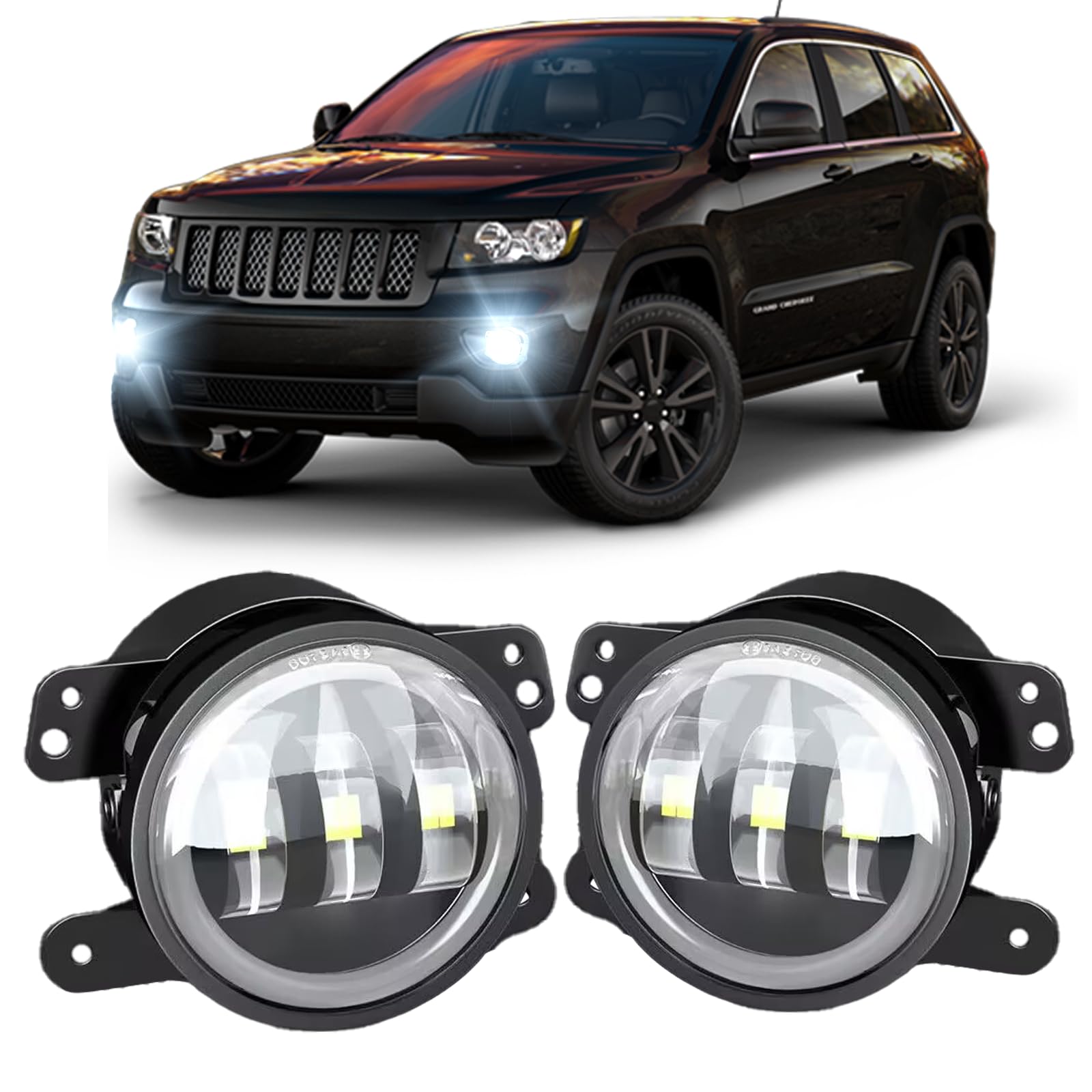
Some Jeep owners want even brighter lights. Upgrading from halogen to LED bulbs is a common request. LED bulbs offer more light and last longer, but you must check if your Grand Cherokee is compatible. Incorrect installation can cause glare or even damage wiring.
Always use bulbs that meet DOT (Department of Transportation) standards. Non-approved bulbs can be too bright or scatter light the wrong way, risking a ticket or safety issues. If you’re considering an upgrade, consult your Jeep dealer or a trusted mechanic first.
Extra Insight: What Most Drivers Overlook
Two things even experienced drivers sometimes miss:
- Battery drain risk: Leaving your high beams on while parked (for example, while waiting in the car) can drain the battery faster than low beams.
- Headlight lens condition: Cloudy or dirty headlight lenses reduce the brightness of both low and high beams. Clean your lenses regularly for best results.
Why Do My High Beams Work, But My Low Beams Don’t?
Usually, this means your low beam bulbs are burned out, or there’s a fuse issue. High and low beams often use separate bulbs or circuits. Check your owner’s manual for the correct fuse and bulb locations.
Can I Install Aftermarket Led Bulbs In My Grand Cherokee?
Yes, but only if they are DOT approved and fit your specific model. Some aftermarket bulbs can cause glare or may not fit properly. Check with your dealer before buying.
What Does The Blue Headlight Icon Mean On My Dashboard?
This is the high beam indicator. When it lights up, your bright lights are active. If you see it but your lights don’t get brighter, check your bulbs or fuses.
My Auto High Beams Keep Turning Off. Why?
Auto high beams turn off when they detect other vehicles or enough ambient light. Dirty windshields or sensors can also confuse the system.
Clean your sensors and check the settings menu.
Where Can I Find More Details About My Jeep’s Lighting System?
The best source is your owner’s manual or the official Jeep Owners website. They provide diagrams, troubleshooting steps, and feature lists by model year.
Driving at night is much safer when you understand how to use your Jeep Grand Cherokee’s bright lights. Whether you have a classic model or a brand-new one with automatic features, these simple steps and insights will keep you confident and in control.
Always consider other drivers, follow your state’s headlight laws, and remember good visibility is key to safe journeys.