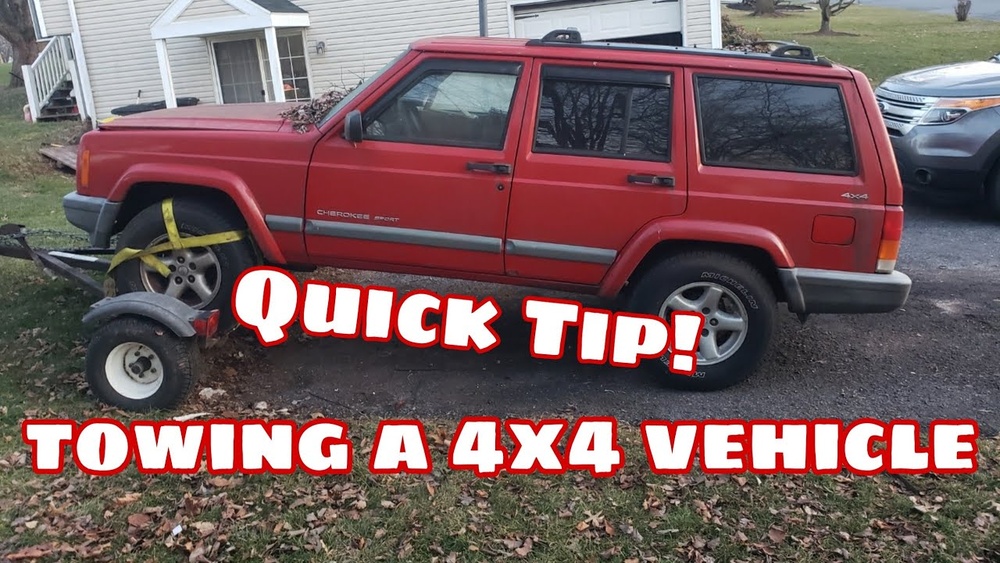
Towing a 4 wheel drive Jeep is not as simple as hooking up a tow strap and pulling it along. There are important steps and safety measures you need to follow, or you risk damaging the drivetrain, transmission, or transfer case. Many Jeep owners—especially those new to off-roading—are not aware that improper towing can lead to expensive repairs. This guide will show you how to tow a 4 wheel drive Jeep safely, with clear instructions for the four main towing methods: flat towing (all four wheels on the ground), dolly towing (front wheels up), trailer towing (all wheels off the ground), and emergency towing. Along the way, you’ll find practical tips, real-world examples, and quick comparison tables to help you choose the right method for your situation.
Why Towing A 4 Wheel Drive Jeep Needs Special Care
A 4 wheel drive system has extra parts—like the transfer case and drive shafts—that can be damaged if the wheels turn while the engine is off and the transmission is in the wrong gear. Towing without the right setup can overheat the transfer case or transmission, even if you only go a short distance. This is why manufacturers like Jeep give specific instructions for towing each model.
Towing rules also depend on the type of Jeep you have (Wrangler, Cherokee, Gladiator, etc. ), and whether it has a manual or automatic transmission.
Always check your owner’s manual first, but this guide will help you understand the general rules and best practices.
1. Flat Towing (dinghy Towing)
Flat towing, also called “dinghy towing” or “four-down towing,” means pulling your Jeep behind another vehicle with all four wheels on the ground. This is a popular choice for RV owners who want to bring their Jeep on adventures.
Steps To Flat Tow A 4 Wheel Drive Jeep
- Check Owner’s Manual: Not all Jeep models can be flat towed. For example, most Jeep Wranglers (with a manual transfer case) can be flat towed, while many Cherokees with AWD cannot.
- Prepare the Jeep:
- Manual transmission: Place the transmission in gear (usually first gear or reverse).
- Automatic transmission: Place the transmission in Park.
- Transfer case: Shift into Neutral (N). This disconnects the drivetrain.
- Unlock the Steering Wheel: Most Jeeps allow the steering wheel to stay unlocked when the key is in the “off, not locked” position.
- Attach Tow Bar: Use a tow bar rated for your Jeep’s weight. Secure safety chains as a backup.
- Connect Wiring: Use a wiring kit to connect the Jeep’s lights to the tow vehicle.
- Double-Check Everything: Make sure all connections are tight and the transfer case is in Neutral.
Flat Towing Pros And Cons
| Advantage | Disadvantage |
|---|---|
| Fast to hook up | Only works for certain models |
| No trailer needed | Risk of drivetrain damage if done incorrectly |
| Easy to store equipment | Extra wear on tires |
Non-obvious insight: If you hear a loud clunk or feel resistance when setting the transfer case to Neutral, double-check the process—it’s easy to miss a step, especially on newer Jeeps with electronic shifters.

2. Dolly Towing (front Wheels Up)
Dolly towing lifts the front wheels of your Jeep off the ground, leaving the rear wheels on the pavement. This method is often used when flat towing is not possible, but the Jeep’s rear wheels are safe to roll.
Steps To Dolly Tow A 4 Wheel Drive Jeep
- Read the Manual: Many Jeeps cannot be dolly towed, especially if they have a full-time 4WD system.
- Position the Jeep: Drive the front wheels onto the dolly, ensuring it’s centered and balanced.
- Secure the Jeep: Strap down the front wheels tightly. Attach safety chains.
- Transmission and Transfer Case: Generally, both should be in Neutral. However, some models require the transmission in Park—always follow your manual’s guidance.
- Rear Differential: If your Jeep has an open differential, dolly towing may be possible. But with limited slip or locking differentials, rear axle components can overheat.
Dolly Towing Pros And Cons
| Advantage | Disadvantage |
|---|---|
| Cheaper than a trailer | Not safe for all 4WD Jeeps |
| Easy to store dolly | Rear driveline can be damaged |
| Good for short moves | Setup takes more time than flat towing |
Practical tip: Always re-check the wheel straps after driving a few miles—straps can loosen slightly as the tires settle.
3. Trailer Towing (all Wheels Off The Ground)
Trailer towing means loading your Jeep onto a flatbed trailer or car hauler so none of the wheels touch the road.
This is the safest method for any 4 wheel drive Jeep, especially for long distances or if you’re not sure about the transfer case settings.
Steps To Trailer Tow A 4 Wheel Drive Jeep
- Choose the Right Trailer: Make sure the trailer can handle your Jeep’s weight. Most Wranglers weigh between 3,900 and 4,500 lbs (1,770–2,040 kg).
- Load Carefully: Use ramps and drive the Jeep slowly onto the trailer. If possible, have a spotter guide you.
- Secure the Jeep: Use ratchet straps or chains to anchor all four wheels. Attach safety chains as a backup.
- Check Weight Distribution: Position the Jeep so about 60% of its weight is in front of the trailer axle for stability.
- Double-Check Everything: Inspect all straps and connections before driving.
Trailer Towing Pros And Cons
| Advantage | Disadvantage |
|---|---|
| No drivetrain risk | Requires large trailer |
| Works for all Jeeps | More expensive |
| Best for long trips | Needs more storage space |
Non-obvious insight: Lowering tire pressure slightly before securing your Jeep on the trailer can help prevent movement and reduce stress on the tie-downs.
4. Emergency Towing
Sometimes, you need to tow your Jeep in a hurry maybe it broke down off-road, or you have no access to proper equipment. Emergency towing can save the day, but it’s risky if not done with care.
Steps For Emergency Towing
- Assess the Situation: If your Jeep has severe damage (like a broken axle), do not tow it with wheels on the ground.
- Use a Tow Strap or Rope: Only use strong, rated straps. Attach to the Jeep’s frame-mounted tow hooks—never to bumpers or suspension parts.
- Transfer Case and Transmission: Place both in Neutral if possible. For newer Jeeps with electronic shifters, follow manual override steps if the vehicle won’t shift.
- Drive Slowly: Keep speeds under 20 mph and cover the shortest possible distance.
- Steering and Brakes: With the engine off, power steering and brakes won’t work. The driver in the Jeep must be extra alert.
Critical note: Emergency towing is only for short distances. If you must tow farther, get a flatbed or professional tow service.
Comparing The Four Towing Methods
Here’s a quick look at the main differences among the four methods:
| Towing Method | Equipment Needed | Jeep Model Compatibility | Risk to Drivetrain |
|---|---|---|---|
| Flat Towing | Tow bar, safety chains | Most Wranglers, some Gladiators | Medium |
| Dolly Towing | Tow dolly, straps | Some 4WD, not all | High |
| Trailer Towing | Flatbed trailer, straps | All Jeeps | Low |
| Emergency Towing | Tow strap or rope | All (short distance only) | High |
Common Mistakes To Avoid
Even experienced Jeep owners make mistakes when towing. Here are a few to watch for:
- Forgetting to set the transfer case in Neutral: This is the most common cause of drivetrain damage.
- Using the wrong towing method: Not all Jeeps can be flat or dolly towed.
- Not securing the steering wheel: If it locks, the Jeep can veer and cause an accident.
- Ignoring weight ratings: Overloading the tow vehicle or trailer can lead to brake failure.
- Skipping safety checks: Loose straps or chains can cause a dangerous situation on the road.
Extra Tips For Safe Jeep Towing
- Know your state laws. Some states require extra lights, brake systems, or safety chains.
- Use a supplemental braking system. Most states require a braking system on the towed vehicle if it’s over 3,000 lbs.
- Practice driving with your setup before going on a long trip. Stopping and turning with a towed vehicle feels very different.
- Inspect tires and wheel bearings before every trip. Towed Jeeps still need good tires and working bearings.
- Carry basic tools and spare parts. A flat tire or broken strap is easier to fix if you’re prepared.

When To Call A Professional
If you’re not sure about your Jeep’s towing setup, or if you have a newer model with electronic transfer cases, it’s often safer to call a professional tow service. Many modern Jeeps have sensors that can prevent the vehicle from entering Neutral, or have AWD systems that can be damaged if towed incorrectly. A pro will have the right equipment and experience to avoid costly mistakes. The American Automobile Association (AAA) is a reliable source for towing help and advice; see their recommendations at AAA Towing Safety.
Can I Flat Tow Any 4 Wheel Drive Jeep?
No, not all Jeeps can be flat towed. Most Jeep Wranglers with a manual transfer case can, but many newer Cherokees and vehicles with full-time AWD cannot.
Always check your owner’s manual before flat towing.
What Happens If I Tow My Jeep With The Transfer Case In Gear?
Towing with the transfer case in gear can cause major damage to the transmission and transfer case. Always place the transfer case in Neutral before towing with wheels on the ground.
Is It Safe To Tow A Jeep With An Automatic Transmission?
Yes, but only if you follow the correct procedure. For most Jeeps, put the transmission in Park and the transfer case in Neutral.
Never tow with the transmission in Neutral and the transfer case in gear.
What Is The Maximum Speed I Can Tow My Jeep?
When flat or dolly towing, most manufacturers recommend not exceeding 55 mph. For emergency towing (with a strap), stay under 20 mph and tow only short distances.
Do I Need Special Lights Or Brakes When Towing?
Yes, most states require you to use lights on the towed vehicle, and if your Jeep is over 3,000 lbs, a supplemental braking system is usually required for safety and legal reasons.
Towing a 4 wheel drive Jeep is easy once you know the correct method. Take the time to learn your Jeep’s requirements, use the right equipment, and double-check your setup every time.
With the right preparation, you’ll keep your Jeep and your adventures rolling smoothly and safely.