If you own a Jeep, you know the thrill of driving with the hard top off. But when the weather changes or you need to store your Jeep hard top for a season, it’s important to keep it safe from damage.
Many Jeep owners make mistakes that lead to scratches, warping, or even cracks. This guide will show you the best ways to store a Jeep hard top, highlight common mistakes, and share practical tips so your hard top stays in excellent shape.
Why Proper Storage Matters
Jeep hard tops are made from fiberglass or plastic composites. They cost between $1,500 and $2,500 to replace. Poor storage can cause fading, scratches, and leaks. A well-stored hard top lasts longer, keeps its value, and fits perfectly when you reattach it. Some owners forget that temperature and moisture can cause warping, which leads to annoying leaks.
Best Places To Store Your Jeep Hard Top
Where you store your hard top is just as important as how you store it.
- Garage: The most popular option. It protects from sun, rain, and snow. Make sure your garage has enough space.
- Basement: Good for climate control, but avoid placing it near water pipes.
- Shed: Use only if it’s dry and secure. Check for rodents or insects.
- Storage unit: Safe but costs between $50–$150 per month.
Here’s a quick comparison of storage locations:
| Location | Protection | Security | Cost |
|---|---|---|---|
| Garage | Excellent | High | Free |
| Basement | Good | Medium | Free |
| Shed | Fair | Low | Free |
| Storage Unit | Excellent | High | $50-$150/mo |
Preparing The Hard Top For Storage
Before storing, spend a few minutes preparing the hard top:
- Clean thoroughly. Use mild soap and water. Avoid harsh chemicals.
- Dry completely. Moisture leads to mold and mildew.
- Inspect for damage. Look for cracks, chips, or loose seals.
- Remove hardware. Take off bolts, latches, and any accessories.
- Label parts. Use zip bags and labels for bolts and screws.
Many beginners skip cleaning, which invites dust and mold. Also, failing to label hardware causes confusion when reinstalling.
Storing Methods: What Works Best
There are several ways to store your Jeep hard top safely. Each has pros and cons.
On A Cart Or Dolly
A hard top storage cart is designed for easy movement and support. These carts cost $150–$250.
| Cart Type | Support Quality | Ease of Use | Price |
|---|---|---|---|
| Standard Dolly | Medium | Easy | $150 |
| Premium Cart | High | Very Easy | $250 |
- Place the hard top upright.
- Secure it with straps.
- Cover with a soft blanket.
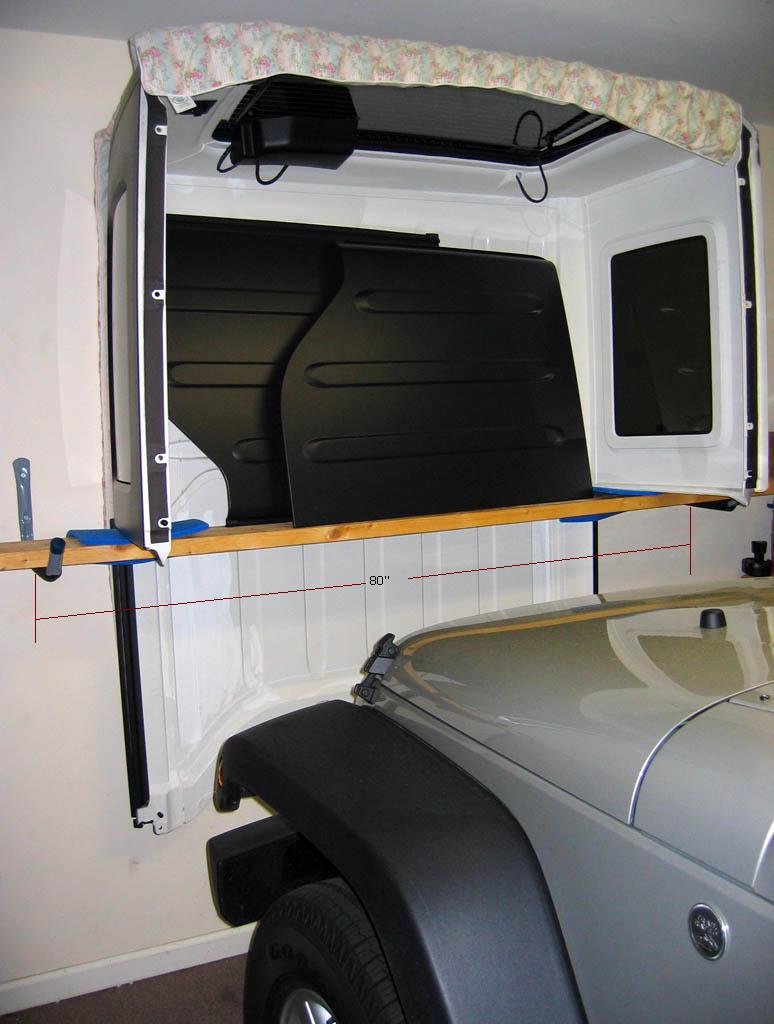
Hanging From The Ceiling
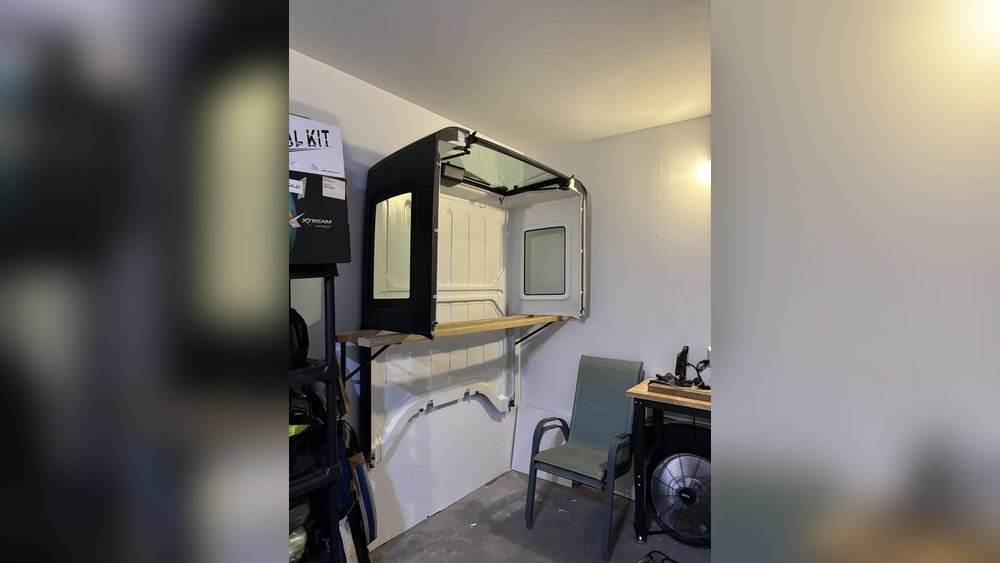
A ceiling hoist saves floor space. Kits start at $100. Make sure the ceiling can support the weight (usually 150–200 lbs).
- Use padded hooks.
- Check hoist cables regularly.
- Keep the top level to avoid warping.
Standing Upright Against A Wall
This method is simple but risky. Place foam pads between the wall and the hard top.
Never lean it directly on concrete. Secure with straps to prevent tipping.
Using A Storage Bag
A hard top storage bag protects from dust and scratches. Prices range from $50–$100. Bags work best with carts or racks, not by themselves.
Climate Control And Protection
Temperature and humidity affect your hard top. Extreme heat or cold can cause warping and cracks.
Ideal storage temperature is between 60 80°F. Humidity should be below 60%.
- Use a dehumidifier in damp areas.
- Avoid direct sunlight.
- Cover with a UV-resistant blanket.
Here’s a comparison of climate risks:
| Condition | Risk | Solution |
|---|---|---|
| High Humidity | Mold/Mildew | Dehumidifier |
| Extreme Heat | Warping | Climate control |
| Direct Sunlight | Fading | UV Cover |
Common Mistakes To Avoid
Many Jeep owners make these errors:
- Stacking items on the hard top. This causes cracks.
- Leaving hardware attached. Bolts can scratch the surface.
- Ignoring climate. Moisture and heat damage the material.
- Not securing the hard top. It can fall and break.
- Storing outside. Rain, snow, and sun ruin the finish.
Forgetting to check the hard top regularly is another mistake. Inspect it monthly for dust, moisture, or pests.
Practical Tips For Safe Storage
- Always store on a flat surface.
- Use foam or blankets for extra protection.
- Label and organize all hardware.
- Check straps and supports every month.
- Never store near chemicals or sharp tools.
Many Jeep owners use a cart and a bag for the best protection. Some even install a camera in their garage to monitor the hard top.
Frequently Asked Questions
How Heavy Is A Jeep Hard Top?
The average weight is 150–200 lbs. Always have two people when moving it to avoid injury.
Can I Store My Jeep Hard Top Outside?
It’s not recommended. Sun, rain, and temperature changes cause fading, cracks, and warping.
How Often Should I Check My Stored Hard Top?
Check every month. Look for dust, moisture, and pests. Early detection prevents bigger problems.
Is A Storage Cart Worth The Cost?
Yes, especially if you move the hard top often. It reduces the risk of dropping and damaging the top.
What Should I Do If I Find Damage During Storage?
Clean the area and apply a fiberglass repair kit. For major cracks, contact a professional or refer to Jeep’s official site for help.
Storing your Jeep hard top properly protects your investment and keeps your Jeep ready for adventure. With the right storage location, method, and climate control, you’ll avoid common mistakes and extend the life of your hard top.
Taking a few extra steps now saves money and stress later.