When you experience death wobble in your Jeep Wrangler, it’s both frightening and dangerous. The steering wheel shakes violently, and the whole front end feels unstable.
Many Jeep owners face this issue, especially after lifting their vehicles or installing larger tires. But the good news?
You don’t have to live with death wobble. With the right approach, you can stop it and drive confidently again.
What Is Death Wobble?
Death wobble is not just a minor shake. It’s a severe, rapid oscillation of the front wheels and steering wheel.
It usually starts after hitting a bump at speeds above 45 mph. The vibration can make your Jeep very hard to control.
This problem mainly affects solid front axle vehicles like the Jeep Wrangler, especially after modifications.
Common Triggers
- Worn suspension or steering parts
- Out-of-balance tires
- Loose track bar bolts
- Improper wheel alignment
Even a small issue can start death wobble. Often, it’s a mix of multiple small problems instead of one big fault.
Main Causes Of Death Wobble
Understanding the root causes is key to fixing death wobble. Here’s a quick comparison of the most common reasons:
| Cause | Typical Symptoms | How It Leads to Wobble |
|---|---|---|
| Loose track bar | Clunking noise, visible movement | Lets axle shift, triggering wobble |
| Worn tie rod ends | Steering play, uneven tire wear | Reduces steering stability |
| Bad ball joints | Squeaking, wandering steering | Allows excess movement in wheel |
| Unbalanced tires | Vibration at high speed | Creates oscillation, amplifies wobble |
| Misaligned wheels | Poor handling, tire wear | Causes uneven forces on suspension |
Step-by-step Guide: How To Stop Death Wobble On Jeep Wrangler
To solve death wobble, you need a systematic approach. Here’s how you can do it:
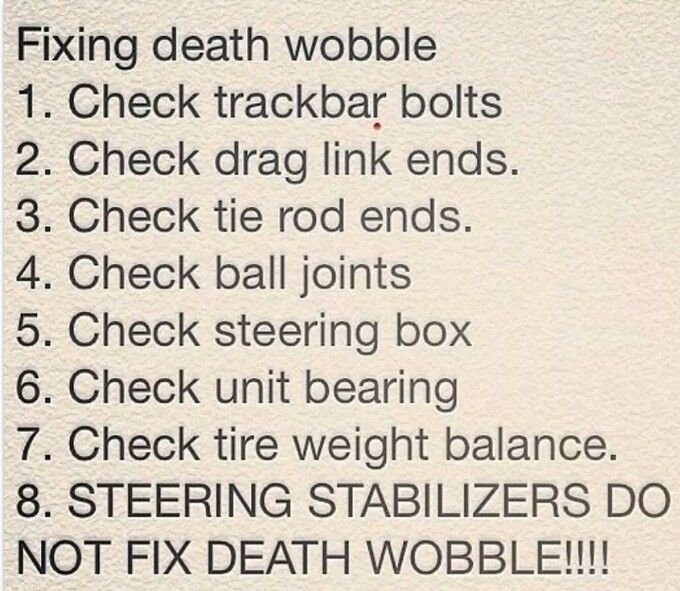
1. Inspect And Tighten The Track Bar
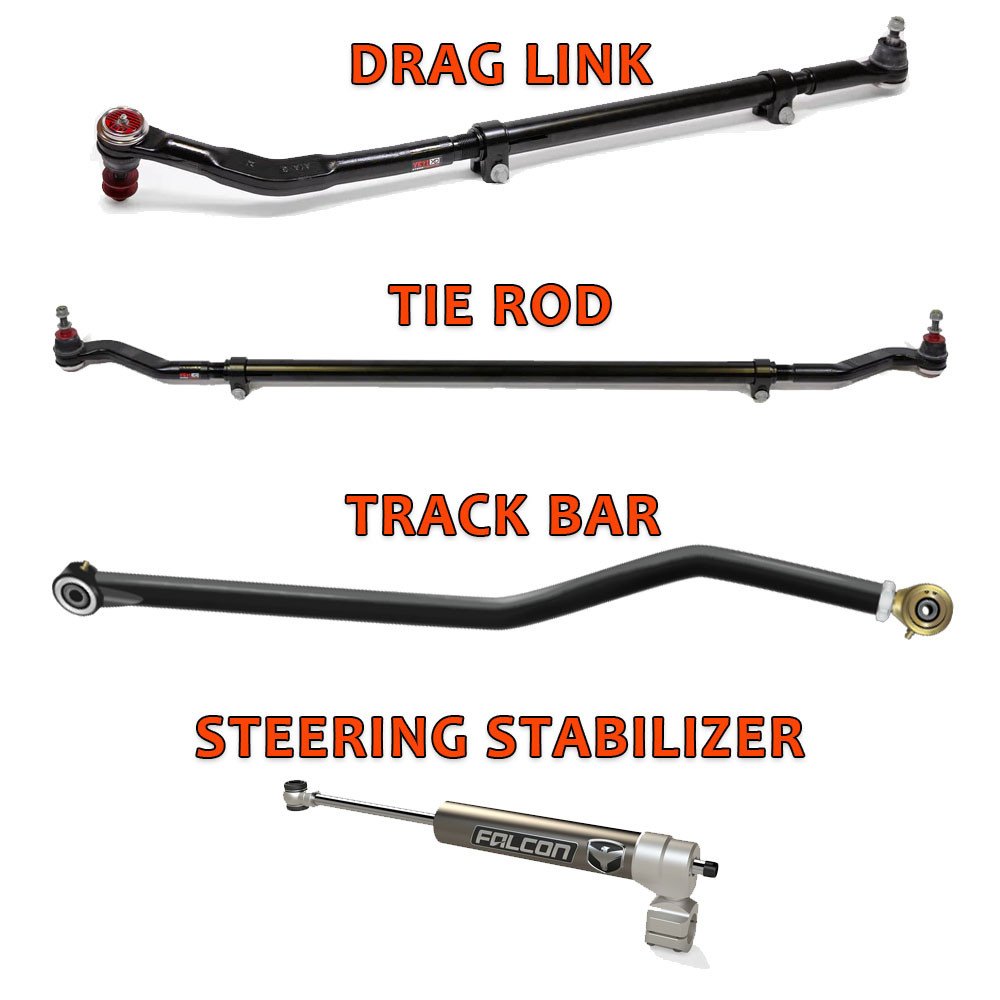
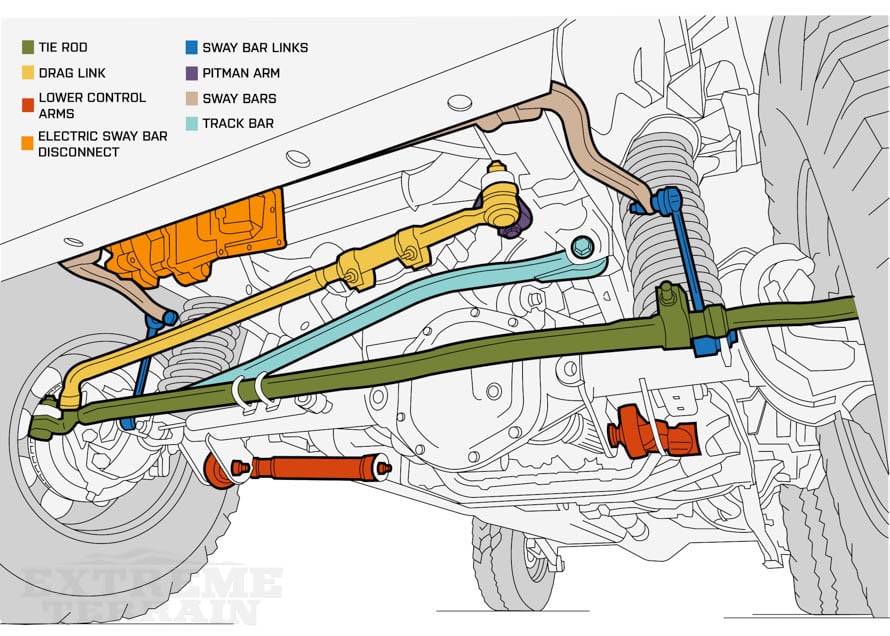
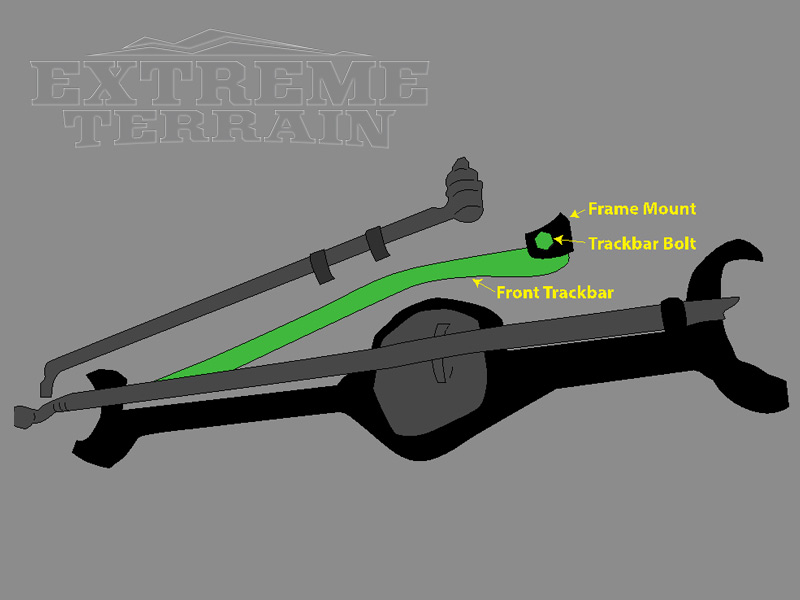
The track bar keeps your axle centered. It must be tight at both ends. Use a torque wrench and check bolts at both the axle and frame mounts. Even a small amount of looseness can start wobble.
2. Check All Steering Components
Look at tie rod ends, drag link, and ball joints. Grab each part and try to move it by hand. If you see any play or hear clicks, replace the worn part. Many times, multiple components are worn at once.
3. Balance And Rotate Your Tires
Unbalanced or worn tires are a common trigger. Ask for a professional tire balance and rotate your tires front to back.
If your wheels are bent, consider replacing them.
4. Get A Proper Wheel Alignment
A Jeep with incorrect toe or caster will handle poorly and can wobble. A specialized shop can set your alignment to factory specs. After lifting your Jeep, you often need a new alignment.
5. Inspect Suspension Bushings
The control arm bushings and track bar bushings should be firm and crack-free. Any worn-out bushing lets parts move too much. Upgrading to polyurethane bushings can help.
6. Replace The Steering Stabilizer (if Needed)
A steering stabilizer can reduce minor shakes, but it’s not a cure. If your current one is leaking or weak, replace it only after fixing the root causes.
7. Address Lift Kit And Aftermarket Part Issues
If you’ve added a lift kit, double-check installation. Some kits need adjustable track bars or longer control arms.
Cheap kits may create geometry problems that cause wobble.
8. Confirm Wheel Bearings And Hubs Are Solid
Lift the front of your Jeep and grab each tire at the top and bottom. Wiggle the tire—if you feel play, the wheel bearing or hub assembly may be failing.
How Much Does It Cost To Fix Death Wobble?
The cost depends on what’s worn out. Here’s a breakdown of typical repair costs:
| Component | Estimated Cost (Parts + Labor) | Difficulty (1-5) |
|---|---|---|
| Track bar replacement | $150–$400 | 2 |
| Tie rod ends | $100–$300 | 2 |
| Ball joints (pair) | $250–$600 | 4 |
| Wheel alignment | $80–$150 | 1 |
| Steering stabilizer | $60–$200 | 1 |
Pro tip: Sometimes, a single $2 bolt that’s loose can trigger death wobble. Always start with tightening and inspecting before spending on new parts.
Non-obvious Insights Most Jeep Owners Miss
- Frame cracks near the track bar mount can mimic loose bolts. If you keep tightening but still have wobble, inspect the frame for cracks or oval holes.
- Improper torque on suspension bolts is common after off-road trips or DIY repairs. Always recheck torque specs after every trail run or major service.
- Aftermarket wheels with wrong backspacing can change steering geometry and increase stress on suspension parts, making wobble more likely.
Preventing Death Wobble In The Future
- Regularly inspect all steering and suspension parts, especially after off-roading.
- Use quality components if replacing parts—cheap ones often wear out fast.
- Keep your tires balanced and check alignment after any suspension change.
- Avoid mixing old and new suspension parts; worn parts can transfer stress to new ones.
If you need deeper technical guidance, the Wikipedia Death Wobble article is a useful resource.
Frequently Asked Questions
What Is The First Thing To Check For Death Wobble?
Always start with the track bar. Make sure all bolts are tight and there’s no movement at the mounts.
Can A Bad Steering Stabilizer Cause Death Wobble?
A weak stabilizer can make wobble feel worse, but it’s rarely the true cause. Fix suspension and steering issues first.
Will Bigger Tires Increase The Risk Of Death Wobble?
Yes, larger tires add weight and stress. This can wear out steering and suspension parts faster, making wobble more likely.
Is It Safe To Drive With Death Wobble?
No. Death wobble can cause loss of control.
Slow down, pull over safely, and inspect your vehicle before driving again.
Do All Jeep Wranglers Get Death Wobble?
Not all, but Wranglers with solid front axles are more prone, especially if modified or poorly maintained.
Addressing death wobble can feel overwhelming, but with careful inspection and targeted repairs, your Jeep Wrangler can return to safe, stable driving. Don’t ignore the signs taking action early will keep your adventures worry-free.