Every Jeep Grand Cherokee owner knows the feeling: you start your SUV, and suddenly a warning light appears on your dashboard. It’s the tire pressure monitoring system (TPMS) alert, telling you that one or more tires need attention. This warning is not just annoying—it’s there for your safety. Incorrect tire pressure can affect braking, fuel economy, and even how your Jeep handles. But what if you’ve already checked and adjusted your tires, and the light won’t turn off? Resetting the tire pressure system is the next step. This guide walks you through the how-to, explains why the warning happens, and helps you avoid common mistakes.
Understanding Tire Pressure Monitoring In Jeep Grand Cherokee
Modern Jeep Grand Cherokees use a TPMS to monitor air pressure in each tire. If any tire falls below the recommended level, the system triggers a warning light. Most models from 2007 onward use direct TPMS, meaning each tire has a sensor inside the valve stem. These sensors send real-time data to your car’s computer.
Why is this important? Low tire pressure can cause poor traction, uneven tire wear, and even blowouts. On the other hand, overinflated tires can reduce grip and make your ride uncomfortable. Keeping pressure at the right level is essential for both safety and performance.
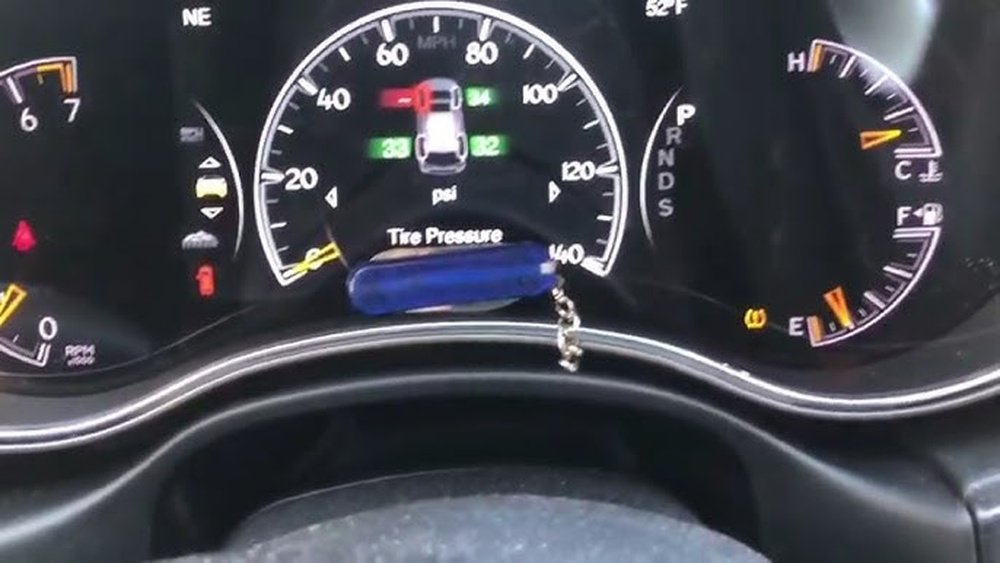
What Causes The Tire Pressure Warning Light?
A tire pressure warning can appear for several reasons:
- Temperature changes: Cold weather can lower tire pressure.
- Small leaks: Slow punctures or faulty valve stems.
- Tire replacement or rotation: New tires or moving them around can confuse sensors.
- Sensor battery failure: TPMS sensors have batteries that last 5–10 years.
Most of the time, simply inflating your tires to the recommended pressure will turn off the warning. But sometimes, you’ll need to reset the system.
How To Check Tire Pressure Correctly
Before you reset anything, always check your tire pressures. Here’s a simple step-by-step:
- Find the recommended pressure: Look for a sticker on the driver’s door jamb. Most Jeep Grand Cherokees recommend 33–36 psi (pounds per square inch), but check your specific model.
- Use a quality gauge: Digital gauges give the most accurate results.
- Check when tires are cold: Measure pressure before driving or after the car has sat for at least three hours.
- Adjust as needed: Add or release air until each tire matches the recommended psi.
Pro tip: Don’t forget the spare tire—some models include it in the TPMS system.
Step-by-step: How To Reset Tire Pressure Jeep Grand Cherokee
If you’ve set all your tires to the right pressure and the warning light remains, it’s time to reset the system. The process can be slightly different depending on your Grand Cherokee’s year and trim. Here’s how to do it on most models from 2011 and up:
1. Drive To Reset
Often, the simplest method is just to drive. The TPMS may need a short trip to re-check each tire.
- Start your Jeep and drive at or above 15 mph for at least 10 minutes.
- The system should re-calibrate and turn off the light automatically.
This method works for most minor issues and after topping up the tires.
2. Manual Reset Procedure
Some Jeep Grand Cherokees have a manual reset option in the vehicle’s menu:
- With the vehicle off, turn the ignition to “On” (do not start the engine).
- Use the steering wheel buttons to navigate to the “Vehicle Info” screen.
- Scroll to “Tire Pressure”.
- Hold the “OK” button until the TPMS light blinks or turns off (if this feature is available).
Not all years support this, but it’s worth a try if you see the option.
3. Using The Key Fob (some Models)
Certain newer models let you reset the system using the remote:
- Turn the ignition to “Off.”
- Press and hold the “Lock” and “Unlock” buttons on the key fob for about 10 seconds.
- Watch for the hazard lights to blink—this signals the reset.
4. Disconnect The Battery (last Resort)
If the light refuses to turn off, you can force a reset:
- Turn off your Jeep.
- Open the hood and disconnect the negative battery terminal for about 10 minutes.
- Reconnect the battery and start the engine.
This clears the car’s memory and may reset the TPMS. However, it can also reset other systems like the clock and radio presets.
Important: Only use this method if you’re comfortable working under the hood, and always wear gloves and eye protection.
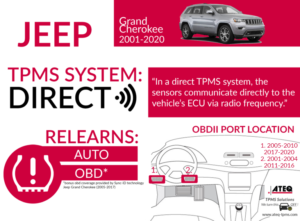
Comparing Jeep Grand Cherokee Tpms Systems By Model Year
Understanding which TPMS system your Grand Cherokee uses can help you troubleshoot more effectively. Here’s a quick reference:
| Model Year | TPMS Type | Reset Method |
|---|---|---|
| 2007–2010 | Direct (valve stem sensors) | Drive to reset |
| 2011–2020 | Direct, advanced menu | Menu/manual or drive |
| 2021–Present | Direct, key fob & app | Key fob, Uconnect app |
Knowing your model year and reset options can save you time and frustration.
Common Mistakes When Resetting Tire Pressure
Even experienced drivers make errors when dealing with TPMS. Avoid these common pitfalls:
- Not using a reliable gauge: Cheap or old gauges can give false readings.
- Checking tires when hot: Driving heats up tires, increasing pressure and leading to under-inflation when cooled.
- Ignoring the spare: Some Grand Cherokees monitor the spare tire too.
- Skipping a full inspection: A persistent warning may mean a nail, crack, or slow leak.
- Rushing the reset: The system sometimes needs up to 20 minutes of driving to recalibrate.
When To Replace Tpms Sensors
TPMS sensors aren’t designed to last forever. If the warning light stays on, even with proper pressure and resets, a sensor could be bad. Here’s what to watch for:
- TPMS warning flashes for 1 minute, then stays solid: This usually means a sensor is not communicating.
- Battery life: Most sensors last 5–10 years. If your Jeep is older, replacement may be necessary.
- After tire change: If a shop damages a sensor during tire replacement, it may fail.
Replacing sensors is a job for a qualified tire shop. They’ll program the new sensor to your Jeep’s computer.
Using Technology: Uconnect App And Diagnostics
Newer Jeep Grand Cherokees (especially 2021 and up) include the Uconnect app and advanced diagnostics. You can check and sometimes reset TPMS warnings from your smartphone:
- Open the Uconnect app.
- Go to the “Vehicle Health Report” or “Tire Pressure” section.
- The app will show current pressures and any alerts.
Some versions allow you to schedule service or even reset warnings remotely.
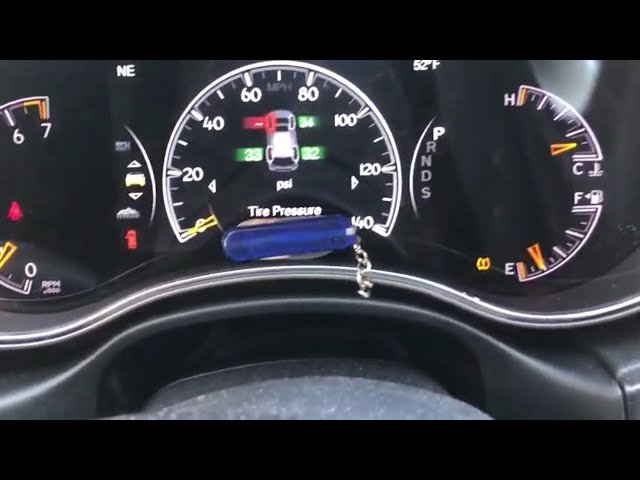
How Tire Pressure Impacts Performance And Safety
It’s easy to ignore a small warning light, but correct tire pressure is critical. Here’s why it matters:
- Fuel economy: Under-inflated tires can lower MPG by up to 3%.
- Braking distance: Low pressure increases stopping distance, especially on wet roads.
- Tire wear: Incorrect pressure causes uneven wear, shortening tire life.
- Handling: Proper pressure keeps your Jeep stable in corners and during emergency maneuvers.
A study by the National Highway Traffic Safety Administration (NHTSA) found that vehicles with under-inflated tires are three times more likely to be involved in tire-related crashes.
Quick Reference: Jeep Grand Cherokee Tire Pressure Recommendations
To make things even easier, here’s a summary of the recommended tire pressures for popular Grand Cherokee trims:
| Model/Trim | Front Tires (psi) | Rear Tires (psi) | Spare Tire (psi) |
|---|---|---|---|
| Laredo | 36 | 36 | 60 (temporary spare) |
| Limited | 36 | 36 | 60 |
| Overland/Summit | 33–36 | 33–36 | 60 |
| Trailhawk | 36 | 36 | 60 |
Always check your owner’s manual for the most accurate numbers.

Real-world Example: Stubborn Tpms Warning
Imagine you inflate all tires correctly, but the light still won’t turn off. You try the drive-to-reset method and wait 20 minutes, but nothing changes.
In this case, a sensor may be damaged or the system needs a manual reset.
If you recently had new tires installed, ask the shop if they checked or replaced the TPMS sensors. Sometimes, a simple sensor re-learn procedure (done with a special tool at a tire shop) is necessary.
This is a common frustration, but it’s usually solved quickly with the right approach.
Expert Tips For Jeep Owners
- Rotate tires regularly: Every 6,000–8,000 miles. This helps sensors and tires last longer.
- Keep a portable air compressor: Quick fixes on the road are easier with your own tool.
- Replace valve caps: Missing caps can let in dirt and moisture, damaging sensors.
- Check pressure monthly: Don’t wait for the warning light—make it a habit.
Frequently Asked Questions
How Do I Know If My Jeep Grand Cherokee’s Tpms Sensor Is Bad?
A faulty sensor usually triggers a blinking warning light that stays solid after a minute. You may also see a message like “Service Tire Pressure System.
” If you’ve inflated your tires and reset the system, but the warning remains, a sensor may be dead and needs replacement.
Can I Reset The Tire Pressure Warning Light Without Any Tools?
Yes, most of the time. Simply inflating your tires to the correct pressure and driving for 10 20 minutes at 15 mph or higher will reset the warning.
If not, try the manual reset through the menu or use your key fob if your model supports it.
What If My Tire Pressure Keeps Dropping Even After Resetting?
If your tires keep losing air, you likely have a slow leak, damaged valve stem, or a puncture. Inspect each tire carefully or visit a tire shop.
Don’t ignore repeated warnings driving on low tires is dangerous.
Do I Need To Reset The Tpms After Rotating My Tires?
Usually, the system will adjust automatically after a short drive. However, if the warning appears after rotation, double-check your pressures and try the reset procedures.
On rare occasions, a tire shop may need to reprogram the sensors.
Where Can I Find The Recommended Tire Pressure For My Jeep Grand Cherokee?
Look at the sticker in the driver’s door jamb or check your owner’s manual. The values are usually 33–36 psi for most trims. For more details, you can also consult the official Jeep website or the National Highway Traffic Safety Administration.
Making sure your Jeep Grand Cherokee’s tire pressure is correct—and knowing how to reset the system—keeps you safe and your ride smooth. With these practical steps and tips, you’ll be ready to handle the warning light with confidence every time.


















