Getting your kayak onto a Jeep Grand Cherokee can feel challenging, especially if you’re new to kayaking or roof racks. The Grand Cherokee’s height, roof design, and weight of most kayaks can make loading tough without the right approach. But with a few smart steps and the right gear, you can load your kayak safely and drive with confidence.
Choosing The Right Kayak Rack For A Jeep Grand Cherokee
The first step is picking a kayak rack that matches both your vehicle and your kayak’s size.
| Rack Type | Pros | Cons |
|---|---|---|
| J-Cradle | Saves space; Secure hold | Harder to load alone |
| Saddle | Stable; Easy loading | Takes more roof space |
| Stacker | Holds multiple kayaks | Best for whitewater kayaks |
| Lift-Assist | Helps with heavy kayaks | Expensive |
J-cradles are the most popular for SUVs like the Grand Cherokee. They hold the kayak at an angle, saving space for other gear. Saddles offer a flat, stable surface but need more roof width. If you often paddle alone, a lift-assist rack can make a huge difference, but these cost more.
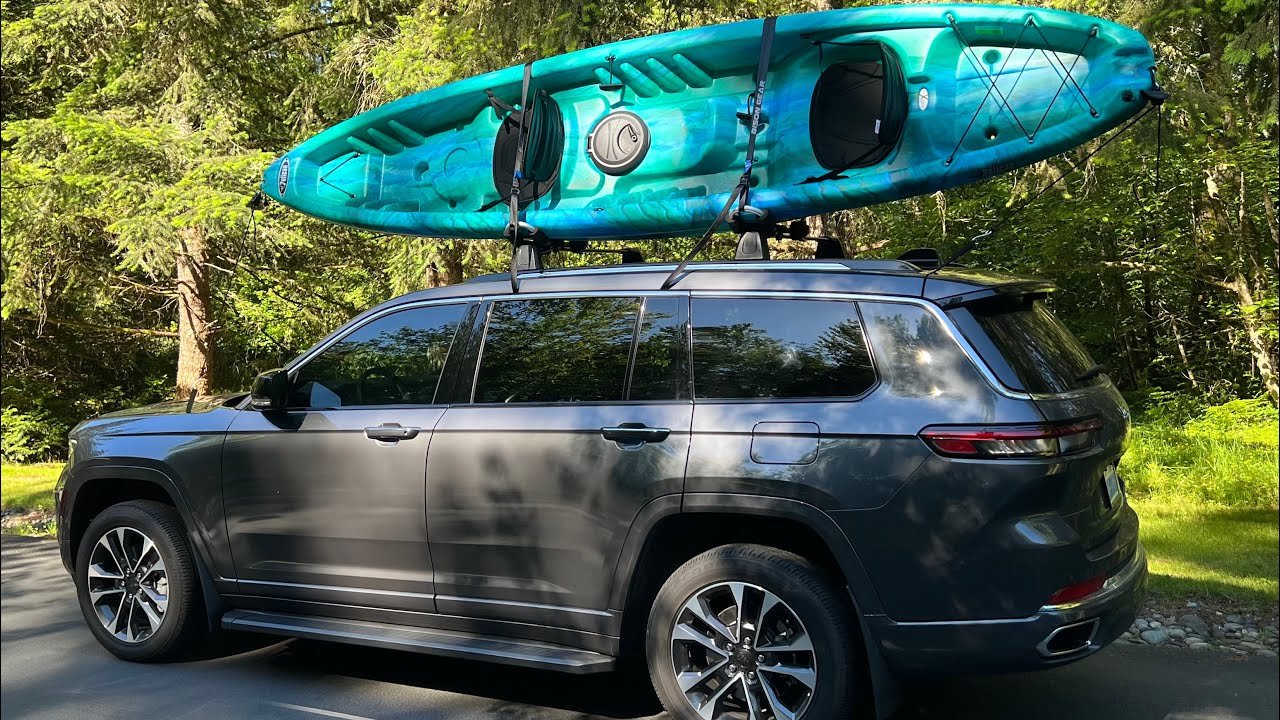
Tip: Always check your Grand Cherokee’s crossbar weight limit. Most models support 150–165 lbs, more than enough for a kayak but important if you carry extra gear.
Preparing Your Kayak And Vehicle
Before you lift anything, make sure your Jeep Grand Cherokee and kayak are ready.
- Inspect the roof rack. Crossbars should be tight and properly spaced (about 24–36 inches apart).
- Clean the roof and rack. Dirt or sand can scratch your paint.
- Remove loose items from the kayak. Paddles, life jackets, or seat cushions can fall off during loading.
Beginner insight: Place a soft towel or foam pad on the Jeep’s roof edge. This protects your paint if the kayak touches the car while loading.
Lifting And Positioning The Kayak
Lifting the kayak is where most people struggle, especially if you’re doing it solo.
Loading With Two People
- Stand on each side of the kayak, next to the Jeep.
- Lift together, keeping your backs straight.
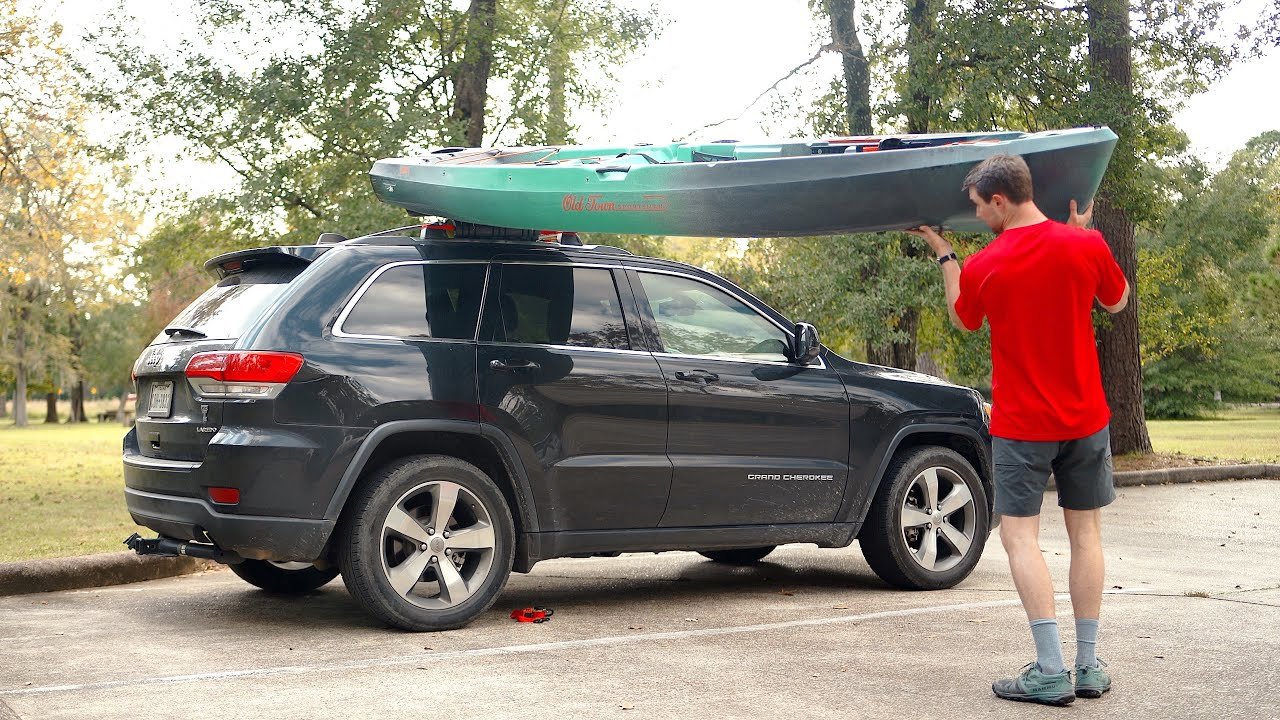
- Place the kayak onto the rack, cockpit facing up.
- Center the kayak so weight is balanced.
Loading Solo
If you’re alone, these steps make loading easier and safer:
- Place the kayak behind your Jeep, bow (front) facing forward.
- Lift the bow onto the rear crossbar or a towel on the roof.
- Move to the stern (back), lift, and slide the kayak forward until centered on the rack.
Non-obvious tip: Many overlook the value of a rug or bathmat draped over the back of the Jeep. This gives a smooth, scratch-free surface for sliding the kayak up.
Securing The Kayak Properly
Once the kayak is on the rack, use quality cam straps (not bungee cords) to secure it. Here’s how:
- Drape a strap over the kayak at each crossbar.
- Run the strap under the bar, then up and through the cam buckle.
- Tighten until snug, but not crushing the hull.
- Twist the straps to reduce wind noise.
| Security Method | Purpose | When to Use |
|---|---|---|
| Main Cam Straps | Primary hold | Always |
| Bow/Stern Lines | Stops forward/backward movement | Highway driving, long trips |
Bow and stern lines (front and back tie-downs) are vital for highway speeds or windy days. Attach them to the tow hooks under your Jeep and the kayak’s handles. These lines prevent the kayak from shifting during sudden stops or strong gusts.
Example: On a 2-hour highway drive, skipping bow and stern lines can cause the kayak to “bounce,” risking damage to your car or losing the kayak.
Common Mistakes To Avoid
New kayakers often make these errors:
- Over-tightening straps: This can bend or crack your kayak’s hull.
- Forgetting the bow/stern lines: Leading cause of kayaks coming loose.
- Using rope instead of cam straps: Rope can loosen during long drives.
- Not checking straps after 10–20 miles: Straps can settle; re-tightening is smart.
Extra insight: If your Jeep has a sunroof, never place the kayak directly over it. Pressure can crack the glass, especially with heavy kayaks.
Driving Tips With A Kayak On The Roof
A loaded kayak changes how your Jeep Grand Cherokee handles. The vehicle is taller and less stable in crosswinds.
- Drive slower, especially on highways.
- Take corners gently.
- Watch for low bridges, parking garages, and tree branches.
- Listen for unusual noises—whistling or banging may mean a loose strap.
After parking, check all straps before heading home. Kayaks can shift from vibration.
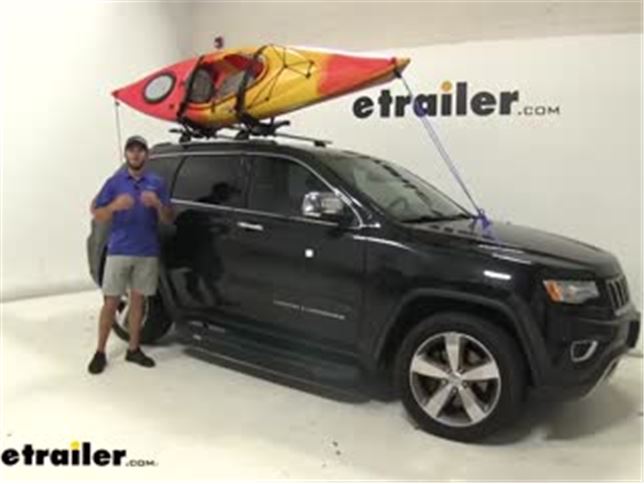
Quick Comparison: Jeep Grand Cherokee Vs Other Suvs For Kayak Transport
How Does The Grand Cherokee Compare To Similar Vehicles?
| Vehicle | Roof Height | Crossbar Limit |
|---|---|---|
| Jeep Grand Cherokee | 69–70 in | 150–165 lbs |
| Honda CR-V | 66–68 in | 165 lbs |
| Ford Explorer | 70–71 in | 165 lbs |
The Grand Cherokee is about average height for midsize SUVs. If you find loading tough, consider a portable step stool or a lift-assist rack.
Final Thoughts
Loading a kayak onto a Jeep Grand Cherokee is very possible with the right rack, a little preparation, and a careful routine. The key is to protect your car and kayak, use secure straps, and double-check everything before you drive. With these steps, your outdoor trips start smoothly and safely.
For even more details on roof rack options and safety, the REI Car Rack Guide offers helpful advice.
Frequently Asked Questions
How Much Weight Can The Jeep Grand Cherokee Roof Rack Hold?
Most Grand Cherokee models support 150–165 lbs on the factory crossbars. Always check your owner’s manual before loading.
Can I Load A Kayak By Myself Onto A Jeep Grand Cherokee?
Yes, but it’s easier with a slide mat or lift-assist rack. Take your time and use the sliding method described above.
Do I Need Bow And Stern Lines For Short Trips?
For city drives, you may skip them, but for highway speeds or windy days, always use bow and stern lines.
What Size Kayak Fits On A Jeep Grand Cherokee?
Most standard kayaks (8 14 feet) fit well. Extra-long or tandem kayaks may require wider racks or special tie-downs.
Are There Special Racks For Inflatable Kayaks?
Yes, but most J-cradles and saddles also work with inflatables. Always check the rack’s specs for compatibility.