Installing a trailer wiring harness on your Jeep Wrangler can make towing much safer and easier. Whether you want to pull a small trailer, carry bikes, or tow for camping, a proper wiring harness is essential. Many Jeep owners feel unsure about electrical work, but you don’t need to be an expert to do this. With the right steps, clear guidance, and simple tools, you can install the harness yourself and avoid expensive labor costs. This guide will walk you through everything from choosing the right harness to connecting the wires, all within a manageable word count.
Choosing The Right Trailer Wiring Harness
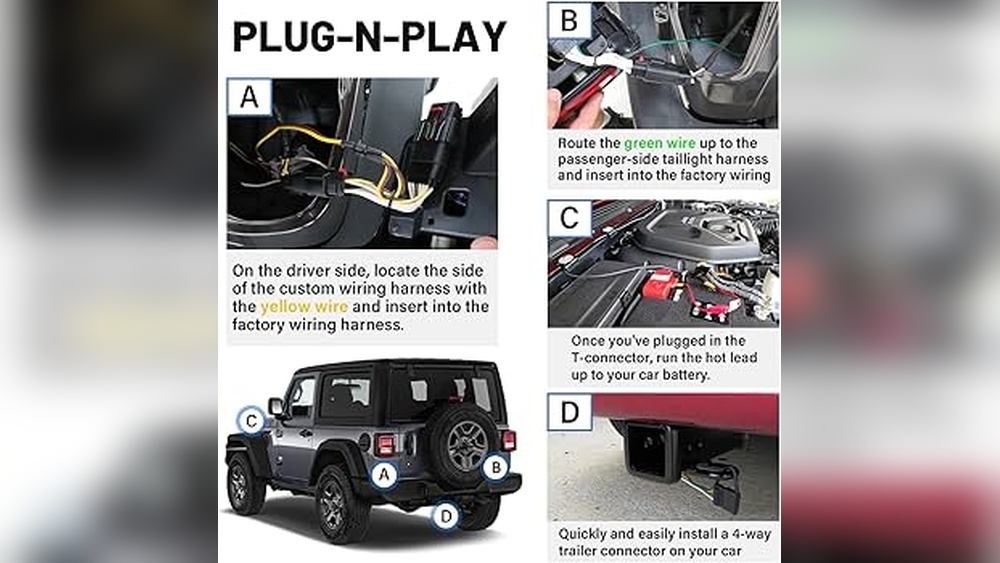
Before starting, you need a harness that fits your Jeep Wrangler’s year and model. Wrangler models from 2007–2018 (JK) often use a plug-and-play system, while older models may require splicing wires.
Here’s a comparison of popular harness types:
| Type | Installation | Compatibility |
|---|---|---|
| Plug-and-Play | Easy, no wire cutting | Most 2007–present Wranglers |
| Universal Splice | Manual wire connection | Older Wranglers, custom setups |
| OEM Harness | Direct fit, higher cost | Matches factory wiring |
Tip: Always check the harness label or website for compatibility. Incorrect harnesses can cause electrical issues or damage.
Tools And Preparation
Gather these tools before starting:
- Screwdriver set
- Socket wrench
- Wire stripper
- Electrical tape
- Zip ties
- Multimeter (optional for testing)
Preparation steps:
- Park your Jeep on a flat surface.
- Disconnect the negative battery cable to prevent shocks.
- Lay out all parts and read the harness instructions.
Step-by-step Installation Guide
Follow these steps for most 2007 present Jeep Wranglers. Older models may need extra wiring work.
Locate The Wiring Access Point
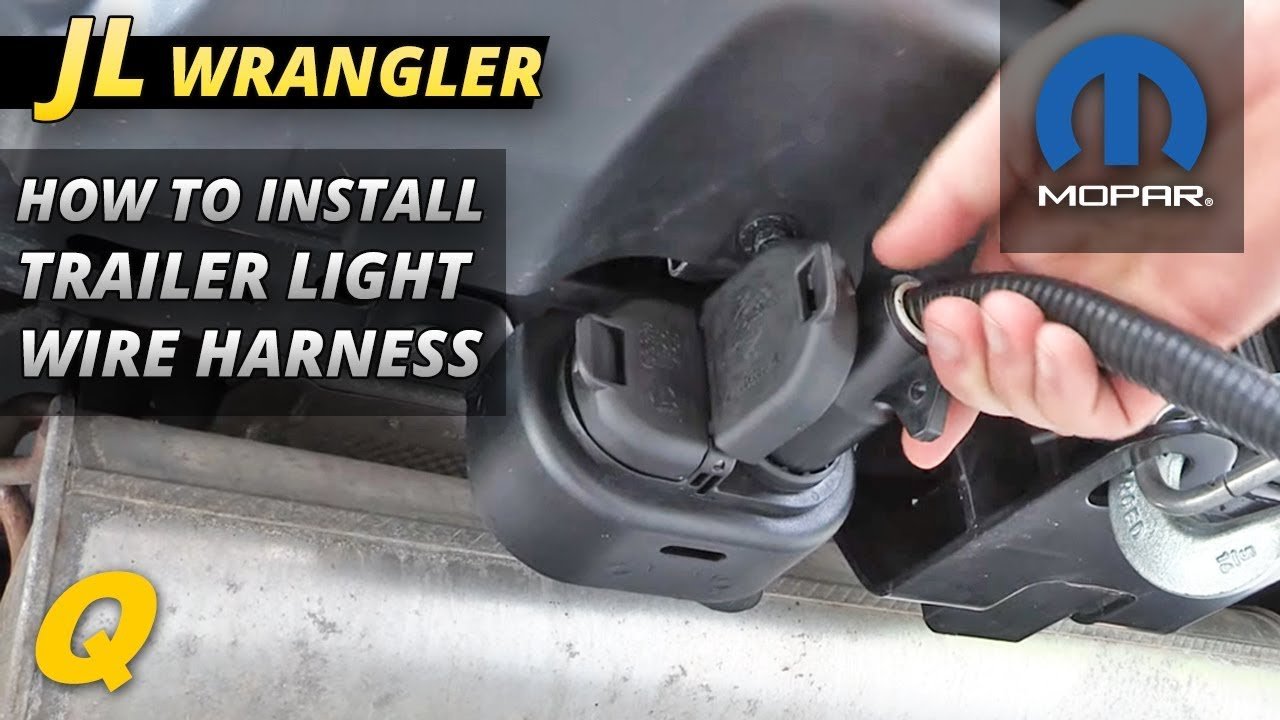
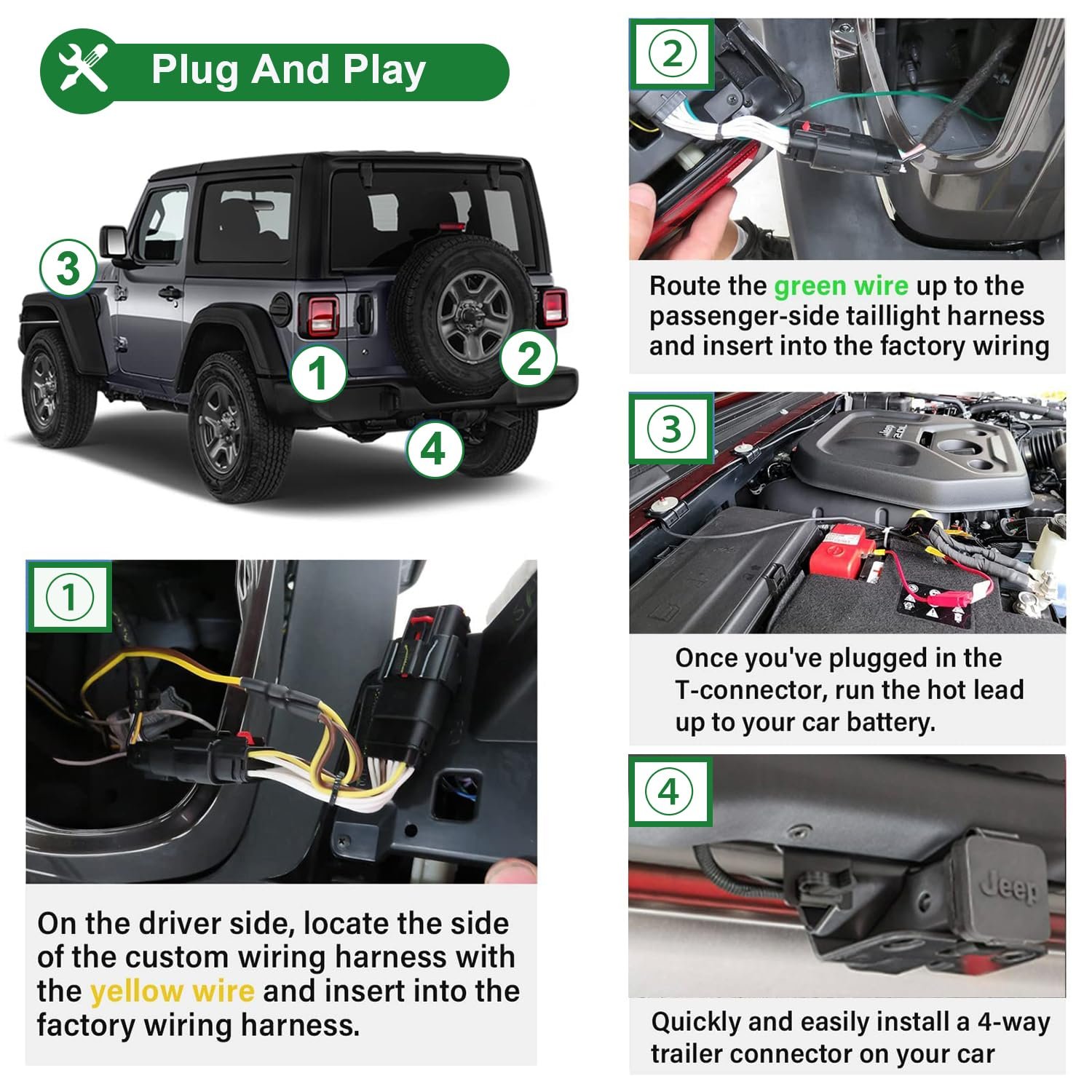
Open the rear tailgate and remove the taillight assembly using a screwdriver. Most harness kits plug in between the taillight and Jeep’s wiring.
Connect The Wiring Harness
- Unplug the Jeep’s factory taillight connector.
- Plug the new harness inline—one side goes into the Jeep wiring, the other into the taillight.
- Repeat for both sides if your harness requires it.
Route The Harness
Find the best path to run the harness cable from the taillights to the trailer hitch area. Use zip ties to secure the cable and avoid moving parts or heat sources.
Common mistake: Letting wires hang loosely can cause them to snag or wear out.
Attach The Trailer Connector
Most harnesses have a 4-pin or 7-pin connector. Secure it near the hitch using screws or supplied brackets.
| Connector Type | Features | Typical Use |
|---|---|---|
| 4-pin | Lights only | Small trailers |
| 7-pin | Lights + brakes | Medium/large trailers |
Test The Connection
Reconnect the Jeep battery. Use the multimeter or plug in a trailer to check each function:
- Turn signals
- Brake lights
- Running lights
If something isn’t working, double-check all connectors and fuses. Most wiring issues come from loose plugs or poor grounding.
Practical Tips And Non-obvious Insights
- Waterproofing: Use electrical tape or waterproof connectors, especially if you off-road or drive in rain.
- Fuse Check: Some harness kits require a new fuse. Always check your Jeep’s fuse box after installation.
- Battery Drain: If your trailer has extra features (like interior lights), make sure the harness doesn’t drain your Jeep battery when parked.
- OEM vs Aftermarket: OEM harnesses usually last longer and fit better, but aftermarket kits are cheaper and offer more flexibility.
| OEM Harness | Aftermarket Harness |
|---|---|
| Better fit, durability | Lower cost, more options |
| Warranty support | May need modifications |
Safety Checks Before Towing
After installation, check these safety items:
- Make sure all lights work with the trailer attached.
- Confirm the harness is clear of exhaust, moving parts, or sharp edges.
- Test your Jeep’s brakes and turn signals with the trailer in a safe area.
- Inspect connectors for rust or loose wires after the first week.
Pro insight: Many beginners skip retesting after a few days. Road vibrations can loosen connections, so check again after your first trip.
Troubleshooting Common Issues
If you run into problems:
- No lights: Check grounding and fuses.
- Blinking issues: Incorrect wiring order or damaged harness.
- Short circuit: Inspect for pinched wires or exposed copper.
- Dim lights: Weak ground or poor connection.
For detailed wiring diagrams, visit the Jeep forums or see the official Jeep site.
Frequently Asked Questions
How Long Does It Take To Install A Trailer Wiring Harness?
Most Jeep owners need about 1–2 hours. If you use a plug-and-play kit, it’s faster. Older models with manual wiring may take longer.
Do I Need Professional Help For Installation?
If you’re comfortable with basic tools and following instructions, you can do it yourself. For complex wiring or older Jeeps, a mechanic might be safer.
Will Installing A Harness Void My Jeep Warranty?
Using an OEM harness usually keeps your warranty safe. Aftermarket kits can sometimes affect warranties, so check your manual or ask your dealer.
What’s The Difference Between 4-pin And 7-pin Connectors?
4-pin connectors handle basic trailer lights. 7-pin connectors add support for trailer brakes, reverse lights, and power. Choose based on your trailer’s needs.
Can I Use The Same Harness For Different Trailers?
Yes, as long as the trailers have compatible connectors. Adapters are available for different pin setups, but check the wiring each time to avoid mismatches.
Installing a trailer wiring harness on your Jeep Wrangler is a practical project that boosts your vehicle’s versatility. With careful steps and good preparation, you can enjoy safe towing for years.
Remember to check your wiring regularly and choose the right harness for your needs.
Towing shouldn’t be stressful make it simple, reliable, and safe.