Checking the tire pressure on your Jeep Cherokee is one of the easiest ways to keep your SUV safe and efficient. Many drivers ignore this simple task, but low or high pressure can cause problems like poor fuel economy, uneven tire wear, or even tire blowouts.
Learning to check your tire pressure correctly will help your Jeep Cherokee drive better, last longer, and keep you safe on the road. This guide will show you step-by-step how to check tire pressure, what numbers to look for, and a few expert tips that most beginners miss.
Why Tire Pressure Matters For Your Jeep Cherokee
The Jeep Cherokee is designed for both city roads and rough terrain. If your tires are not inflated to the right pressure:
- You may lose control on slippery surfaces
- Your tires will wear out faster
- You might spend more money on gas
According to the National Highway Traffic Safety Administration, under-inflated tires are the cause of about 11,000 accidents in the US each year. Keeping tire pressure correct is not just about comfort, but safety and savings.
Recommended Tire Pressure For Jeep Cherokee
Every Jeep Cherokee model has a recommended tire pressure. Most models use 225/65R17 or 235/65R17 tires, but you should always check your own vehicle’s sticker.
| Model Year | Front Tires (psi) | Rear Tires (psi) |
|---|---|---|
| 2018-2024 | 33 | 33 |
| 2014-2017 | 32 | 32 |
| Older models | Check sticker | Check sticker |
Look for the tire pressure label on the driver’s door jamb. This sticker shows the recommended psi (pounds per square inch) for your specific Jeep Cherokee.

Tools You Need
To check tire pressure, you need:
- Tire pressure gauge (digital or analog)
- Air compressor (optional, for filling)
- Pen and paper (optional, for notes)
Digital gauges are often more accurate, but even a simple analog gauge works well. Many gas stations have gauges and air pumps available for free or a small fee.
Step-by-step: How To Check Tire Pressure
Follow these steps for best results:
- Park your Jeep Cherokee on level ground. Wait for tires to cool down if you’ve just driven; tire pressure rises when hot.
- Find the recommended psi on your door sticker.
- Remove the dust cap from the tire valve.
- Press the tire pressure gauge onto the valve. Listen for a short hiss of air.
- Read the number on the gauge. Compare it to the recommended psi.
- If pressure is too low, add air. If it’s too high, release air by pressing the valve gently.
- Repeat for all four tires. Don’t forget the spare tire!
| Step | Action | Common Mistake |
|---|---|---|
| 1 | Park and cool tires | Checking when tires are hot |
| 2 | Find recommended psi | Using tire sidewall instead of sticker |
| 3-7 | Check, adjust, repeat | Ignoring the spare tire |
How Often Should You Check Tire Pressure?
Most experts recommend checking tire pressure once a month and before long trips. Extreme temperature changes can affect pressure. For example, in winter, tire pressure can drop by 1 psi for every 10°F decrease in temperature. After a cold snap, check your tires.
What If Your Jeep Cherokee Has Tpms?
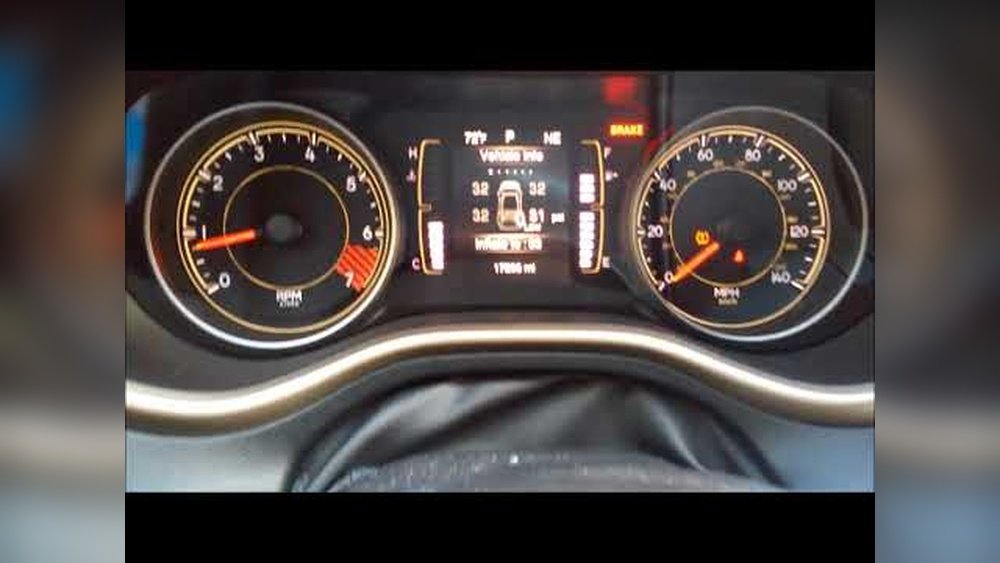
Many newer Jeep Cherokees have a Tire Pressure Monitoring System (TPMS). This system warns you if a tire is too low. However, TPMS often alerts only when pressure is dangerously low—not when it’s just a few psi below the recommended level.
| TPMS Feature | Benefit | Limitation |
|---|---|---|
| Real-time alerts | Quick warning for low pressure | May not warn until pressure is very low |
| Dashboard display | Shows which tire is low | Does not show exact psi |
Always check tires manually, even if your Jeep Cherokee has TPMS.
Practical Tips Most Beginners Miss
- Check tire pressure when tires are cold. Driving warms tires and gives a false reading.
- Rotate tires regularly. This helps all tires wear evenly and keeps pressure balanced.
- Don’t trust the tire sidewall for psi. The number printed there is the maximum, not the recommended pressure for your Jeep Cherokee.
- Use the same gauge every time. Different gauges can show slightly different numbers.
- Check after hitting potholes. A hard bump can damage tires and affect pressure.
Many people forget the spare tire. If you ever need it, you want it to be properly inflated.
Signs Of Incorrect Tire Pressure
If your Jeep Cherokee’s tires are not at the right pressure, you may notice:
- Steering feels heavy or loose
- Uneven tread wear
- Poor fuel economy
- Vibration or noise while driving
If you see any of these signs, check your tire pressure right away.

Where To Get Help
Most auto shops will check tire pressure for free. Many gas stations have air pumps and gauges. If you’re unsure about your readings or have a slow leak, visit your local mechanic. For more information on tire safety and maintenance, see the National Highway Traffic Safety Administration.
Frequently Asked Questions
How Do I Know If My Tire Pressure Is Too Low?
Your Jeep Cherokee may feel sluggish, or the TPMS light might turn on. For best accuracy, use a tire pressure gauge and compare to the recommended psi on your door sticker.
Can I Use The Tire Sidewall Number For Pressure?
No. The sidewall number is the maximum allowed by the tire manufacturer, not the correct pressure for your Jeep Cherokee. Always use the sticker inside the driver’s door.
How Often Should I Check My Tire Pressure?
Check at least once a month and before any road trip. Also, check after big temperature changes or after hitting a pothole.
Does Tpms Replace Manual Checking?
No. TPMS helps by warning about very low pressure, but it does not show exact psi. Manual checks are still important for safety.
What Is The Best Type Of Tire Pressure Gauge?
Digital gauges are easy to read and usually accurate, but a good analog gauge works too. Pick a gauge you find comfortable and reliable.
Keeping your Jeep Cherokee’s tires at the right pressure is a simple job that brings big rewards. It improves safety, saves money, and keeps your vehicle running smoothly.
With the steps above, you can check your tire pressure confidently and avoid common mistakes.
Remember to check regularly, use the right tools, and always refer to your Jeep’s sticker for the best numbers.