Changing the thermostat in your Jeep Wrangler is a smart way to fix overheating issues and improve engine performance. Many drivers worry about the process, but with the right tools and guidance, it’s a manageable job—even for beginners. This guide will show you step-by-step how to change a thermostat on a Jeep Wrangler, what tools you’ll need, and common mistakes to avoid. Whether you’re fixing a 2006 Wrangler or a newer model, these directions will help you do the job safely and correctly.
Why Change The Thermostat?
The thermostat controls coolant flow in your engine. If it fails, your Jeep might overheat or run too cold, hurting performance and fuel efficiency. A faulty thermostat can also trigger the check engine light. Most Jeep Wranglers need a thermostat replacement every 60,000–100,000 miles, but symptoms can appear earlier. Ignoring a bad thermostat can lead to expensive repairs, so it’s wise to act quickly.
Symptoms Of A Bad Thermostat
- Engine overheating
- Coolant leaks near the thermostat housing
- Temperature gauge stuck in one spot
- Low heater output during cold weather
Tools And Parts Needed
Before starting, make sure you have the right tools and replacement parts. Using proper equipment helps avoid mistakes and speeds up the job.
Tools
- Socket wrench set (8mm, 10mm, 13mm)
- Flathead screwdriver
- Torque wrench
- Drain pan (for coolant)
- Pliers
- Shop towels
- Coolant funnel
Parts
- New thermostat (OEM or quality aftermarket)
- Thermostat gasket (usually included)
- Coolant (check your Jeep’s manual for type and quantity)
Optional Equipment
- Gloves and safety glasses
- Replacement bolts (if original bolts are corroded)
- Thread sealant (for extra leak protection)
Preparing Your Jeep Wrangler
Preparation is key. Doing these steps before you start will help you stay safe and keep your garage clean.
- Park on a level surface and turn off the engine.
- Allow the engine to cool completely. Working on a hot engine is dangerous.
- Disconnect the negative battery cable to avoid electrical shock.
- Place the drain pan under the radiator to catch coolant.
Draining The Coolant
Locate the radiator drain plug at the bottom. Use pliers or a wrench to loosen it, and let the coolant flow into your pan.
Some Jeep Wranglers have a petcock valve, which makes draining easier. If your model doesn’t, you may need to remove the lower radiator hose.
Tip: Save the drained coolant if it’s still clean. Otherwise, dispose of it properly—never pour it down the drain.
Removing The Old Thermostat
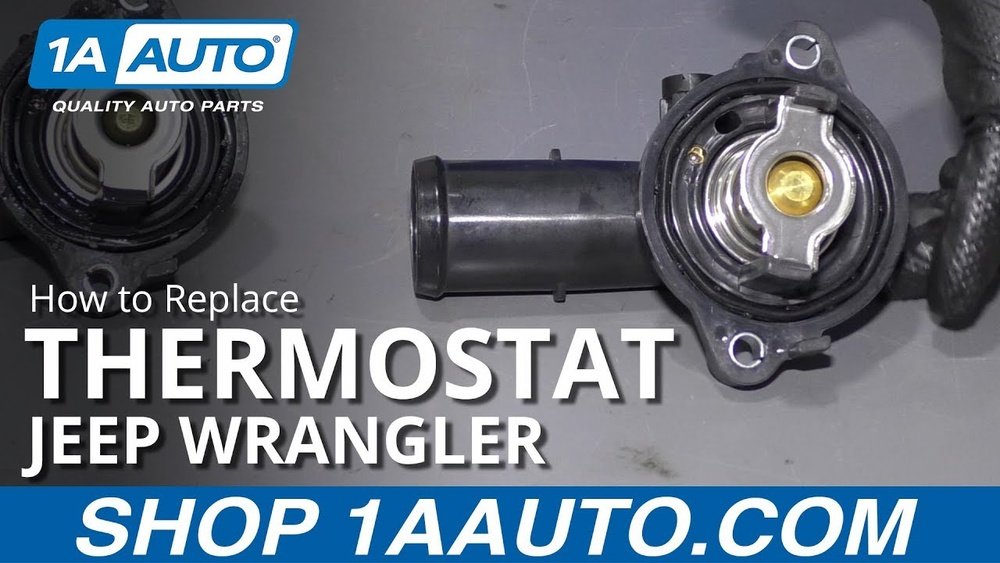
The thermostat is usually found in a metal housing attached to the engine block, connected by a hose. Here’s how to remove it:
- Locate the thermostat housing. On most Jeep Wranglers, it’s at the end of the upper radiator hose.
- Use your socket wrench to remove the bolts holding the housing.
- Carefully lift the housing. You might need to pry it gently with a screwdriver if it’s stuck.
- Remove the old thermostat and gasket. Note the orientation—most thermostats have a spring side facing the engine.
Common Mistakes To Avoid
- Forgetting to note the thermostat orientation: Installing it backward will cause problems.
- Damaging the housing: Don’t use excessive force.
- Dropping bolts: Keep them in a safe spot.
Cleaning And Inspecting The Housing
Before installing the new thermostat, check the housing for corrosion or cracks. Clean old gasket material from both surfaces. Any debris left behind can cause leaks.
- Use shop towels and a scraper to remove gasket residue.
- Inspect for rust or damage. If the housing is cracked, replace it.
- Dry the area before placing the new gasket.
Installing The New Thermostat
Now it’s time to put everything back together. Follow these steps:
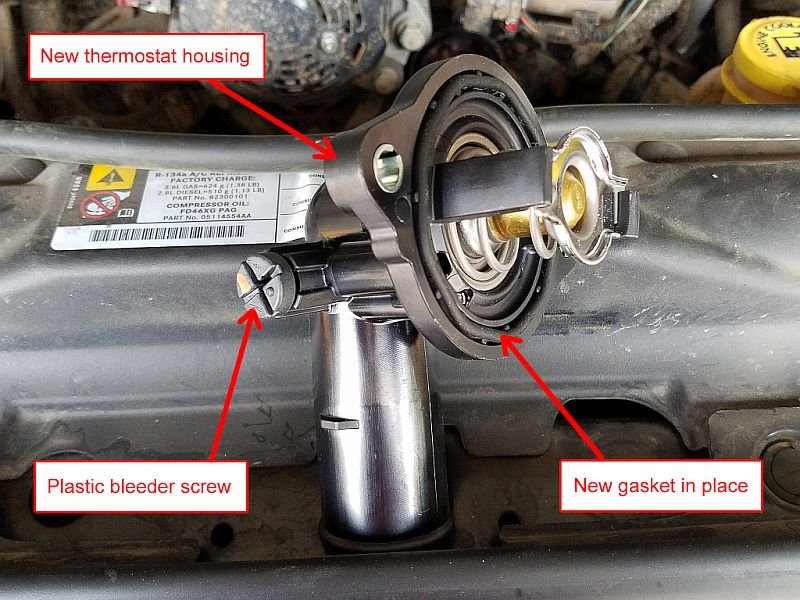
- Place the new thermostat in the same orientation as the old one (spring side toward engine).
- Position the gasket. Some gaskets need sealant; others don’t. Check instructions.
- Reinstall the thermostat housing and bolts. Tighten them by hand first.
- Use a torque wrench to finish tightening. Most Jeep Wranglers require 13–15 ft-lb (check your manual).
- Reconnect the upper radiator hose.
Jeep Wrangler Thermostat Torque Specs
Here’s a quick reference for common models:
| Model Year | Engine Size | Torque Spec (ft-lb) |
|---|---|---|
| 2006 | 4.0L | 13 |
| 2012 | 3.6L | 15 |
| 2018 | 3.6L | 15 |
Insight: Many beginners don’t use a torque wrench, but overtightening can crack the housing.
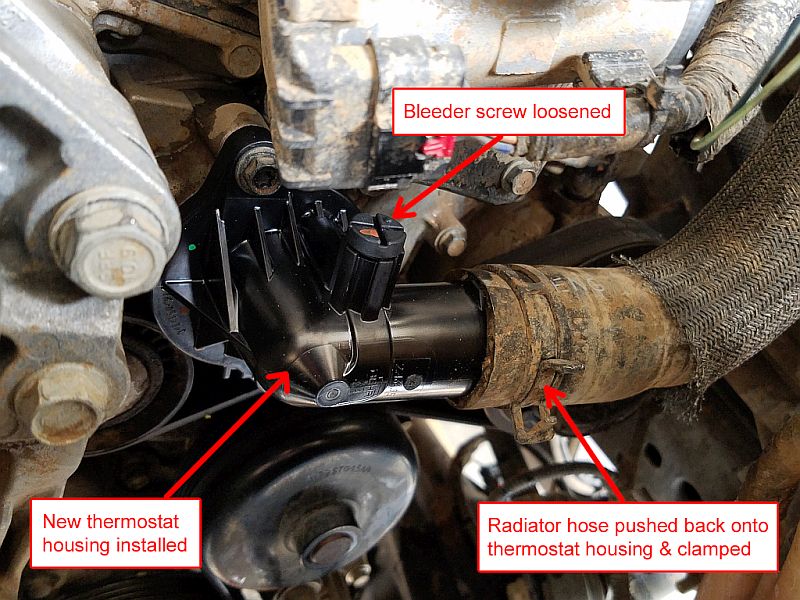
Refilling And Bleeding The Coolant
After installing the thermostat, you need to refill the cooling system. This step is often overlooked but is crucial for avoiding air pockets.
- Slowly pour new coolant into the radiator or reservoir using your funnel.
- Fill until the coolant reaches the “Full” mark.
- Start the engine and let it run with the radiator cap off. Watch the temperature gauge.
- When the thermostat opens (usually after a few minutes), coolant will drop—add more as needed.
- Check for leaks around the housing.
Coolant Capacity Comparison
Different Jeep Wrangler models hold different amounts of coolant:
| Model Year | Engine Size | Coolant Capacity (quarts) |
|---|---|---|
| 2006 | 4.0L | 14 |
| 2012 | 3.6L | 16 |
| 2018 | 2.0L Turbo | 15 |
Tip: Always use the coolant type recommended by Jeep. Mixing types can cause deposits and reduce performance.
Testing And Final Checks
Once the system is full, check your work carefully.
- Look for any leaks around the thermostat housing and hoses.
- Check the temperature gauge while idling and driving.
- Ensure the heater works well—this confirms proper coolant flow.
- Top off the coolant after your first test drive.
Non-obvious insight: Sometimes, air pockets stay trapped. If your heater doesn’t work or the engine overheats, bleed the system again.
Practical Tips For Success
Changing a thermostat can be easy if you follow some practical advice:
- Take photos before you remove parts. They help when reassembling.
- Label bolts if you’re working on a more complex engine.
- Buy extra coolant—spills are common.
- Work slowly and double-check each step.
Some Jeep Wranglers have sensors near the thermostat. If your engine has a temperature sensor, be careful not to damage it.
Mistakes Beginners Often Make
Many first-timers run into trouble because they:
- Don’t let the engine cool fully, risking burns.
- Forget to disconnect the battery, causing electrical shorts.
- Install the thermostat backward.
- Use the wrong coolant type.
- Ignore torque specs, causing leaks or cracks.
Learning from these mistakes will save you time, money, and frustration.
When To Call A Mechanic
If you see cracks in the housing, stripped bolt holes, or heavy corrosion, it’s best to call a mechanic. Also, if your Jeep still overheats after the new thermostat, there may be bigger problems like a clogged radiator or blown head gasket.
Comparing Oem Vs. Aftermarket Thermostats
Choosing the right replacement part matters. Here’s a quick comparison:
| Feature | OEM Thermostat | Aftermarket Thermostat |
|---|---|---|
| Price | Higher | Lower |
| Reliability | Consistent | Varies |
| Warranty | Yes | Maybe |
| Compatibility | Perfect fit | Sometimes needs adjustment |
Insight: Many Jeep owners prefer OEM parts for reliability, but some aftermarket brands offer good performance at a lower cost.
Safety Reminders
Always work in a well-ventilated area, wear gloves, and keep coolant away from pets and children. Coolant is toxic if swallowed.
Dispose of old coolant at a recycling center.
Where To Find Detailed Jeep Wrangler Manuals
If you want more technical details, check your Jeep’s official service manual or visit Jeep’s official website for specifications and diagrams.
Frequently Asked Questions
How Long Does It Take To Change A Thermostat On A Jeep Wrangler?
Usually, it takes 1–2 hours. If you’re a beginner, plan for extra time. Some models are easier than others, but most can be done in an afternoon.
What Happens If I Install The Thermostat Backward?
Installing the thermostat in the wrong direction will cause cooling system failure. Your engine may overheat or not warm up properly. Always check the orientation before reassembly.
Can I Reuse Old Coolant After Draining?
If the coolant is clean and less than 2 years old, you can reuse it. If it’s dirty or contaminated, replace it. Never reuse coolant with oil or debris in it.
How Do I Know If My Thermostat Needs Sealant?
Most modern gaskets don’t require sealant, but some older models do. Always check the instructions that come with your thermostat and gasket.
Is It Okay To Drive With A Faulty Thermostat?
Driving with a bad thermostat risks engine damage. You may face overheating, poor fuel efficiency, or even a blown head gasket. Replace it as soon as possible.
Changing the thermostat on your Jeep Wrangler is a practical skill that can save you money and keep your vehicle running smoothly. With careful preparation, the right tools, and a bit of patience, you can handle this job confidently.
Remember, small mistakes like using the wrong coolant or failing to bleed the system can cause trouble later.
If you run into problems, don’t hesitate to seek expert help or consult reliable sources. This guide should give you the knowledge and confidence you need to get the job done right.


















