The Jeep Patriot is a popular compact SUV known for its practical design and affordability. Many drivers choose it for daily commuting and outdoor adventures.
But before you load up your Patriot with gear, tools, or family luggage, it’s important to understand its weight limits. Carrying too much can affect safety, handling, and even void your warranty.
Let’s break down how much weight a Jeep Patriot can carry, what those numbers really mean, and how to make smart choices for your trips.
Understanding Vehicle Weight Ratings
Every vehicle has specific weight limits set by the manufacturer. For the Jeep Patriot, the main numbers to know are:
- Curb weight: The weight of the vehicle without passengers or cargo, but with all fluids and a full tank of gas.
- Gross Vehicle Weight Rating (GVWR): The maximum total weight the vehicle can safely carry, including passengers, cargo, and the vehicle itself.
- Payload capacity: The maximum weight of passengers and cargo you can add.
- Towing capacity: How much the Jeep can pull behind it, such as a trailer.
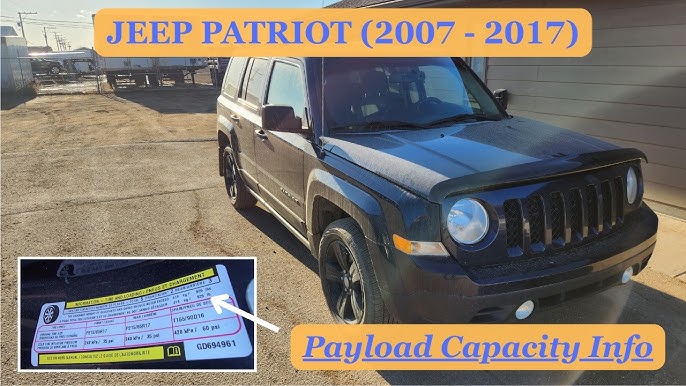
These numbers are found on a sticker in the driver’s door jamb or in the owner’s manual. Always use the numbers for your exact model and year.
Jeep Patriot Payload Capacity Explained
Most Jeep Patriot models have a payload capacity ranging from 925 to 1,000 pounds. This includes everything you put inside: people, pets, groceries, gear, and even aftermarket accessories.
Here’s a quick look at typical figures for the Jeep Patriot:
| Model Year | Payload Capacity (lbs) | GVWR (lbs) |
|---|---|---|
| 2011 | 925 | 4,435 |
| 2015 | 1,000 | 4,435 |
| 2017 | 1,000 | 4,435 |
Most versions fall between 925–1,000 lbs for payload. These numbers are for the total added weight, not just cargo in the trunk.
What Affects The Payload Limit?
Several factors can change how much you can safely carry in your Jeep Patriot:
- Number of passengers: Each person counts toward the payload. Four average adults (about 150 lbs each) would take up 600 lbs, leaving only 400 lbs for cargo.
- Optional equipment: Roof racks, heavy wheels, or extra parts add to the total weight.
- Aftermarket modifications: Larger tires or lift kits may reduce safe carrying capacity.
- Fuel and fluids: The vehicle’s curb weight includes a full gas tank, but extra gear or tools also count.
Overloading even by a little bit can damage your suspension, brakes, and tires. It can also reduce fuel economy.
How To Calculate How Much You Can Carry
To know your real-world payload, use this simple method:
- Check your Jeep Patriot’s GVWR on the door sticker.
- Find the curb weight in your owner’s manual.
- Subtract curb weight from GVWR. That’s your max payload.
Example: If your Patriot’s GVWR is 4,435 lbs and curb weight is 3,385 lbs:
4,435 – 3,385 = 1,050 Lbs Payload
However, always stick to the lower number if your manual or sticker says so.
Real-life Examples
Let’s say you plan a weekend trip:
- 2 adults (350 lbs total)
- 2 kids (200 lbs total)
- Luggage and camping gear (300 lbs)
- Dog (50 lbs)
Total: 900 Lbs
With a typical payload limit of 1,000 lbs, you’re close to the maximum. Add a roof box (40 lbs) and you have little room left. Always estimate before loading up for safety.
Towing And Roof Load Limits
If you want to tow a trailer or carry items on your roof, these limits matter too.
- Towing capacity: Most Jeep Patriots can tow up to 2,000 lbs (with a towing package).
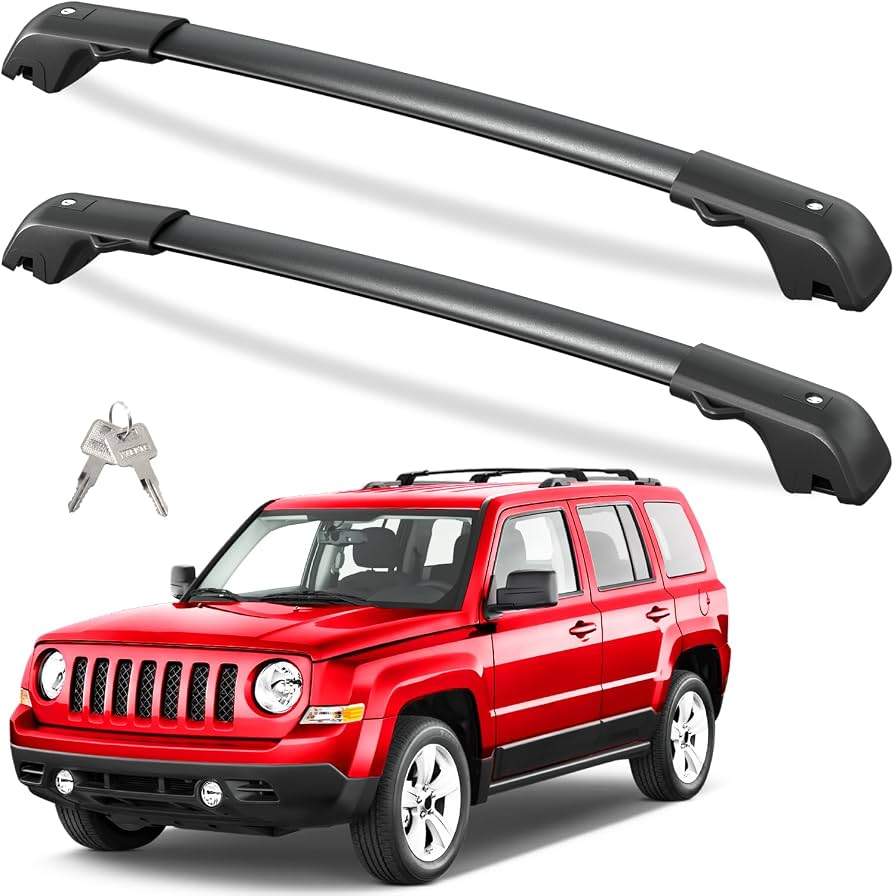
- Maximum roof load: Usually 150 lbs (including the rack).
Here’s how these compare:
| Feature | Limit (lbs) |
|---|---|
| Payload (passengers + cargo) | 925–1,000 |
| Towing (with equipment) | 2,000 |
| Roof load | 150 |
Remember: weight on the roof still counts toward the total payload limit.
Common Mistakes Jeep Patriot Owners Make
- Ignoring passenger weight: Many only count cargo but forget people add up quickly.
- Overloading the roof rack: Exceeding the 150-lb roof limit can lead to roof damage or loss of control.
- Not checking for modifications: Suspension or wheel upgrades may lower the safe load.
- Assuming all years are the same: Model year differences can change limits by 50–100 lbs.
Tips For Safe Loading
- Spread weight evenly in the cargo area to avoid handling problems.
- Keep heavy items low and centered.
- Secure all cargo to prevent it from moving during sudden stops.
- Check tire pressure before and after loading.
- Never exceed the lowest limit—payload, roof, or towing.
Why Payload Matters For Safety
Driving with too much weight can cause:
- Longer stopping distances
- Poor handling, especially in corners
- Tire blowouts
- Suspension wear
Insurance may not cover accidents caused by overloading. Always put safety first, even if it means leaving some gear behind.
Data Table: Example Payload Scenarios
Here are sample loading setups to give you a sense of how quickly you can reach the limit:
| Scenario | Total Weight (lbs) | Safe? |
|---|---|---|
| Family of 4 + luggage | 950 | Yes |
| 2 adults + 4 bikes + gear | 1,050 | No |
| Solo driver + camping gear | 400 | Yes |
Where To Find Accurate Jeep Patriot Weight Specs
Always use official sources. Your owner’s manual and the driver’s door sticker are best. For more technical details, visit the Jeep Official Website.
Closing Thoughts
The Jeep Patriot is a capable SUV, but understanding its weight limits is crucial for safety and performance. Most models can carry about 925–1,000 lbs of people and cargo. Always include the weight of passengers, gear, and accessories in your calculations. Check your owner’s manual for exact numbers, and never push your Patriot past its limits. With a bit of planning, your Jeep will handle every adventure smoothly and safely.