If you drive a Jeep or are thinking of buying one, you might wonder: How much gas does a Jeep hold? This is a key question for planning road trips, calculating fuel costs, or just understanding your vehicle’s limits.
Different Jeep models come with different gas tank sizes, and knowing these differences can help you make smarter choices. Let’s look closely at Jeep fuel capacities, how they compare to other SUVs, and why this matters for your daily driving.
Jeep Gas Tank Sizes Explained
Jeep vehicles are known for their rugged design and off-road ability. But their fuel tank capacity varies widely depending on the model. Most Jeeps hold between 12 and 22 gallons of gas. Here are some popular Jeep models and their typical gas tank sizes:
| Model | Year | Gas Tank Size (Gallons) |
|---|---|---|
| Jeep Wrangler | 2026 | 17.5–21.5 |
| Jeep Grand Cherokee | 2026 | 23 |
| Jeep Cherokee | 2026 | 15.8 |
| Jeep Compass | 2026 | 13.5 |
| Jeep Gladiator | 2026 | 22 |
Jeep Wranglers have some of the widest range, especially because they come in different body styles and trims. The Grand Cherokee is larger, so it usually offers a bigger tank. Smaller models like the Jeep Compass have less space, so their tanks are smaller.
Why Gas Tank Size Matters
A Jeep’s gas tank size affects more than just how often you visit the gas station. Here are some practical reasons to pay attention:
- Driving Range: Bigger tanks mean you can drive farther between fill-ups. For example, with a 21.5-gallon Wrangler and average 20 MPG, you can go about 430 miles on a full tank.
- Fuel Costs: Larger tanks cost more to fill, but may save you time if you travel long distances.
- Trip Planning: If you go off-road or drive in remote areas, a bigger tank reduces worry about running out of gas.
- Cargo and Weight: Heavier tanks can affect your Jeep’s weight, especially when full. This may slightly change how your Jeep feels on rough roads.
Most people overlook the impact of tank size on daily comfort. For example, if your Jeep has a smaller tank, you might get frustrated with frequent stops, especially on busy highways.
Comparing Jeep Models With Other Suvs
Jeep’s gas tanks are similar to other mid-size SUVs, but some models are bigger or smaller than average. Here’s a comparison with other popular SUVs:
| Vehicle | Gas Tank Size (Gallons) |
|---|---|
| Jeep Grand Cherokee | 23 |
| Ford Explorer | 20.2 |
| Toyota 4Runner | 23 |
| Honda CR-V | 14 |
| Jeep Compass | 13.5 |
The Grand Cherokee and Toyota 4Runner lead the pack for mid-size SUVs. The Compass and CR-V have smaller tanks, making them better for city driving but less ideal for long trips.
How To Check Your Jeep’s Gas Tank Size
If you’re unsure about your Jeep’s gas tank size, there are easy ways to find out:
- Owner’s Manual: Check the specifications section for exact numbers.
- Manufacturer Website: Visit official Jeep pages for model details.
- Inside Fuel Door: Some Jeeps have tank size printed near the gas cap.
- VIN Lookup Tools: Enter your vehicle identification number on websites like Edmunds to get detailed specs.
Knowing your exact fuel capacity helps you plan for trips and avoid guessing at the gas station.

Real-world Fuel Range Examples
Let’s look at how far you can go with some Jeep models:
| Model | Tank Size (Gallons) | Estimated MPG | Range (Miles) |
|---|---|---|---|
| Jeep Wrangler | 21.5 | 20 | 430 |
| Jeep Grand Cherokee | 23 | 22 | 506 |
| Jeep Compass | 13.5 | 25 | 337 |
Notice that even a smaller tank, like the Compass, can offer good range if the vehicle is fuel-efficient. This is why both tank size and MPG matter.
Tips For Maximizing Your Jeep’s Gas Mileage
You can get more out of your Jeep’s gas tank with a few smart habits:
- Check Tire Pressure: Properly inflated tires reduce drag and help save fuel.
- Avoid Excess Weight: Remove heavy gear when you don’t need it.
- Drive Smoothly: Gentle acceleration and braking improves MPG.
- Keep Up With Maintenance: Regular oil changes and air filter replacements help your engine run better.
- Use Cruise Control: On highways, cruise control can save gas by keeping your speed steady.
Many Jeep owners forget that simple maintenance can boost fuel economy, especially on older models.

Frequently Asked Questions
How Much Gas Does A Jeep Wrangler Hold?
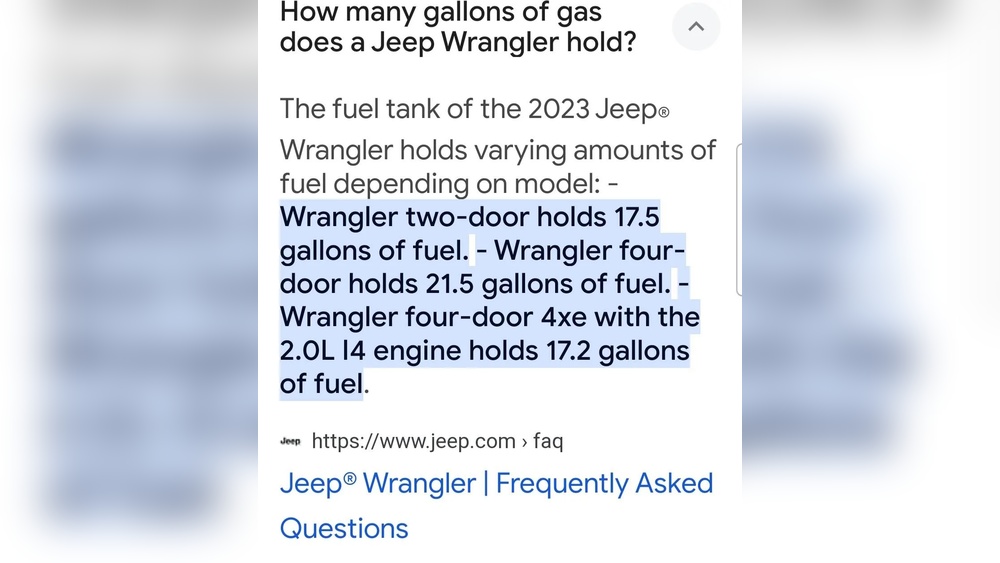
The Jeep Wrangler holds between 17.5 and 21.5 gallons, depending on the model year and trim. Four-door Wranglers tend to have larger tanks than two-door versions.
What Is The Largest Gas Tank In A Jeep?
The Jeep Grand Cherokee usually has the largest tank, at 23 gallons. This gives it a long driving range, great for road trips or off-road adventures.
Does A Bigger Gas Tank Mean Better Fuel Economy?
Not always. Fuel economy depends on the engine, weight, and how you drive. A bigger tank lets you drive farther, but does not mean the Jeep uses gas more efficiently.
How Often Should I Fill My Jeep’s Gas Tank?
This depends on your driving habits, tank size, and MPG. Most Jeep owners refuel every 300–500 miles. City drivers will fill up more often than highway drivers.
Can I Upgrade My Jeep’s Gas Tank?
Some owners install aftermarket tanks for more capacity, especially for off-road use. However, this can affect vehicle weight and may void warranties. Always check with a Jeep dealership before making changes.
Understanding how much gas your Jeep holds is more than a trivia question—it’s essential for planning, budgeting, and enjoying your driving experience. Whether you drive a Wrangler, Grand Cherokee, or another model, knowing your fuel capacity helps you stay prepared and confident on the road.