Jeep vehicles have a reputation for durability and adventure. If you own a Jeep or plan to buy one, you might wonder: How long do Jeep engines last? This question matters because engine life affects both your driving experience and your wallet. Let’s explore what influences engine lifespan, what real owners report, and how you can make your Jeep engine last longer.
Average Lifespan Of Jeep Engines
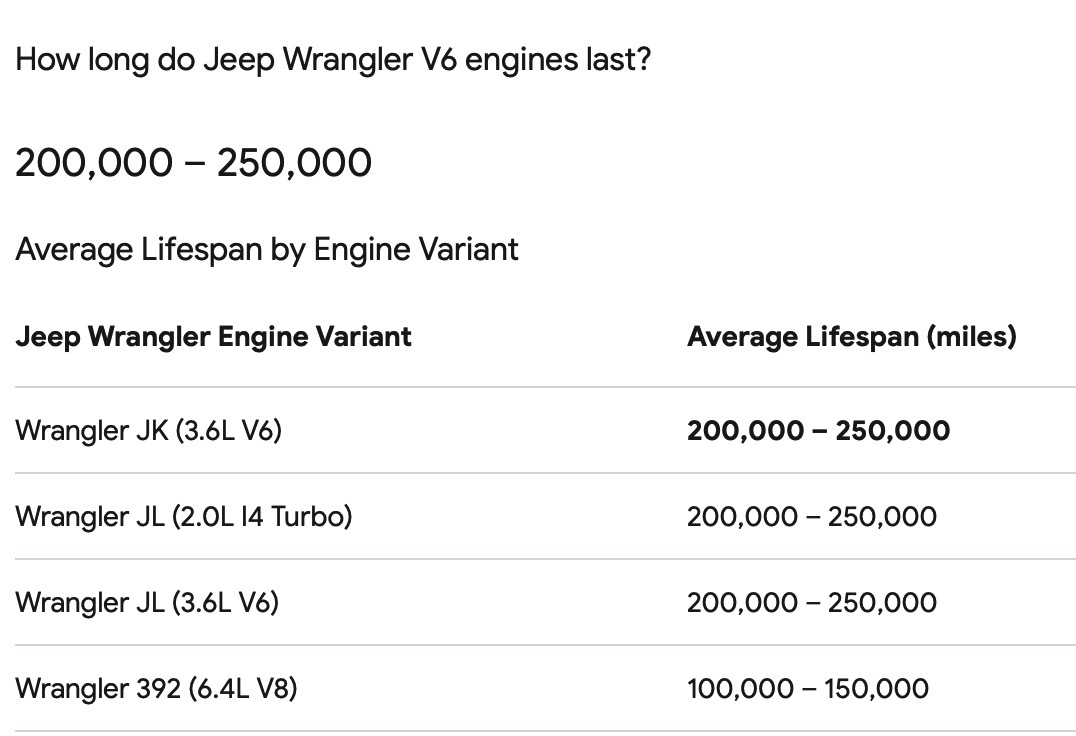
Most Jeep engines last between 150,000 and 250,000 miles. For many drivers, that’s around 10 to 15 years with normal use. Some Jeep owners report engines running well past 300,000 miles, but this is rare and usually requires excellent maintenance.
The actual lifespan depends on the engine model, driving habits, and care. For example, the Jeep Wrangler’s 3.6L Pentastar V6 is known for lasting over 200,000 miles if properly maintained. Older engines, like the 4.0L Inline-6, have legendary durability and often surpass 250,000 miles.

Here’s a quick comparison of common Jeep engines and their typical mileage ranges:
| Engine Model | Typical Lifespan (Miles) | Notes |
|---|---|---|
| 3.6L Pentastar V6 | 180,000–220,000 | Modern, reliable, found in Wranglers & Cherokees |
| 4.0L Inline-6 | 200,000–250,000 | Older, famous for longevity |
| 2.4L Tigershark | 150,000–200,000 | Used in Compass & Renegade |
| 5.7L Hemi V8 | 180,000–220,000 | High performance, more maintenance needed |
Factors That Affect Jeep Engine Longevity
Several things influence how long your Jeep engine will last:
- Maintenance: Regular oil changes and filter replacements are essential.
- Driving Style: Aggressive driving, towing, and frequent off-roading can shorten engine life.
- Climate: Extreme heat or cold stresses the engine. Rust can also be a problem in humid areas.
- Fuel Quality: Using low-quality fuel or the wrong type can cause damage.
- Model Year & Engine Type: Some engines have better designs or fewer problems.
Let’s look at how maintenance impacts engine life:
| Maintenance Level | Expected Engine Life |
|---|---|
| Excellent (all scheduled services) | 200,000–250,000+ miles |
| Average (some missed services) | 150,000–200,000 miles |
| Poor (rare oil changes, neglect) | 100,000–150,000 miles |
Signs Your Jeep Engine Is Wearing Out
You can spot early warning signs before major engine problems happen. Here are a few:
- Knocking sounds: Usually means worn bearings.
- Excessive smoke: Blue, black, or white smoke means trouble.
- Loss of power: Harder to accelerate or climb hills.
- Frequent overheating: Indicates cooling issues or internal damage.
- Oil leaks: Can lead to engine failure if not fixed.
Ignoring these signs often leads to expensive repairs or engine replacement.
Tips To Make Your Jeep Engine Last Longer
If you want your Jeep engine to reach 200,000 miles or more, follow these practical tips:
- Change oil regularly: Use manufacturer-recommended oil and change it every 5,000–7,500 miles.
- Use quality parts: Always choose OEM or high-quality filters and fluids.
- Drive gently: Avoid sudden acceleration, hard braking, and excessive idling.
- Let it warm up: Especially in cold weather, let your engine run for a minute before driving.
- Check fluids often: Keep coolant, transmission fluid, and brake fluid at proper levels.
- Fix issues early: Don’t ignore warning lights or strange noises.
- Avoid heavy towing: Unless your Jeep is designed for it, towing heavy loads can wear out the engine.
One insight many beginners miss: Jeep engines need extra care after off-roading. Mud, dust, and water can get into parts and cause damage. Always check for leaks, clean air filters, and inspect belts after an off-road trip.
Another overlooked tip: Using top-tier gasoline (even if your Jeep doesn’t require premium) can help keep the engine cleaner and more efficient over time.

Real-world Examples And Owner Experiences
Many Jeep owners share stories of their engines lasting well over 200,000 miles. For example, a 1998 Jeep Cherokee with the 4.0L Inline-6 engine is still running strong at 280,000 miles, thanks to careful maintenance and moderate driving.
On the other hand, some newer models, like the Jeep Compass, may face engine issues as early as 100,000 miles if neglected. The key difference is how the vehicle is used and maintained. Jeeps used for heavy off-roading or towing will usually have shorter engine life unless maintained meticulously.
If you’re buying a used Jeep, always check for service records. A Jeep with a history of regular oil changes and repairs is more likely to have a healthy engine.
Jeep Engines Compared To Other Brands
How do Jeep engines stack up against other popular SUV brands? Here’s a quick comparison:
| Brand | Engine Lifespan (Miles) | Notes |
|---|---|---|
| Jeep | 150,000–250,000 | Great for off-road, solid with good care |
| Toyota | 200,000–300,000 | Known for reliability and longevity |
| Ford | 150,000–220,000 | Varies by model, average reliability |
| Chevrolet | 180,000–240,000 | Durable engines, especially in trucks |
Jeep engines are competitive, but brands like Toyota often last longer due to engineering and fewer recalls.
Frequently Asked Questions
How Can I Tell If My Jeep Engine Needs Replacement?
Look for knocking sounds, excessive smoke, overheating, and loss of power. If repairs are too costly or the engine fails a compression test, replacement may be needed.
Is It Worth Rebuilding A Jeep Engine?
If your Jeep is in good shape and you love it, rebuilding can be cost-effective. It usually costs less than buying a new vehicle but depends on labor and parts prices.
Do Newer Jeep Engines Last Longer Than Older Ones?
Not always. Older engines like the 4.0L Inline-6 often last longer than some modern engines. Newer engines may be more efficient but are sometimes less durable.
What’s The Best Oil Type For Jeep Engines?
Always use the manufacturer-recommended oil. For most modern Jeeps, synthetic oil is best. Check your owner’s manual for specifics.
How Often Should I Service My Jeep Engine?
Service your Jeep every 5,000–7,500 miles for oil changes, and follow the maintenance schedule for other fluids and parts.
Jeep engines are built to last, but their true lifespan depends on your care and driving habits. Proper maintenance, gentle driving, and early repairs can help your Jeep reach impressive mileage. If you’re curious about engine longevity for other vehicles, check out Wikipedia’s engine overview for a broader perspective. With the right approach, your Jeep can be a reliable companion for many years and adventures.