Many Jeep owners hear about Trac Lok and wonder if their own vehicle has it. Trac Lok, also known as Track-Lok or Trac-Lok, is a type of limited-slip differential.
It helps improve traction, especially when one wheel starts to slip. But unless you checked the option when buying your Jeep, or you’ve crawled under your vehicle to look, you might not know if your Jeep came with this feature.
Let’s break down how to find out if you have Trac Lok, why it matters, and what to do next.
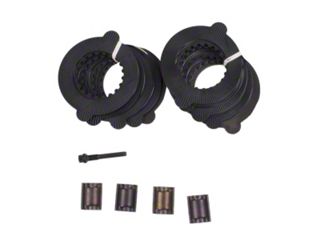
What Is Trac Lok And Why Does It Matter?
Trac Lok is a mechanical device inside your Jeep’s rear axle. Its main job is to transfer power from the wheel that slips to the one that grips better. This can help you get through mud, snow, sand, or off-road trails.
Without Trac Lok, if one tire loses traction, all the power goes to that tire. The other tire just sits there.
With Trac Lok, some power shifts to the tire with grip, helping you move forward. This is especially useful if you use your Jeep for off-roading, driving in bad weather, or towing.
A few key benefits:
- Better traction on loose or slippery surfaces
- Increased safety when driving in rain or snow
- Improved off-road performance
However, Trac Lok is not a true locking differential. It’s limited-slip, which means it helps but doesn’t guarantee both wheels always turn together.
Which Jeeps Came With Trac Lok?
Not every Jeep has Trac Lok. It’s often an optional feature, especially on models like the Jeep Wrangler, Cherokee, and some Grand Cherokee trims. Over the years, Jeep offered Trac Lok on different models and axles. It usually appears as part of a towing or off-road package.
Here are some examples:
| Model | Years Offered | Trac Lok Availability |
|---|---|---|
| Wrangler (TJ/JK/JL) | 1997–Present | Optional or standard on select trims |
| Cherokee (XJ/KL) | 1984–2001, 2014–Present | Optional, mostly on 4×4 models |
| Grand Cherokee (WJ/WK) | 1999–2010 | Available with Up Country or towing packages |
Your Jeep may have Trac Lok if it came with certain packages. But package options changed with each model year, so checking is important.
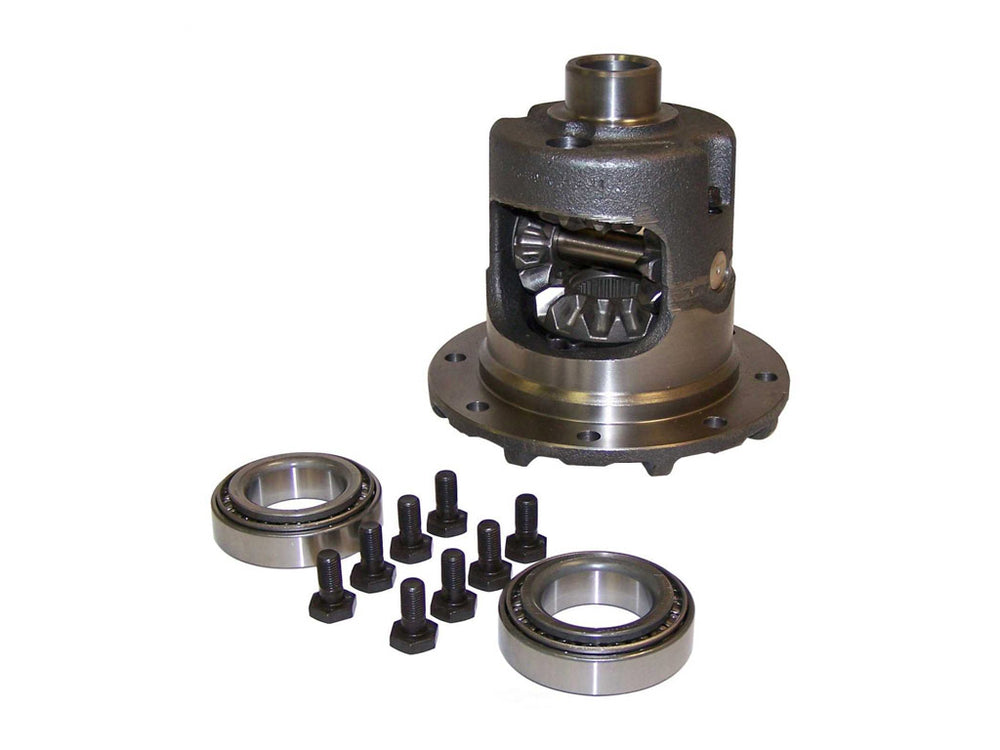
How To Tell If Your Jeep Has Trac Lok
There’s no single, easy answer. Jeep rarely puts a big “Trac Lok” badge on the vehicle. But you can use several methods to check:
1. Window Sticker Or Build Sheet
If you still have the original window sticker or a build sheet, look for codes like “DSA,” “DSA Trac Lok,” or “Limited Slip Differential.” If you don’t have these, you can often get a build sheet from a Jeep dealer using your VIN.
2. Differential Tag
Many axles have a small metal tag attached to one of the cover bolts. If yours says “Limited Slip,” “Trac Lok,” or has a part number you can look up, that’s a strong sign.
3. Rear Axle Test
A simple test can help:
- Safely jack up the rear of your Jeep so both wheels are off the ground.
- With the vehicle in neutral (and the front wheels blocked), spin one rear tire by hand.
- If the opposite tire turns the same direction, you likely have Trac Lok. If it spins the other way, it’s probably an open differential.
4. Owner’s Manual
Check your owner’s manual. Some editions mention Trac Lok as part of the axle description or maintenance schedule.
5. Service Records
If you bought the Jeep used, service records may note a differential fluid change with friction modifier. Trac Lok needs a special additive called friction modifier to work correctly. If you see this in the records, you probably have Trac Lok.
Common Mistakes When Checking For Trac Lok
Many Jeep owners make errors when checking for Trac Lok. Here are a few to avoid:
- Assuming all 4×4 Jeeps have it: Many Jeeps are 4×4 but have open differentials.
- Confusing it with locker diffs: Trac Lok is not a true locker. Lockers force both wheels to turn together, but Trac Lok only helps when there’s a difference in traction.
- Missing hidden clues: Some Jeeps with Trac Lok may not have clear markings. Always double-check using more than one method.
One less obvious tip: If your Jeep makes a chattering noise during tight turns (especially after a differential fluid change), it may need more friction modifier. This noise is common with worn Trac Lok units.
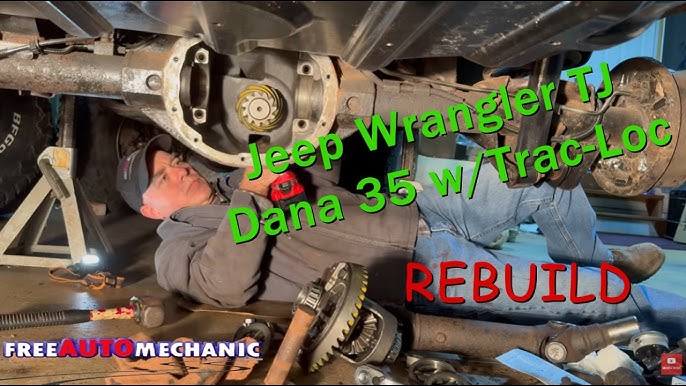
Comparing Trac Lok To Other Differentials
It helps to compare Trac Lok with other common Jeep differentials:
| Type | How It Works | Best Use |
|---|---|---|
| Open Differential | Power goes to the wheel with least traction | Normal road driving |
| Trac Lok (Limited Slip) | Some power shifts to the wheel with more grip | Light off-roading, snow, mud |
| Locker | Both wheels turn together, no matter what | Serious off-roading, rock crawling |
Trac Lok is a good middle ground—better than open, but not as aggressive as a locker.
What To Do If You Don’t Have Trac Lok
If you find out your Jeep does not have Trac Lok, you have options. Many owners add it later by swapping the differential unit.
This is called a “limited-slip differential retrofit. ” You can also upgrade to a full locker, but it’s more expensive and can affect daily driving.
If you often drive in tough conditions but want smooth everyday use, adding Trac Lok or another limited-slip is a smart move. Make sure to use the right friction modifier to keep it working smoothly.
A less obvious insight: Even if you don’t have Trac Lok, good tires make a big difference. Sometimes, quality all-terrain or winter tires improve traction more than changing your differential.


















