The Jeep Grand Cherokee has long been a popular choice for people who want comfort, style, and off-road ability. In recent years, Jeep added a new option: the Grand Cherokee L.
On the surface, these SUVs look similar and even share a name. But there are important differences to know before you buy or lease one.
This article breaks down how the Grand Cherokee and Grand Cherokee L compare—so you can choose the right fit for your needs.
What Sets Them Apart?
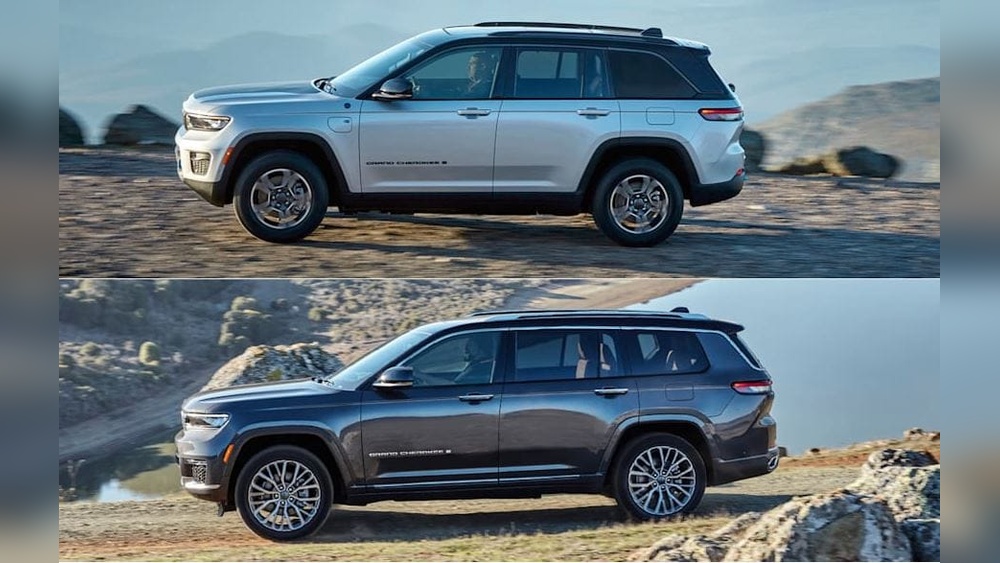
The main difference is simple: size and seating. The Grand Cherokee L is longer and has three rows of seats, while the regular Grand Cherokee is a two-row SUV. But the story doesn’t end there. Each model offers unique benefits in space, features, and driving experience.
Size And Dimensions
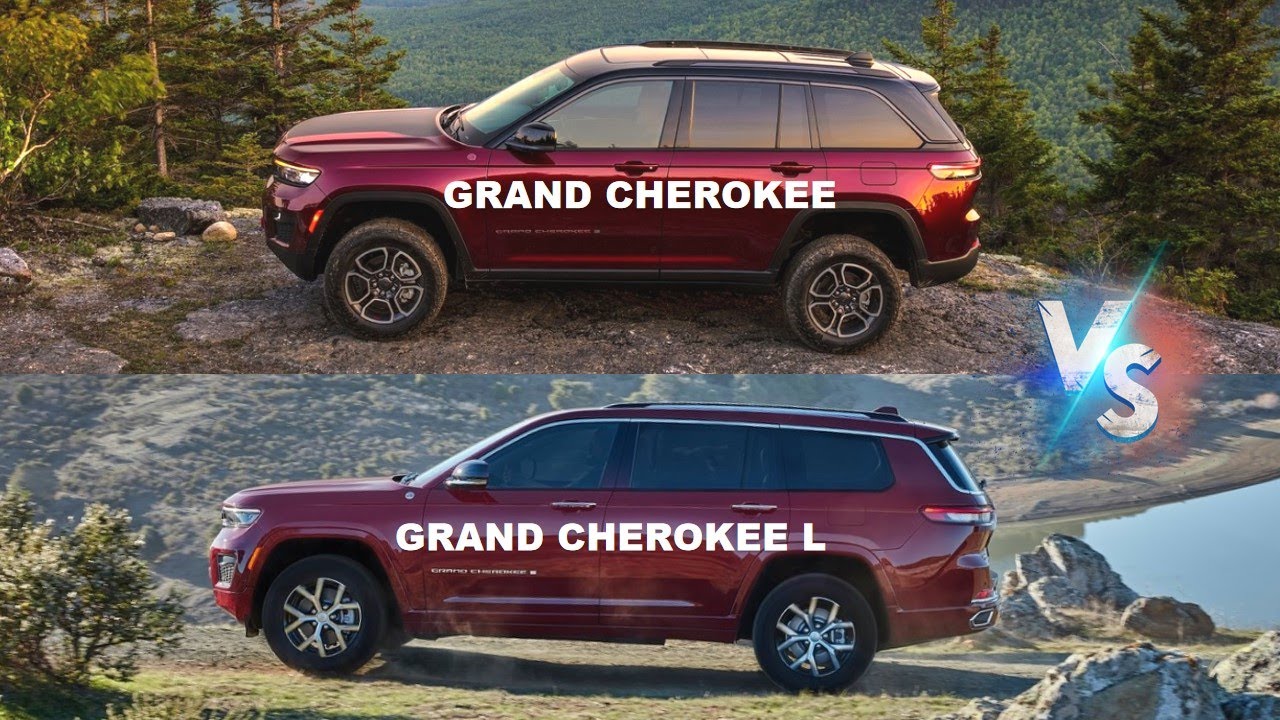
You’ll notice the size difference as soon as you see them side by side. The Grand Cherokee L is noticeably longer, which makes room for the third row.
| Model | Length (inches) | Wheelbase (inches) | Height (inches) |
|---|---|---|---|
| Grand Cherokee | 193.5 | 116.7 | 70.8 |
| Grand Cherokee L | 204.9 | 121.7 | 71.5 |
That extra 11.4 inches in length gives the Grand Cherokee L space for more passengers or cargo. However, the bigger size can make parking in tight spaces a bit harder.

Seating And Interior Layout
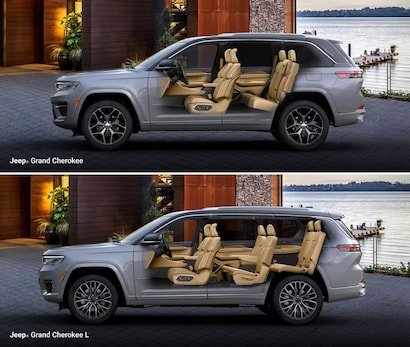
Seating is where the two models are most different. The regular Grand Cherokee seats up to five people, while the Grand Cherokee L can hold up to seven.
| Model | Rows | Max Seating | Third Row? |
|---|---|---|---|
| Grand Cherokee | 2 | 5 | No |
| Grand Cherokee L | 3 | 6 or 7 | Yes |
The Grand Cherokee L offers either captain’s chairs or a bench seat in the second row. Captain’s chairs are great for comfort, but a bench lets you seat seven instead of six.
Cargo Space Comparison
A big SUV usually means more space for luggage, sports gear, or groceries. Here’s how the two models compare for cargo:
- Grand Cherokee: 37.7 cubic feet behind the second row, 70.8 cubic feet with the seats down.
- Grand Cherokee L: 17.2 cubic feet behind the third row, 46.9 cubic feet behind the second row, and up to 84.6 cubic feet with all rear seats down.
With all seats up, the Grand Cherokee L’s cargo area is smaller than the two-row version. But fold those back rows, and the L has much more total cargo space.
This is a detail many buyers miss—if you use all three rows for passengers, you may have less room for bags.
Engine Options And Performance
Both models offer similar engine choices:
- 3.6L V6: 293 horsepower, standard on most trims.
- 5.7L V8: 357 horsepower, available on higher trims.
The Grand Cherokee (not L) also offers a plug-in hybrid 4xe version, which gives up to 25 miles of electric-only driving. The Grand Cherokee L does not have this hybrid option (as of early 2026).
While both are built for comfort, the two-row Grand Cherokee is a bit lighter, so it feels sportier and may have slightly better acceleration.
Towing Capability
If you plan to tow a trailer or boat, both models deliver strong numbers:
| Engine | Grand Cherokee | Grand Cherokee L |
|---|---|---|
| 3.6L V6 | 6,200 lbs | 6,200 lbs |
| 5.7L V8 | 7,200 lbs | 7,200 lbs |
These numbers mean you can tow most midsize campers, boats, or trailers with either version.
Technology And Features
Both SUVs share many of the same tech features. You’ll find:
- A large touchscreen (8.4 or 10.1 inches)
- Apple CarPlay and Android Auto
- Optional 19-speaker McIntosh audio system
- Advanced safety systems (automatic emergency braking, adaptive cruise control, lane keep assist)
One non-obvious detail: because the Grand Cherokee L is often used for families, some trims offer rear-seat monitoring cameras. This helps parents keep an eye on children in the back.
Pricing And Value
Prices change based on trim level and options, but here’s a basic range for 2026:
- Grand Cherokee: Starts around $39,500
- Grand Cherokee L: Starts around $42,000
Higher trims (Summit, Overland) can go over $60,000 for both. Remember, the L’s extra length and seats cost more, but you may get more value if you need three rows.
Driving Experience
The two-row Grand Cherokee feels a bit easier to maneuver in city traffic or parking lots. The Grand Cherokee L, with its longer wheelbase, is smoother on highways and handles bumpy roads well.
Some owners say the L feels more like a luxury vehicle, especially in high-end trims.
A subtle insight: the Grand Cherokee L’s longer body means it may have a larger turning radius. If you drive in crowded areas, this is worth considering.
Which Should You Choose?
Choose the Grand Cherokee if:
- You rarely need more than five seats.
- You want a slightly sportier drive.
- You prefer easier parking and city driving.
Choose the Grand Cherokee L if:
- You need three rows for family or friends.
- You want maximum cargo space when seats are folded.
- You plan to take long road trips with more passengers.
Some buyers overlook resale value. In some markets, three-row SUVs like the Grand Cherokee L can keep value better, especially for families.
But if you don’t need the space, the two-row Grand Cherokee is less expensive and more agile.
For more technical details and specs, visit the official Jeep Grand Cherokee page.
Frequently Asked Questions
Is The Grand Cherokee L Just A Longer Grand Cherokee?
No. While they share a platform and engines, the Grand Cherokee L adds a third row, has a longer wheelbase, and slightly different interior features for families.
Does The Grand Cherokee L Use More Fuel?
Usually, yes. The Grand Cherokee L is heavier and larger, so it may get 1–2 mpg less than the two-row version, especially in city driving.
Can You Get The Hybrid 4xe Engine In The Grand Cherokee L?
As of 2026, the 4xe plug-in hybrid is only available in the two-row Grand Cherokee, not the Grand Cherokee L.
Is There A Big Difference In Cargo Space?
With all seats up, the two-row Grand Cherokee has more cargo space behind the last row. But with seats folded, the Grand Cherokee L offers much more total space.
Which Suv Is Better For Off-roading?
Both are strong, especially with the Trailhawk trim. However, the shorter Grand Cherokee is a bit better for tight trails due to its smaller size.
In summary, both the Grand Cherokee and Grand Cherokee L offer comfort, power, and technology. Your choice depends mostly on how many people you need to carry and how much space you need.
If possible, test drive both to see which feels right for your lifestyle.