Jeep owners often want their vehicles to stand out, both on and off the road. One popular way to achieve this is by installing Jeep halo lights—those bright, colorful rings around the headlights.
They look striking at night and can give your Jeep a modern, aggressive look. But before you rush to add them, it's important to ask: Are Jeep halo lights legal?
The answer isn’t simple. Laws vary across states, and misunderstanding them can lead to tickets or failed inspections.

This guide explains what you need to know about halo light legality, how laws differ by location, and how to avoid common mistakes.
What Are Jeep Halo Lights?
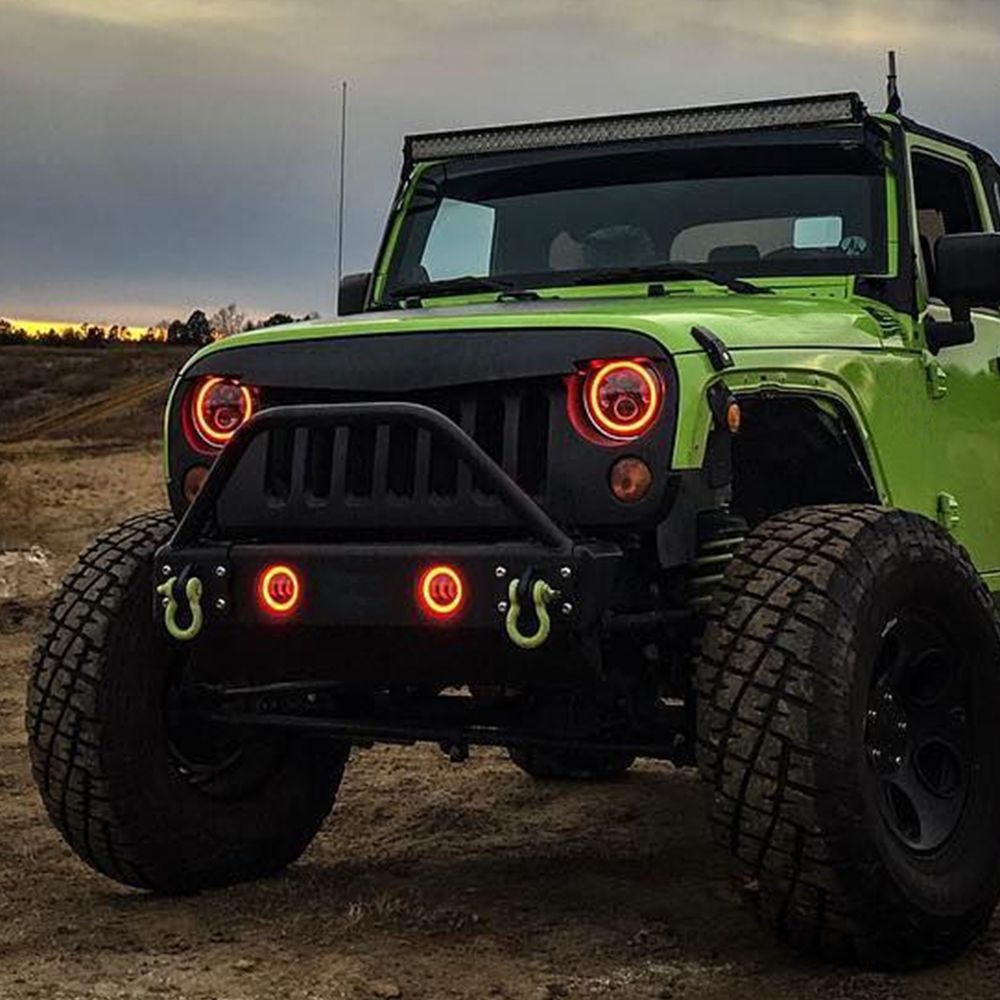
Halo lights are LED rings that surround the main headlight bulb. Originally seen on luxury cars like BMWs, they’re now common in the Jeep community. Halo lights can be pure white, but many models allow you to change to other colors or create effects like flashing or fading.
Drivers use halo lights for:
- Aesthetic upgrades—to make their Jeep stand out
- Daytime running lights—to improve visibility
- Show purposes—at car meets or off-road events
Some halo kits are built into the headlight, while others can be added as external rings. Most are powered by the Jeep’s electrical system and controlled with a switch or remote.
United States Laws On Halo Lights
No single law covers all states. Instead, each state’s Department of Motor Vehicles (DMV) or Highway Patrol sets its own rules for aftermarket vehicle lighting. These rules cover three main areas:
- Color restrictions—What colors are allowed on the road?
- Light placement—Where can you install extra lighting?
- Usage—When can you use aftermarket lights?
Here’s a simple breakdown for popular Jeep states:
| State | Are Halo Lights Legal? | Allowed Colors | Notes |
|---|---|---|---|
| California | Sometimes | White/Amber (front) | No blue/red; off-road only for color effects |
| Texas | No (on road) | White/Amber (front) | Red/blue strictly prohibited |
| Florida | Rarely | White only | Colored halos not street legal |
| New York | Rarely | White/Amber (front) | No colored lights when driving |
Key insight: Even in states where white or amber halos are allowed, using any other color (especially red or blue) on public roads is almost always illegal. These colors are reserved for emergency vehicles.
Common Legal Mistakes With Halo Lights
Many Jeep owners install multi-color halo kits because they look cool at car meets or on social media. However, this is where most get in trouble:
- Using color-changing halos on public streets, even briefly, can lead to police stops or fines.
- Some kits don’t allow you to lock the color to white or amber, making them impossible to use legally on the road.
- DIY wiring mistakes can cause halos to flash or strobe, which is usually illegal except for emergency vehicles.
Pro tip: Always check if your halo kit can be set to a fixed, legal color and switched off completely when needed.
Inspection And Insurance Issues
Beyond traffic stops, illegal lights can cause other problems:
- Vehicle inspections: Some states require annual safety checks. Illegal halo lights may cause your Jeep to fail inspection, especially if they can’t be turned off or set to a legal color.
- Insurance claims: If you’re involved in an accident and your Jeep has unauthorized lighting, your claim could be denied. Insurers may argue the lighting contributed to the crash or distracted other drivers.
Here’s a quick look at how common insurance and inspection issues relate to Jeep halo lights:
| Issue | Impact of Illegal Halo Lights |
|---|---|
| Annual Vehicle Inspection | May fail if non-compliant lighting is detected |
| Insurance Claim | Possible denial if illegal modification played a role |
| Traffic Stop | Ticket or warning; lights may need to be removed |

How To Stay Legal With Jeep Halo Lights
Staying compliant is possible if you follow these steps:
- Research your state’s laws before buying or installing halo lights. Check your state DMV website.
- Choose white or amber halos for street use. Avoid kits that only do red, blue, green, or other colors.
- Wire your halos with a switch. This lets you turn them off for inspection or if an officer asks.
- Avoid strobe or flashing modes unless you’re off-road or at a car show, not on public streets.
- Keep receipts and documentation for your lighting kit. Some states require proof that the lights are DOT-approved.
Little-known tip: Some states allow colored halo lights if they’re covered or disabled while on public roads. Removable covers or a hidden switch can be a smart investment for Jeep enthusiasts.
Real-world Examples
- In Texas, a Jeep owner was fined $180 for using blue halos in a parking lot, even though the vehicle was not moving. The officer noted that any blue light visible from the front is illegal.
- In California, a group of Jeep drivers was stopped at night for running red halos. The police issued warnings and asked them to remove the lights before resuming travel.
- In Florida, a Jeep failed state inspection because the halo kit did not have a DOT approval stamp, even though the color was white.
Are Halo Lights Worth It?
For many Jeep owners, the answer is yes—if used responsibly. Halo lights can make your Jeep look unique and improve daytime visibility. But the risk of fines, failed inspections, or insurance problems is real if you ignore local laws. Always prioritize safety and legality over style.
If you want to learn more about state-specific vehicle lighting laws, the National Highway Traffic Safety Administration provides useful guidelines at NHTSA.
Frequently Asked Questions
Can I Use Colored Halo Lights On Public Roads?
No, colored halo lights (red, blue, green, etc. ) Are not legal on public roads in most states.
Only white or amber halos are usually allowed.
Do Jeep Halo Lights Improve Visibility?
White or amber halo lights can help other drivers see your vehicle during the day. However, they do not replace proper headlights for night driving.
Will I Fail Inspection If I Have Halo Lights?
If your halo lights can be set to a legal color and are DOT-approved, you may pass. Non-compliant kits, especially with color-changing features, can cause you to fail.
Are There Federal Laws About Halo Lights?
Federal law (FMVSS 108) sets standards for headlights but leaves most aftermarket lighting laws to the states. Always check your local rules.
How Do Police Check For Illegal Halo Lights?
Police look for non-standard colors (red, blue), flashing patterns, or excessively bright lights. They may also check for DOT approval on the light housing.
Jeep halo lights can be a fun and stylish upgrade, but always know your state’s laws before installing them. A little research now can save you time, money, and trouble on the road.