Every Jeep JK owner knows the joy of customizing their ride—new tires, lift kits, or upgraded suspension often bring a fresh look and better performance. But these upgrades can sometimes lead to an unexpected issue: a steering wheel that’s no longer centered. If your Jeep JK’s steering wheel points slightly left or right while driving straight, you’re not alone. This misalignment isn’t just annoying—it can affect your safety and confuse some electronic systems. The good news: centering your steering wheel is a straightforward task with the right tools and understanding. Let’s break down exactly how to do it, why it matters, and what you need to watch out for along the way.
Why Centering The Steering Wheel Matters
Driving with a misaligned steering wheel is more than a cosmetic issue. Many Jeep JKs (2007–2018 Wranglers) have electronic stability control (ESC) and traction control systems. These systems rely on sensors that assume your steering wheel is truly centered when you’re driving straight. If the wheel isn’t centered, you might notice:
- The traction control light flickers or stays on
- The Jeep may pull slightly to one side
- ESC can activate unexpectedly, reducing power or applying brakes
- Premature tire wear from incorrect alignment
More importantly, a misaligned steering wheel can hide deeper alignment problems after suspension work. That’s why it’s crucial to center the wheel after any changes to your steering or suspension.
Tools And Materials You’ll Need
Before you begin, gather a few basic tools. You don’t need a mechanic’s shop—just patience and the right gear:
- Tape measure or ruler
- Wrenches: Usually 15mm and 18mm for the drag link clamps
- Jack and jack stands (if needed for access)
- Work gloves
- Chalk or marker
Having these ready will make the process faster and safer. Always wear gloves and work on a flat, stable surface.
Understanding The Jeep Jk Steering System
The Jeep JK uses a recirculating ball steering box with a drag link and tie rod system. Here’s what matters for centering:
- The drag link connects the steering box to the passenger-side steering knuckle.
- Adjusting the drag link (not the tie rod) changes the steering wheel position without affecting the actual wheel alignment (toe).
The steering wheel’s position is set by the length of the drag link. If you install a lift or adjust the suspension, the drag link’s angle changes, pulling the wheel off-center.
Drag Link Vs Tie Rod: What’s The Difference?
Many beginners mix up these parts. The drag link is for steering wheel centering. The tie rod connects both wheels and handles toe adjustment (how much the tires point in or out). Adjusting the wrong part can make things worse.
How To Center The Steering Wheel On Jeep Jk
Here’s a step-by-step guide to getting your steering wheel lined up perfectly.
1. Park And Prepare
- Park your Jeep on a flat, level area.
- Set the parking brake and turn off the engine.
- If you’ve recently driven, let parts cool before touching metal.
2. Check The Steering Wheel Position
- Sit in the driver’s seat.
- Start the Jeep and drive forward a short distance on a flat road.
- Let the wheel settle naturally and note how far off-center it is (clockwise or counterclockwise).
- Stop, and turn off the engine.
Pro Tip: Use a piece of masking tape to mark the top center of the steering wheel. This helps you track changes during adjustments.
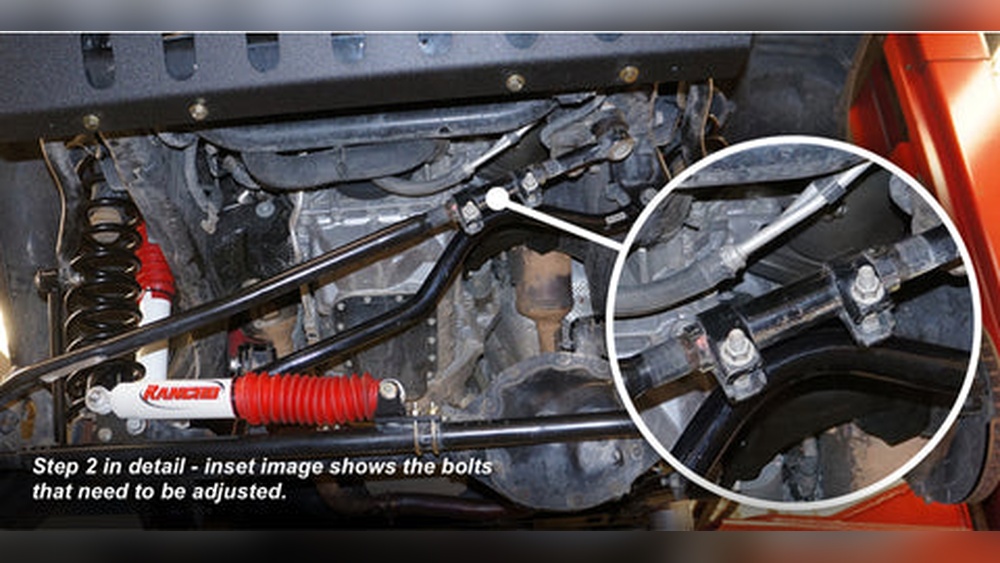
3. Locate The Drag Link Adjustment
- Slide under the front of your Jeep JK.
- Find the drag link connecting from the pitman arm (steering box) to the passenger-side knuckle.
- Look for a threaded adjustment sleeve with two clamps (usually near the passenger tire).
4. Loosen Drag Link Clamps
- Using your wrenches, loosen both clamps on the adjustment sleeve.
- Do not remove the bolts—just loosen enough for the sleeve to turn by hand or with a wrench.
Tip: Sometimes, rust or dirt can make turning the sleeve hard. Spray a little penetrating oil and wait a few minutes if needed.
5. Adjust The Drag Link
- Turn the sleeve with your wrench.
- One way will move the steering wheel left, the other right.
- Make small adjustments—about 1/8 turn at a time.
- After each adjustment, retighten the clamps just enough to test the steering.
Important: Always adjust with the wheels on the ground. If the Jeep is jacked up, the steering geometry changes and will give a false reading.
6. Check Your Progress
- Start the Jeep and drive forward a short distance.
- Let the steering wheel settle and see if it’s centered.
- If not, repeat the adjustment process.
- It usually takes 2–3 tries to get it perfect.
7. Tighten Everything Up
- Once the steering wheel is centered, fully tighten the drag link clamps.
- Double-check that both clamps are secure—you don’t want them loosening on the road.
8. Test Drive
- Take the Jeep for a longer test drive.
- Pay attention to the steering wheel position, any pulling, and warning lights.
- If the traction control or ESC light stays on, repeat the process or consider a full alignment check.
Common Mistakes To Avoid
Even experienced Jeep owners can make these errors:
- Adjusting the tie rod instead of the drag link: This changes wheel alignment, not steering wheel centering.
- Jacking up the Jeep during adjustment: Always adjust with tires on the ground.
- Making large adjustments: Small turns are best; big changes can overcorrect.
- Not tightening clamps: Loose clamps can cause dangerous play in the steering.
Visual Guide: Drag Link Vs Tie Rod
To help you spot the right part, here’s a simple comparison:
| Part | Location | Function |
|---|---|---|
| Drag Link | Pitman arm to passenger knuckle | Centers steering wheel |
| Tie Rod | Knuckle to knuckle (front axle) | Adjusts toe (wheel angle) |
Knowing this difference saves time and prevents costly mistakes.
When Should You Center The Steering Wheel?
You’ll need to perform this adjustment after:
- Installing a lift kit (any height)
- Replacing or upgrading drag link or tie rod
- Changing the track bar
- Doing any major suspension or steering work
If you haven’t changed anything but the steering wheel is off-center, it could signal worn parts or bent components. Get those checked before adjusting.
How Steering Wheel Centering Affects Safety Systems
The Jeep JK’s electronic stability control (ESC) uses a steering angle sensor. If the steering wheel isn’t centered, the ESC may think you’re always turning. This can cause:
- False traction control activation
- Unexpected power reduction or braking
- Trouble codes or warning lights
If you notice the traction control light after a lift or alignment, centering the steering wheel usually fixes it. However, if the light stays on, have the system scanned for fault codes.
Diy Vs Professional Alignment
Centering the steering wheel is a DIY-friendly job—much easier than a full alignment. However, if you’ve installed new suspension or steering parts, a professional alignment is still recommended. Wheel alignment ensures:
- Even tire wear
- Safe handling
- Accurate tracking on the road
Here’s how these tasks compare:
| Task | Tools Needed | Skill Level | Recommended For |
|---|---|---|---|
| Steering Wheel Centering | Basic hand tools | Beginner | DIYers after minor mods |
| Full Wheel Alignment | Alignment rack, specialty tools | Advanced/Professional | After lifts or major suspension work |
If your Jeep pulls, wanders, or shows uneven tire wear, get a full alignment even if you’ve centered the wheel yourself.
Real-world Tips For Success
Most guides cover the basics, but here are some insights that can make your adjustment smoother:
- Chalk Mark Both Sides: Mark the position of the drag link sleeve before you start. This gives a reference point and helps you track how much you’ve turned it.
- Check Toe-In After Big Lifts: Even though drag link adjustments don’t change toe, big suspension lifts can. If steering feels odd after centering, check your toe with a tape measure or visit a shop.
- Don’t Ignore Warning Lights: If the traction control or ESC light stays on, don’t just unplug the battery. Persistent warnings after centering can mean other alignment or sensor problems.
Example Scenario: Adjusting After A 2.5” Lift
Let’s say you just installed a 2.5-inch lift kit and notice your steering wheel now points slightly right when driving straight. Here’s what you’d do:
- Mark the steering wheel top with tape.
- Follow the drag link adjustment steps.
- After your first 1/8 turn, the wheel improves but is still a bit right.
- A second small adjustment brings it dead center.
- All warning lights disappear, and the Jeep tracks straight.
This method works for all Jeep JK models (Wrangler Sport, Sahara, Rubicon, etc. ) From 2007 to 2018.
What If The Wheel Won’t Center?
If you can’t get the steering wheel to center even after several adjustments, check for:
- Bent drag link or tie rod: Off-roading can bend these parts.
- Loose track bar: A shifting axle throws off alignment.
- Worn bushings or ball joints: Excessive play can make centering impossible.
In these cases, replace worn or damaged parts before continuing.
How Often Should You Check Centering?
Check your steering wheel center:
- After any major off-road trip
- After hitting a large pothole or curb
- Every 6–12 months as part of basic maintenance
Small shifts can happen over time, especially with lifted Jeeps.
Quick Reference: Steering Wheel Centering Steps
For a fast overview:
- Park on level ground.
- Note steering wheel position.
- Locate and loosen drag link clamps.
- Turn sleeve in small increments.
- Test drive and repeat if needed.
- Tighten clamps and verify warning lights.
Why Does My Steering Wheel Go Off-center After A Lift?
A lift changes the angle and length relationship of your drag link, moving the steering wheel off-center even if the wheels are straight. Adjusting the drag link corrects this.
Can I Drive With A Slightly Off-center Steering Wheel?
You can, but it’s not recommended. Even a small misalignment can confuse your Jeep’s ESC and traction control, possibly triggering warning lights or reducing safety.
Do I Need A Professional Alignment After Centering My Steering Wheel?
If you only adjusted the drag link, a full alignment isn’t required. But after installing a lift, new tie rod, or track bar, a professional alignment ensures proper toe and safe handling.
How Do I Know If I Turned The Drag Link In The Right Direction?
If your steering wheel was off to the right, lengthen the drag link. If it was off to the left, shorten it.
Adjust in small increments and check progress after each change.
Where Can I Learn More About Jeep Jk Steering And Alignment?
The official Jeep website offers detailed guides and resources for owners.
Getting your Jeep JK’s steering wheel centered isn’t just about comfort it’s about confidence and control, both on and off the road.
With these steps, you’ll keep your Jeep driving straight and your dashboard warning light-free, ready for your next adventure.