If you own a Jeep TJ, you know it’s built for adventure. But after a suspension lift, steering repair, or even hitting a big pothole, you might find your steering wheel is no longer centered. This isn’t just an aesthetic issue—an off-center steering wheel can signal alignment problems and affect your driving safety. In this guide, you’ll learn how to center your Jeep TJ steering wheel the right way, even if you’re new to vehicle maintenance. The process is straightforward, but a few key details make a big difference in the results. By following the steps below, you’ll restore your Jeep’s steering to its proper position and gain confidence in your own repair skills.
Why The Steering Wheel Gets Off-center
Most Jeep TJ owners notice their steering wheel shifts after suspension lifts, replacing steering components, or making alignment changes. When these adjustments happen, the drag link—which connects your steering box to the wheels—may not be set correctly. As a result, the steering wheel points left or right when the wheels are straight.
An off-center steering wheel may also be a sign of more serious problems, such as a bent steering linkage or worn tie rod ends.
If your Jeep pulls to one side, has uneven tire wear, or feels unstable, check for these issues before centering the wheel.
Always fix worn parts first, since centering the wheel won’t solve deeper problems.
Tools And Supplies You’ll Need
Before you begin, gather these tools and materials:
- 15mm and 18mm wrenches (or correct size for your Jeep’s drag link adjustment collar)
- Tape measure or ruler (optional, for extra accuracy)
- Permanent marker or chalk
- Jack and jack stands (if needed for better access)
- Wheel chocks
- Safety gloves and eye protection
- Penetrating oil (if bolts are rusty)
Having these ready will save time and help you work safely.
Understanding The Jeep Tj Steering System
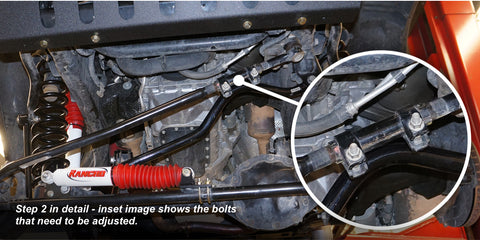
It helps to know how your Jeep’s steering works. The drag link is the main part you’ll adjust. It runs from the pitman arm (connected to the steering box) to the passenger-side steering knuckle. Rotating the adjustment sleeve on the drag link changes the steering wheel’s position without affecting wheel alignment.
Here’s a simple breakdown:
| Component | Function | Location |
|---|---|---|
| Drag Link | Connects steering box to wheel knuckle | Front axle, runs diagonally |
| Tie Rod | Connects both wheels together | Front axle, runs horizontally |
| Pitman Arm | Transfers motion from steering box | Attached to steering box, left side |
When you adjust the drag link, you’re changing the relationship between the steering wheel and the position of the wheels not the alignment angles themselves.
Step-by-step: How To Center Jeep Tj Steering Wheel
Ready to get hands-on? Follow these steps carefully, and you’ll have a perfectly centered steering wheel in under an hour. No advanced skills are needed, but patience and attention to detail are key.
1. Park Safely And Prepare
- Find a level surface to park your Jeep.
- Set the parking brake and use wheel chocks behind the rear tires.
- If your Jeep sits high, you may want to jack up the front for easier access, but this is optional.
- Wear safety gloves and eye protection.
2. Inspect And Mark The Current Position
- Sit in the driver’s seat with the wheels pointing straight ahead.
- Note the angle of the steering wheel. Use a marker or chalk to make a small mark at the top center of the wheel and on the dashboard as a reference.
- This helps track your adjustments.
3. Locate And Loosen The Drag Link Adjustment Sleeve
- Crawl under the front of your Jeep and locate the drag link adjustment sleeve. It’s a short, threaded section with clamps at both ends.
- Spray the sleeve and bolts with penetrating oil if they look rusty.
- Use your 15mm or 18mm wrenches to loosen both clamp bolts on the sleeve. Do not remove them completely—just loosen enough to allow the sleeve to turn.
4. Rotate The Drag Link To Adjust Steering Wheel Position
- With the clamps loose, turn the adjustment sleeve. One direction will rotate the steering wheel left; the other moves it right.
- Make small adjustments—about 1/4 turn at a time—then check progress.
- After each adjustment, tighten the clamps lightly, start the engine, and turn the wheels from lock to lock. Let the wheels return to center and check the steering wheel position.
- Repeat until the steering wheel is centered when the wheels are straight ahead.
Pro Tip:
Turning the drag link can be stiff. Use a wrench or channel-lock pliers if needed, but be gentle to avoid damaging threads.
5. Final Tightening And Test Drive
- Once you’re satisfied, fully tighten the adjustment sleeve clamps.
- Lower the Jeep (if jacked up) and remove wheel chocks.
- Take a careful test drive on a straight, flat road. Keep an eye on the steering wheel and make minor adjustments if needed.
- If the steering wheel is still not perfect, repeat the process in small increments.
Common Mistakes To Avoid
Even experienced Jeep owners can make these mistakes. Here’s how to avoid them:
- Over-adjusting the sleeve: Small changes go a long way. Too much adjustment can make the problem worse.
- Ignoring worn components: If your tie rod ends or drag link are loose, centering the steering wheel won’t last.
- Forgetting to tighten clamps: Loose clamps can let the adjustment slip, causing steering problems or even failure.
- Not checking alignment: If your Jeep pulls or your tires wear unevenly, get a full alignment after centering the wheel.
When To Seek Professional Help
If you notice any of these signs, stop and consult a professional:
- Unusual noises when turning
- Loose or wandering steering
- Excessive play in the steering wheel
- Visible damage to steering components
A professional mechanic has tools to check alignment, steering angle sensors (in newer models), and can catch hidden issues you might miss.
Jeep Tj Steering: Centering Vs. Alignment
It’s important to understand that centering the steering wheel is not the same as aligning your wheels. Alignment sets the angles (toe, camber, caster) so your Jeep drives straight and your tires wear evenly. Steering wheel centering simply matches the wheel to the direction your tires are pointing.
Here’s a quick comparison:
| Task | Purpose | Tools Needed | Does It Fix Alignment? |
|---|---|---|---|
| Centering Steering Wheel | Aligns wheel position with straight wheels | Wrenches, marker | No |
| Wheel Alignment | Adjusts suspension angles for proper tracking | Alignment machine | Yes |
If you recently installed a lift kit or replaced steering parts, it’s smart to do a full alignment at a shop after centering your steering wheel.
Two Non-obvious Tips Most Beginners Miss
- Check the steering stabilizer position before and after adjusting. If your Jeep TJ has a steering stabilizer (a small shock absorber on the linkage), make sure it’s not binding or off-center after you finish. A misaligned stabilizer can make steering feel odd or even damage the stabilizer.
- Record your original adjustment. Before turning the drag link sleeve, count the exposed threads or measure the length showing on each side. Write it down or snap a photo. If you need to return to your starting point, this makes it easy.
Real-world Example: After A 2” Lift
Suppose you’ve just installed a 2-inch suspension lift on your Jeep TJ. After the lift, you notice the steering wheel points about 30 degrees left, even though the wheels are straight. This is classic drag link misalignment. By following the steps above and making small adjustments to the drag link sleeve, you can restore the steering wheel to center—no need for expensive tools or a trip to the shop.
Many Jeep owners share that after their first DIY centering, they feel more confident handling future suspension and steering work. It’s a skill worth learning, especially for off-roaders.
How Often Should You Center The Steering Wheel?
For most Jeep TJs, you’ll only need to center the steering wheel after:
- Installing a lift kit
- Replacing drag link, tie rod, or steering box
- After a full alignment (if the wheel remains off-center)
Regular driving rarely knocks the wheel off-center unless a component is worn or damaged.
Should You Try This If You’re A Beginner?
Absolutely. This job is considered beginner-friendly for anyone comfortable with basic hand tools. The most important things are working safely, making small adjustments, and not forcing any parts. Always double-check your work and take a test drive.
If you’re unsure, ask a more experienced Jeep owner or consult a local mechanic. There are also detailed walkthroughs and videos on forums and YouTube. For in-depth reference, check the JeepForum community, where many users share real-world experiences.
Frequently Asked Questions
How Do I Know If My Steering Wheel Is Off-center?
Your steering wheel is off-center if, while driving straight, the wheel points to the left or right instead of straight up. This can happen after suspension changes or steering repairs.
Can I Center My Jeep Tj Steering Wheel Without An Alignment?
Yes, you can center the steering wheel without a full alignment if your wheels are already aligned. However, if your Jeep pulls to one side or shows uneven tire wear, get a professional alignment.
What If My Steering Wheel Is Still Off-center After Adjustment?
If repeated adjustments don’t solve the problem, check for worn or damaged steering parts. There may be an underlying issue like a bent drag link, loose tie rod ends, or other alignment problems.
Is It Safe To Drive With An Off-center Steering Wheel?
It’s not recommended. While your Jeep may seem to drive fine, an off-center wheel can hide alignment or steering issues. It may also confuse electronic systems if your vehicle has traction or stability control.
Will Centering The Steering Wheel Fix My Jeep’s Alignment?
No. Centering the steering wheel only changes the wheel’s position relative to the tires. It does not adjust alignment angles such as toe, camber, or caster. Get a full alignment if you notice pulling, odd tire wear, or unstable steering.
Getting your Jeep TJ steering wheel centered isn’t just about looks—it’s about safe, confident driving. By understanding the process and avoiding common mistakes, you’ll keep your Jeep ready for whatever the trail (or city streets) brings.