Driving a 2003 Jeep Liberty can be a lot of fun, especially when you know how to use its 4 wheel drive system. This vehicle was designed for both city roads and rough terrain. But many drivers are unsure when or how to use the different 4WD modes. If you want to get the best performance and avoid damage to your Jeep, it’s important to understand each setting and when to engage it. This guide will help you use the 4 wheel drive on your 2003 Jeep Liberty with confidence, avoid common mistakes, and protect your vehicle for years to come.
Understanding The 4 Wheel Drive System
Before you start using the 4WD, it helps to know how the system works. The 2003 Jeep Liberty typically comes with a Command-Trac part-time 4WD system or the Selec-Trac full-time 4WD system. Both are operated by a lever next to the driver’s seat. This lever allows you to shift between 2WD, 4WD Part-Time (4H), Neutral (N), and 4WD Low (4L).
The main difference between Command-Trac and Selec-Trac is that Selec-Trac offers a “full-time” 4WD mode, which can be used on any surface, while Command-Trac is for off-road or slippery roads only.
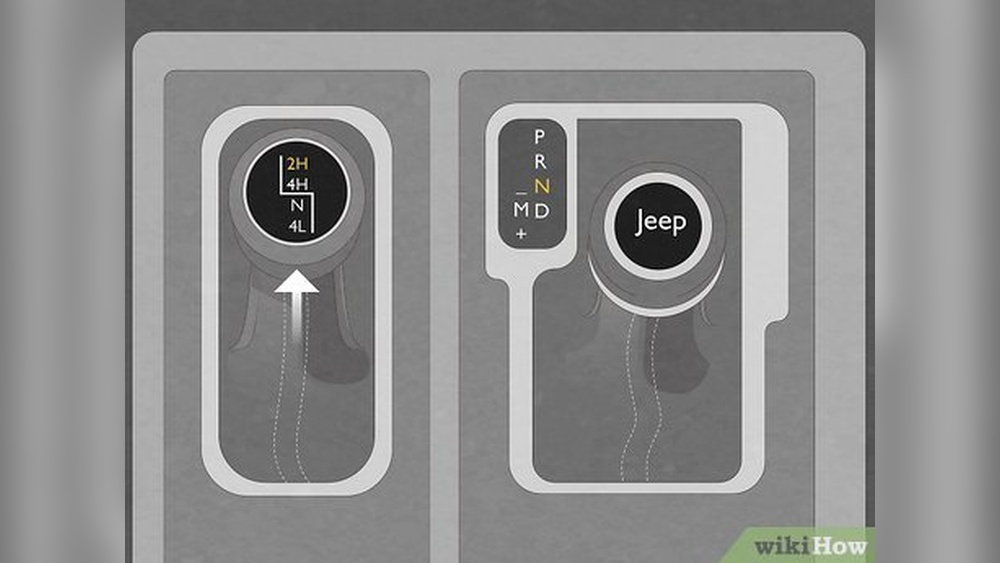
Always check your owner’s manual if you are not sure which system your Jeep Liberty has.
The Four 4wd Modes Explained
There are four main settings you’ll use in your Jeep Liberty’s 4WD system. Let’s break down each one, how to engage them, and when to use them.
1. 2wd (two-wheel Drive)
In 2WD, only the rear wheels receive power. This is the default setting for most driving situations, especially on dry pavement.
- When to use: Normal city or highway driving, dry or wet roads, and when you want the best fuel economy.
- How to engage: Make sure the 4WD lever is in the “2WD” position. You can shift from 4WD to 2WD while driving, as long as the wheels are not slipping.
Tip: Using 2WD reduces wear on your 4WD components and saves fuel. Many drivers forget to switch back to 2WD after leaving a slippery area, which can lower gas mileage and increase tire wear.
2. 4wd Part-time (4h)
4WD Part-Time (4H) is for driving on slippery surfaces like snow, mud, sand, or loose gravel. In this mode, power is sent to all four wheels. However, the system does not allow for different wheel speeds between the front and rear axles, which means you should never use 4H on dry pavement.
- When to use: Slippery, loose, or off-road surfaces where extra traction is needed.
- How to engage: Slow down to below 55 mph (preferably under 45 mph), and pull the 4WD lever from 2WD to 4H. You can do this while moving, but it’s smoother if you let off the gas and shift when the vehicle is moving straight.
- How to disengage: Shift back to 2WD when you return to dry, firm roads.
Non-obvious insight: If you use 4H on dry pavement, the drivetrain can bind up, leading to hard steering and possible damage over time. Many new drivers don’t realize this until they hear a strange noise or feel the car resist turning.
3. Neutral (n)
The Neutral position disconnects the drivetrain from the wheels. The vehicle cannot move under its own power when in Neutral. This mode is mainly for towing your Jeep Liberty behind another vehicle (“flat towing”).
- When to use: Only when towing your Jeep Liberty with all four wheels on the ground, such as behind an RV.
- How to engage: Stop the vehicle, press the brake, put the transmission in Neutral, then move the 4WD lever to the “N” position. Check your owner’s manual for the exact procedure as mistakes can damage your transmission.
- How to disengage: Reverse the steps—come to a complete stop, put the transmission in Neutral, then move the 4WD lever out of Neutral.
Non-obvious insight: Never try to drive with the transfer case in Neutral. The Jeep will not move, and you could damage the transmission if you apply throttle.
4. 4wd Low (4l)
4WD Low (4L) is your “get out of trouble” mode. It provides maximum torque at low speeds, helping you get unstuck or climb very steep hills. Only use 4L when driving very slowly (under 25 mph) in off-road situations.
- When to use: Deep mud or snow, very steep hills, rocky trails, or when you need to move the Jeep slowly with a lot of power.
- How to engage: Stop the vehicle completely, shift the transmission to Neutral, then pull the 4WD lever from 4H to 4L. You may hear a clunk as the gears shift.
- How to disengage: Stop, shift to Neutral, and push the lever back to 4H.
Tip: Don’t use 4L for normal snow driving. It’s only for extreme situations where you need slow, controlled movement.
How To Shift Between Modes
Knowing how to switch between 4WD modes can prevent gear grinding and expensive repairs. Most shifts can be done “on the fly,” but some require a full stop.
| Mode Change | Vehicle Speed | Transmission Position | Process |
|---|---|---|---|
| 2WD to 4H | Below 55 mph | Drive | Pull lever to 4H while moving straight |
| 4H to 4L | Stopped | Neutral | Shift to Neutral, pull lever to 4L |
| 4L to 4H | Stopped | Neutral | Shift to Neutral, push lever to 4H |
| 4H to 2WD | Below 55 mph | Drive | Push lever to 2WD while moving straight |
Practical tip: If the shift feels difficult, move the Jeep slowly forward or backward a few feet. Sometimes gears don’t line up perfectly, and a little movement helps.
Common Mistakes To Avoid
Even experienced drivers make errors with 4WD. Here’s how to avoid the most frequent problems:
- Using 4WD on dry pavement: This can bind up your drivetrain, cause tire wear, and make turning difficult.
- Not returning to 2WD after slippery roads: Leaving your Jeep in 4H on dry roads increases fuel use and stresses parts.
- Shifting into 4L while moving: Always come to a complete stop before using 4L. Shifting while moving can damage the transfer case.
- Forgetting to check tires: If your tires are not the same size or worn evenly, 4WD systems can bind or fail.
- Ignoring warning signs: If you hear clunks, grinding, or notice the Jeep won’t shift modes smoothly, get it checked. Small problems can get expensive quickly.
When To Use Each Mode: Real-world Examples
Choosing the right mode is not always obvious. Here are real situations and which setting you should use.
| Situation | Best Mode | Why |
|---|---|---|
| Dry city roads | 2WD | Best fuel economy, no extra traction needed |
| Heavy snow on highway | 4H | Extra grip for slippery surface |
| Deep mud or sand | 4L | Maximum torque at low speed |
| Flat towing behind RV | Neutral | Disconnects drivetrain for safe towing |
Helpful reminder: Always switch back to 2WD as soon as you’re back on solid, dry roads. If you’re unsure, start with 2WD and only use 4WD when you feel slipping or lose control.
Maintenance Tips For The 4wd System
Taking care of your Jeep’s 4WD system will keep it running smoothly.
- Use the system regularly: Even if you don’t need 4WD, engage it for a few minutes every month. This keeps the gears and fluids moving.
- Check fluids: The transfer case and differentials need proper lubrication. Have them checked during oil changes or before off-road trips.
- Inspect for leaks: Look under the Jeep for wet spots, especially after off-roading.
- Listen for noises: Clicking, clunking, or whining can mean a problem with 4WD components.
- Follow the manual: Always consult your owner’s manual for maintenance intervals and 4WD operation tips.
Pro insight: If you plan to drive through deep water or mud, check your 4WD system soon after. Water can sneak into seals and cause long-term damage.

Differences Between Command-trac And Selec-trac
If you’re not sure which system you have, here’s a quick breakdown:
- Command-Trac: Part-time 4WD only. Use 4WD on slippery surfaces only. Never use on dry pavement.
- Selec-Trac: Offers a full-time 4WD mode (4WD “Full-Time” or “AWD” on some shift levers). This mode can be used on any road surface.
Always look at your shift lever and check your owner’s manual. Using the wrong mode on the wrong surface can be costly.
For more on Jeep’s 4WD systems, see the official Jeep 4WD Systems page.
What To Do If Your 4wd Won’t Engage
Sometimes you might shift the lever, but the Jeep stays in 2WD or won’t shift out of 4WD. Here’s what you can try:
- Move forward and backward: Sometimes the gears are not lined up. Roll the Jeep a few feet and try shifting again.
- Check for indicator lights: If a light is blinking, it means the system is trying to shift but hasn’t finished.
- Stop and shift to Neutral: For 4L, you must be stopped and in Neutral.
- Inspect for damage: After off-roading, rocks or debris can jam the linkage.
- Visit a mechanic: If you hear grinding or the Jeep won’t move, don’t force it.
Expert tip: Regular use and maintenance make shifting easier and reduce the chance of trouble.

How Fast Can I Drive In 4wd High (4h)?
You can drive up to about 55 mph in 4H, but it’s safest to stay under 45 mph, especially on slippery surfaces. High speeds reduce the benefits of 4WD and can stress the system.
Should I Use 4wd In The Rain?
Only use 4H in rain if the road is very slippery (ice, slush, heavy mud). For normal wet pavement, 2WD is usually enough. If your Jeep has Selec-Trac with a “Full-Time” mode, you can use that on any surface.
Can I Shift Into 4wd Low (4l) While Moving?
No. Always stop completely and put the transmission in Neutral before shifting into or out of 4L. Shifting while moving can damage your transfer case.
What Happens If I Use 4wd On Dry Pavement?
Using 4WD (4H or 4L) on dry pavement causes drivetrain binding. This can make turning hard, wear out tires, and break parts over time.
How Do I Know If My Jeep Is In 4wd?
Look for the 4WD indicator light on your dashboard. You may also feel a difference in steering or hear a change in sound from the drivetrain. If you’re unsure, check the owner’s manual for your specific Jeep Liberty.
Driving a 2003 Jeep Liberty with 4 wheel drive opens up many possibilities, but only if you use each mode correctly. Understanding the four main settings 2WD, 4H, Neutral, and 4L can help you handle any road or trail with confidence.
Remember to shift carefully, avoid using 4WD on dry pavement, and maintain your system regularly.
With these tips, your Jeep will take you farther, safer, and with fewer headaches. Happy trails!