Jeep Wranglers are known for their rugged looks and off-road abilities. But many drivers wonder: are Jeep Wranglers good on gas? If you’re considering buying one, fuel economy can be a key factor. Gas mileage affects your travel costs and even your daily driving comfort. Let’s look closely at how Wranglers perform on gas, why their numbers look the way they do, and what you can expect compared to other vehicles.
What Is Typical Jeep Wrangler Gas Mileage?
When people talk about Jeep Wranglers and gas, they often say, “They aren’t built for fuel savings.” There’s truth in that statement. The Jeep Wrangler is designed for tough terrain, not just city streets.
For 2023 models, the Wrangler’s gas mileage ranges from about 17 to 22 miles per gallon (mpg) in the city and 23 to 29 mpg on the highway, depending on the engine and configuration.
Here’s a look at some common Wrangler models:
| Model/Engine | City MPG | Highway MPG | Combined MPG |
|---|---|---|---|
| Wrangler 2.0L Turbo (4-cyl) | 21 | 24 | 22 |
| Wrangler 3.6L V6 (automatic) | 19 | 24 | 21 |
| Wrangler 3.6L V6 (manual) | 17 | 23 | 19 |
| Wrangler 4xe Plug-in Hybrid | 49 MPGe* | — | — |
*MPGe means “miles per gallon equivalent” for hybrids.
Older Wranglers (like those from the 1990s and early 2000s) often return lower numbers—sometimes around 15-18 mpg combined.
Why Are Jeep Wranglers Not Great On Gas?
Wranglers are not built to win fuel economy awards. Here’s why their gas mileage is usually lower than many other SUVs:
- Boxy Shape: The Wrangler’s classic design creates more wind resistance. A smooth, modern SUV shape slices through air better, saving gas.
- Heavy Frame: Wranglers use a strong, body-on-frame build for off-roading. This adds weight, which requires more fuel to move.
- 4WD Systems: Most Wranglers have four-wheel drive, which uses extra energy compared to two-wheel drive.
- Large Tires: Big, knobby tires help off-road, but they create more rolling resistance on paved roads.
- Low Gears: Short gearing is great for climbing rocks but keeps engine speeds higher on highways, using more fuel.
Comparing Wrangler Gas Mileage To Other Vehicles
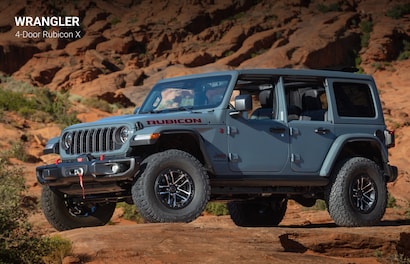
How does the Wrangler compare to other SUVs? Let’s see how it stacks up:
| Vehicle | City MPG | Highway MPG | Combined MPG |
|---|---|---|---|
| Jeep Wrangler (V6 Auto) | 19 | 24 | 21 |
| Toyota RAV4 (Gas) | 27 | 35 | 30 |
| Honda CR-V (Gas) | 28 | 34 | 30 |
| Ford Bronco (4-door, V6) | 17 | 21 | 19 |
As you can see, the Wrangler’s numbers are lower than most crossovers but similar to other hardcore off-roaders like the Ford Bronco.
Cost To Drive A Jeep Wrangler
Let’s put fuel economy into real-world dollars. If you drive 12,000 miles per year and gas costs $4.00 per gallon:
- Wrangler (21 mpg combined): About 571 gallons/year = $2,284 per year
- Toyota RAV4 (30 mpg combined): About 400 gallons/year = $1,600 per year
That’s a difference of $684 every year. Over 5 years, that’s over $3,400 more for gas in the Wrangler.
But fuel cost is not the only factor. Some buyers are happy to pay more for the Wrangler’s unique abilities.

Are Any Jeep Wranglers Good On Gas?
There are ways to get better mileage with a Wrangler, though you’ll never match a small crossover. Here are some options:
- Wrangler 4xe (Plug-in Hybrid): The 4xe can travel up to 22 miles on electric power alone. Its official rating is 49 MPGe (electric + gas).
- 2.0L Turbo Engine: This four-cylinder is more efficient than the V6, with about 22 mpg combined.
- Mild Hybrid Systems: Newer Wranglers offer mild-hybrid tech (“eTorque”) that helps save gas at low speeds.
Still, these options are only “good” compared to other Wranglers—not to the most efficient SUVs.
Real-world Wrangler Gas Mileage Tips
Some Wrangler owners get better (or worse) numbers than the EPA estimates. Here’s what makes a difference:
- Driving Style: Fast starts and stops hurt mpg. Smooth, steady driving helps.
- Tire Pressure: Under-inflated tires use more fuel.
- Roof and Door Choices: Soft tops and removing doors can increase wind drag.
- Modifications: Bigger tires and lifts reduce mpg.
- Load: Carrying gear or towing lowers fuel economy.
A non-obvious tip: keep the factory wheels and tires if you want the best mpg. Many owners upgrade to larger tires, which can drop mileage by 2-4 mpg.
When Is A Wrangler’s Gas Mileage “good Enough”?
If you need a car for daily city driving, there are better choices for fuel economy. But if you love open-air driving, off-roading, and the Wrangler style, the gas cost might feel worth it.
You should also think about how much you drive. If you only use your Wrangler on weekends or short commutes, the higher fuel use may not matter as much.
Some drivers buy a used Wrangler as a second vehicle for adventures, using a smaller, more efficient car for daily trips.
The Bottom Line
So, are Jeep Wranglers good on gas? The honest answer: No, not compared to most modern SUVs. Their design favors strength and off-road ability, not fuel savings. But for those who want adventure and style, the Wrangler’s gas mileage is often “good enough.” If you’re thinking about buying, weigh the extra fuel cost against the fun and freedom the Wrangler offers. For official EPA ratings and more detailed numbers, visit the U.S. Department of Energy.

Frequently Asked Questions
How Far Can A Jeep Wrangler Go On A Full Tank?
Most newer Wranglers have a 17.5–21.5 gallon fuel tank. With about 21 mpg combined, you can expect around 350–450 miles per tank with normal driving.
Does Using 4wd Affect Wrangler Gas Mileage?
Yes. Engaging 4WD adds more resistance and uses more fuel. Try to drive in 2WD (if possible) when you don’t need extra traction.
Is The Hybrid Jeep Wrangler 4xe Much Better On Gas?
The Wrangler 4xe can be much more efficient, especially for short trips under 22 miles using electric power. But on long gas-only drives, its mpg is similar to the standard Wrangler.
How Does Wrangler Gas Mileage Change With Big Tires And Lifts?
Big tires and a lifted suspension can lower mpg by 2–4 points or more, especially at highway speeds. Extra weight and wind resistance make the engine work harder.
Are Older Wranglers Worse On Gas?
Generally, yes. Older Wranglers (like the YJ or TJ models) often get 15–18 mpg combined. Newer models with modern engines and transmissions are a bit better, but still not great compared to other SUVs.