Driving a Jeep with 4 wheel drive can feel powerful and safe, especially when roads are slippery or the terrain is rough. Many Jeep owners, especially first-timers, are unsure how to turn on 4 wheel drive correctly. Doing it wrong can damage your vehicle or reduce performance. Let’s go step by step, so you can use your Jeep’s 4WD with confidence.
Understanding 4 Wheel Drive In A Jeep
A Jeep 4WD system sends power to all four wheels, giving you better traction. But not all Jeeps use the same system. Some have a simple part-time 4WD, while others offer full-time 4WD or automatic 4WD. Knowing your Jeep model and its drive type is important. For example, the Jeep Wrangler and Gladiator have part-time 4WD, while the Grand Cherokee often uses full-time or automatic systems.
Below is a quick comparison of common Jeep 4WD systems:
| System Type | Common Models | Usage |
|---|---|---|
| Part-Time 4WD | Wrangler, Gladiator | Off-road, snow, mud |
| Full-Time 4WD | Grand Cherokee | All conditions |
| Automatic 4WD | Cherokee, Compass | Daily driving, light off-road |
Before turning on 4WD, check your owner’s manual. Some systems require the vehicle to stop, others allow you to switch while driving.
1. Switching To 4wd High
4WD High is great for fast driving on slippery surfaces like snow, rain, or loose gravel. It gives extra traction without limiting speed.
To turn on 4WD High:
- Make sure your Jeep is moving below 55 mph.
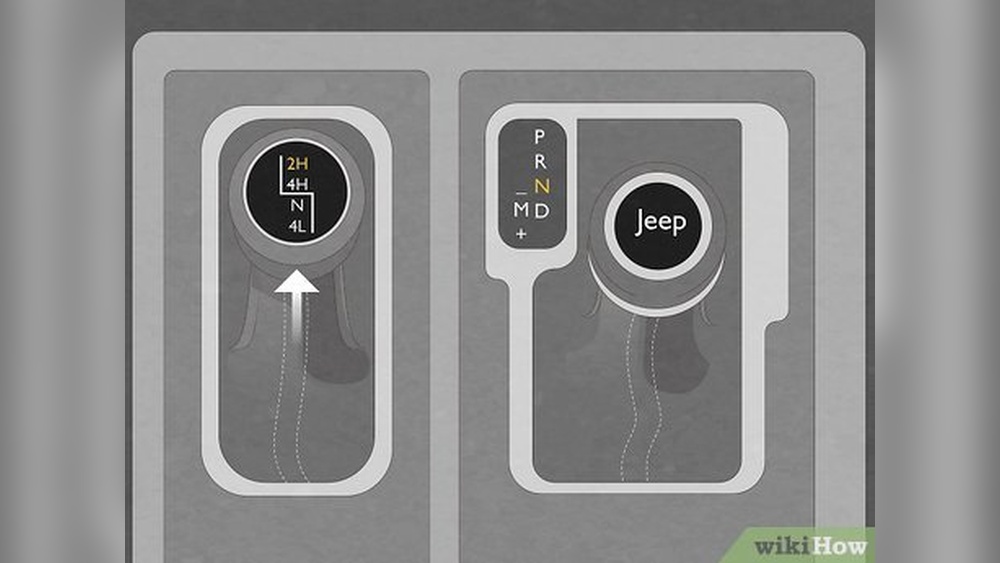
- Locate the 4WD lever or dial. It’s often marked as “2H,” “4H,” “N,” and “4L.”
- Shift from 2H (2 wheel drive high) to 4H (4 wheel drive high). For most Jeeps, you don’t need to stop—just slow down.
- You’ll feel a slight click. The dashboard should show a 4WD indicator light.
Common mistake: Many drivers try to shift at high speeds or on dry pavement. This stresses the drivetrain. Always use 4WD High on surfaces that need extra grip.
2. Shifting To 4wd Low
4WD Low is for tough situations like deep mud, sand, steep hills, or rocky terrain. It gives maximum torque but limits speed.
Steps to turn on 4WD Low:
- Bring your Jeep to a complete stop.
- Put the transmission in Neutral (N).
- Move the lever or dial from 4H to 4L. This often requires a firm push.
- Wait for the 4WD Low indicator to light up.
Tip: Only use 4WD Low for slow driving. Never shift into 4WD Low while moving fast, as this can damage the transfer case.
Here’s a side-by-side comparison of 4WD High vs 4WD Low:
| Mode | Best For | Speed Limit |
|---|---|---|
| 4WD High | Snow, ice, gravel | Up to 55 mph |
| 4WD Low | Deep mud, rocks | Below 20 mph |
3. Using Automatic 4wd
Some Jeeps, like the Cherokee or Compass, have automatic 4WD. This system senses road conditions and switches between 2WD and 4WD without you doing anything.
To use automatic 4WD:
- Make sure the system is set to Auto mode (check your dial or screen).
- Drive normally. The Jeep will decide when to send power to all four wheels.
- Watch the dashboard for 4WD active messages during slippery conditions.
Insight: Many beginners don’t realize that automatic 4WD works in the background. You don’t need to shift manually, but you should still drive carefully in tough conditions.

4. Engaging Full-time 4wd
Full-time 4WD systems, like those in the Grand Cherokee, are always active. You can drive on any surface, and the vehicle automatically manages wheel power.
How to engage full-time 4WD:
- Check if your Jeep has a Selec-Terrain system. This lets you pick modes like “Snow,” “Sand,” “Rock,” or “Auto.”
- Use the selector knob to choose the mode that fits your driving surface.
- The system adjusts power distribution instantly.
Expert tip: Some think full-time 4WD means you don’t need to change modes. But choosing the right terrain mode helps the system give optimal traction and performance.
Below is a comparison of part-time vs full-time 4WD:
| Feature | Part-Time 4WD | Full-Time 4WD |
|---|---|---|
| Manual Shift | Required | Not Needed |
| Best Use | Off-road, bad weather | All conditions |
| Fuel Efficiency | Better in 2WD | Lower |
Safety And Maintenance Tips
Turning on 4WD is simple, but maintaining the system is important. Here are two tips most new Jeep owners miss:
- Check tire pressure: Uneven tires can cause 4WD systems to work harder, leading to wear.
- Use 4WD regularly: If you rarely use 4WD, parts can stick. Engage it once a month, even on short drives.
Data point: According to Jeep’s official guidelines, regular 4WD use and service can extend system life by up to 30%.

Common Mistakes To Avoid
- Shifting into 4WD Low without stopping.
- Using 4WD High on dry pavement.
- Forgetting to switch back to 2WD on normal roads (for part-time systems).
- Ignoring dashboard warning lights.
Frequently Asked Questions
How Do I Know If My Jeep Is In 4 Wheel Drive?
Look for a 4WD indicator light on your dashboard. It turns on when 4WD is active. If you don’t see it, check your manual or ask your dealer.
Can I Switch To 4wd While Driving?
You can shift to 4WD High while moving slowly (below 55 mph). But for 4WD Low, always stop and put the transmission in Neutral.
Is It Safe To Use 4wd On Dry Roads?
No, for part-time 4WD systems. Using 4WD High on dry pavement can damage the system and cause tire wear. Use 2WD for regular roads.
What Happens If I Use 4wd Incorrectly?
Improper use can stress the drivetrain, cause transfer case damage, and make tires wear unevenly. Always follow the steps and your Jeep’s manual.
Where Can I Get More Info About Jeep 4wd Systems?
You can visit the official Jeep website for detailed guides and videos: Jeep Capabilities.
Turning on 4 wheel drive in a Jeep is easy once you know the steps. The right mode keeps you safe and improves performance, whether you’re facing snow or mud. If you follow these tips and avoid common mistakes, your Jeep will handle tough roads like a pro. Always check your manual and trust the dashboard signals. With practice, using 4WD will become second nature, letting you enjoy every adventure.