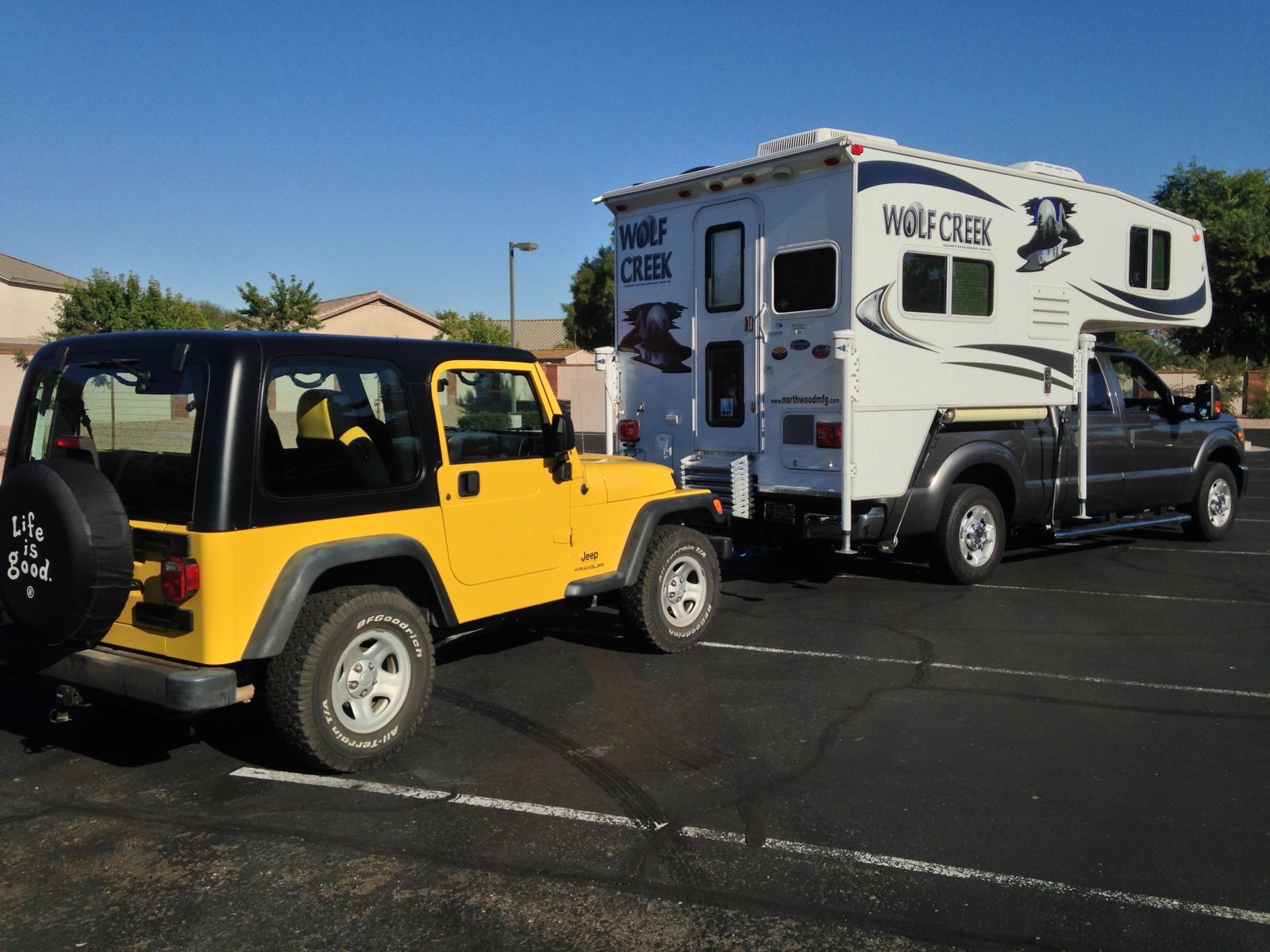
Flat towing a Jeep Wrangler is a popular choice for many RV owners and adventure seekers. The Wrangler’s rugged design and simple driveline make it one of the easiest vehicles to tow behind a motorhome.
But if you’ve never flat towed before, or you’re unsure about the exact steps, this guide will help you do it safely and confidently.
What Is Flat Towing?
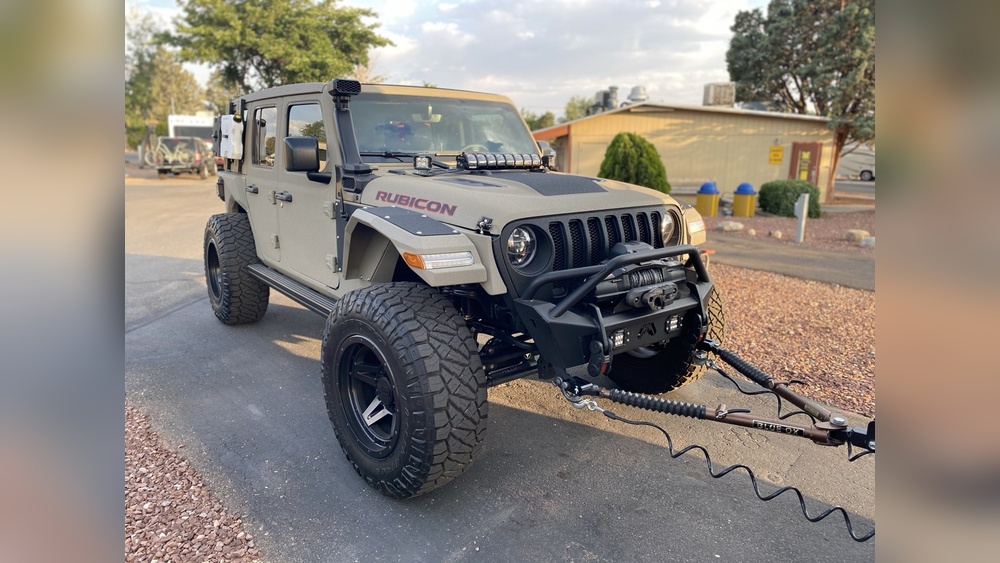
Flat towing, also called dinghy towing, means pulling a vehicle with all four wheels on the ground. Unlike using a tow dolly or trailer, flat towing requires special equipment but is often more convenient, especially for short stops and quick detachment. Jeep Wranglers, thanks to their manual transfer case and neutral position, are well-suited for this method.
Why Choose Flat Towing For Jeep Wrangler?
Jeep Wranglers are designed for off-road performance and simplicity. Most models allow the transfer case to be shifted into neutral, disconnecting the wheels from the drivetrain. This prevents damage during towing and makes the Wrangler ideal for flat towing. Here’s a quick comparison of towing methods:
| Method | Setup Time | Cost | Ease of Use |
|---|---|---|---|
| Flat Towing | 10-20 mins | Medium | Easy |
| Tow Dolly | 20-30 mins | Medium-High | Moderate |
| Trailer | 30-40 mins | High | Difficult |
Essential Equipment For Flat Towing
Before you start, make sure you have the right gear. Missing one piece can lead to unsafe towing or vehicle damage.
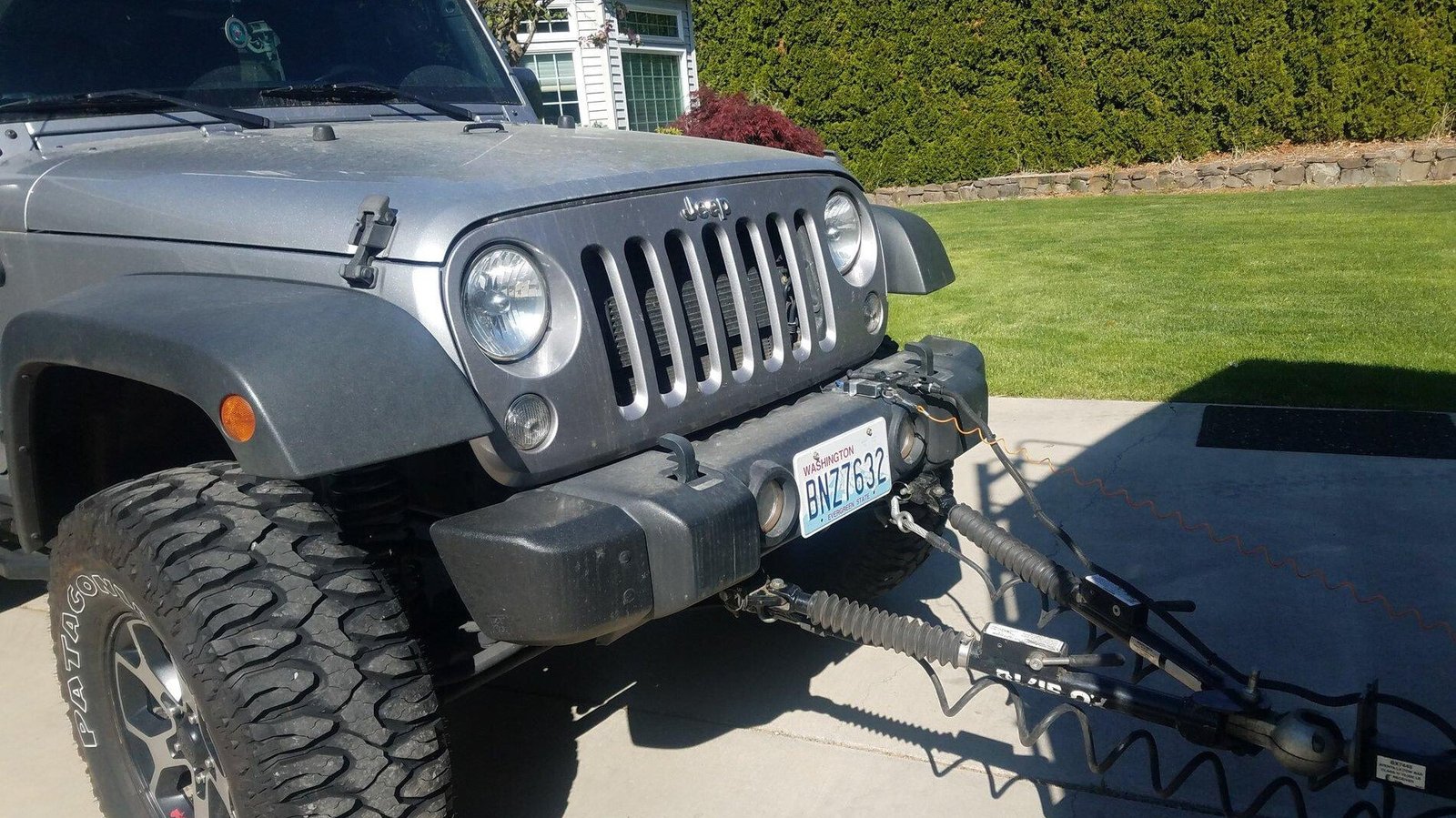
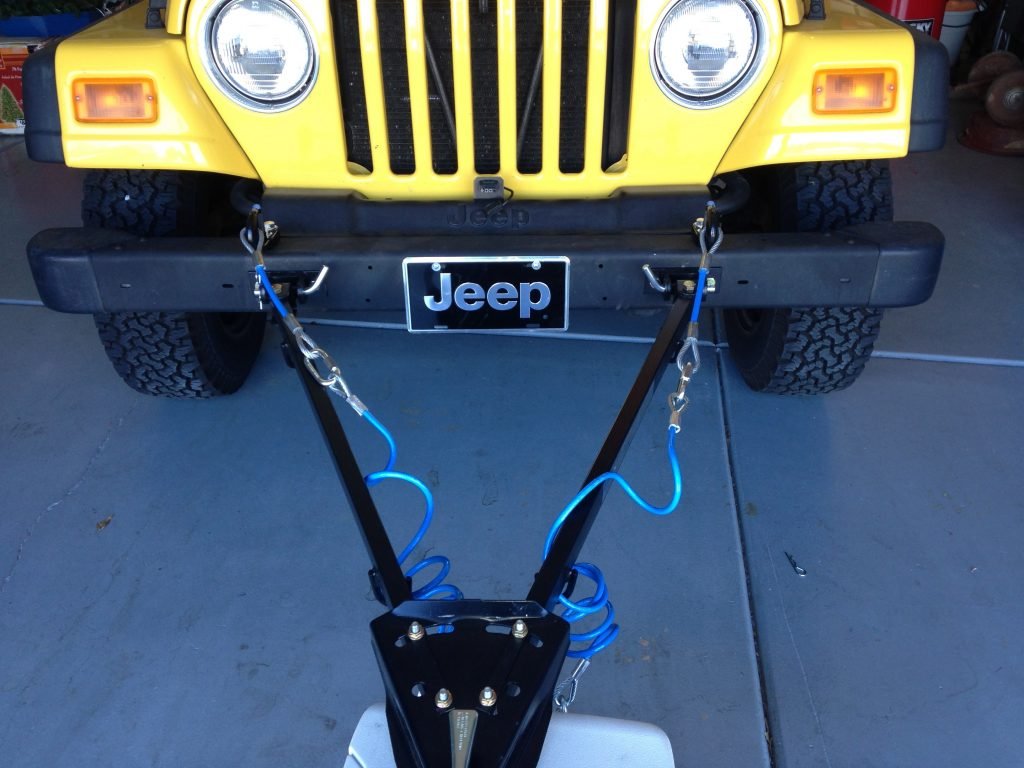
- Tow bar – Connects your Wrangler to the RV.
- Base plate kit – Attaches to the Jeep’s frame for tow bar connection.
- Safety cables – Provide backup if the tow bar fails.
- Wiring harness – Syncs Wrangler’s lights with the RV.
- Supplemental braking system – Required by law in most states; helps the Jeep brake with the RV.
- Drop/rise hitch adapter – Keeps the tow bar level.
It’s important to use equipment rated for your Jeep’s weight. Most Wranglers weigh between 4,000 and 5,000 lbs.
| Equipment | Average Cost | Key Feature |
|---|---|---|
| Tow Bar | $400-$800 | Adjustable arms |
| Base Plate Kit | $300-$500 | Custom fit |
| Braking System | $800-$1,500 | Automatic activation |
Step-by-step: How To Flat Tow A Jeep Wrangler
Flat towing requires careful setup. Here’s a clear process:
1. Prepare Your Jeep
- Check your Wrangler’s owner’s manual. Not all models are flat towable, especially newer automatic transmissions.
- Inspect all towing equipment for wear or damage.
- Install the base plate kit and connect the tow bar.
- Plug in safety cables and wiring harness.
- Attach the supplemental braking system.
2. Set The Transfer Case
- Start the Jeep and firmly press the brake pedal.
- Shift the transmission into neutral.
- Set the transfer case lever to neutral (N).
- Test by gently rolling the Jeep; it should move freely.
3. Secure And Double-check
- Make sure all connections are tight.
- Confirm the tow bar is locked and secured.
- Check the lighting system by turning on the RV’s lights.
- Test the braking system.
4. Ready To Tow
- Release the parking brake.
- Place the ignition in the off position, but leave the steering wheel unlocked.
- Begin towing slowly and check for unusual noises or resistance.
Common Mistakes To Avoid
- Forgetting to set the transfer case in neutral can destroy your transmission.
- Leaving the steering wheel locked will cause tire drag and possible damage.
- Using mismatched towing gear can lead to dangerous situations.
Tip: Always carry spare pins and clips for the tow bar. They’re small but vital.
Legal And Safety Considerations
Most states require supplemental braking systems for vehicles over 3,000 lbs. If your Wrangler doesn’t have the right braking setup, you could face fines or insurance issues. Also, check towing speed limits and rules for each state you travel through.
You should also verify your RV’s towing capacity. Many Class A motorhomes can handle Wranglers, but smaller RVs may struggle. Always check the Gross Combined Weight Rating (GCWR).
Maintenance And Troubleshooting
Flat towing can stress your Jeep. Here’s how to keep everything running smoothly:
- Inspect tow bar and cables before each trip.
- Check tire pressure on both vehicles.
- Lubricate tow bar joints regularly.
- After towing, shift the transfer case back to 2WD or 4WD.
If you notice any odd noises or resistance while towing, stop immediately. Problems can escalate quickly and lead to costly repairs.
Benefits Of Flat Towing A Jeep Wrangler
Flat towing saves time and effort compared to trailers or dollies. Detaching is quick and you can drive your Jeep off-road as soon as you arrive. Another benefit is fuel efficiency; you avoid hauling heavy trailers, which can lower your RV’s mileage by up to 10%.
Many Jeep owners also appreciate the flexibility. You can stop anywhere, detach, and explore without extra setup. For more technical details, visit the Jeep Official Site.
Frequently Asked Questions
Can All Jeep Wranglers Be Flat Towed?
Most manual transmission and manual transfer case Wranglers can be flat towed. Newer models with electronic transfer cases or automatic transmissions may require extra steps or may not be towable.
Do I Need A Supplemental Braking System?
Yes, most states require a supplemental braking system for vehicles over 3,000 lbs. It’s also safer for your Jeep and the RV.
How Fast Can I Tow My Jeep Wrangler?
Most experts recommend keeping speeds under 65 mph. Check your owner’s manual and state laws for specific limits.
Will Flat Towing Affect My Jeep’s Warranty?
If you follow manufacturer guidelines and use approved equipment, flat towing should not void your warranty. Always check with your dealer.
What Should I Do If My Jeep Can’t Be Flat Towed?
If your Wrangler isn’t compatible, consider a tow dolly or trailer. These methods work for most vehicles, but are less convenient than flat towing.
Flat towing a Jeep Wrangler is straightforward with the right equipment and knowledge. Take the time to learn your vehicle’s specific requirements, use quality gear, and double-check all connections.
With careful preparation, you’ll enjoy safe, worry-free travels wherever your adventures lead.