The 97 Jeep Wrangler crankshaft position sensor is a small but vital component for your vehicle's engine to run smoothly. This sensor plays a crucial role in telling your engine's computer, the ECU (Engine Control Unit), the exact position of the crankshaft.
Without this information, the ECU cannot properly time the fuel injection and ignition spark, leading to various engine problems. Understanding its function, symptoms of failure, and how to replace it is essential for any Jeep Wrangler owner.
This guide will cover everything you need to know about the crankshaft position sensor in your '97 Jeep Wrangler, from its basic operation to common issues and troubleshooting steps.
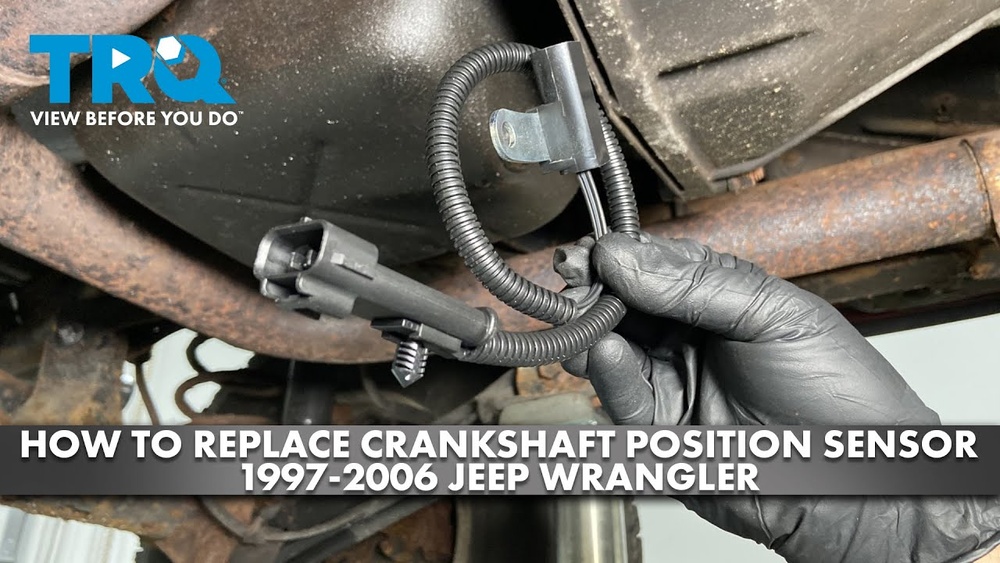
Understanding The Crankshaft Position Sensor’s Role
The crankshaft position sensor (CKP sensor) is an electronic device that monitors the rotational speed and position of the crankshaft. The crankshaft is a critical part of the engine that converts the up-and-down motion of the pistons into rotational motion, which ultimately powers the wheels. The CKP sensor works by detecting a specific pattern on a toothed wheel or a reluctor ring attached to the crankshaft. As the crankshaft rotates, these teeth or notches pass by the sensor. The sensor then generates an electrical signal that varies in frequency and pulse width, indicating the crankshaft’s position and speed.
This signal is sent to the ECU. The ECU uses this information, along with data from other sensors like the camshaft position sensor (CMP sensor), to determine precisely when to fire the spark plugs and when to inject fuel into each cylinder. This precise timing is crucial for optimal engine performance, fuel efficiency, and emissions control. A faulty CKP sensor can disrupt this delicate timing, causing a wide range of drivability issues.
Symptoms Of A Failing Crankshaft Position Sensor
When the crankshaft position sensor starts to fail or fails completely, your Jeep Wrangler will likely exhibit several noticeable symptoms. These symptoms can range from minor annoyances to complete engine failure, making it important to address them promptly.
Engine Misfires And Rough Idling
One of the most common signs of a failing CKP sensor is an engine misfire. This happens when one or more cylinders fail to ignite the fuel-air mixture at the correct time. You might feel the engine stutter or hesitate, especially under acceleration. The engine may also run rough at idle, shaking or vibrating more than usual. This is because the ECU is not receiving accurate position data, leading to inconsistent timing for each cylinder.
Stalling Engine
A more severe symptom of a failing CKP sensor is sudden engine stalling. If the sensor completely fails or provides erratic readings, the ECU can lose track of the crankshaft’s position. This can cause the engine to shut off unexpectedly, even while you are driving. This is a dangerous situation, as it can lead to a loss of power steering and braking assist. If your Jeep stalls and then refuses to restart, the CKP sensor is a prime suspect.
Difficulty Starting The Engine
A crank no-start condition is another significant indicator of a faulty CKP sensor. If the ECU doesn’t receive a signal from the sensor, it doesn’t know if the engine is even turning over, and therefore it won’t attempt to inject fuel or provide spark. You might crank the engine for an extended period, and it will just keep cranking without catching or firing up. In some cases, the engine might start briefly and then immediately die.
Check Engine Light Illumination
The Check Engine Light (CEL) is your vehicle’s way of telling you that something is wrong with its systems. A faulty CKP sensor will almost always trigger the CEL. The specific diagnostic trouble code (DTC) stored in the ECU will often point towards the CKP sensor circuit. Common DTCs include P0335, P0336, P0337, P0338, P0339, and P0340. Reading these codes with an OBD-II scanner is a crucial step in diagnosing the problem.
Poor Fuel Economy
While not as immediately noticeable as stalling or misfires, a failing CKP sensor can also lead to decreased fuel economy. When the sensor provides inaccurate timing information, the ECU might not be able to optimize the fuel mixture and ignition timing for maximum efficiency. This can result in the engine burning more fuel than necessary, even for normal driving conditions.
Engine Performance Issues
Beyond misfires and stalling, you might notice a general lack of power or sluggish acceleration. The engine might feel hesitant when you press the gas pedal, as if it’s struggling to respond. This is because the incorrect timing affects the engine’s ability to produce power efficiently.
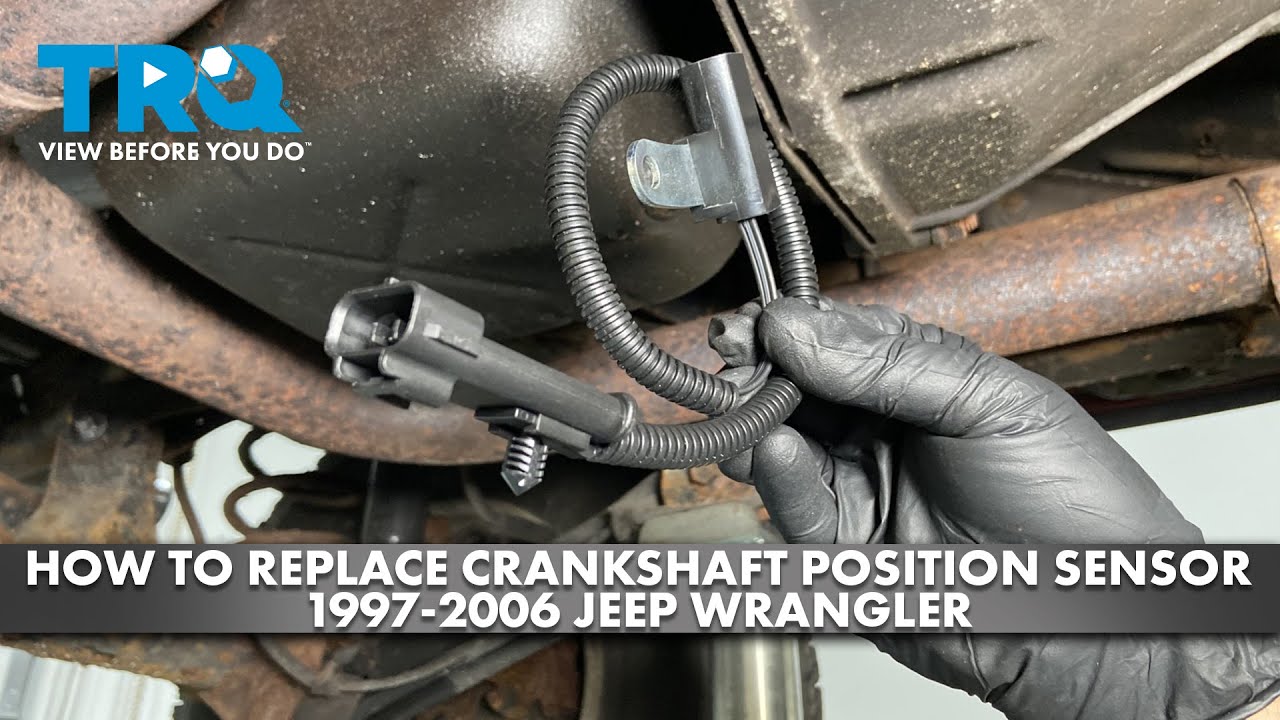
Locating The Crankshaft Position Sensor On A ’97 Jeep Wrangler
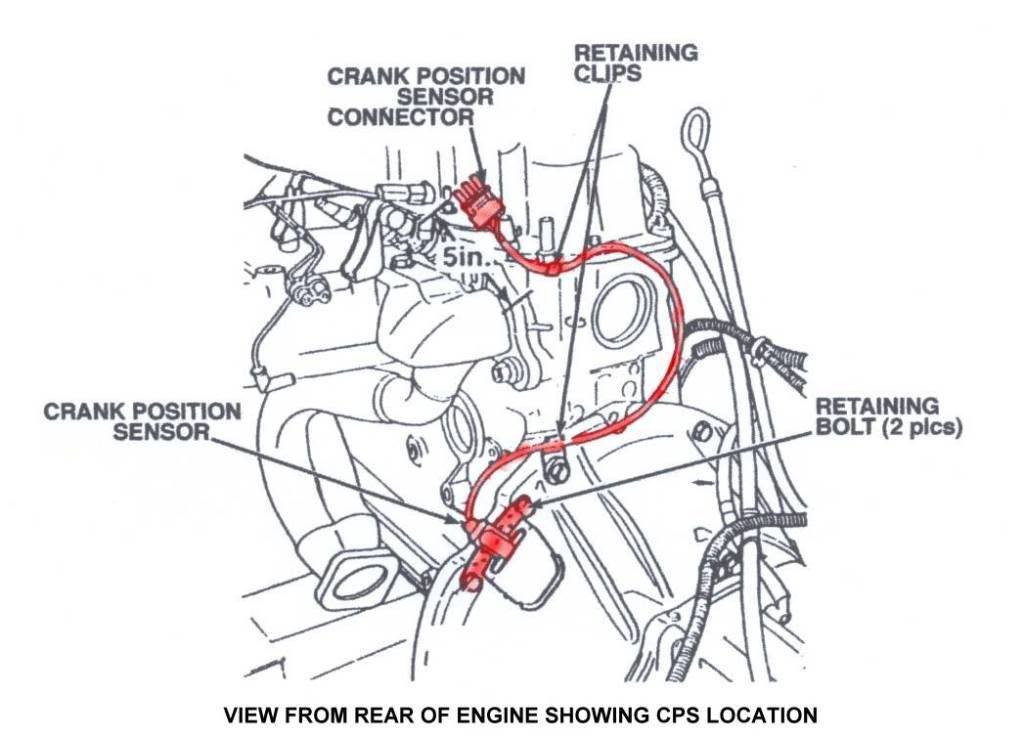
The location of the CKP sensor on a ’97 Jeep Wrangler can vary slightly depending on the engine configuration (e.g., 2.5L or 4.0L inline-six). However, it is generally found on the engine block, near the rear of the engine, close to the flywheel or flexplate.
For The 4.0l Inline-six Engine
On the popular 4.0L engine, the CKP sensor is typically mounted on the driver’s side of the engine block, just above the oil pan and behind the starter motor. It is often secured by a single bolt. The sensor itself will have a wire connector leading to the main engine harness.
For The 2.5l Four-cylinder Engine
On the 2.5L engine, the CKP sensor is usually located on the passenger side of the engine block, also near the rear of the engine and the transmission bellhousing. Similar to the 4.0L, it’s a relatively small component with a wiring connector.
Accessing the sensor can be challenging due to its location. You might need to work from underneath the vehicle, and in some cases, it may be necessary to remove other components like the starter or exhaust components to get to it.
Testing The Crankshaft Position Sensor
Before replacing the CKP sensor, it’s wise to test it to confirm it’s the source of your problems. There are several ways to do this, ranging from simple visual inspections to using diagnostic tools.
Visual Inspection
Start with a visual inspection. Look for any obvious signs of damage to the sensor or its wiring harness. Check for frayed wires, corroded connectors, or physical damage to the sensor body. Ensure the sensor is securely mounted and not loose.
Using A Multimeter
A multimeter can be used to test the electrical resistance of the CKP sensor. The exact resistance values can be found in your Jeep Wrangler’s service manual, but typically, a healthy sensor will show a specific resistance reading. To perform this test, you’ll need to disconnect the sensor’s electrical connector. Then, connect the multimeter probes to the appropriate pins on the sensor and check for continuity and resistance.
You can also test the sensor's output signal while the engine is cranking. With the connector reattached and the engine cranking (but not starting), you can back-probe the connector and measure for an AC voltage signal.
A good sensor will produce a fluctuating AC voltage as the crankshaft turns.
Obd-ii Scanner
As mentioned earlier, an OBD-II scanner is an invaluable tool. It can read DTCs stored in the ECU, which can directly point to CKP sensor issues. Some advanced scanners can also display live data from the sensor, allowing you to see its output in real-time as the engine cranks or runs. If the scanner shows no signal or erratic signals from the CKP sensor, it’s a strong indication of a problem.
Replacing The Crankshaft Position Sensor
Replacing the CKP sensor on a ’97 Jeep Wrangler is a task that many DIYers can tackle, but it requires patience and the right tools due to its often-cramped location.
Tools And Materials Needed
- New Crankshaft Position Sensor: Ensure you get the correct sensor for your specific ’97 Jeep Wrangler model (2.5L or 4.0L).
- Socket Set and Ratchet: You’ll likely need various socket sizes, including potentially a deep socket.
- Wrench Set: For bolts that may be difficult to reach with a ratchet.
- Torque Wrench: To ensure the new sensor is tightened to the manufacturer’s specifications.
- Penetrating Oil: To help loosen stubborn bolts.
- Safety Glasses and Gloves: For personal protection.
- OBD-II Scanner: To clear codes after replacement.
- Optional: Inspection Mirror and Light: To help you see the sensor in its tight location.
Step-by-step Replacement Guide
- Safety First: Park your Jeep on a level surface and engage the parking brake. Disconnect the negative battery terminal to prevent electrical shorts.
- Locate the Sensor: Refer to the “Locating the Crankshaft Position Sensor” section above for its position. You may need to jack up the vehicle and use jack stands for better access from underneath.
- Access the Sensor: Depending on your engine, you might need to remove the starter motor or other components to get a clear view and access to the sensor’s mounting bolt. Use penetrating oil on the bolt if it appears rusted.
- Disconnect the Electrical Connector: Carefully unplug the electrical connector from the old sensor. There might be a locking tab that needs to be pressed or lifted.
- Remove the Old Sensor: Use the appropriate socket and ratchet to remove the bolt securing the CKP sensor. Once the bolt is out, gently pull the old sensor straight out of its mounting hole. Some sensors may be a tight fit, so a gentle wiggle might be needed.
- Install the New Sensor: Insert the new CKP sensor into the mounting hole. Ensure it is oriented correctly according to the old sensor’s position.
- Secure the New Sensor: Install the mounting bolt and tighten it. Crucially, use a torque wrench to tighten the bolt to the manufacturer’s specified torque. Overtightening can damage the sensor or the engine block, while undertightening can lead to sensor failure or inaccurate readings. Consult your Jeep’s service manual for the exact torque specification.
- Reconnect the Electrical Connector: Plug the electrical connector firmly into the new sensor until it clicks into place.
- Reinstall Any Removed Components: If you removed the starter or other parts, reinstall them now.
- Reconnect the Battery: Reconnect the negative battery terminal.
- Clear Codes: Start the engine. It should start and run smoothly. Use your OBD-II scanner to clear any DTCs that were stored in the ECU.
Common Issues And Troubleshooting
Even after replacing the CKP sensor, you might encounter issues. Here are some common problems and troubleshooting tips:
Worn Or Damaged Wiring Harness
The wiring harness connecting the CKP sensor to the ECU can become damaged due to heat, vibration, or physical abrasion. Inspect the entire length of the harness for any signs of wear or damage. A poor connection at the connector itself can also cause intermittent issues. Ensure the connector pins are clean and free of corrosion.
Incorrect Sensor Installation
If the new sensor is not installed correctly, it can lead to problems. Ensure it’s seated properly and the mounting bolt is torqued to specification. An improperly seated sensor might not be able to read the crankshaft’s reluctor wheel accurately.
Faulty Reluctor Wheel/ring
The CKP sensor reads signals from a reluctor wheel or ring attached to the crankshaft. If this wheel is damaged, missing teeth, or has debris on it, the sensor will not be able to generate a proper signal.
This is less common but can occur, especially on older engines.
Other Sensor Issues
Sometimes, the symptoms of a bad CKP sensor can mimic problems with other engine sensors, such as the camshaft position sensor or even the ignition control module. If replacing the CKP sensor doesn’t solve the problem, further diagnostics might be needed to rule out other potential causes.
Intermittent Failures
CKP sensors can sometimes fail intermittently. This means they might work fine for a while and then suddenly stop working, causing the engine to stall or refuse to start.
These issues can be particularly frustrating to diagnose. Wiggling the wiring harness while the engine is cranking can sometimes help pinpoint a loose connection.
The Importance Of Using Quality Parts
When replacing a critical component like the crankshaft position sensor, it’s vital to use high-quality parts. Cheap, aftermarket sensors may not meet the original specifications and can fail prematurely or cause drivability issues. While OEM (Original Equipment Manufacturer) parts are often the most reliable, reputable aftermarket brands can also offer good quality. Always research brands and read reviews before purchasing.
Understanding The Reluctor Wheel
The reluctor wheel, also known as a tone ring or trigger wheel, is a metal disc with notches or teeth that is attached to the crankshaft. The CKP sensor works in conjunction with this wheel. As the crankshaft rotates, the teeth of the reluctor wheel pass by the CKP sensor’s magnetic field. This interruption of the magnetic field generates the electrical pulses that the ECU interprets as crankshaft position and speed.
The number of teeth and the spacing between them are precisely engineered. If the reluctor wheel is bent, cracked, or has missing teeth, the CKP sensor will receive an incorrect signal, leading to engine performance problems.
While rare, damage to the reluctor wheel can occur due to extreme engine stress or improper installation of other engine components.
Differences Between 2.5l And 4.0l Ckp Sensors
While both the 2.5L and 4.0L engines in the ’97 Jeep Wrangler use a crankshaft position sensor, the specific part numbers and sometimes the physical design can differ. It is essential to purchase the correct sensor for your specific engine to ensure proper fitment and function. Always verify the part number against your vehicle’s VIN or consult a parts specialist.
Common Part Numbers (example – Always Verify)
- For 4.0L Engine: You might find part numbers like Mopar 56027865 or equivalent from aftermarket suppliers.
- For 2.5L Engine: The part number might differ, for example, Mopar 56027866 or similar.
*Note: These are examples and can vary. Always confirm with your vehicle’s specifications.*
When To Seek Professional Help
While replacing a CKP sensor is a common DIY repair, there are instances where seeking professional help from a qualified mechanic is advisable:
- Uncertainty about Diagnosis: If you’re not confident in diagnosing the problem or are unsure if the CKP sensor is the culprit, a mechanic can perform accurate diagnostics.
- Difficult Access: If the sensor is in a particularly hard-to-reach location on your specific Jeep, and you lack the necessary tools or comfort level to work in tight spaces.
- Persistent Problems: If you’ve replaced the