The Jeep Wrangler wheel stud thread size is a critical piece of information for anyone looking to customize their vehicle, replace damaged parts, or simply understand their Jeep better.
While seemingly a small detail, the correct thread size ensures your wheels are securely attached, which is paramount for safety on and off the road. Incorrect thread sizes can lead to loose wheels, damaged lug nuts, and potentially dangerous driving situations.
This guide will explore the nuances of Jeep Wrangler wheel stud thread sizes, covering common specifications, how to identify them, and why they matter so much.
Understanding Jeep Wrangler Wheel Stud Thread Basics
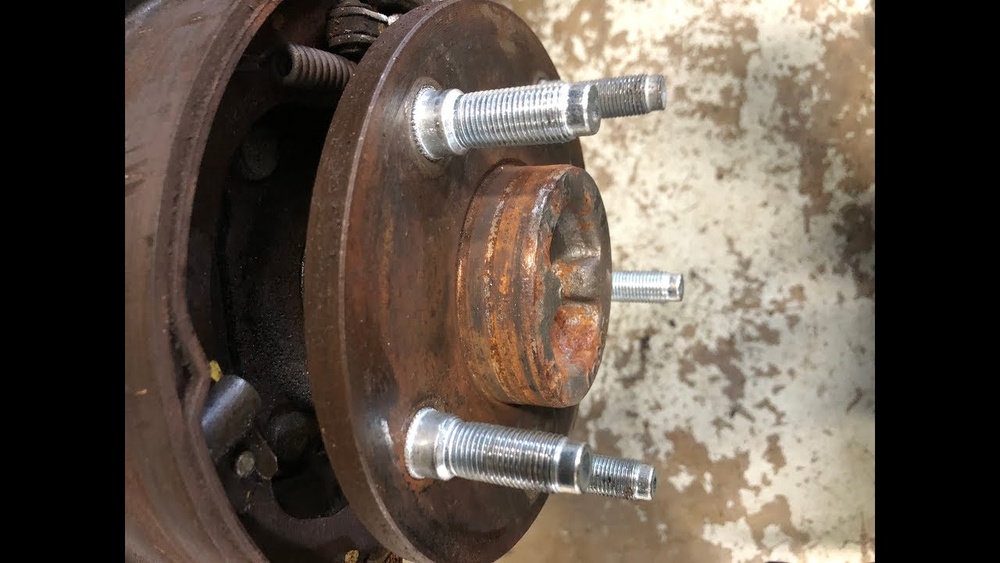
Wheel studs are the threaded bolts that protrude from your wheel hub, serving as the anchor points for your wheels. Lug nuts then thread onto these studs to hold the wheel firmly against the hub.
The thread size refers to the diameter and the pitch (the distance between threads) of these studs.
For Jeep Wranglers, these specifications are generally consistent across many generations but can vary slightly depending on the specific model year and trim.
The most common thread size for Jeep Wranglers, particularly for JK (2007-2018) and JL (2018-present) models, is M14x1.5. This designation breaks down as follows:
- M14: This indicates the metric diameter of the stud is 14 millimeters.
- 1.5: This signifies the thread pitch, meaning there are 1.5 millimeters between each thread crest.
Older Jeep models, such as the TJ (1997-2006) and earlier, often used a 1/2-inch x 20 thread size. This is a standard imperial measurement:
- 1/2-inch: Refers to the nominal diameter of the stud in inches.
- 20: Indicates the threads per inch (TPI), meaning there are 20 threads within one inch of the stud’s length.
It's crucial to understand these differences because using the wrong lug nuts or studs can cause significant problems. For instance, trying to thread a 1/2-inch x 20 lug nut onto an M14x1.
5 stud will result in the threads not engaging properly, leading to a loose fit and potential stripping of the threads on both the nut and the stud.
Conversely, an M14x1. 5 lug nut on a 1/2-inch x 20 stud won’t thread on at all.
Why Thread Size Matters For Your Wrangler
The integrity of your wheel attachment system is directly linked to the correct thread size. Here’s why it’s so important:
- Safety: This is the most critical factor. Wheels are subjected to immense forces during driving, including acceleration, braking, cornering, and impacts from road imperfections. Properly threaded studs and lug nuts ensure the wheel remains securely fastened to the vehicle. A loose wheel can detach, causing a catastrophic accident.
- Component Longevity: Using the correct thread size prevents premature wear and damage to both the wheel studs and the lug nuts. Mismatched threads can strip easily, requiring replacement of these parts. Stripped threads on the hub itself are a more complex and expensive repair.
- Accessory Compatibility: When upgrading wheels, tires, or even just replacing lug nuts, knowing the thread size is essential. Aftermarket wheels and lug nuts are manufactured to specific thread standards. Using incompatible parts will prevent proper installation.
- Torque Specifications: Every wheel stud and lug nut combination has a specific torque rating. This rating is based on the material strength and thread size. Using the correct size ensures you can achieve the manufacturer’s recommended torque, guaranteeing the wheel is tightened appropriately without over-stressing the components.
Identifying Your Jeep Wrangler’s Wheel Stud Thread Size
Accurately identifying the thread size on your Jeep Wrangler is essential before purchasing any new parts. There are several reliable methods to do this.
Method 1: Check Your Owner’s Manual
The most straightforward and often overlooked method is to consult your Jeep Wrangler’s owner’s manual. Manufacturers typically list detailed specifications for critical components like wheel studs and lug nuts.
Look in the sections related to wheels, tires, maintenance, or technical specifications.
This is the definitive source for your specific model year.
Method 2: Measure The Stud Diameter And Count Threads (imperial)
If you don’t have your owner’s manual or want to double-check, you can measure the stud directly. For imperial sizes like 1/2-inch x 20:
- Diameter: Use a caliper or a ruler to measure the diameter of the stud. If it measures approximately 1/2 inch (0.5 inches or about 12.7 mm), it’s likely an imperial size.
- Thread Count (TPI): This is trickier without a specialized tool. You can try to visually count the number of threads within one inch of the stud’s threaded portion. Alternatively, you can use a thread gauge tool or even a standard ruler. If you count 20 threads within one inch, it confirms the 1/2-inch x 20 size.
Method 3: Measure The Stud Diameter And Pitch (metric)
For metric sizes like M14x1.5:
- Diameter: Use a caliper to measure the outside diameter of the stud. If it measures approximately 14 millimeters, it’s likely a metric size.
- Thread Pitch: This is the distance between the crests of two adjacent threads, measured in millimeters. Using a caliper, measure the distance across several threads and divide by the number of thread gaps. For M14x1.5, this distance will be 1.5 mm. A thread pitch gauge is the most accurate tool for this.
Method 4: Examine Existing Lug Nuts
The lug nuts you currently use should match your wheel studs. If you have a lug nut handy, you can often find its size stamped on it, typically on the underside or inside the hex opening. Look for markings like “1/2-20” or “M14x1.5”. If there are no markings, you can measure the inner diameter of the threaded hole in the lug nut. For a 1/2-inch x 20 nut, the hole’s diameter will be slightly larger than 1/2 inch to allow it to thread on. For an M14x1.5 nut, the internal diameter will be slightly larger than 14mm.
Method 5: Consult Online Resources And Forums
Many Jeep forums and automotive parts websites provide detailed specifications for various Jeep Wrangler models. Searching for “[Your Jeep Wrangler Year and Model] wheel stud size” can yield helpful results. However, always cross-reference this information with other methods if possible, as online data can sometimes be inaccurate.
Common Wheel Stud Thread Sizes By Jeep Wrangler Generation
While the M14x1.5 and 1/2-inch x 20 sizes are the most prevalent, understanding how they apply to different Wrangler generations can prevent confusion.
Jeep Wrangler Tj (1997-2006)
The TJ generation of Jeep Wranglers predominantly uses the 1/2-inch x 20 thread size for its wheel studs. This was a standard size for many American vehicles during that era. If you own a TJ and are looking to replace lug nuts or studs, this is the size you’ll most likely need.
Jeep Wrangler Jk (2007-2018)
The JK generation saw a shift towards metric fasteners, a trend common across the automotive industry. For most Jeep Wrangler JK models, the standard wheel stud thread size is M14x1.5. This applies to both the 2-door and 4-door variants.
Jeep Wrangler Jl (2018-present)
Continuing the trend from the JK, the current generation Jeep Wrangler JL also utilizes the M14x1.5 thread size for its wheel studs. This metric standard ensures compatibility with modern wheel designs and manufacturing processes.
Other Jeep Models And Variations
It’s important to note that while these are the most common sizes for Wranglers, other Jeep models or specific performance variants might use different specifications. For example, some older Jeep Cherokees (XJ) used 1/2-inch x 20 studs, similar to the TJ Wrangler. Always verify the specifications for your particular vehicle.
Lug Nut Types And Their Relation To Thread Size
Lug nuts are the counterparts to wheel studs, and their design is as important as the stud’s thread size. The type of lug nut you use must match the stud’s thread and the wheel’s seating.
Seat Types
The “seat” is the part of the lug nut that contacts the wheel. The most common types for Jeep Wranglers are:
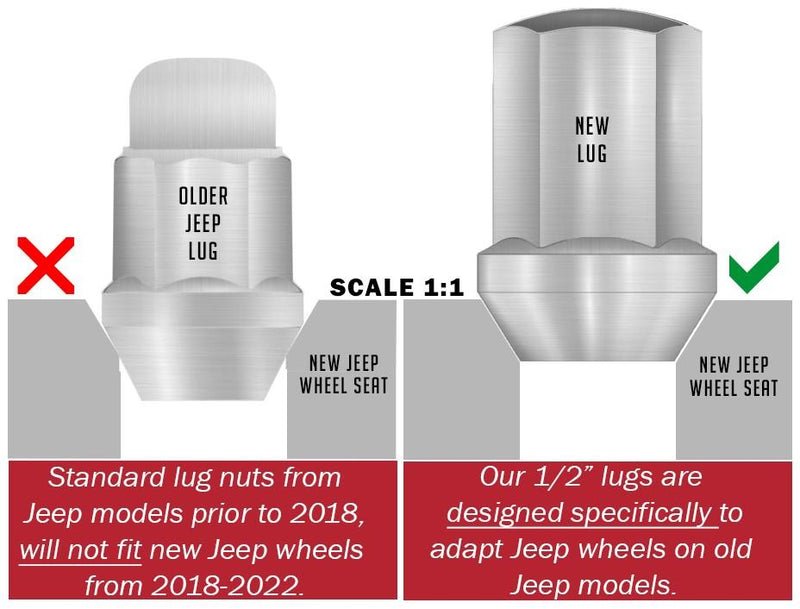
- Conical (or Acorn) Seat: This is the most common type and features a tapered, cone-shaped end that fits into a corresponding tapered hole in the wheel. Both 1/2-inch x 20 and M14x1.5 studs often use conical seat lug nuts. The angle of the taper (e.g., 60 degrees) is also a critical specification.
- Ball (or Radius) Seat: These have a rounded, ball-shaped end that sits in a rounded recess in the wheel. This type is less common on factory Jeep Wranglers but can be found on some aftermarket wheels.
- Flat Seat: These have a flat end and are typically used with wheels that have flat mounting surfaces and often require a washer. This is rare for Wranglers.
Pro Tip: Always ensure your lug nuts match both the thread size *and* the seat type of your wheels. Mismatched seats can lead to uneven pressure, damage to the wheel, and loose fittings.
Lug Nut Sizing And Thread Engagement
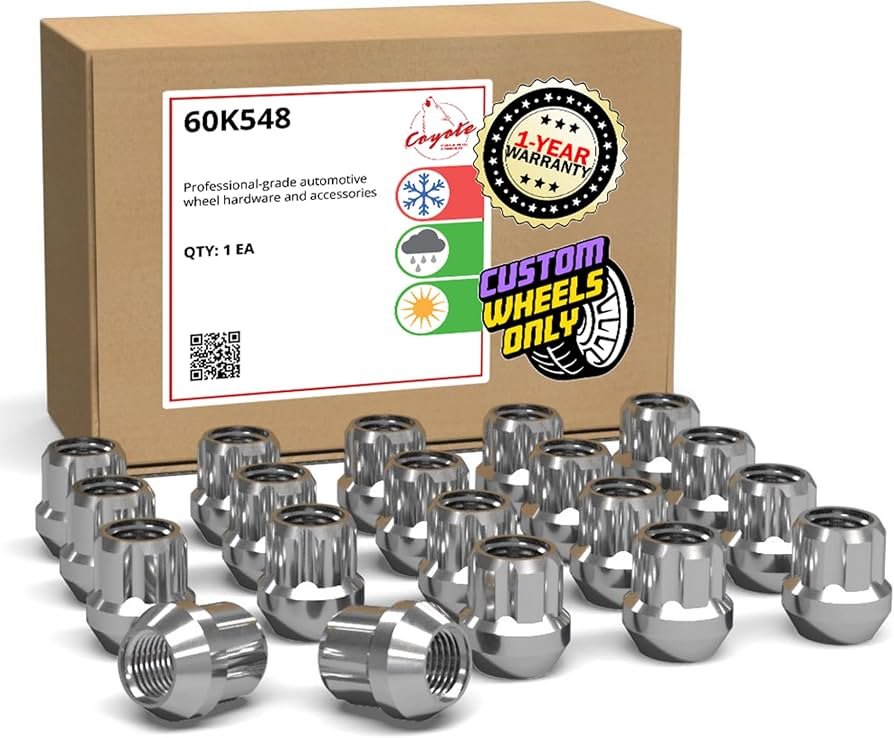
When you purchase lug nuts, they should be explicitly labeled with the thread size they are designed for.
- For 1/2-inch x 20 studs, you need lug nuts marked 1/2-20.
- For M14x1.5 studs, you need lug nuts marked M14x1.5.
The length of the lug nut also matters. It needs to be long enough to fully engage several threads on the stud without bottoming out.
A lug nut that is too short won't provide enough thread engagement for a secure hold.
Conversely, a lug nut that is too long might interfere with other components, though this is less common.
Even with the correct thread size, problems can arise. Understanding common issues can help you diagnose and fix them before they become serious.
Stripped Threads
This is perhaps the most frequent problem. Stripped threads occur when lug nuts are forced onto studs with mismatched threads, or when lug nuts are cross-threaded (started at an angle).
- Symptoms: The lug nut spins freely without tightening, or it tightens partially and then loosens up. You might hear grinding noises.
- Solution: If the threads on the stud are damaged, the stud must be replaced. If only the lug nut is damaged, replace the lug nut. It’s often recommended to replace all lug nuts on a wheel if one is stripped, to ensure uniform wear and prevent future issues. For a 1/2-inch x 20 stud, replacement involves pressing out the old stud from the hub and pressing in a new one. For M14x1.5 studs, the process is similar.
Cross-threading
This happens when a lug nut is not started straight onto the stud. The angled threads of the nut immediately damage the threads of the stud.
- Prevention: Always start threading lug nuts by hand. Turn them counter-clockwise until you feel the threads “catch” (this is the loosening direction), then turn clockwise to tighten. If you feel any resistance while turning clockwise by hand, stop, back the nut off, and try again, ensuring it’s perfectly straight.
- Solution: If cross-threading occurs and damages the stud, the stud needs replacement. If caught early, you might be able to salvage the threads by carefully backing the nut off and re-starting it straight.
Loose Lug Nuts
This is a critical safety issue. It can result from improper torquing, vibration, or using the wrong thread size or lug nut type.
- Symptoms: You might hear clicking or knocking sounds while driving, especially during turns or braking. The steering might feel loose.
- Solution: Immediately pull over safely and check your lug nuts. If they are loose, tighten them securely. It is vital to re-torque your lug nuts after installing a wheel, and periodically thereafter. If you suspect a stud or hub issue, have it inspected by a professional.
Corrosion And Damage
Road salt, water, and dirt can cause corrosion on wheel studs and inside lug nuts, making them difficult to remove or install. Physical damage from impact or improper tool use can also occur.
- Prevention: Regularly clean your wheels and exposed studs. Use a wire brush to clean threads before installing lug nuts. Apply a small amount of anti-seize compound *only* to the threads of the stud (avoiding the seating surface and the shank of the stud) to prevent seizing, but be aware this can slightly affect torque readings, so some manufacturers advise against it.
- Solution: If corrosion is present, try to clean the threads thoroughly. If a lug nut is seized or damaged, it may need to be carefully cut off. Damaged studs must be replaced.
Replacing Jeep Wrangler Wheel Studs
Replacing a wheel stud is a common maintenance task, especially if threads become stripped or the stud breaks. The process is similar for both 1/2-inch x 20 and M14x1.5 studs, though the specific parts will differ.
Tools And Materials Needed
- New wheel studs (ensure they match your vehicle’s thread size and have the correct knurl diameter for your hub)
- Lug nuts (new ones are recommended if the old ones are damaged or worn)
- Jack and jack stands
- Lug wrench or socket set
- Torque wrench
- Pry bar or large C-clamp (optional, for stud installation)
- Hammer (preferably a dead blow hammer)
- Wire brush
- Penetrating oil (optional, for stuck studs)
Step-by-step Replacement Process
- Loosen Lug Nuts: Before jacking up the vehicle, slightly loosen the lug nuts on the wheel you’re working on.
- Jack Up Vehicle: Safely lift the vehicle using a jack and secure it with jack stands under a strong point of the frame or axle. Remove the wheel.
- Access the Hub: You may need to remove the brake caliper and rotor to gain clear access to the back of the wheel hub where the studs are pressed in.