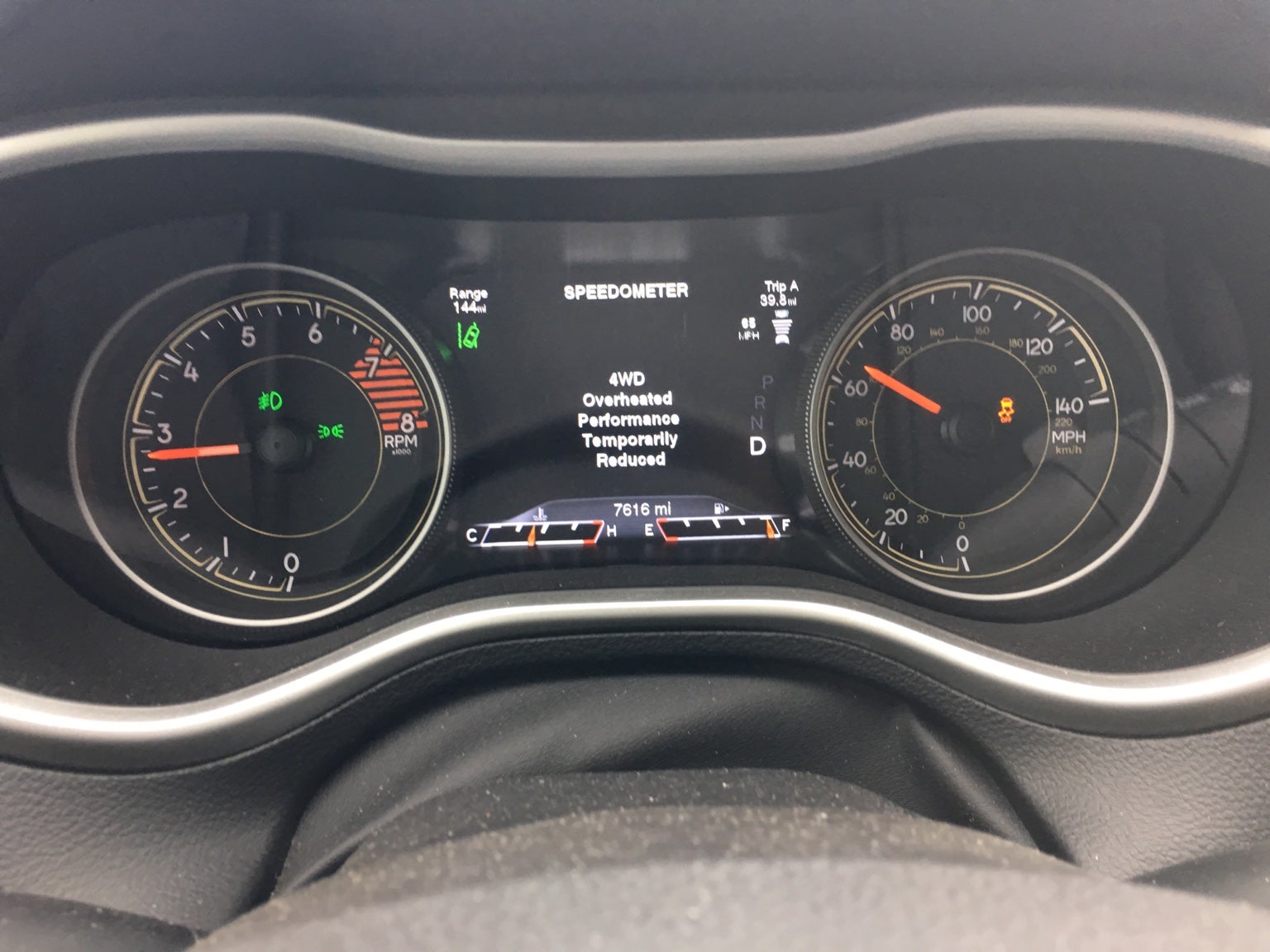
If you drive a Jeep Cherokee, you might have seen the warning message: “4WD Overheated Temporarily Unavailable” on your dashboard. This can surprise many drivers, especially if you’re not off-roading or pushing your SUV hard.
What does this alert really mean, and how should you respond? Understanding this issue can help you avoid expensive repairs and keep your Jeep running smoothly.
This warning means your Jeep Cherokee’s four-wheel drive system has gotten too hot. When this happens, the car’s computer will shut off or reduce power to the system to protect it from damage. The message often appears in models with the Active Drive II or Active Drive Lock systems, especially after driving in tough conditions or for a long time.
Common Situations That Trigger The Warning
- Driving on sand, mud, or snow: These surfaces make the 4WD system work harder.
- Climbing steep hills: The system can overheat faster when going uphill.
- Towing heavy loads: Pulling trailers adds stress.
- Stop-and-go traffic: Continuous low-speed driving can build up heat.
Most drivers think overheating only happens off-road. In reality, even city driving with heavy traffic or towing can cause the warning.
Main Causes Of 4wd System Overheating
Several factors can lead to your 4WD system getting too hot. Here are the main reasons:
Insufficient Fluid Or Poor Fluid Quality
The 4WD system uses special lubricating fluid. If the fluid is old, low, or wrong type, it won’t cool the parts well.
Mechanical Stress
Long drives on rough roads or towing heavy loads make the components work harder and get hotter.
Faulty Sensors
The system relies on temperature sensors. If these give wrong readings, the warning may appear even if there’s no real problem.
Clogged Or Damaged Parts
Debris or damage in the drivetrain can reduce airflow and cause heat buildup.
Software Glitches
Sometimes, the car’s onboard computer may send a false warning due to a software bug.

What To Do When You See The Warning
If you see “4WD Overheated Temporarily Unavailable,” don’t panic. Here’s what you should do:
- Find a safe place to stop.
- Shift your vehicle into park and let the engine idle.
- Wait at least 10–20 minutes for the system to cool down.
- Avoid using 4WD until the warning disappears.
Most times, the message goes away after cooling. If it stays, or comes back often, a deeper problem may exist.
How The Jeep Cherokee 4wd System Works
Understanding how your SUV’s 4WD system works can help you prevent overheating. Here’s a simple comparison of the main Jeep Cherokee four-wheel drive types:
| System | Key Feature | Common Use |
|---|---|---|
| Active Drive I | Automatic 4WD engagement | Everyday driving |
| Active Drive II | Low range for off-road | Rough terrain |
| Active Drive Lock | Locking rear differential | Serious off-roading |
The more advanced the system (like Active Drive II or Lock), the more heat it can produce under stress.
How To Prevent 4wd Overheating
A few simple habits can reduce the risk:
- Check your fluids regularly: Use the right type and change as recommended.
- Take breaks: If driving on tough terrain or towing, stop every hour.
- Avoid high loads for long periods: Don’t push the system too hard for too long.
- Keep air vents clear: Remove mud or debris that blocks cooling.
- Use 4WD only when needed: Don’t drive in 4WD on dry pavement.
Here’s how different driving conditions affect your 4WD:
| Condition | 4WD Stress Level | Overheating Risk |
|---|---|---|
| Highway cruising | Low | Very low |
| Heavy towing | High | Medium |
| Off-road climbing | Very high | High |
| Stop-and-go city driving | Medium | Medium |
Diagnosing And Fixing The Problem
If the warning appears often, or doesn’t clear after cooling, further steps are necessary.
Inspection Steps
- Scan for trouble codes: Use a diagnostic tool to check for stored error codes.
- Check fluid level and quality: Look for signs of burning or contamination.
- Inspect for leaks: Oil on the ground can indicate a problem.
- Look at wiring and sensors: Damaged wires or connectors can cause false warnings.
Here’s a quick overview of what to check:
| Symptom | Possible Cause | Action |
|---|---|---|
| Warning disappears after rest | Temporary overload | Monitor, avoid stress |
| Warning returns quickly | Low fluid or faulty part | Service needed |
| Unusual noises | Mechanical issue | Visit mechanic |
A professional mechanic can help if you’re unsure. For accurate technical details, you can check the official Jeep Maintenance Guide.
When To See A Mechanic
You should get expert help if:
- The warning light stays on after cooling and restarting.
- You hear grinding or clunking noises.
- You notice fluid leaks under the SUV.
- The Jeep struggles to move or shifts strangely.
Ignoring these signs can lead to expensive repairs like a damaged transfer case or burnt-out clutches.
Many drivers don’t realize that regular software updates from Jeep dealers can fix false warnings. Another overlooked tip is that using tires of different sizes can confuse the 4WD system and trigger overheating.
Closing Thoughts
Seeing the 4WD Overheated Temporarily Unavailable message in your Jeep Cherokee is not always a reason to worry, but it does mean you should pay attention. Most of the time, a cool-down and some preventive care will solve the issue. However, repeated warnings or other symptoms should never be ignored. By understanding your vehicle and acting quickly, you keep your Cherokee ready for both city streets and wild trails.
Frequently Asked Questions
This warning appears when the 4WD system gets too hot, usually from tough driving, towing, or low fluid.
Can I Keep Driving When This Message Shows Up?
It’s best to stop and let the system cool down. Driving with the warning on can cause damage.
How Long Does It Take For The 4wd System To Cool?
Usually, 10 to 20 minutes of idling is enough. If the message stays after cooling, seek help.
Will Changing Fluid Stop The Warning?
If the fluid is old or low, changing it can help. However, other issues like bad sensors may also be the cause.
Does This Problem Affect All Jeep Cherokee Models?
It’s more common in newer models with advanced 4WD systems, especially those with Active Drive II or Lock. Older models may not show this warning.