The Jeep Inline 6 engine is a legendary powerplant. For decades, it powered Jeeps and other vehicles, known for its durability and torque.
If you own a classic Jeep with an Inline 6, you might be thinking about a rebuild. A rebuild kit is essential for this process.
It contains all the parts you need to bring your engine back to life.
This guide will explore 40 Inline 6 Jeep Engine Rebuild Kit components. We will break down what each part does and why it’s important for a successful engine rebuild. Whether you’re a seasoned mechanic or a DIY enthusiast, understanding these parts will help you choose the right kit and complete your project with confidence. We’ll cover everything from essential gaskets to crucial internal engine components.
Understanding The Jeep Inline 6 Engine
Before diving into rebuild kits, it’s good to know a bit about the engine itself. Jeep’s Inline 6 engines, often called “AMC 6” or “Jeep 6,” have a long history. They are famous for their straight-six configuration, meaning all six cylinders are in a single line. This design is naturally balanced, leading to smoother operation and fewer vibrations compared to V-engines.
These engines are known for their robust construction. They were built to handle tough off-road conditions and heavy loads. Common displacements include 4.0L, 4.2L (258 cubic inches), and sometimes earlier 3.8L or 3.7L versions. The 4.0L High Output (HO) engine, introduced in the late 1980s, is particularly popular for its improved power and reliability.
Why Rebuild Your Jeep Inline 6 Engine?
There are several reasons why someone would choose to rebuild their Jeep Inline 6.
- Longevity: These engines are built to last. A rebuild can give your engine many more years of service, saving you the cost of a new vehicle.
- Performance: A worn-out engine loses power and efficiency. A rebuild can restore or even improve its original performance.
- Value: A well-maintained and rebuilt engine increases the resale value of your Jeep.
- Customization: A rebuild is a perfect opportunity to upgrade certain components for better performance or durability.
- Preservation: For classic Jeep enthusiasts, rebuilding the original engine is part of preserving the vehicle’s heritage.
What Is An Engine Rebuild Kit?
An engine rebuild kit is a package of new parts designed to completely overhaul an engine. Instead of buying each part separately, a kit provides a convenient and often cost-effective way to get most of the necessary components. Kits can vary in completeness, from basic gasket sets to full engine overhaul kits that include pistons, rings, bearings, and more.
The 40 Key Components In A Comprehensive Inline 6 Jeep Engine Rebuild Kit
A truly comprehensive rebuild kit for a Jeep Inline 6 engine will contain many parts. While exact contents can vary between manufacturers, here are 40 essential components you’d expect to find or should consider for a full rebuild.
Gaskets And Seals
Gaskets create a seal between two surfaces to prevent leaks of fluids or gases. Seals prevent lubricant from escaping or contaminants from entering.
- Head Gasket: This is one of the most critical gaskets. It seals the cylinder head to the engine block, preventing combustion gases from escaping and coolant/oil from mixing. A blown head gasket is a common reason for an engine rebuild.
- Intake Manifold Gasket: Seals the intake manifold to the cylinder head, preventing vacuum leaks and ensuring proper air-fuel mixture.
- Exhaust Manifold Gasket: Seals the exhaust manifold to the cylinder head, preventing exhaust leaks which can be noisy and reduce performance.
- Valve Cover Gasket: Seals the valve cover to the cylinder head, preventing oil from leaking out.
- Oil Pan Gasket: Seals the oil pan to the bottom of the engine block, preventing oil leaks.
- Timing Cover Gasket: Seals the timing cover to the front of the engine block, preventing oil leaks from the timing chain/gear area.
- Water Pump Gasket: Seals the water pump to the engine block, preventing coolant leaks.
- Oil Filter Adapter Gasket: If your engine uses an oil filter adapter, this gasket seals it.
- Rear Main Seal: This seal is located at the back of the crankshaft, where it meets the flywheel/flexplate. It prevents oil from leaking out of the engine block. Replacing this is often done during a rebuild.
- Front Crankshaft Seal (Timing Cover Seal): Seals the front of the crankshaft where it exits the timing cover, preventing oil leaks.
- Oil Pump Gasket/Seal: Seals the oil pump assembly to the engine block or pickup tube.
- Distributor O-ring/Seal: Seals the distributor where it enters the engine block, preventing oil leaks.
- Fuel Pump Gasket: If your Jeep has a mechanical fuel pump, this gasket seals it to the block.
- Thermostat Housing Gasket: Seals the thermostat housing to the water pump or intake manifold.
- Flywheel/Flexplate Bolts: While not strictly a gasket, these often come in kits and are crucial for connecting the crankshaft to the transmission.
Internal Engine Components
These are the parts that move inside the engine and are essential for combustion and power generation.
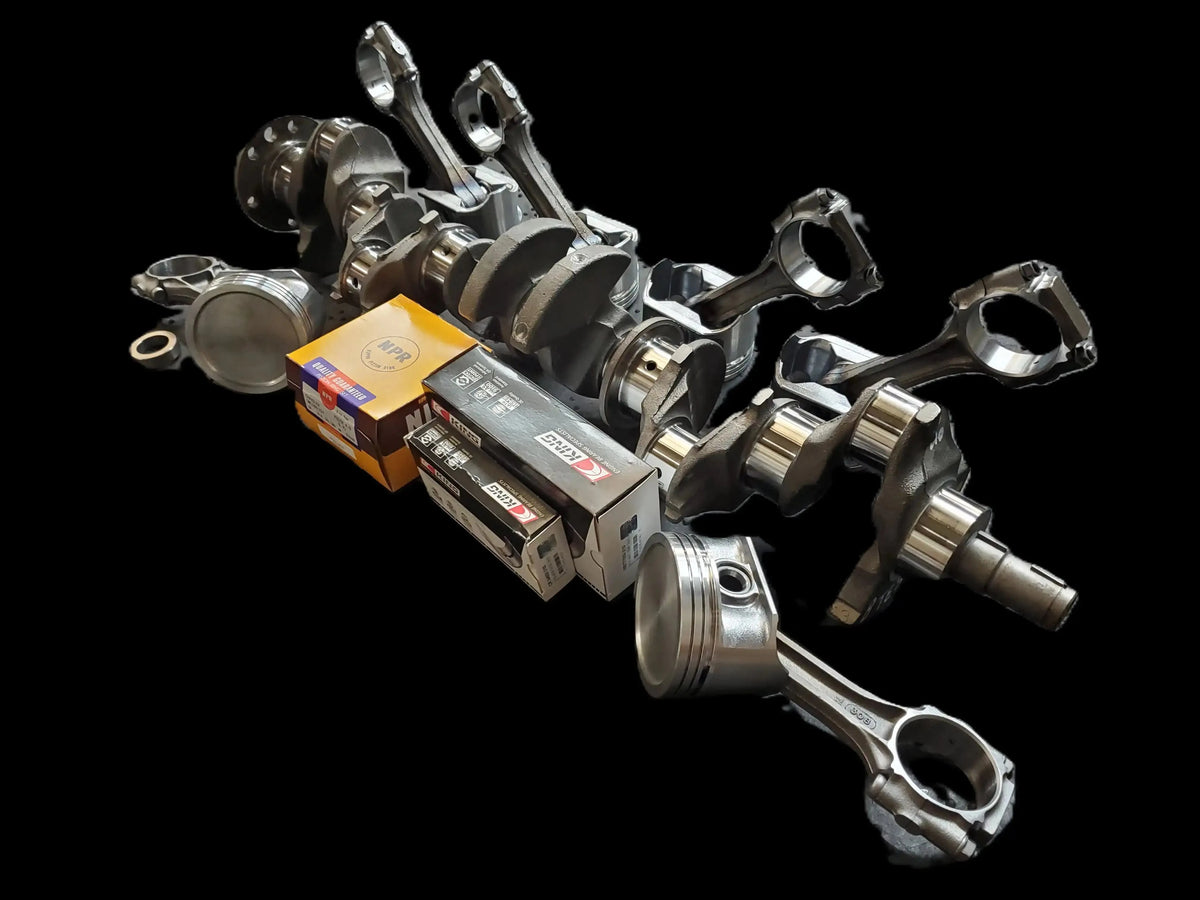
- Piston Rings: These rings seal the piston to the cylinder wall, control oil consumption, and transfer heat. A rebuild kit typically includes rings for all pistons.
- Pistons: These cylindrical components move up and down within the cylinders, driven by combustion pressure. Rebuild kits may include new pistons if the original ones are damaged or worn beyond repair.
- Connecting Rod Bearings: These bearings sit between the connecting rod and the crankshaft journal. They reduce friction and wear. Kits usually include a full set.
- Main Bearings: Similar to rod bearings, these support the crankshaft within the engine block. A full set is included in comprehensive kits.
- Thrust Bearings: These bearings control the crankshaft’s end play (forward and backward movement).
- Crankshaft Bushings (if applicable): Some older engines might use bushings instead of bearings in certain areas.
- Camshaft Bearings: These bearings support the camshaft within the engine block, allowing it to rotate smoothly.
- Timing Set (Chain and Gears/Sprockets): This synchronizes the rotation of the crankshaft and camshaft, ensuring valves open and close at the correct time. A worn timing set can cause poor performance and even engine damage.
- Timing Chain Tensioner and Guides: These components keep the timing chain tight, preventing slack and ensuring accurate timing.
- Oil Pump: The oil pump circulates oil throughout the engine to lubricate moving parts. A new oil pump is highly recommended during a rebuild.
- Oil Pickup Tube Screen/O-ring: This filters oil before it enters the oil pump and ensures a good seal.
- Freeze Plugs (Core Plugs): These are metal plugs in the engine block that protect it from freezing damage by popping out if coolant freezes. They should be replaced during a rebuild as they can corrode and leak.
- Pushrods: These rods transfer the motion from the camshaft (or lifters) to the rocker arms, opening the valves.
- Lifters (Tappets): These components ride on the camshaft lobes and transmit the motion to the pushrods. Hydraulic lifters are common in Jeep Inline 6s.
- Rocker Arms: These levers pivot on a shaft and open the valves when pushed by the pushrods.
- Valve Guides: These guide the movement of the valves within the cylinder head.
- Valve Seals: These seals prevent oil from leaking down the valve stems into the combustion chamber.
- Valve Springs: These springs close the valves after they have been opened by the camshaft.
- Retainers and Keepers (for valves): These small parts hold the valve springs onto the valves.
Other Essential Components
These parts are not always included in every kit but are crucial for a complete rebuild.
- Water Pump: Circulates coolant through the engine to prevent overheating. While not always in a kit, it’s a common replacement item.
- Oil Pump Drive Gear: This gear, often made of nylon or similar material on some Jeep engines, drives the oil pump. It’s known to fail and should be replaced.
- Harmonic Balancer (Crankshaft Pulley): This dampens torsional vibrations from the crankshaft. While not always part of a kit, worn ones can cause issues.
- Spark Plugs: Essential for ignition. Good practice to replace during a rebuild.
- Spark Plug Wires: Carry the electrical current from the distributor/coil to the spark plugs.
- Engine Mounts: These rubber or polyurethane mounts isolate the engine’s vibration from the chassis. Though not inside the engine, their replacement is often part of a comprehensive restoration.
Choosing The Right Rebuild Kit
Not all kits are created equal. Here’s what to consider:
Kit Types
- Gasket Set: Contains only gaskets and seals. You’ll need to source all internal engine parts separately.
- In-Frame Kit: Includes gaskets, seals, piston rings, connecting rod bearings, and main bearings. Designed for rebuilds without removing the engine from the vehicle.
- Rebuild Kit / Overhaul Kit: This is usually the most comprehensive. It includes everything in an in-frame kit plus pistons, sometimes camshaft, timing set, oil pump, and more.
- Master Rebuild Kit: The most complete option, often including items like freeze plugs, oil pump drive gear, and sometimes even valves and valve springs.
Quality Matters
- Brand Reputation: Stick with reputable brands known for quality engine parts.
- Material Quality: Look for kits with high-quality materials, especially for gaskets (e.g., multi-layer steel head gaskets).
- Fitment: Ensure the kit is specifically designed for your exact Jeep model year and engine (e.g., 4.0L HO, 4.2L).
What’s Not Usually Included?
Be aware that most kits do not include:
- Cylinder head (requires machining or replacement)
- Engine block (requires machining or replacement)
- Crankshaft (requires machining or replacement)
- Connecting rods (require machining or replacement)
- Camshaft (sometimes included, but often bought separately for upgrades)
- Valves, valve springs, retainers (sometimes included in master kits)
- Oil pan, valve covers, intake/exhaust manifolds (usually reused or purchased separately)
- Tools required for the rebuild
The Rebuild Process: A High-level Overview
A full engine rebuild is a significant undertaking. It involves:
- Engine Removal: Taking the engine out of the Jeep.
- Disassembly: Taking the engine apart, cleaning each component.
- Inspection and Measurement: Checking all parts for wear or damage. This is where you determine if parts need machining or replacement.
- Machining: Services like honing cylinders, grinding crankshaft, decking block/head, valve job.
- Cleaning: Thoroughly cleaning all parts and the engine bay.
- Assembly: Carefully putting the engine back together using the new parts from the rebuild kit and following torque specifications precisely.
- Installation: Putting the rebuilt engine back into the Jeep.
- Break-in: A crucial period of running the engine under specific conditions to seat new components, especially piston rings.
Key Considerations During Rebuild
- Machine Shop Work: Don’t underestimate the importance of a good machine shop. They can save your engine block and head from being scrap metal.
- Torque Specifications: Follow the factory service manual for all torque specs. Overtightening or undertightening bolts can cause catastrophic failure.
- Cleanliness: Keep everything meticulously clean during assembly. Dirt and debris are the enemies of a freshly rebuilt engine.
- Lubrication: Use assembly lube on bearings, camshaft lobes, and other critical friction points during assembly.
- Break-in Procedure: The break-in period is vital for ring seating. Improper break-in can lead to poor compression and excessive oil consumption for the life of the engine.
Common Pitfalls To Avoid
- Skipping Inspection: Assuming all old parts are usable or all new parts are perfect. Always inspect.
- Using Low-Quality Parts: Cheap kits might seem attractive but can lead to premature failure.
- Improper Torque: Leads to leaks, stripped threads, or component failure.
- Rushing the Process: Engine building requires patience and attention to detail.
- Forgetting the Break-in: A crucial step for long-term engine health.

Comparing Different Rebuild Kit Options
When looking for a kit, you’ll see variations in price and included parts. Here’s a general comparison:
| Kit Type | Primary Components Included | Best For |
|---|---|---|
| **Basic Gasket Set** | All necessary gaskets and seals | Engine needing only seal and gasket replacement |
| **In-Frame Kit** | Gaskets, seals, piston rings, rod bearings, main bearings | Rebuilds where block/pistons are still in good condition |
| **Rebuild Kit** | In-frame kit + pistons, timing set, oil pump, etc. | Standard overhaul, replacing most wear items |
| **Master Kit** | Rebuild kit + freeze plugs, oil pump drive gear, sometimes valves | Comprehensive rebuild, ensuring all common wear items are new |
Performance Upgrades During Rebuild
A rebuild is the perfect time to consider performance enhancements:
- Performance Camshaft: Can increase horsepower and torque, often with a more aggressive idle.
- Higher Compression Pistons: Boosts power but requires higher octane fuel and careful tuning.
- Ported Cylinder Head: Improves airflow for more power.
- Upgraded Valve Springs: Necessary if installing a more aggressive camshaft.
These upgrades often require matching parts and professional tuning to work correctly and avoid engine damage.
The Importance Of The Oil Pump Drive Gear
On many Jeep Inline 6 engines, especially the 4. 0L, the oil pump drive gear is made of a softer material (like nylon or plastic).
This gear is designed to be a weak link; if the oil