If you have ever seen a Jeep with a small rubber duck on the dashboard or hood, you might wonder why it’s there. Is it just a quirky decoration, or is there a deeper story behind it? This growing trend, known as “Jeep Ducking,” has become a unique part of Jeep culture. Let’s dive into the reasons why people put rubber ducks in their Jeeps, where this tradition started, and what it means for the community.
The Origin Of Jeep Ducking
Jeep Ducking started in Ontario, Canada in 2020. The idea came from a Jeep owner who wanted to spread kindness during the COVID-19 pandemic. She placed a rubber duck on a stranger’s Jeep with a friendly note. The gesture was simple: make someone smile and share a moment of positivity.
This act quickly caught on. Other Jeep owners loved the idea, and soon, people across North America and beyond were “ducking” each other’s Jeeps. The hashtag #duckduckjeep appeared on social media, showing photos of rubber ducks on Jeeps in all sorts of places.
What Does The Rubber Duck Mean?
The rubber duck in a Jeep is more than a toy. It has become a symbol of friendship and community among Jeep owners. When someone leaves a duck on your Jeep, it means you are part of a special group that values kindness and fun.
The gesture is usually anonymous. You don’t know who left the duck, but you know it was from a fellow Jeep enthusiast. This makes the experience surprising and joyful.
How Jeep Ducking Works
Jeep Ducking is easy and doesn’t need any rules, but there are some common steps that most people follow:
- Buy rubber ducks in different colors and styles.
- Write a note or tag with a positive message, like “You’ve been ducked!” or “Nice Jeep!”
- Place the duck on another Jeep when you see one parked.
- Take a picture and share it online with the hashtag #duckduckjeep.
Some Jeep owners keep their ducks on display inside their vehicles. Others pass them along to keep the tradition going. There is no right or wrong way to participate.
Why Do Jeep Owners Love Ducking?
There are several reasons why this trend is so popular:
- Connection: Ducking gives Jeep owners an easy way to connect with others, even strangers. It creates a sense of belonging.
- Surprise and Delight: Finding a duck on your Jeep is unexpected. It brings a smile and can make your day better.
- Creativity: People enjoy choosing fun or rare ducks to share. Some even customize ducks with paint or stickers.
- Positive Vibes: In a world that can feel divided, ducking spreads simple kindness.
Types Of Rubber Ducks Used
Not all rubber ducks are the same. Some Jeep owners prefer classic yellow ducks, while others look for unique or themed designs.
| Type of Duck | Description | Popularity |
|---|---|---|
| Classic Yellow | Traditional, bright yellow with orange beak | Very High |
| Themed Ducks | Sports, superheroes, animals, etc. | High |
| Custom Ducks | Painted or decorated by hand | Medium |
Collecting different ducks has become a hobby for many Jeep fans.
How Jeep Ducking Compares To Other Car Traditions
Car owners have always found ways to connect, but Jeep Ducking stands out for its friendliness. Here’s how it compares:
| Tradition | Main Action | Purpose |
|---|---|---|
| Jeep Ducking | Leave a rubber duck | Spread kindness, build community |
| VW “Waving” | Wave to other VW drivers | Show recognition |
| Mini Cooper “Flashing” | Flash headlights at other Minis | Identify as an owner |
Jeep Ducking is unique because it involves a physical gift and often a personal note.
Surprising Facts About Jeep Ducking
Most people know the basics, but here are a few things many beginners miss:
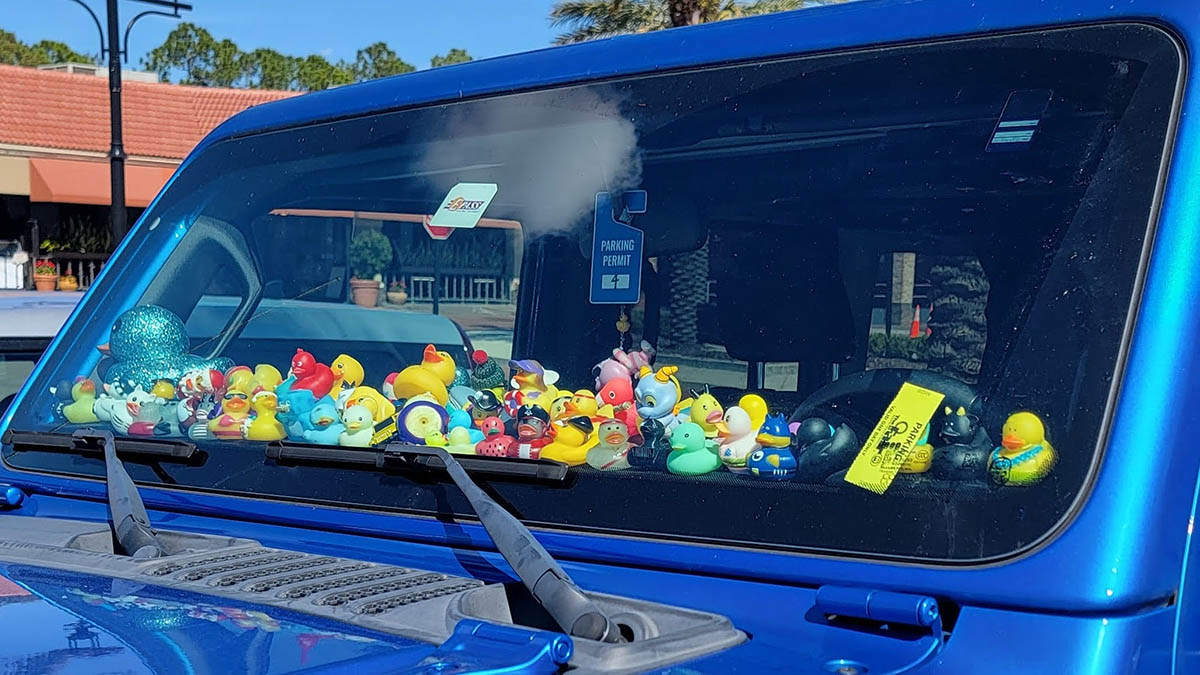
- Some Jeeps have hundreds of ducks. Owners with many ducks often display them on the dashboard, windshield, or even hanging from the mirror.
- Ducking is international. The trend started in Canada, but now you’ll find ducks on Jeeps in Europe, Australia, and South America.
- Limited edition ducks exist. Some companies and events make special ducks just for Jeep Ducking, making them rare and sought after.
Is It Just For Jeeps?
While the tradition started with Jeeps, a few other car communities have tried similar ideas. However, Jeep Ducking is still mostly a Jeep thing, and it’s rare to see ducks on other brands.
Some Jeep owners say the tradition brings back the “Jeep Wave,” an old custom where drivers wave at each other on the road. Both traditions make people feel like they are part of a family.

Tips For New Jeep Duckers
If you want to join in, here are some tips:
- Use small, lightweight ducks so they don’t damage paint or wipers.
- Avoid leaving ducks in dangerous spots, like on the driver’s seat.
- Write a friendly note, but don’t include private contact details.
- Respect private property and never trespass to place a duck.
If you want to learn more about the history and impact of Jeep Ducking, see this Jeep Ducking Wikipedia article.
Frequently Asked Questions
Why Do People Put Rubber Ducks In Their Jeeps?
People put rubber ducks in their Jeeps as a way to share kindness, connect with other Jeep owners, and be part of a friendly community. It started as a random act to make people smile and has grown into a global tradition.
Can Anyone Participate In Jeep Ducking?
Yes, anyone who owns a Jeep can join the tradition. All you need are some rubber ducks and a positive attitude. Some people even include their kids or family in the fun.
What Should I Write On The Duck’s Note?
Common messages include “You’ve been ducked!” or “Nice Jeep!” Some people add their Instagram handle or a funny joke. Keep it friendly and positive.
Is Jeep Ducking Allowed Everywhere?
Most places are fine with Jeep Ducking, but you should always respect local laws and avoid putting ducks where they could cause problems or be seen as littering.
Do People Ever Get Upset About Jeep Ducking?
It’s rare, but a few people may not appreciate someone touching their vehicle. If you’re unsure, it’s best to be discreet and gentle. Most Jeep owners enjoy the tradition and look forward to finding a new duck.
The next time you spot a small rubber duck sitting proudly on a Jeep, you’ll know it’s more than a decoration. It’s a sign of community, fun, and simple acts of kindness—proof that even a toy can build connections between strangers.