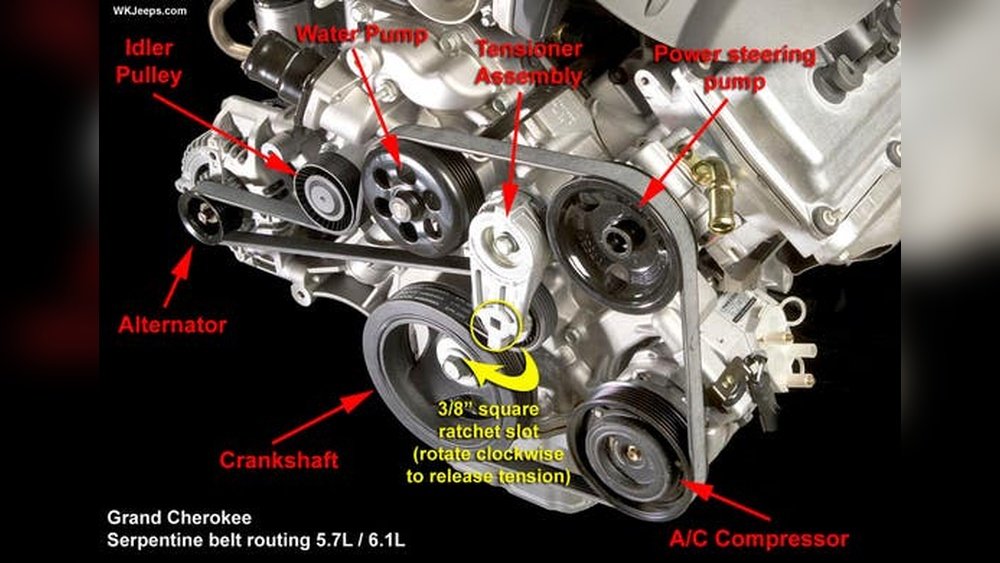
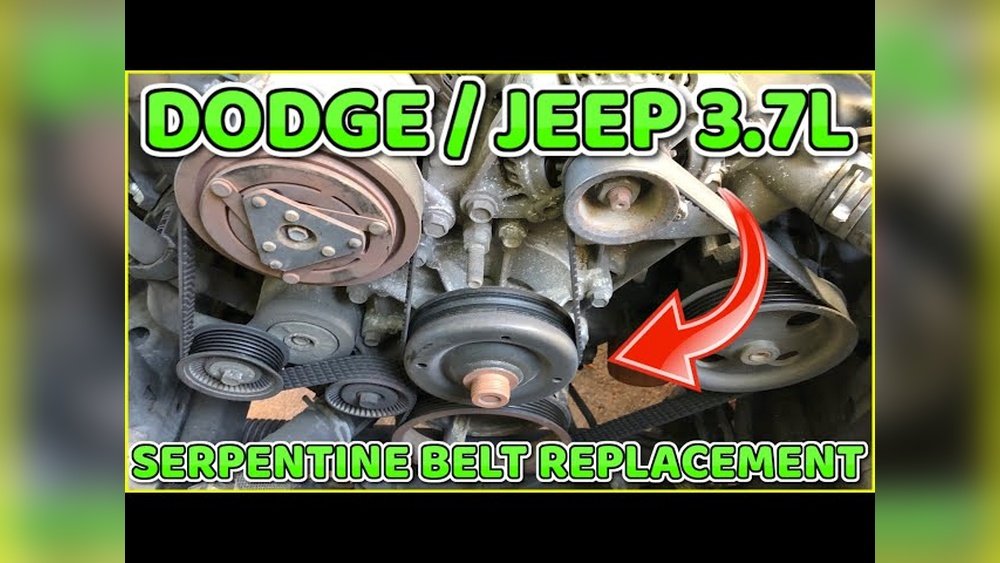
A Grand Cherokee battery question needs a model-year answer. On some generations, the 12-volt battery is under the front passenger seat and remote jump posts are provided in the engine compartment.
A Grand Cherokee 4xe also includes a high-voltage system.
Quick Answer
Check the owner guide for the exact Grand Cherokee. The 2014 guide states that the battery is under the passenger front seat and remote posts are on the right side of the engine compartment for jump-starting. Hybrid models require additional precautions.
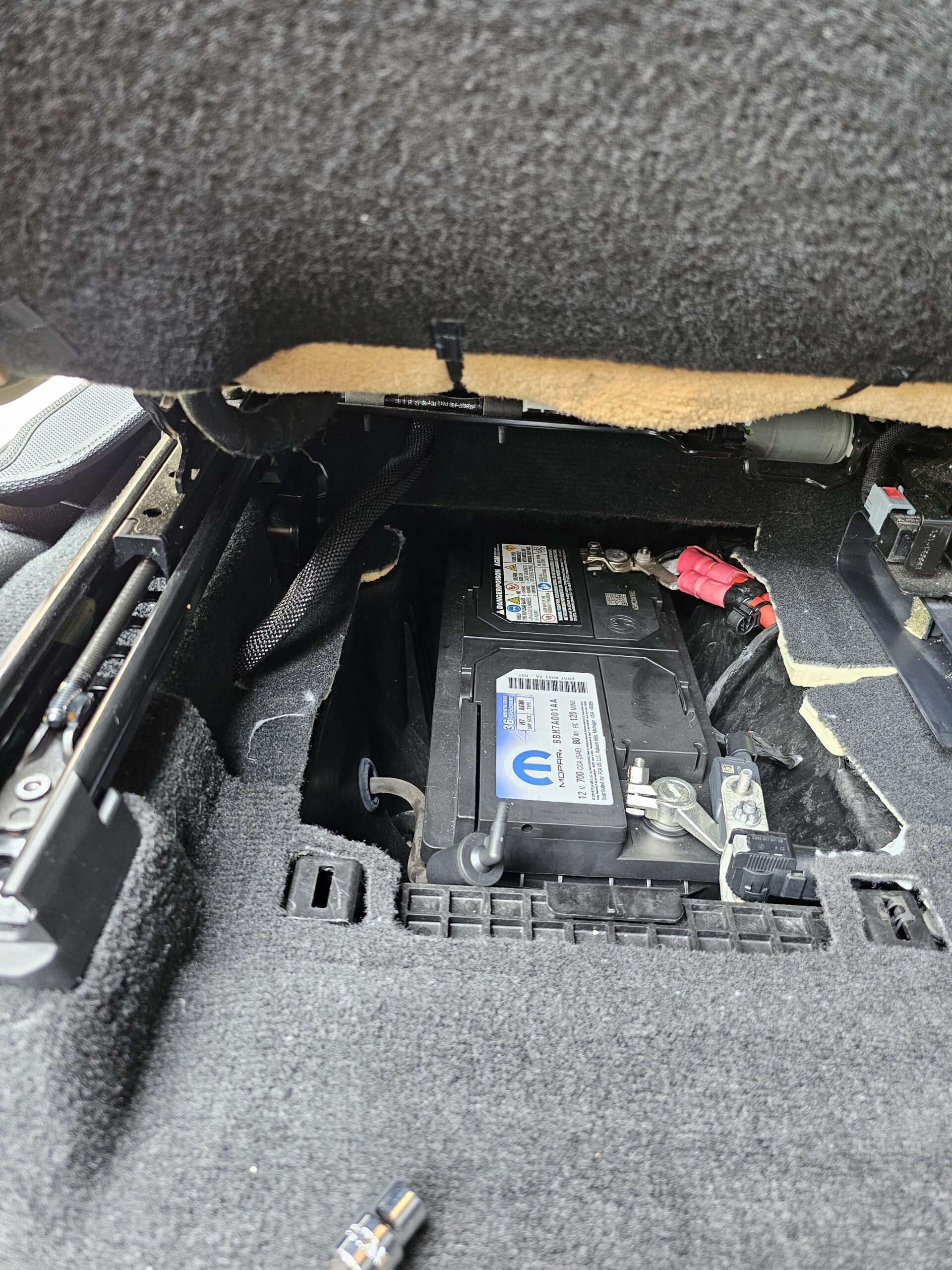
Confirm Generation Before Removing Trim
Do not move seats or covers based on a video for another year.
Use Remote Posts When Directed
Follow the manual connection point and cable order.
4xe Adds High-Voltage Safety
High-voltage components belong to qualified technicians. Do not open or probe them.
Repeated Discharge Needs Diagnosis
A new battery may not solve poor connections, charging faults or parasitic drain.
Protect Interior Hardware
Keep covers and fasteners organized when access near the seat is required.
Save the Replacement Record
Write down battery type, installation date and test result.
Stop When Warning Signs Appear
Use professional help for damaged cables, heat, collision damage or hybrid warnings.
Key Details to Check
| Item | What to verify | Why it matters |
|---|---|---|
| Year | Exact guide | Arrangement varies |
| Jump posts | Under-hood labels | Supports correct access |
| 12-volt battery | Condition and terminals | Identifies routine issue |
| High voltage | 4xe warnings | Requires caution |
| Records | Date and test | Tracks repeat failure |
Step-by-Step Review
- Identify year and powertrain.
- Open the matching Mopar guide.
- Inspect the labeled remote posts.
- Follow the stated jump-start procedure.
- Arrange battery and charging-system testing.
- Investigate repeat discharge.
- Use qualified service for high-voltage warnings.
Common Mistakes to Avoid
- Assuming every Grand Cherokee stores the battery in one place.
- Jumping from an unverified terminal.
- Reversing polarity.
- Treating high-voltage parts like 12-volt equipment.
- Replacing batteries without diagnosis.
No. Use the exact guide.
“,”visible”:true},{“id”:”faq-question-685826fb5f9a”,”title”:”Can I open a 4xe high-voltage battery case?”,”content”:”No. Qualified technicians should handle high-voltage service.
“,”visible”:true},{“id”:”faq-question-fa73aab9d857″,”title”:”Why did a replacement battery discharge?”,”content”:”The cause may be charging, connections or an electrical load. Diagnose it.
“,”visible”:true}]} –>Is the battery under the hood on every Grand Cherokee?
No. Use the exact guide.
Can I open a 4xe high-voltage battery case?
No. Qualified technicians should handle high-voltage service.
Why did a replacement battery discharge?
The cause may be charging, connections or an electrical load. Diagnose it.
Parasitic-Drain Clues
Note how long the Jeep sits before failing and whether lights, accessories or aftermarket equipment were active. The pattern helps diagnosis.
Hybrid Warning Discipline
Stop for high-voltage warnings, damaged orange cables or collision damage near hybrid components. Arrange qualified service.
Check Battery Age Before Winter
Cold weather may expose a weak 12-volt battery. Record the installation date and test result before seasonal travel, especially when the Jeep already cranks slowly.
Clean Connections Correctly
Loose or corroded terminals may create intermittent faults. Use the proper service procedure and protect surrounding trim. Do not improvise around hybrid components.
Jump-Start Location Is Not the Battery Location
Remote under-hood posts may be designed for jump-starting even when the actual battery sits elsewhere. Follow the guide rather than searching blindly under covers.
Aftermarket Accessories Need Review
Dash cameras, alarms, lighting and audio equipment may contribute to battery drain when installed poorly. Tell the technician about every accessory during diagnosis.
Do Not Experiment With Orange Cables
Orange cables identify high-voltage components on electrified vehicles. Do not touch, disconnect or test them without the correct training and equipment.
Use a Multimeter Only Where Appropriate
Routine 12-volt testing may be useful, but only at verified points and with the correct procedure. Do not probe unknown connectors or hybrid wiring.
Watch for Corrosion Around Connections
Moisture and corrosion increase resistance and create intermittent trouble. Inspect accessible 12-volt terminals and grounds during diagnosis.
Keep the Seat Area Clean During Access
When the battery sits under a seat, protect trim, move the seat correctly and keep tools away from wiring. Reinstall covers securely.
Do Not Ignore Warning Messages
Electrical warnings after a jump start or battery replacement deserve a scan. Clearing messages repeatedly without diagnosis may hide a developing problem.
Charge and Test Before Condemning a Battery
A deeply discharged battery may need charging before a reliable test. Ask the technician for the measured result rather than assuming replacement is required.
Record Access Instructions for Future Service
Save the battery location, jump-post photo and replacement date. The next roadside event becomes easier when the information is already organized.
Prepare for Roadside Assistance
Save the jump-post location in your phone and keep the owner guide accessible. During a roadside event, use the verified connection points and follow the manual instead of searching randomly under the hood.
Escalate Repeat Failures Quickly
When the battery discharges again after charging or replacement, stop treating the issue as a simple battery problem. Ask for a charging-system test, parasitic-draw diagnosis and inspection of aftermarket accessories.
Separate No-Start From Battery Location
Finding the battery or jump posts solves an access question, not the diagnosis. A no-start may involve a weak battery, poor connection, starter issue, charging problem or another fault. Test before replacing parts.
Keep a Safe Jump-Start Kit
Store quality jumper cables or a suitable booster pack where they remain accessible. Review the manual before an emergency and keep the clamps clean and protected from accidental contact.
Ask for Measured Results
When a shop tests the system, request the battery result, charging voltage and any parasitic-draw findings. Written measurements make future troubleshooting more useful.
- Where Is Battery On Jeep Grand Cherokee
- Where Is The Battery On A 2018 Jeep Grand Cherokee
- Where Is The Battery In A Jeep Grand Cherokee
Final Takeaway
Find the correct Grand Cherokee guide before touching the system. Use labeled jump posts when directed, test the 12-volt system and leave 4xe high-voltage work to qualified technicians.