If you drive a Jeep, you know it’s built for adventure. Jeeps can handle rough roads, big hills, and deep mud.
But when you change your Jeep’s tires or add heavy parts, something important happens: the gears inside your Jeep may not work as well as before. Many Jeep owners ask, “When should you regear your Jeep?”
Let’s make this simple and clear so you can decide if it’s time to upgrade your Jeep’s gears.
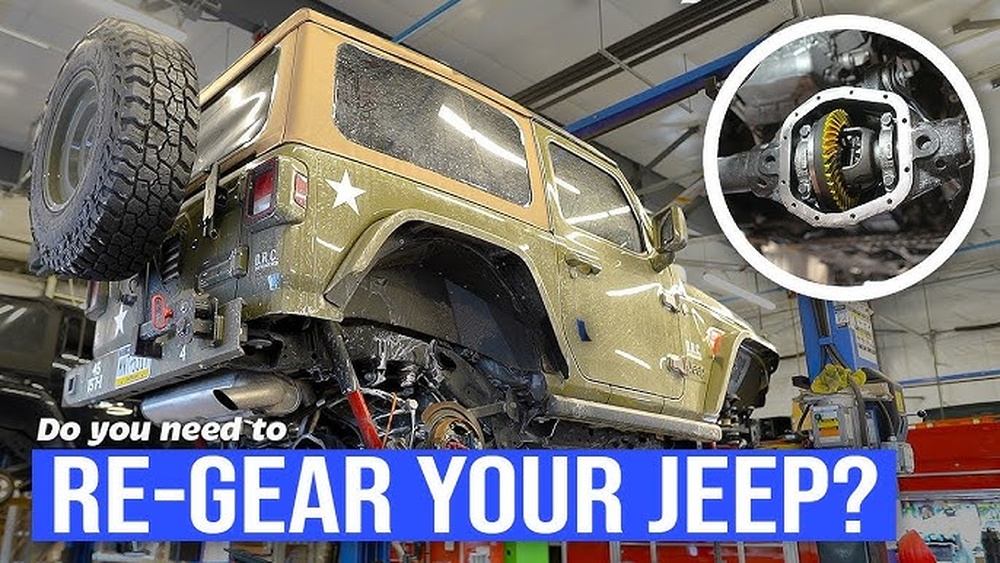
What Does Regearing Mean?
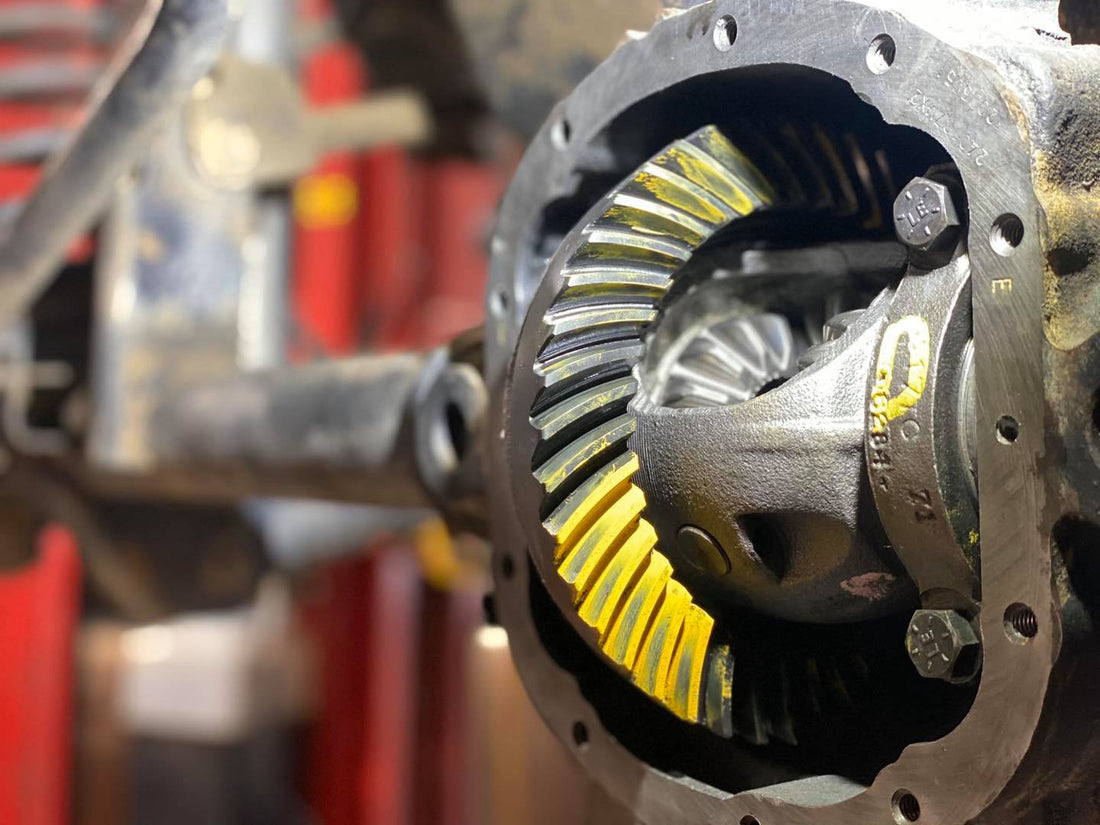
Regearing means changing the ring and pinion gears inside your Jeep’s axles. These gears control how power moves from your engine to your wheels. If you use bigger tires, pull heavy loads, or drive off-road often, your Jeep’s gears may struggle. Regearing fixes this by matching your gears to your Jeep’s needs.
Signs It’s Time To Regear
There are several clear signs your Jeep may need new gears. Here are the most common:
- Bigger Tires: If you install tires that are much larger than stock (usually 2 inches or more), your Jeep’s gears may not spin fast enough. This causes slow acceleration and poor fuel economy.
- Poor Performance: Your Jeep feels sluggish, struggles up hills, or takes longer to speed up.
- Bad Fuel Economy: You notice your gas mileage drops after changing tires or adding weight.
- Transmission Problems: The transmission shifts too often, or stays in high gear too long.
- Off-Road Struggles: Your Jeep has trouble crawling over rocks or deep mud.
- Towing Issues: Pulling trailers or heavy loads is harder than before.
Many beginners miss that gear ratio is more than just a number. If your Jeep’s engine works too hard, you risk damage over time. Regearing isn’t just about power—it helps your Jeep last longer.
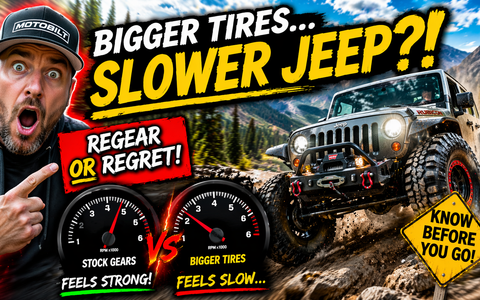
How Gear Ratio Works
Gear ratio is written as two numbers, like 4.10:1 or 3.73:1. This tells you how many times the driveshaft spins for one turn of the wheels.
| Gear Ratio | Acceleration | Fuel Economy |
|---|---|---|
| 3.73:1 | Moderate | Better |
| 4.10:1 | Quick | Lower |
| 4.56:1 | Very Quick | Poor |
Higher ratios (like 4.56:1) give more power for climbing and towing, but use more fuel. Lower ratios (like 3.73:1) are better for highway driving and gas mileage.
When Should You Regear Your Jeep?
The right time depends on how you use your Jeep and what changes you make. Here’s how to decide:
After Installing Larger Tires
If your tires are more than 2 inches bigger than stock, you should consider regearing. For example, if your factory tires are 31 inches and you upgrade to 35 inches, that’s a big jump. Your Jeep’s engine and transmission will feel the strain.
| Tire Size | Recommended Gear Ratio |
|---|---|
| 31″ | 3.73:1 |
| 33″ | 4.10:1 |
| 35″ | 4.56:1 |
| 37″ | 4.88:1 |
After Adding Heavy Accessories
Items like steel bumpers, winches, and roof racks add weight. If your Jeep feels slower or burns more gas after adding these, regearing helps return performance.
For Serious Off-roading
If you spend weekends on rocky trails, deep sand, or mud, higher gear ratios help your Jeep crawl and climb. Most off-roaders regear after upgrading tires or suspension.
When Towing More
Pulling a boat or trailer often? Higher gear ratios give your Jeep the power it needs.
If your Jeep strains to tow, or the transmission overheats, it’s time to regear.
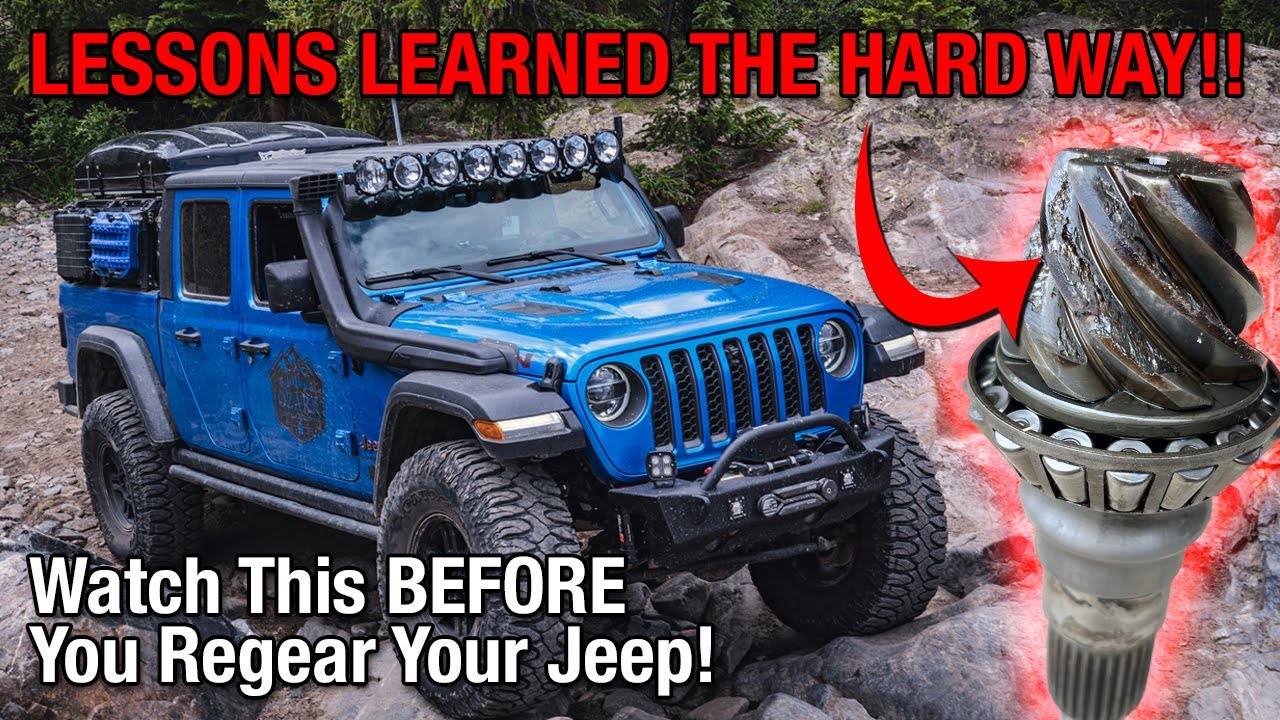
Cost And What To Expect
Regearing is not cheap. Most shops charge $1,200 to $2,000 for parts and labor. The price depends on your Jeep model and how many axles you regear.
You can expect:
- Better acceleration
- Improved off-road ability
- Smoother towing
- More stable transmission shifting
- Slightly lower fuel economy (especially with high ratios)
A non-obvious insight: If you only regear one axle, your Jeep may get damaged. Always regear both front and rear axles at the same time.
Common Mistakes To Avoid
Many Jeep owners make mistakes when regearing. Here are the most common:
- Ignoring Gear Ratio Charts: Always check recommended ratios for your tire size and Jeep model.
- Regearing Only One Axle: This can break your drivetrain. Always do both axles.
- Choosing Too High a Ratio: You’ll lose fuel economy and make highway driving noisy.
- Waiting Too Long: Delaying regearing can damage your transmission and engine.
- Skipping Professional Help: Regearing needs skill. Don’t try it alone unless you’re experienced.
Real-world Example
A Jeep Wrangler owner upgraded from 32-inch tires to 37-inch tires. Before regearing, the Jeep struggled up hills and gas mileage dropped from 17 mpg to 12 mpg. After regearing from 3.73:1 to 4.88:1, acceleration improved, towing was easier, and the transmission shifted smoothly again.
How To Choose The Right Gear Ratio
Use your driving style and tire size to pick the best ratio. If you drive mostly in the city or highway, stick with moderate ratios like 4.10:1. For off-road and towing, go higher. Always check your Jeep’s manual or ask a trusted mechanic.
You can find helpful gear calculators and charts online, such as those from Quadratec.
Frequently Asked Questions
<!– wp:rank-math/faq-block {"questions":[{"id":"faq-question-e1010fb9b7d5","title":"How Much Does Regearing Cost?","content":"Most shops charge $1,200–$2,000 for regearing both axles. Prices depend on your Jeep model and location.
“,”visible”:true},{“id”:”faq-question-76e8a2e592ae”,”title”:”Can I Regear My Jeep Myself?”,”content”:”It’s possible, but not recommended unless you have experience. Regearing needs special tools and precise work.
“,”visible”:true},{“id”:”faq-question-2001d3c59703″,”title”:”Will Regearing Void My Warranty?”,”content”:”Sometimes. Check your Jeep’s warranty details or ask your dealer before making changes.
“,”visible”:true},{“id”:”faq-question-45f57540517f”,”title”:”Does Regearing Improve Towing?”,”content”:”Yes, a higher gear ratio gives your Jeep more power for towing and carrying heavy loads.
“,”visible”:true},{“id”:”faq-question-6375e172ecb0″,”title”:”How Long Does Regearing Take?”,”content”:”Most shops finish in 1–2 days. If parts are delayed, it could take longer.
Making the right decision about when to regear your Jeep will protect your vehicle and boost your driving experience. If you notice poor performance after upgrading tires or adding weight, don’t wait. Regearing is an investment that pays off in better power, smoother driving, and longer Jeep life.
“,”visible”:true}]} –>How Much Does Regearing Cost?
Most shops charge $1,200–$2,000 for regearing both axles. Prices depend on your Jeep model and location.
Can I Regear My Jeep Myself?
It’s possible, but not recommended unless you have experience. Regearing needs special tools and precise work.
Will Regearing Void My Warranty?
Sometimes. Check your Jeep’s warranty details or ask your dealer before making changes.
Does Regearing Improve Towing?
Yes, a higher gear ratio gives your Jeep more power for towing and carrying heavy loads.
How Long Does Regearing Take?
Most shops finish in 1–2 days. If parts are delayed, it could take longer.
Making the right decision about when to regear your Jeep will protect your vehicle and boost your driving experience. If you notice poor performance after upgrading tires or adding weight, don’t wait. Regearing is an investment that pays off in better power, smoother driving, and longer Jeep life.



















