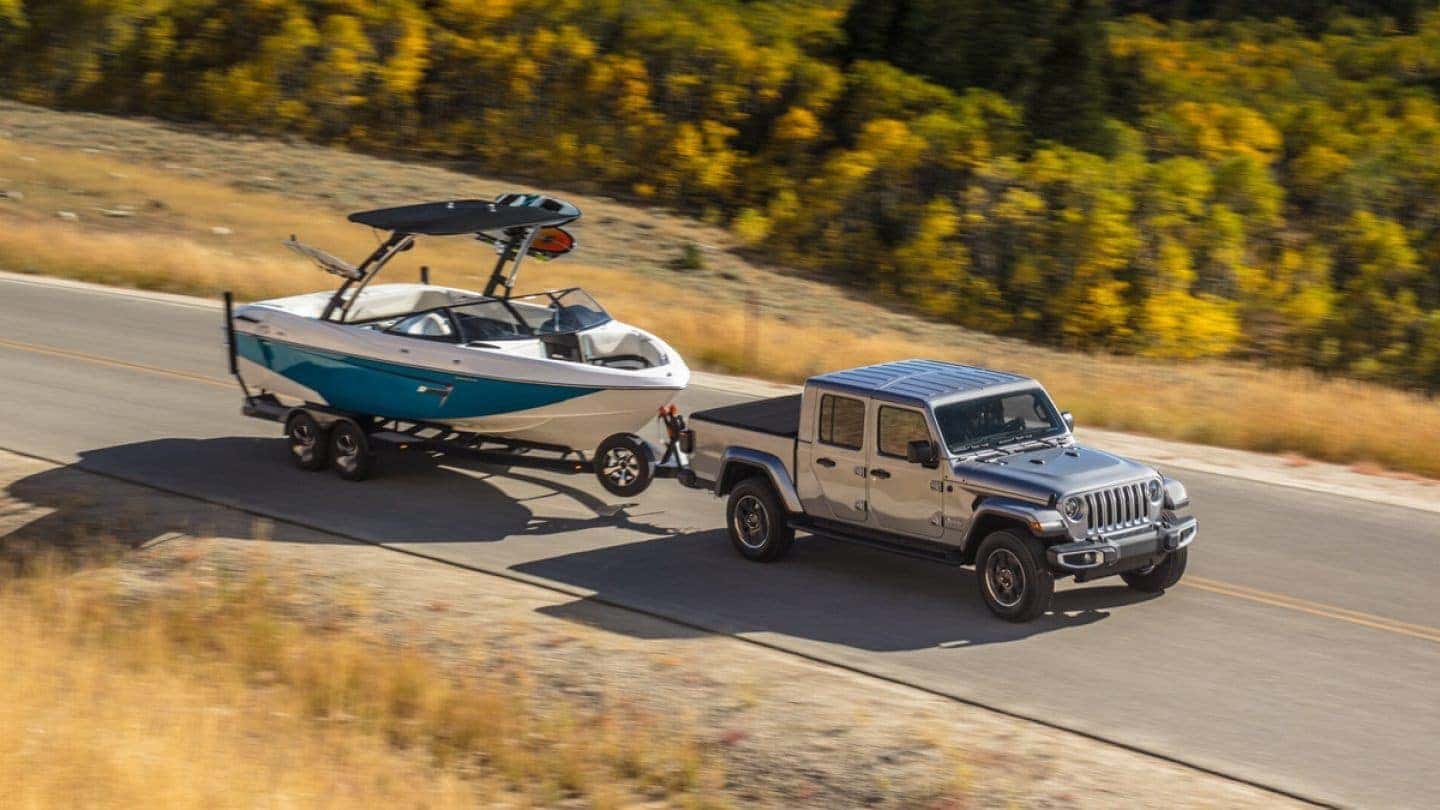
Gladiator towing starts with the exact truck, not the largest number on a marketing page. Payload, tongue weight and trailer setup remain part of the calculation.
Quick Answer
Gladiator towing capacity depends on configuration and equipment. Official Jeep material lists up to 7,700 pounds for certain properly equipped 2026 Gladiator configurations, but the exact truck rating, payload, tongue weight and trailer setup still need verification.
Include Payload and Tongue Weight
Passengers, cargo and hitch load use available payload. A trailer that fits the tow number may still overload the truck.
Set Up the Trailer Properly
Lights, tires, coupler, chains, brakes and load distribution all matter before leaving.
Use the Exact Gladiator Configuration
Jeep’s official material lists an available maximum gas towing capacity of 7,700 pounds for certain configurations. Your truck label, equipment and payload still control the real plan.
Recheck After the First Few Miles
Stop safely and inspect the coupler, chains, lights, tires and load after the first short towing segment.
Loaded Trailer Weight Comes First
Dry trailer weight is only the start. Add cargo, water, fuel, batteries and equipment before comparing the total with the truck rating.
Tongue Weight Uses Payload
Passengers, bed cargo and hitch load share the available payload. Check the door label and loaded setup.
Inspect Again After Leaving
Stop after the first few miles and check the coupler, chains, lights, tires and load security. A short inspection catches problems early.
Use the Exact Gladiator Configuration
Jeep lists an available maximum gas towing capacity of 7,700 pounds for certain Gladiator configurations. Your trim, equipment, axle and door labels determine the real plan.
Do not apply the headline to every truck.
Calculate Loaded Trailer Weight
Include trailer, cargo, fuel, water, batteries and gear. A dry-weight number is not the weight the Gladiator moves on the road.
Build a margin instead of planning at the limit.
Check Payload After Adding Tongue Weight
Tongue weight uses part of the truck payload. Add passengers, bed cargo and accessories.
A trailer may fit the towing headline while the loaded truck still exceeds a separate rating.
Inspect the Connection Before Every Trip
Confirm coupler, safety chains, electrical connector, lights, tires and cargo securement. Stop after the first short segment and recheck the setup.
Key Details to Check
| Item | What to verify | Why it matters |
|---|---|---|
| Rating | Maximum towing capacity | Use the exact configuration, not a broad maximum |
| Limit | Payload | Includes people, cargo and tongue weight |
| Trailer item | Tongue weight | Affects stability and payload |
| Safety item | Brakes and sway control | Review for the trailer and local requirements |
Use Trailer Brakes and Local Rules
Trailer-brake requirements vary by weight and location. Read the truck guide and local requirements.
Practice braking and backing before a long trip.
Use a Scale for the Loaded Combination
A public scale helps verify truck, axle and combined weights after passengers, bed cargo and trailer gear are loaded. Save the ticket and adjust the setup when a margin becomes too small.
Plan for Hills and Heat
A tow route with grades, traffic and hot weather places more demand on the truck than a flat local trip. Review the route and maintenance condition before leaving.
Practice Backing Before a Busy Trip
Use an open safe area to learn steering inputs and mirror view. Trailer control improves with practice, and a calm setup reduces mistakes at ramps, campsites or loading areas.
Inspect Cooling and Brakes Before a Long Tow
A towing trip adds demand to the truck. Review tire condition, brake operation, fluids and service intervals before loading the trailer. Resolve warning lights before departure.
Match Speed to Conditions
Wind, rain, traffic and trailer behavior should shape speed and following distance. Leave extra room and stop when sway, heat or braking concerns appear.
Secure Bed Cargo Separately
Items in the Gladiator bed may move during braking or affect payload. Tie them down and include their weight in the calculation before leaving.
Use a Written Departure Checklist
Before towing, walk around the Gladiator and trailer with the same checklist each time. Verify lights, chains, coupler, tires, cargo and mirrors.
A routine catches small omissions before traffic adds pressure.
Recalculate After Loading Changes
A new accessory, extra passenger or heavier cargo changes the numbers. Update the payload and trailer notes before the next trip instead of relying on an older calculation.
Review Mirrors and Visibility
Adjust mirrors for the trailer and test the view before entering traffic. Add suitable equipment when required and avoid leaving the first visibility check until a busy road.
Use a Calm Final Walk-Around
Take one slow lap around the trailer before departure. A deliberate pause is easier than fixing a missed detail on the road.
Use the Exact Truck Rating
A maximum marketing figure is not the rating for every Gladiator. Check year, trim, drivetrain, axle, tow package and labels.
Step-by-Step Review
- Confirm the exact truck rating.
- Calculate loaded trailer weight.
- Check payload and tongue weight.
- Inspect hitch, lights and tires.
- Complete a cautious test tow.
Common Mistakes to Avoid
- Using the headline maximum for every Gladiator
- Ignoring payload
- Towing before testing trailer lights and brakes
Can every Gladiator tow 7,700 pounds?
No. The maximum applies only to certain properly equipped configurations.
Does payload matter when towing?
Yes. Tongue weight, passengers and cargo consume payload.
Where should I confirm my truck rating?
Use the labels, owner’s manual and official Jeep specifications.
- Jeep Gladiator Willys Towing Capacity
- How To Increase Towing Capacity Jeep Gladiator
- 2021 Jeep Gladiator Willys Towing Capacity
Final Takeaway
Gladiator towing starts with the exact configuration, loaded trailer and payload calculation. Recheck the hitch, lights and load after the first few miles.