If you own a Jeep, especially a Wrangler or Grand Cherokee, you may have heard the term death wobble. This is not just a dramatic phrase—it's a real and sometimes frightening experience for drivers.
Imagine your steering wheel shaking violently at highway speeds, the whole vehicle vibrating, and feeling like you might lose control. Death wobble is more than just an annoyance; it can be dangerous and confusing, especially for those new to Jeeps.
Understanding what causes death wobble in a Jeep helps you stay safe and keep your vehicle in top condition.
What Is Death Wobble?
Death wobble is a severe and rapid oscillation of the front wheels and steering components. It usually happens after hitting a bump at speeds over 45 mph.
The vibration can be so intense that it feels like the Jeep might come apart.
While it’s most common in solid front axle Jeeps, other vehicles with similar suspension setups can also experience it.
Death wobble is not the same as a minor shake or loose steering. It’s a violent event that often forces drivers to slow down immediately. Many believe it’s caused by just one broken part, but in most cases, death wobble is the result of several issues working together.
Main Causes Of Death Wobble In Jeeps
Identifying the root causes is key to solving and preventing death wobble. Here are the most common factors:
1. Worn Or Loose Track Bar
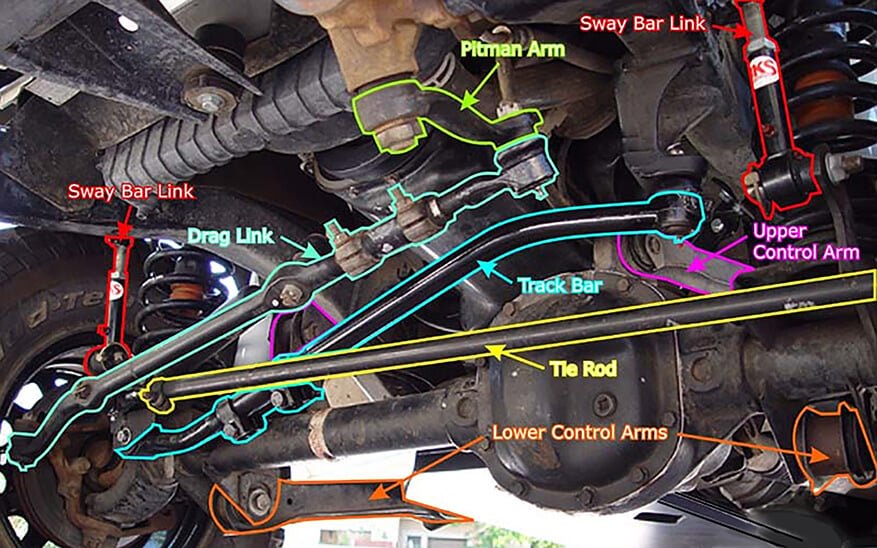
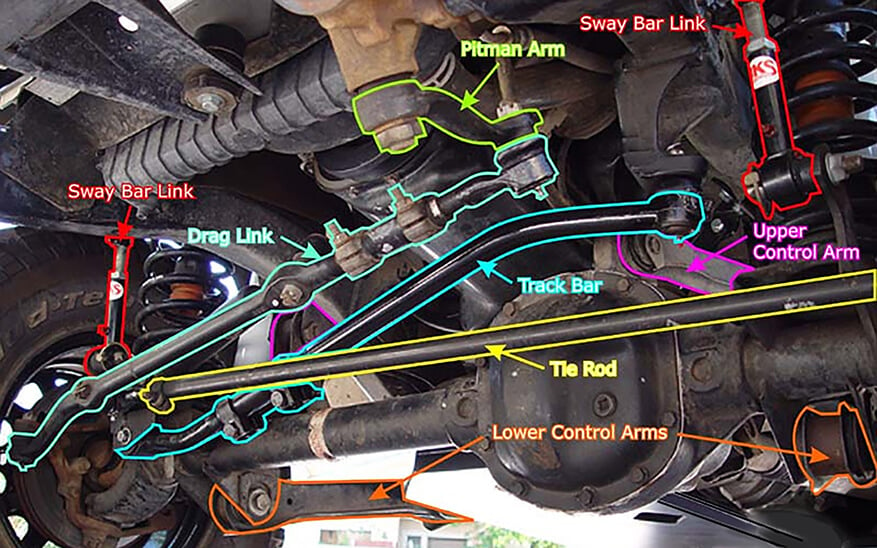
The track bar is a critical piece of the Jeep’s suspension. It keeps the front axle centered under the vehicle. If the track bar bushings or bolts are worn, loose, or damaged, the axle can shift side to side, triggering death wobble.
- Loose bolts or worn bushings allow movement.
- Even a small amount of play can create big problems at high speeds.
2. Bad Ball Joints And Tie Rod Ends
Ball joints connect the steering knuckles to the control arms, allowing them to move up and down. Tie rod ends link the steering rack to the wheels. If either is worn, the steering components lose stability.
- Worn ball joints or tie rod ends allow uncontrolled movement.
- This slack magnifies vibrations, especially after hitting bumps.
3. Steering Stabilizer Masking Underlying Issues
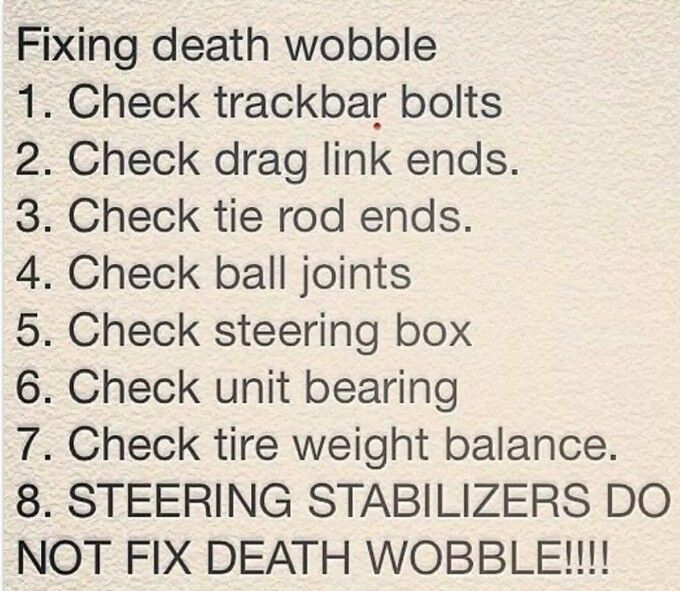
A steering stabilizer looks like a small shock absorber. It can help smooth minor vibrations but does not fix the real causes of death wobble.
- Some owners install bigger stabilizers hoping to cure death wobble.
- This often hides symptoms without solving the root problem.
4. Damaged Or Misaligned Suspension Components
Bent or worn control arms, bushings, or brackets can throw off the suspension geometry. Misalignment from off-roading or accidents can also lead to wobble.
- Off-road use increases stress on these parts.
- Alignment problems often start small but get worse over time.
5. Improper Wheel Alignment And Balance
Wheel alignment and tire balance are often overlooked, yet they play a major role in keeping the ride smooth.
- Unbalanced tires can cause vibrations that trigger death wobble.
- Poor alignment increases tire wear and stresses suspension parts.
6. Oversized Tires And Lift Kits
Many Jeep owners install lift kits and larger tires. While this adds style and off-road capability, it can strain the suspension if not done properly.
- Bigger tires add weight and change steering angles.
- Lifts without proper geometry correction increase stress on factory parts.
7. Loose Or Broken Steering Box Mounts
The steering box controls the direction of the front wheels. If its mounts are loose or cracked, steering can become unpredictable.
- Movement in the steering box makes the front end unstable.
- This is more common in older Jeeps or those with heavy off-road use.
How Common Is Death Wobble?
Death wobble is most common in Jeep Wranglers (especially TJ and JK models) and vehicles with solid front axles. According to the National Highway Traffic Safety Administration, complaints about death wobble have increased as more people lift and modify their Jeeps.
Here’s a quick look at how death wobble risk compares across popular Jeep models:
| Jeep Model | Death Wobble Risk | Common Years Affected |
|---|---|---|
| Wrangler TJ | High | 1997–2006 |
| Wrangler JK | High | 2007–2018 |
| Grand Cherokee | Medium | 1993–2010 |
| Gladiator JT | Medium | 2020–present |
How To Diagnose Death Wobble
Finding the source of death wobble can take time. Here’s a smart approach:
- Inspect the Track Bar: Check both ends for movement with a pry bar.
- Check Ball Joints and Tie Rods: Look for any play or looseness.
- Examine Suspension Bushings: Worn rubber or polyurethane bushings should be replaced.
- Look at Wheel Alignment and Tire Balance: Uneven wear or vibration at certain speeds are red flags.
- Review Recent Modifications: Lifts or big tires may require extra adjustments.
A common mistake is to replace only the steering stabilizer. While it might temporarily reduce shaking, it rarely fixes death wobble for good.
Jeep Death Wobble: Prevention And Repair
To keep your Jeep safe and reduce the risk of death wobble:
- Tighten all suspension bolts to factory specs regularly.
- Replace worn parts right away, especially after off-roading.
- Balance tires and rotate them every 5,000–7,000 miles.
- Get professional alignments after lifting or modifying your Jeep.
- Choose quality parts when upgrading steering or suspension.
Here’s a quick comparison of common fixes and their effectiveness:
| Fix | Effectiveness | Notes |
|---|---|---|
| Replace track bar bushings | Very High | Often solves root cause |
| Install larger steering stabilizer | Low | Masks symptoms only |
| Wheel alignment | Medium | Helps if alignment is off |
| Replace ball joints/tie rods | High | Essential if worn |
Non-obvious Insights For Jeep Owners
Many first-time Jeep owners miss these important facts:
- Death wobble is not only caused by one part. Often, it’s a combination of small problems that add up. Fixing just one worn part rarely solves everything.
- Improper installation is a frequent cause. Even new parts can trigger wobble if they’re not installed or torqued correctly. Always double-check work after any repair or modification.
When To Seek Professional Help
If you can’t find the cause yourself, get a trusted mechanic with Jeep experience. Some shops have special alignment tools for solid axle vehicles that regular shops may not own. Ignoring death wobble is risky—it can damage more parts or cause loss of control.
You can read more about steering and suspension safety at the Wikipedia page on death wobble.
Frequently Asked Questions
What Should I Do If My Jeep Gets Death Wobble While Driving?
Stay calm, slow down, and hold the steering wheel firmly. Pull over safely, then inspect your suspension and steering before driving again.
Can Death Wobble Damage My Jeep?
Yes. Repeated death wobble can wear out suspension parts, steering components, and even lead to tire or wheel damage.
Will A Steering Stabilizer Fix Death Wobble?
A steering stabilizer can reduce vibrations but rarely fixes the root cause. You need to address worn or loose parts for a true solution.
Are Lifted Jeeps More Likely To Get Death Wobble?
Yes, especially if the lift is not installed correctly or if other suspension parts are not upgraded to handle the new angles.
Is Death Wobble Covered Under Jeep Warranty?
Sometimes, if the vehicle is under warranty and has no aftermarket modifications. Check with your dealer for your specific case.
By understanding what causes death wobble in your Jeep, you can take action before it becomes a serious problem. Regular maintenance, careful inspections, and smart upgrades keep you safer on and off the road.