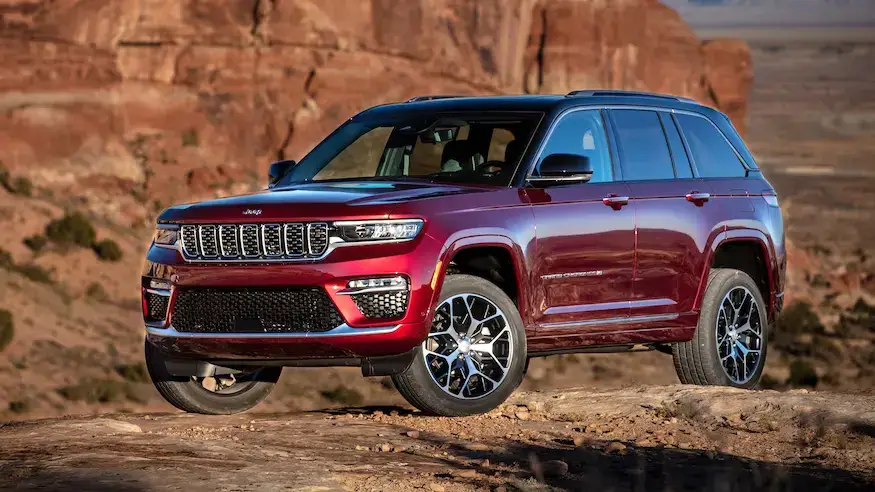
If you own a Jeep Grand Cherokee and suddenly see the P0300 trouble code, your engine is warning you about a random or multiple cylinder misfire. This issue can make your SUV shake, lose power, waste fuel, and trigger the check engine light.
The P0300 Jeep Grand Cherokee code is one of the most common engine fault codes across different Grand Cherokee generations. Whether you drive a 3.6L Pentastar V6, 5.7L HEMI V8, or older 4.0L engine, this problem can appear without warning.
Some drivers notice a rough idle during startup. Others feel hesitation while accelerating onto the highway.
In severe cases, the engine may stall completely.
The good news is that this code is usually fixable once you identify the root cause.
In this complete guide, you’ll learn:
- What the P0300 Jeep Grand Cherokee code means
- Common symptoms
- Main causes
- How to diagnose the issue step-by-step
- Repair costs
- Whether it is safe to drive
- How to prevent the problem in the future
Let’s start with the basics.
What Does P0300 Mean on a Jeep Grand Cherokee?
The P0300 code means the engine control module detected random or multiple cylinder misfires.
A misfire happens when one or more cylinders fail to burn fuel properly. Your engine depends on precise combustion timing.
When combustion becomes inconsistent, the engine runs rough and performance drops.
Unlike codes such as P0301 or P0302, which point to a specific cylinder, P0300 indicates the misfires are happening randomly across multiple cylinders.
The engine computer monitors crankshaft speed changes to detect misfires. If one cylinder produces less power than expected, the computer notices the irregular rotation and stores the code.
The P0300 Jeep Grand Cherokee issue often appears alongside other codes, including:
| Code | Meaning |
|---|---|
| P0301 | Cylinder 1 misfire |
| P0302 | Cylinder 2 misfire |
| P0303 | Cylinder 3 misfire |
| P0171 | Lean fuel condition |
| P0420 | Catalytic converter efficiency problem |
| P0200 | Injector circuit issue |
When multiple codes appear together, diagnosis becomes easier because the extra codes narrow down the source of the problem.
Common Symptoms of P0300 Jeep
The symptoms vary depending on how severe the misfire is.
Some Jeep owners only notice a rough idle. Others experience major drivability issues.
Here are the most common signs.
Check Engine Light
The check engine light is usually the first symptom.
- Solid light: Mild or occasional misfire
- Flashing light: Severe misfire that may damage the catalytic converter
Never ignore a flashing check engine light.
Rough Idle
Your Jeep may vibrate heavily while stopped.
The steering wheel, seats, or dashboard may shake more than normal.
Poor Acceleration
A misfiring engine struggles to produce full power.
You may notice:
- Sluggish acceleration
- Hesitation during throttle input
- Delayed response
- Jerking while driving
Reduced Fuel Economy
When cylinders fail to burn fuel properly, fuel efficiency drops.
Your Jeep may consume noticeably more gasoline.
Engine Stalling
Severe misfires sometimes cause stalling during idle or low-speed driving.
Fuel Smell
Unburned fuel may enter the exhaust system.
This can create a strong gasoline smell around the vehicle.
Hard Starting
Some Jeep Grand Cherokee owners report extended cranking or difficulty starting the engine.
What Causes P0300 on a Jeep Grand Cherokee?
The P0300 Jeep Grand Cherokee code has several possible causes.
Diagnosis requires checking ignition, fuel delivery, air intake, vacuum leaks, and engine compression.
Here are the most common causes.
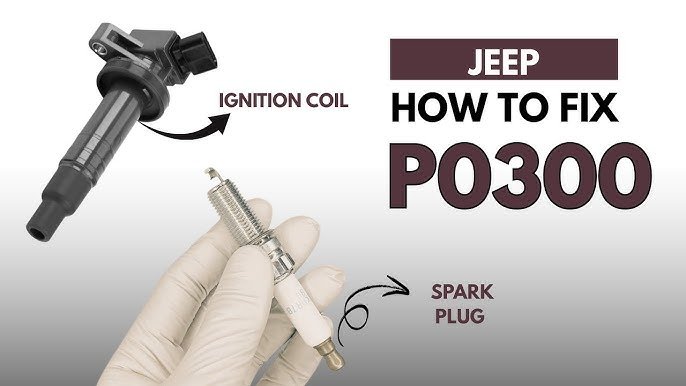
Bad Spark Plugs
Worn or fouled spark plugs are one of the leading causes.
Spark plugs ignite the air-fuel mixture inside each cylinder. Over time, they wear out and lose efficiency.
Signs of failing spark plugs include:
- Rough idle
- Engine hesitation
- Poor fuel economy
- Hard starts
Jeep Grand Cherokee spark plugs usually require replacement between 30,000 and 100,000 miles, depending on the plug type.
Faulty Ignition Coils
Ignition coils supply voltage to the spark plugs.
A weak or failing coil may produce an inconsistent spark, causing random misfires.
Common symptoms include:
- Shaking engine
- Sudden power loss
- Misfires under load
- Flashing check engine light
The 3.6L Pentastar engine is known for occasional coil failures.
Vacuum Leaks
Vacuum leaks allow unmetered air into the engine.
This disrupts the air-fuel ratio and creates lean conditions that trigger misfires.
Common leak locations include:
- Intake manifold gasket
- Vacuum hoses
- PCV system
- Brake booster hose
A vacuum leak often creates a hissing sound near the engine.
Fuel Injector Problems
Fuel injectors deliver fuel into each cylinder.
If one or more injectors become clogged or fail electronically, the engine may misfire.
Symptoms include:
- Rough idle
- Hesitation
- Fuel smell
- Poor acceleration
Dirty injectors are common in high-mileage Grand Cherokees.
Low Fuel Pressure
A weak fuel pump or failing fuel pressure regulator may starve the engine of fuel.
This condition becomes more noticeable during acceleration.
Symptoms include:
- Loss of power
- Hard starts
- Engine sputtering
- Misfires under load
Dirty or Faulty Mass Air Flow Sensor
The MAF sensor measures incoming air.
If the sensor sends incorrect data, the engine computer may create an improper air-fuel mixture.
This frequently leads to random misfires.
Oxygen Sensor Problems
Bad oxygen sensors may send incorrect exhaust readings to the engine computer.
This can cause rich or lean fuel mixtures that trigger the P0300 Jeep Grand Cherokee code.
Engine Compression Problems
Mechanical engine damage may also cause misfires.
Examples include:
- Burnt valves
- Worn piston rings
- Head gasket failure
- Timing chain issues
Compression problems are more serious and expensive to repair.
Carbon Buildup
Carbon deposits inside the combustion chamber can interfere with proper ignition.
Direct injection engines are especially vulnerable to carbon buildup over time.
Jeep Grand Cherokee Engines Affected by P0300
The P0300 code affects multiple Grand Cherokee generations.
3.6L Pentastar V6
This engine commonly experiences:
- Ignition coil failure
- Spark plug wear
- Cylinder head issues in early models
5.7L HEMI V8
The HEMI engine may develop:
- MDS lifter issues
- Injector problems
- Vacuum leaks
4.0L Inline-6
Older Grand Cherokees with the legendary 4.0L engine may experience:
- Distributor issues
- Vacuum leaks
- Aging sensors
4.7L V8
This engine sometimes suffers from:
- Coil pack failures
- Valve seat problems
- Fuel injector issues
How to Diagnose P0300 Jeep Grand Cherokee
Proper diagnosis saves time and money.
Replacing random parts without testing often makes the repair more expensive.
Follow these steps.
Step 1: Scan for Additional Codes
Use an OBD2 scanner to check for related codes.
Extra codes provide valuable clues.
Examples:
- P0171 may indicate a vacuum leak
- P0302 points toward cylinder 2
- P0201 suggests injector problems
Step 2: Inspect Spark Plugs
Remove the spark plugs and examine them.
Look for:
- Heavy carbon buildup
- Oil contamination
- Cracked porcelain
- Excessive wear
Replace damaged plugs.
Step 3: Test Ignition Coils
Swap ignition coils between cylinders.
If the misfire follows the coil, the coil is defective.
Step 4: Check for Vacuum Leaks
Inspect vacuum hoses carefully.
Look for:
- Cracks
- Loose connections
- Broken fittings
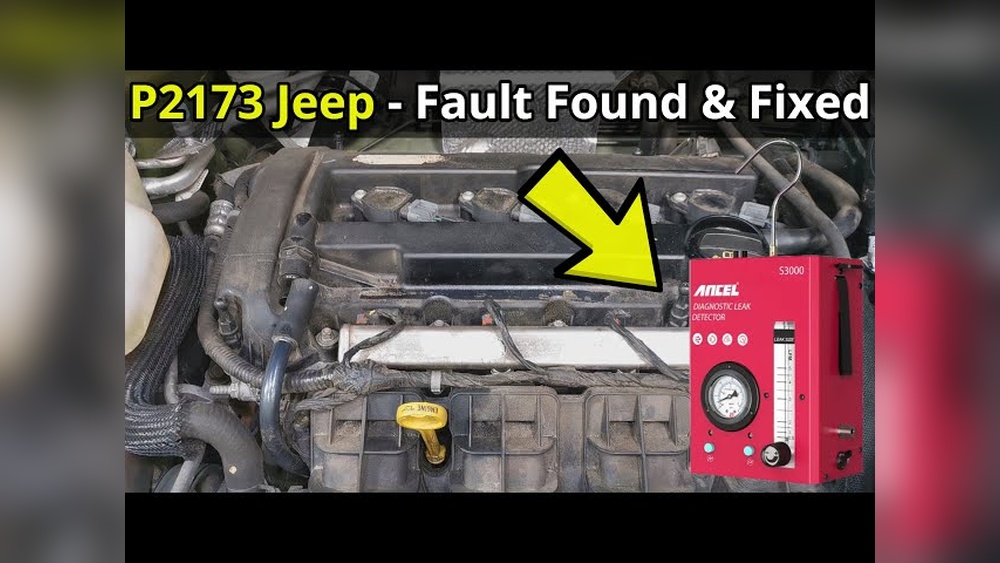
A smoke test is one of the best ways to locate hidden vacuum leaks.
Step 5: Inspect Fuel Injectors
Listen to the injector operation using a mechanic’s stethoscope.
A working injector produces a rhythmic clicking sound.
You may also perform injector balance tests.
Step 6: Check Fuel Pressure
Connect a fuel pressure gauge.
Compare readings against factory specifications.
Low pressure may indicate:
- Weak fuel pump
- Clogged fuel filter
- Faulty regulator
Step 7: Test Engine Compression
Compression testing helps identify internal engine damage.
Low compression in one or more cylinders often points toward mechanical problems.
Step 8: Inspect Air Intake Sensors
Clean the mass air flow sensor using MAF cleaner.
Never touch the sensor wires directly.
Can You Drive With P0300 on a Jeep Grand Cherokee?
Driving with a P0300 code is risky.
A mild misfire may allow short-distance driving, but severe misfires can damage the catalytic converter.
Unburned fuel entering the exhaust system creates excessive heat inside the converter.
Catalytic converter replacement is expensive.
You should avoid driving if:
- The check engine light flashes
- The engine shakes violently
- Power loss becomes severe
- The Jeep stalls repeatedly
Short trips to a repair shop are usually acceptable if the engine still runs smoothly enough.
How Much Does It Cost to Fix P0300 Jeep Grand Cherokee?
Repair costs depend on the root cause.
Here’s a rough estimate.
| Repair | Estimated Cost |
|---|---|
| Spark plug replacement | $150 to $400 |
| Ignition coil replacement | $100 to $350 |
| Fuel injector replacement | $200 to $700 |
| Vacuum leak repair | $100 to $500 |
| Fuel pump replacement | $400 to $1,000 |
| MAF sensor replacement | $150 to $400 |
| Oxygen sensor replacement | $150 to $450 |
| Engine compression repair | $1,500 to $5,000+ |
| Catalytic converter replacement | $900 to $2,500 |
Labor costs vary depending on location and engine type.
HEMI V8 repairs usually cost more than V6 repairs.
DIY Fixes for P0300 Jeep Grand Cherokee
Some repairs are beginner-friendly.
Here are common DIY solutions.
Replace Spark Plugs
If your plugs are old, replacing them is a smart first step.
Always use the correct gap and recommended plug type.
Replace Ignition Coils
Coil replacement is usually straightforward.
Most Grand Cherokee models use coil-on-plug ignition systems.
Clean the MAF Sensor
A dirty MAF sensor may trigger misfires.
Use only the dedicated MAF cleaner spray.
Add Fuel Injector Cleaner
Fuel system cleaners sometimes help with mild injector clogging.
Choose high-quality cleaners designed for direct injection engines.
Inspect Vacuum Hoses
Cracked vacuum hoses are inexpensive and easy to replace.
Common Mistakes When Diagnosing P0300
Many Jeep owners waste money because they skip proper diagnosis.
Avoid these mistakes.
Replacing Parts Randomly
Guessing rarely works.
Always diagnose before replacing components.
Ignoring Additional Codes
Extra codes provide important clues.
Never focus only on P0300.
Replacing Only One Spark Plug
If one spark plug is worn, the others are usually near failure too.
Replace the full set.
Ignoring Fuel Quality
Poor-quality gasoline sometimes contributes to misfires.
Use fuel from reputable stations.
Delaying Repairs
Minor misfires often become expensive repairs later.
How to Prevent P0300 on a Jeep Grand Cherokee
Preventive maintenance reduces the chances of random misfires.
Follow these tips.
Replace Spark Plugs on Schedule
Follow Jeep maintenance intervals.
Old spark plugs increase ignition stress.
Use Quality Fuel
Low-quality fuel may leave deposits inside injectors and combustion chambers.
Clean Fuel Injectors Periodically
Injector cleaning helps maintain smooth fuel delivery.
Inspect Ignition Coils
Weak coils often fail gradually before completely dying.
Check for Vacuum Leaks
Inspect hoses during routine maintenance.
Rubber components become brittle with age.
Maintain the Air Intake System
Replace dirty air filters regularly.
A restricted air filter affects combustion efficiency.
Update Engine Software
Some Jeep models received PCM software updates that improve misfire detection and engine management.
P0300 Jeep Grand Cherokee by Model Year
Different generations may experience slightly different causes.
2005 to 2010 Jeep Grand Cherokee
Common causes include:
- Ignition coil failure
- Fuel injector clogging
- Vacuum leaks
2011 to 2015 Jeep Grand Cherokee
Common issues:
- Pentastar cylinder head problems
- Coil pack failures
- Spark plug wear
2016 to 2020 Jeep Grand Cherokee
Frequently reported causes:
- Fuel injector problems
- Carbon buildup
- MAF sensor contamination
2021 to 2026 Jeep Grand Cherokee
Newer models may experience:
- Sensor calibration issues
- Fuel quality sensitivity
- Software-related misfire detection
Does P0300 Mean You Need a New Engine?
No.
Most P0300 Jeep Grand Cherokee cases involve relatively simple repairs.
Spark plugs, ignition coils, and vacuum leaks account for a large percentage of random misfire problems.
Engine replacement is usually only necessary when:
- Compression is extremely low
- Internal engine damage exists
- Timing chain failure occurs
- Severe overheating damaged the engine
Always perform compression testing before assuming the worst.
<!– wp:rank-math/faq-block {"questions":[{"id":"faq-question-7d7f52f36607","title":"What is the most common cause of P0300 in a Jeep Grand Cherokee?","content":"The most common causes are worn spark plugs, failing ignition coils, vacuum leaks, and injector problems.
“,”visible”:true},{“id”:”faq-question-c390975dfe80″,”title”:”Can bad gas cause P0300?”,”content”:”Yes.u003cbru003eu003cbru003eContaminated or low-quality fuel may trigger random misfires.
“,”visible”:true},{“id”:”faq-question-de97b9920334″,”title”:”Will P0300 clear itself?”,”content”:”Sometimes temporary misfires disappear on their own. However, recurring misfires require proper diagnosis.
“,”visible”:true},{“id”:”faq-question-375322e0c080″,”title”:”How serious is the P0300 code?”,”content”:”A mild misfire may seem harmless initially, but severe misfires can damage the catalytic converter and reduce engine lifespan.
“,”visible”:true},{“id”:”faq-question-84d6be7a2c32″,”title”:”Can a bad battery cause P0300?”,”content”:”Indirectly, yes.u003cbru003eLow voltage may affect ignition performance and sensor readings.
“,”visible”:true},{“id”:”faq-question-8a753b935747″,”title”:”Can low oil cause misfires?”,”content”:”Low oil levels may affect variable valve timing systems in some engines, contributing to misfires.
“,”visible”:true},{“id”:”faq-question-811ee3022cd5″,”title”:”Does P0300 affect fuel economy?”,”content”:”Yes. Misfires reduce combustion efficiency and increase fuel consumption.
“,”visible”:true}]} –>What is the most common cause of P0300 in a Jeep Grand Cherokee?
The most common causes are worn spark plugs, failing ignition coils, vacuum leaks, and injector problems.
Can bad gas cause P0300?
Yes.u003cbru003eu003cbru003eContaminated or low-quality fuel may trigger random misfires.
Will P0300 clear itself?
Sometimes temporary misfires disappear on their own. However, recurring misfires require proper diagnosis.
How serious is the P0300 code?
A mild misfire may seem harmless initially, but severe misfires can damage the catalytic converter and reduce engine lifespan.
Can a bad battery cause P0300?
Indirectly, yes.u003cbru003eLow voltage may affect ignition performance and sensor readings.
Can low oil cause misfires?
Low oil levels may affect variable valve timing systems in some engines, contributing to misfires.
Does P0300 affect fuel economy?
Yes. Misfires reduce combustion efficiency and increase fuel consumption.
Final Thoughts
The P0300 Jeep Grand Cherokee code points to random or multiple cylinder misfires. While the issue may sound serious, the cause is often something manageable like spark plugs, ignition coils, or vacuum leaks.
Fast diagnosis matters.
Ignoring the problem may damage the catalytic converter, reduce fuel economy, and eventually create larger engine problems.
Start with the basics:
- Scan for additional codes
- Inspect spark plugs
- Test ignition coils
- Check fuel pressure
- Look for vacuum leaks
If simple fixes do not solve the issue, perform compression testing to rule out mechanical engine damage.
Routine maintenance is the best defense against future misfires.
Replacing spark plugs on schedule, using quality fuel, and inspecting the ignition system regularly helps keep your Jeep Grand Cherokee running smoothly for years.