The idea of fitting Ford wheels onto a Jeep Cherokee XJ is a topic that sparks a lot of discussion and curiosity among off-road enthusiasts and DIY mechanics. It’s not a simple bolt-on job for most Ford wheels, but with the right knowledge and modifications, it’s certainly achievable.
This common modification arises from a few key desires: accessing a wider variety of aftermarket wheels, finding cheaper or more readily available wheel options, or simply wanting a unique look for their XJ.
However, understanding the differences in wheel bolt patterns, offsets, and potential clearance issues is crucial before diving in. This article will guide you through what you need to know about putting Ford wheels on your Jeep XJ, covering the technicalities, the required modifications, and the pros and cons.
Understanding Wheel Bolt Patterns: The Core Difference
The bolt pattern, also known as the lug pattern or PCD (Pitch Circle Diameter), is the arrangement of the wheel studs on your vehicle’s hub. It’s measured by the number of studs and the diameter of the circle they form. This is the most significant hurdle when trying to swap wheels between different manufacturers.
The Jeep Cherokee XJ, produced from 1984 to 2001, famously uses a 5×4.5 inch (5×114.3mm) bolt pattern. This is a very common pattern found on many Jeep and some Chrysler, Dodge, and even some older Japanese vehicles.
Ford, on the other hand, has used a variety of bolt patterns across its lineup. For many of its trucks and SUVs that might be considered candidates for wheel swaps, particularly older models or those with similar suspension setups to the XJ, a common Ford bolt pattern is 5×5.5 inches (5×139.7mm). This is a significant difference from the XJ’s 5×4.5 pattern.
Why The Difference Matters
The difference between 5×4.5 inches and 5×5.5 inches is about half an inch in diameter. This might sound small, but it’s enough to prevent a direct fit. The holes in the Ford wheel are spaced differently relative to each other than the studs on the Jeep XJ hub. Trying to force a wheel with a different bolt pattern onto your vehicle is dangerous and can lead to:
- Stud damage: You could bend or break the wheel studs.
- Wheel damage: The wheel itself could be stressed or cracked.
- Unsafe mounting: The wheel might not sit flush against the hub, leading to vibration, uneven tire wear, and in the worst-case scenario, the wheel coming loose.
This is why simply buying Ford wheels and expecting them to bolt right onto your XJ is not a viable option without modification.
Methods For Adapting Ford Wheels To Your Jeep Xj
Since a direct fit is impossible, you need a way to bridge the gap between the Jeep XJ’s 5×4.5 bolt pattern and the Ford wheels’ pattern (commonly 5×5.5). There are two primary methods to achieve this: using wheel adapters or replacing the axle with one that has the correct bolt pattern.
Using Wheel Adapters
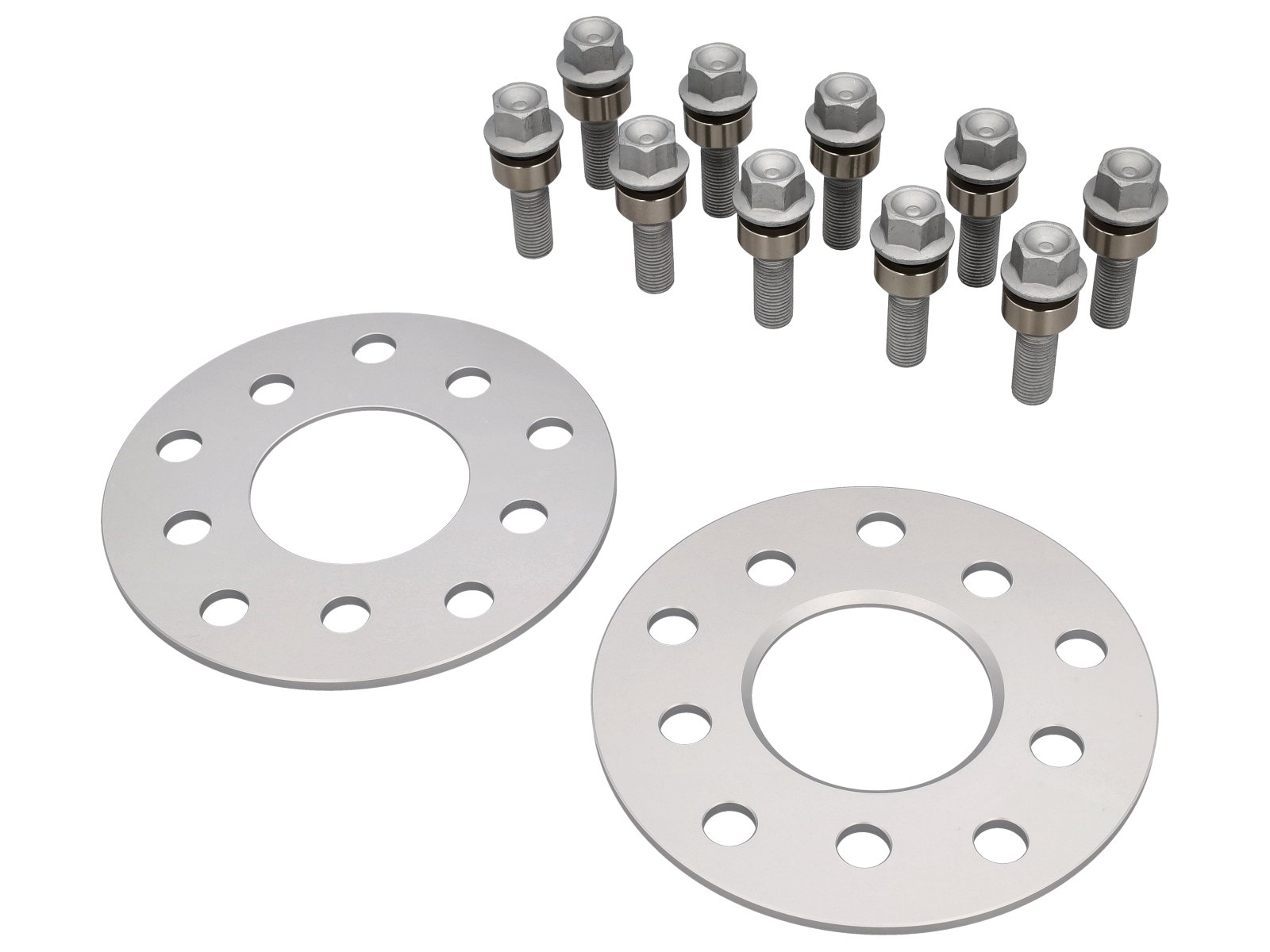
Wheel adapters are essentially spacers that bolt onto your existing hub and provide a new set of studs with the desired bolt pattern. For example, you can buy adapters that are 5×4.5 inches on one side (to bolt to your XJ’s hub) and 5×5.5 inches on the other side (to accept Ford wheels).
How Adapters Work
- Installation: The adapter is bolted to your Jeep XJ’s wheel studs using the correct lug nuts for your vehicle.
- New Hub: The adapter then presents a new set of studs (in the Ford bolt pattern) onto which you mount the Ford wheel. You’ll use different lug nuts to secure the Ford wheel to the adapter.
Pros Of Using Adapters
- Accessibility: Allows you to use a much wider range of wheels, including those from Ford trucks and SUVs.
- Cost-Effective (Initially): Adapters are generally less expensive than swapping an entire axle.
- Relatively Easy Installation: For someone comfortable with basic automotive work, installing adapters can be a straightforward process.
- Reversibility: If you decide to go back to your original Jeep wheels or a different set later, you can simply remove the adapters.
Cons Of Using Adapters
- Increased Stress on Bearings: Adapters add leverage and weight further out from the hub, which can increase the load on your wheel bearings. This is especially true for heavier wheels and tires. Over time, this can lead to premature bearing wear.
- Potential for Vibration: If not installed perfectly or if the adapters themselves are not high quality, you can experience vibrations.
- Track Width Increase: Adapters act as spacers, pushing your wheels further out from the vehicle. This widens your track width, which can affect handling, tire wear, and may require fender flares to stay legal or prevent tire rubbing on fenders.
- Durability Concerns: Cheap or poorly manufactured adapters can be a safety hazard. It’s crucial to buy from reputable brands and ensure they are made from strong materials like T6 aluminum or steel.
- Stud Length Issues: You need to ensure your original studs don’t stick out too far past the adapter, potentially interfering with the wheel seating. Sometimes, you might need shorter studs or a different adapter design.
Types Of Adapters
- Bolt-On Adapters: These are the most common type. They bolt to your hub, and the wheel bolts to the adapter’s studs.
- Hub-Centric Adapters: These are designed to center the wheel on the adapter, which then centers on your hub. This helps reduce vibration and ensure a proper fit.
- Wheel-Centric Adapters: These center the wheel onto the adapter, but the adapter itself might not be perfectly centered on the hub, or it relies on the lug nuts to center the wheel.
When looking for adapters, you’ll need to specify:
- Your Jeep XJ’s bolt pattern (5×4.5 inches)
- The desired Ford bolt pattern (e.g., 5×5.5 inches)
- The thickness of the adapter (this determines how much your track width increases)
Pro Tip: Always ensure the adapter’s center bore matches your Jeep XJ’s hub diameter to prevent wobbling. Similarly, the adapter’s outer bore should be large enough for your Ford wheel’s hub or center cap to fit without interference.
Replacing The Axle
A more robust, though more involved, solution is to swap the entire axle from your Jeep XJ with one that already has the desired Ford bolt pattern. This is a popular method among serious off-roaders who are already upgrading their suspension or driveline.
Axle Options
- Ford Explorer (Certain Years): Some Ford Explorers, particularly those from the mid-1990s to early 2000s, came with a 5×4.5 inch bolt pattern, which is the same as your XJ. This makes them a relatively straightforward swap, requiring minimal modification to achieve the same bolt pattern. However, this doesn’t help if you want to run Ford wheels with a *different* bolt pattern.
- Ford F-150 (Older Models): Older Ford F-150 trucks often came with a 5×5.5 inch bolt pattern. Swapping an F-150 axle into an XJ is a significant undertaking. You’ll need to adapt the mounting perches, potentially modify the width of the axle, and address brake system compatibility.
- Custom Axles: For ultimate flexibility, custom-built axles are available that can be ordered with specific bolt patterns, widths, and mounting configurations.
Pros Of Axle Swaps
- Stronger Components: Many Ford truck axles are significantly stronger than the stock XJ Dana 30 (front) and Dana 35 (rear) axles, especially if you’re looking at F-150 axles. This is beneficial for larger tires and heavier off-roading.
- Improved Durability: A properly installed axle swap with compatible components can be more durable and reliable than using adapters.
- No Added Stress from Spacers: You don’t have the extra leverage and weight of adapters, which is easier on wheel bearings.
- Correct Track Width: If you choose an axle with a similar width to your XJ, you maintain a more appropriate track width without needing spacers or fender flares solely for width.
Cons Of Axle Swaps
- Complexity and Cost: This is a much more involved and expensive modification. It requires significant mechanical skill, specialized tools, and potentially fabrication work (welding shock mounts, spring perches, control arm mounts).
- Driveshaft Modifications: The length and U-joint angles of your driveshafts will likely need to be modified to connect properly to the new axle.
- Brake System Integration: You’ll need to figure out how to integrate the brake system from the donor axle with your XJ’s existing setup, or upgrade the entire brake system.
- Gearing Compatibility: The differential gears in the donor axle must match or be re-geared to match your XJ’s front axle (if you’re only swapping the rear) or both axles (if doing a full swap) to ensure proper 4WD operation.
- Gauging Width: Axle width is critical. If the donor axle is significantly wider or narrower than your XJ, it can affect tire clearance, handling, and aesthetics. You might need to consider cutting and turning axle tubes or using custom-built axles to get the right width.
Example: Swapping a Ford Explorer rear axle (which often has the 5×4.5 bolt pattern) into an XJ can be a good option if you need a stronger rear end than the Dana 35 and want to maintain the same bolt pattern. However, if you’re looking for the more common Ford truck bolt pattern (5×5.5), an F-150 axle is a much more involved swap.
Considerations Beyond Bolt Pattern
Even if you solve the bolt pattern issue with adapters or an axle swap, there are other critical factors to consider when fitting Ford wheels onto your Jeep XJ.
Wheel Offset
Wheel offset is the distance from the hub mounting surface of the wheel to the centerline of the wheel. It determines how far inward or outward the wheel sits.
- Positive Offset: The hub mounting surface is on the front side of the wheel’s centerline. This tucks the wheel inward.
- Negative Offset: The hub mounting surface is on the back side of the wheel’s centerline. This pushes the wheel outward.
- Zero Offset: The hub mounting surface is exactly at the wheel’s centerline.
The stock XJ wheels typically have a low positive offset or are nearly zero offset. When you use adapters, you are effectively increasing the offset (making it more positive) because the adapter pushes the wheel out. If you swap to a Ford axle, it might have a different inherent offset than your XJ axle.
Impact Of Offset On Xj
- Too Much Positive Offset (Wheel Tucked In): Can cause the tire to rub on suspension components, brake calipers, or the inner fender well.
- Too Much Negative Offset (Wheel Pushed Out): Can cause the tire to rub on the fender flares, body panels, or require extensive trimming. It also increases stress on wheel bearings and can lead to poor handling.
When selecting Ford wheels, you need to be aware of their offset and how it will interact with your XJ’s suspension and the adapters or axle you are using. Aiming for an offset that keeps the tire as close to the original position as possible is generally best for handling and minimizing rubbing issues.
Wheel Backspacing
Backspacing is the distance from the back of the wheel mounting surface to the outside edge of the wheel. It’s closely related to offset and is often used interchangeably, though they are technically different measurements.
- Low Backspacing: Pushes the wheel outward.
- High Backspacing: Tucks the wheel inward.
Similar to offset, the backspacing of the Ford wheels you choose, combined with the effect of adapters or a new axle, will determine clearance.
Tire Size And Clearance
The size of the tire you plan to run is a massive factor. Larger tires require more clearance.
- Rubbing: Even with the correct bolt pattern and a suitable offset, large tires can rub on fenders, control arms, or the frame, especially when turning or flexing the suspension.
- Lift Kits: Most people who put larger tires on an XJ also install a lift kit. The amount of lift will dictate how large of a tire you can fit without significant rubbing.
- Fender Trimming: Sometimes, even with a lift, you might need to trim your fenders or install aftermarket fender flares to accommodate larger tires, especially when using wheels that push the tire further out.
When considering Ford wheels, always check the dimensions of the wheels themselves (diameter and width) and the tires you intend to mount on them. This information is crucial for predicting clearance issues.
Hub Diameter
While the bolt pattern is the primary concern, the hub diameter of both the vehicle and the wheel can also play a role. Your Jeep XJ has a hub diameter of approximately 71.5mm. Some Ford wheels might have a larger hub bore.
- Hub Rings: If the Ford wheel’s hub bore is larger than your Jeep’s hub, you can use hub-centric rings. These are small metal or plastic rings that fit into the wheel’s hub bore and center it on your vehicle’s hub. This helps prevent vibrations and ensures the wheel is properly centered, taking some stress off the lug nuts.
- Wheel Centering: If the wheel bore is smaller than your hub, it simply won’t fit.
Material And Weight
Ford wheels come in various materials and weights. Steel wheels are typically heavier but more durable for off-roading. Alloy wheels are lighter, which can improve handling and fuel economy, but can be more susceptible to damage from impacts. Consider the weight of the Ford wheels you choose, as this will affect your XJ’s performance, suspension wear, and fuel efficiency. Heavier wheels will put more strain on your axles, brakes, and suspension.
Common Ford Wheel Bolt Patterns And Their Xj Compatibility
Let’s look at some common Ford bolt patterns and how they relate to the Jeep XJ.
1. Ford 5×5.5 Inch (139.7mm)
This is arguably the most common Ford truck bolt pattern and the one most people are thinking of when they want to adapt Ford wheels to an XJ. As mentioned, it’s larger than the X