The Jeep XJ, also known as the Cherokee, has a reputation for rugged performance and off-road reliability. But one area where many owners find room for improvement is the spare tire mount. The factory setup often places the spare tire inside the cargo area, taking up valuable space and sometimes limiting access. For Jeep XJ enthusiasts who want better storage, easier access, or improved off-road capability, upgrading the spare tire mount makes a big difference.
Why Upgrade Your Jeep Xj Spare Tire Mount?
Most factory Jeep XJs carry the spare tire upright inside the rear cargo area. While this keeps the tire safe, it reduces cargo space and can be inconvenient during camping trips or daily errands.
Upgrading to an external tire mount provides several key advantages:
- More cargo room inside the cabin
- Easier access to the spare tire, especially off-road
- Better weight distribution if placed on the rear bumper
- Improved rear visibility compared to high roof racks
Some aftermarket mounts also help fit larger tires, which is important for lifted XJs running 31-inch or 33-inch tires.
Types Of Spare Tire Mounts For Jeep Xj
Jeep XJ owners have several options to consider. Each type suits different needs and budgets.
| Mount Type | Location | Pros | Cons |
|---|---|---|---|
| Interior Upright | Inside cargo area | Protected from elements | Takes up space |
| Roof Rack | On roof | Frees up cargo | Hard to reach, affects center of gravity |
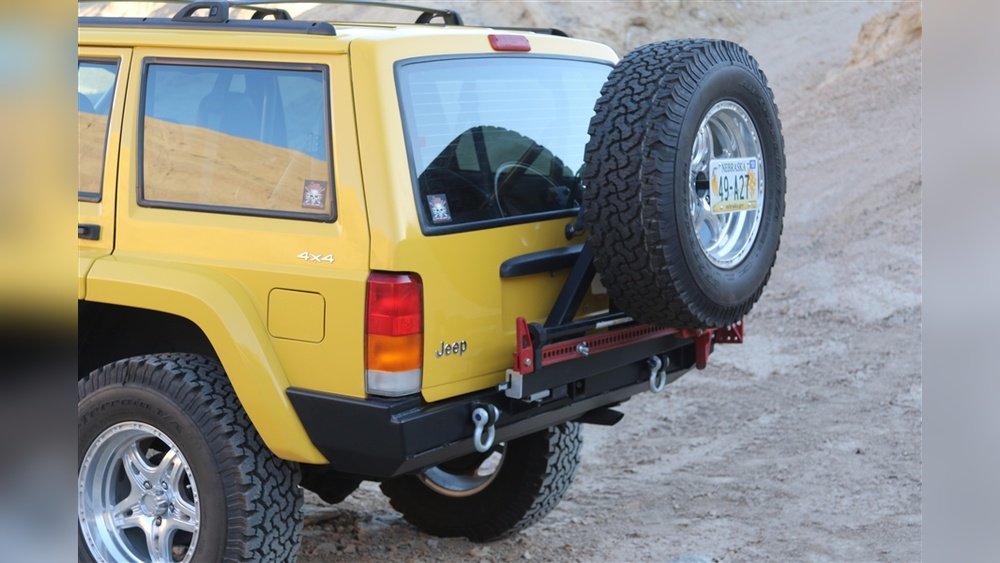
| Rear Bumper Swing-Out | Attached to bumper | Easy access, fits big tires | Can be expensive |
| Hatch Mount | Rear hatch | Affordable, easy install | May block rear glass |
Rear Bumper Swing-out Mount
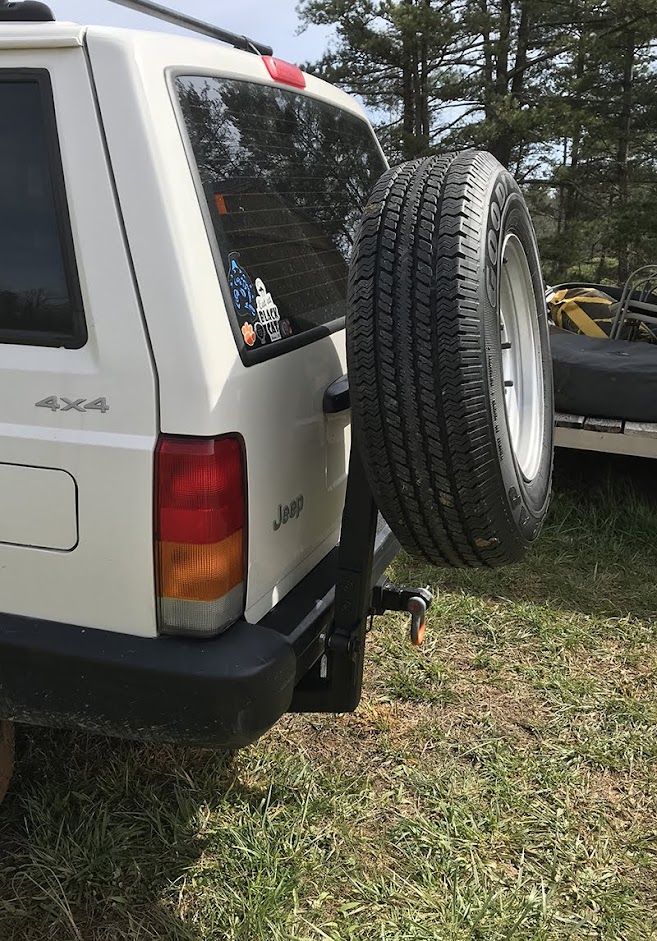
This is the most popular upgrade among off-roaders. A swing-out bumper mount lets you carry larger tires, up to 35 inches in some cases. It swings away for easy cargo access and is built from strong steel. Brands like Smittybilt, JCR Offroad, and Dirtbound offer reliable options.
Roof Rack Mount
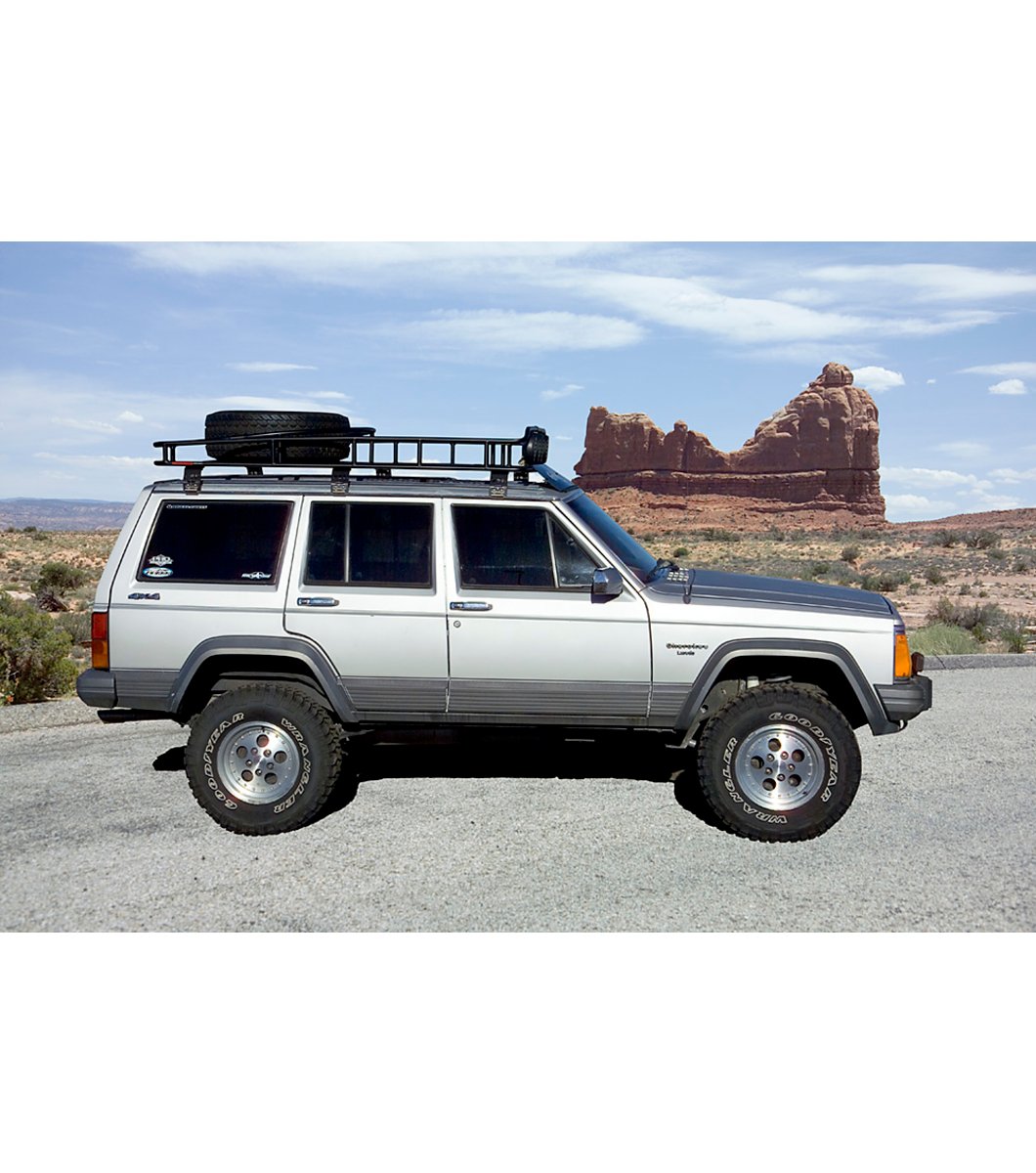
If you need interior space and already have a roof rack, mounting the spare up top works. But lifting a heavy tire overhead can be difficult, and it raises your vehicle’s center of gravity.
It’s best for those who rarely change the tire.
Hatch-mounted Spare Carrier
Some kits mount the spare directly on the rear hatch. This is an affordable solution, but the Jeep XJ’s thin hatch metal can bend under heavy tires.
For 31-inch and larger tires, reinforced brackets are needed.
Installation Tips And Common Mistakes
Installing a spare tire mount is straightforward with basic tools, but there are details to watch for.
- Check weight limits: Not all mounts support heavy tires. Rear bumper swing-outs usually handle up to 100 lbs.
- Use proper hardware: Cheap bolts can shear under stress. Always use grade 8 hardware for safety.
- Seal holes: If you drill into the body, seal holes to prevent rust.
- Test latch mechanism: Swing-out mounts must lock securely. Loose latches can rattle or fail off-road.
- Balance the load: Heavy tires on one side may affect handling. Place the mount centrally when possible.
A common mistake is overloading the hatch or bumper. If your tire is larger than stock, choose mounts rated for extra weight.
| Mount Location | Max Tire Size | Recommended Weight Limit |
|---|---|---|
| Interior Upright | Up to 31″ | 60 lbs |
| Roof Rack | Up to 33″ | 75 lbs |
| Swing-Out Bumper | Up to 35″ | 100 lbs |
| Hatch Mount | Up to 31″ | 55 lbs |
Choosing The Right Spare Tire Mount
Selecting the best mount depends on your driving style, tire size, and budget.
- For daily drivers: Interior upright or hatch mount works well. They’re affordable and easy to install.
- For off-roaders: Rear bumper swing-outs are ideal, especially for oversized tires.
- For campers: Roof rack mounts free up cargo space but make tire changes harder.
Consider your tire size. If you plan to upgrade to 33-inch or 35-inch tires, invest in a mount that’s built for extra strength.
Look for powder-coated finishes to resist rust, and double-check compatibility with your XJ’s year and model.
Maintenance And Safety
A spare tire mount needs regular care, especially if used off-road. Wash dirt and salt from moving parts, check bolts for tightness, and lubricate the swing mechanism. Inspect welds and brackets every few months for cracks or rust.
When mounting the tire, make sure the lug nuts are tight. Loose tires can damage the mount or fall off during rough rides.
Many owners forget to check the spare’s air pressure, so inspect it monthly.
Non-obvious Insights
Many beginners overlook these important points:
- Mounting hardware quality: Using cheap bolts can lead to failures. Always choose grade 8 bolts or higher.
- Insurance and legality: In some states, mounting a tire on the hatch can block the rear license plate or lights. Check local laws to avoid fines.
- Weight distribution: Adding a heavy tire to the back changes your Jeep’s handling. If you drive in snow or mud, this can affect traction and stability.
Real-world Example
Jake, a Jeep XJ owner from Colorado, upgraded to a rear bumper swing-out mount after switching to 33-inch tires. He noticed more cargo space, easier access to the tire when off-road, and better overall balance.
After a year, he found that regular lubrication of the latch kept it working smoothly.
He also switched to grade 8 hardware after his original bolts loosened during a rough trail ride.
For more technical details on tire mount design, you can check Wikipedia’s spare tire overview.
Frequently Asked Questions
How Big Of A Spare Tire Can I Fit With A Swing-out Mount?
Most swing-out mounts handle tires up to 35 inches. Always check the manufacturer’s specs for weight limits before buying.
Is A Roof Rack Spare Tire Mount Safe For Off-roading?
It’s safe if properly secured, but it can be hard to reach and affects your vehicle’s center of gravity. For frequent off-roading, a rear bumper mount is better.
Will Mounting A Spare On The Hatch Damage My Jeep Xj?
The hatch is made of thin metal. Heavy tires can cause dents or cracks over time. Use reinforced brackets if you must mount there, and keep tire size under 31 inches.
Can I Install A Spare Tire Mount Myself?
Yes, most mounts can be installed with basic hand tools. Follow instructions, use quality hardware, and seal any drilled holes to prevent rust.
Do I Need To Check The Spare Tire Pressure Regularly?
Absolutely. A flat spare is useless during emergencies. Check air pressure monthly and inspect the tire for cracks or wear.
Upgrading your Jeep XJ’s spare tire mount isn’t just about looks it improves practicality, safety, and performance both on and off the road. With the right mount and proper installation, your XJ will be ready for any adventure.